![“I wasn't discouraged by some of the obstacles we faced. I learned a lot from the leadership. I found that different people need different ways of receiving feedback — you can't [just] tell them to do something and expect the best. [Some] people needed more incentive. A large part of my role was to figure out what worked for everyone and to figure out how to lead all these separate individuals as a team,” Suhana Bhandare (’26) said.](https://harkeraquila.com/wp-content/uploads/2026/06/SuhanaBhandare_JasmineHansra-1-1200x798.jpg)


![“This is actually from Randy Pausch Randy P. Brick: ‘Walls are there for a reason. You have to show how much you want to overcome them.’ You have to show how much you want something. That's what I've always been able to do with tennis, Link Crew and getting that internship [with Kushy Baby]. It’s important pushing through that — getting around that brick wall, climbing over it or clawing through it,” Yash Sachdeva (’26) said.](https://harkeraquila.com/wp-content/uploads/2026/05/YashSachdeva_RamBatchu-copy-1200x1002.jpg)

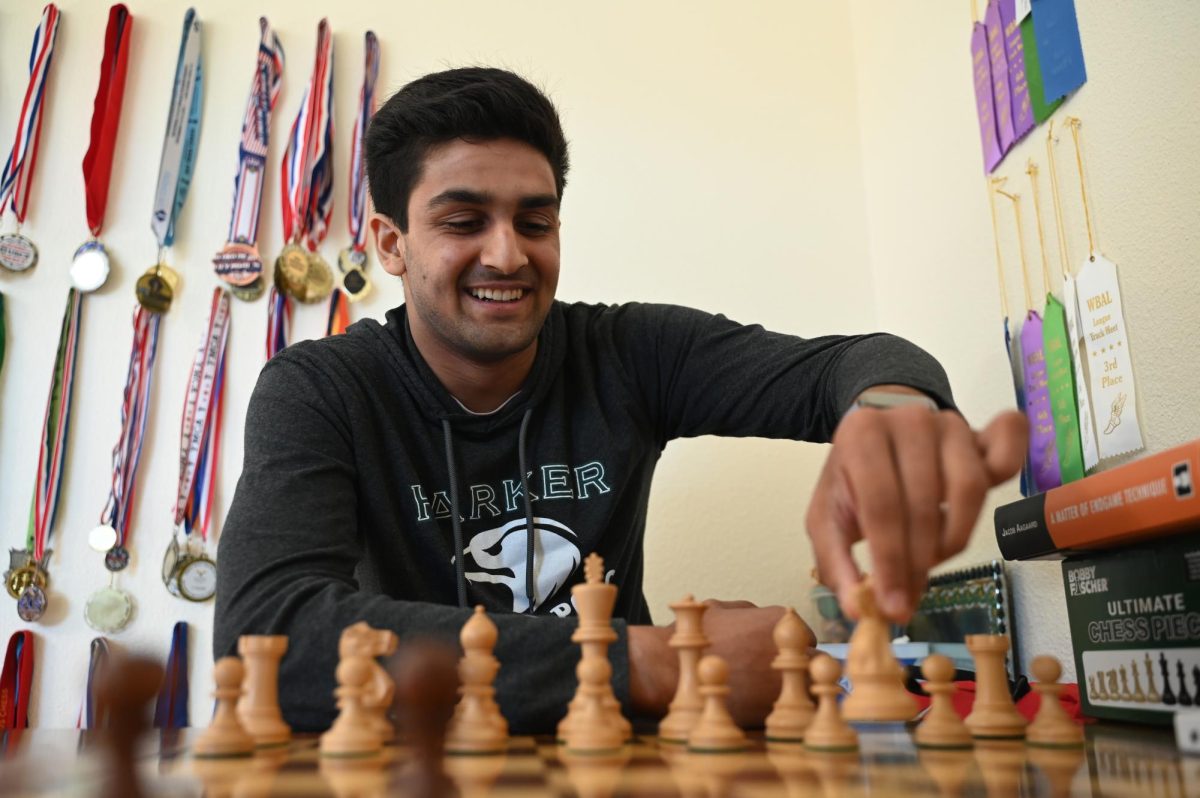















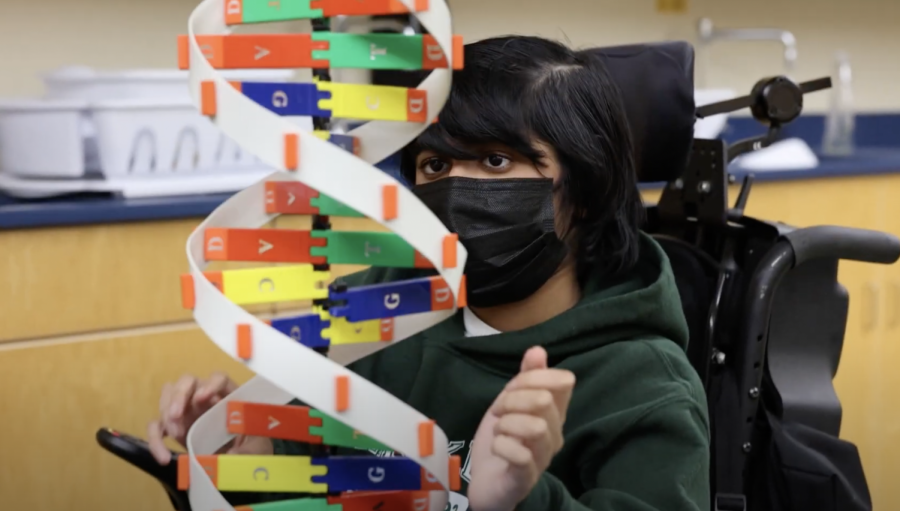
![“[Building nerf blasters] became this outlet of creativity for me that hasn't been matched by anything else. The process [of] making a build complete to your desire is such a painstakingly difficult process, but I've had to learn from [the skills needed from] soldering to proper painting. There's so many different options for everything, if you think about it, it exists. The best part is [that] if it doesn't exist, you can build it yourself," Ishaan Parate said.](https://harkeraquila.com/wp-content/uploads/2022/08/DSC_8149-900x604.jpg)

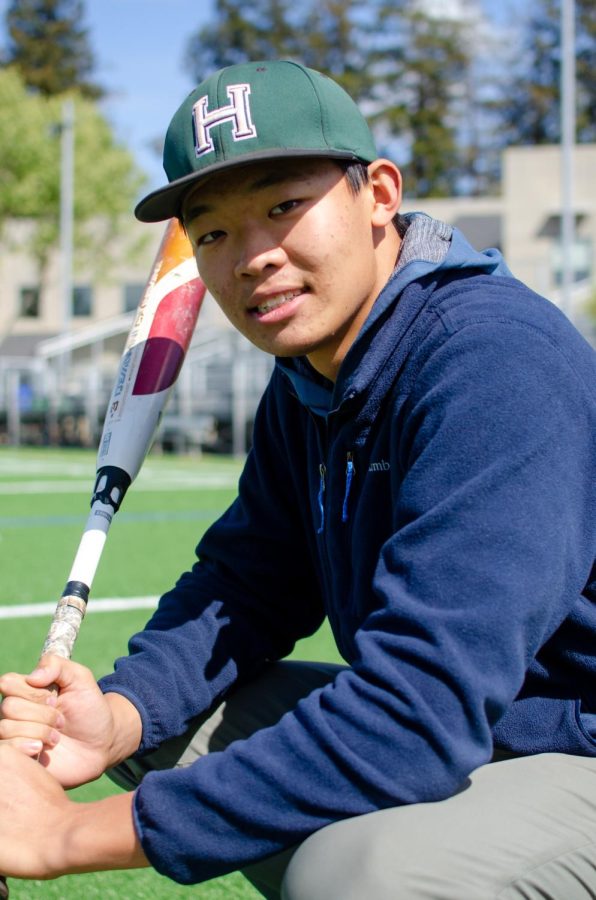

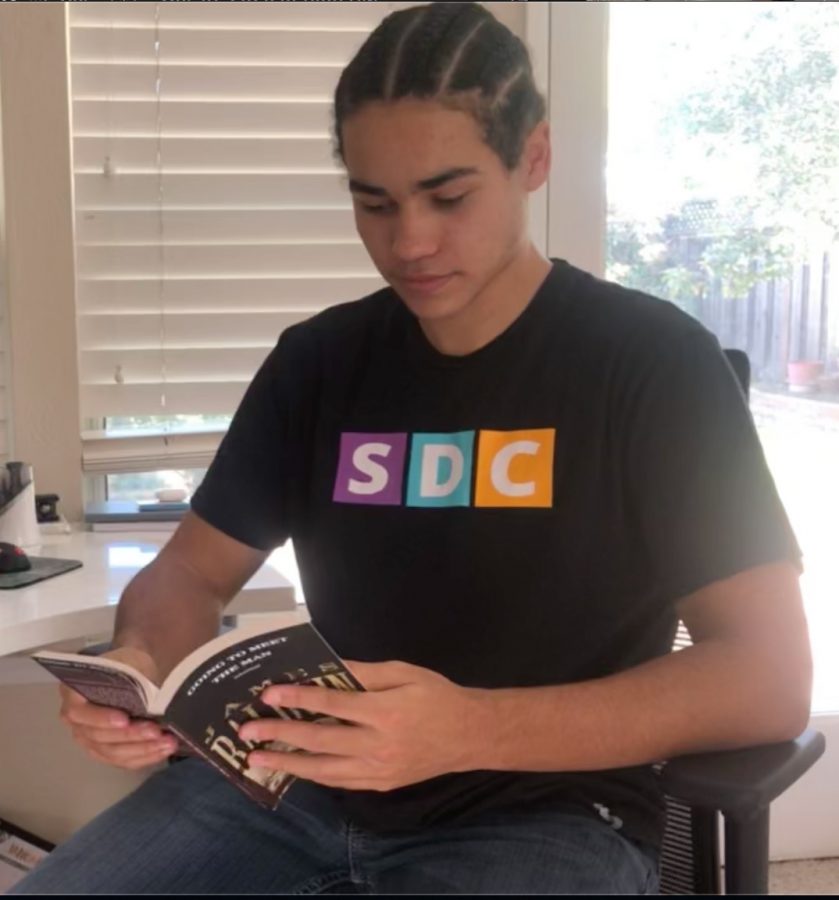
![“When I came into high school, I was ready to be a follower. But DECA was a game changer for me. It helped me overcome my fear of public speaking, and it's played such a major role in who I've become today. To be able to successfully lead a chapter of 150 students, an officer team and be one of the upperclassmen I once really admired is something I'm [really] proud of,” Anvitha Tummala ('21) said.](https://harkeraquila.com/wp-content/uploads/2021/07/Screen-Shot-2021-07-25-at-9.50.05-AM-900x594.png)






![“I think getting up in the morning and having a sense of purpose [is exciting]. I think without a certain amount of drive, life is kind of obsolete and mundane, and I think having that every single day is what makes each day unique and kind of makes life exciting,” Neymika Jain (12) said.](https://harkeraquila.com/wp-content/uploads/2017/06/Screen-Shot-2017-06-03-at-4.54.16-PM.png)





![“My slogan is ‘slow feet, don’t eat, and I’m hungry.’ You need to run fast to get where you are–you aren't going to get those championships if you aren't fast,” Angel Cervantes (12) said. “I want to do well in school on my tests and in track and win championships for my team. I live by that, [and] I can do that anywhere: in the classroom or on the field.”](https://harkeraquila.com/wp-content/uploads/2018/06/DSC5146-900x601.jpg)
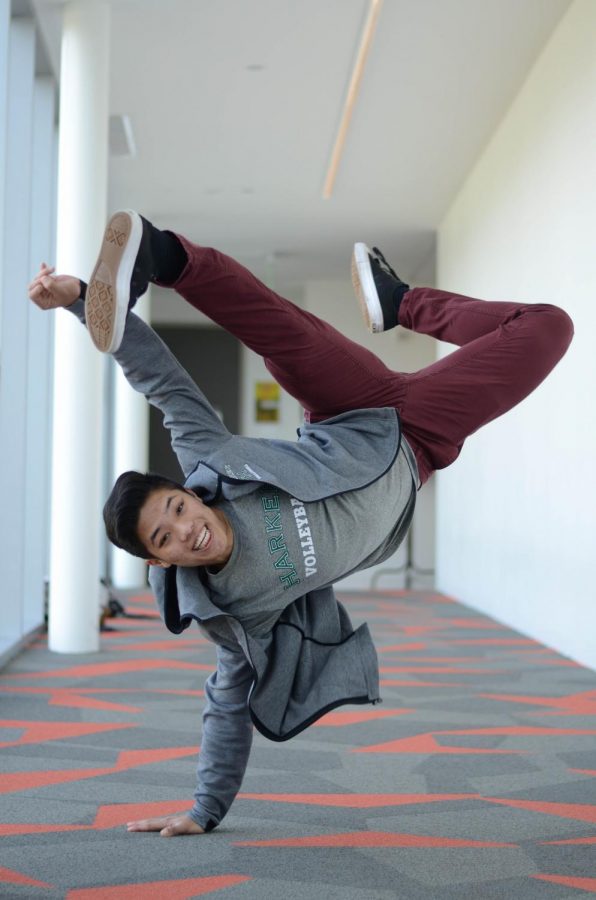
![“[Volleyball has] taught me how to fall correctly, and another thing it taught is that you don’t have to be the best at something to be good at it. If you just hit the ball in a smart way, then it still scores points and you’re good at it. You could be a background player and still make a much bigger impact on the team than you would think,” Anya Gert (’20) said.](https://harkeraquila.com/wp-content/uploads/2020/06/AnnaGert_JinTuan_HoHPhotoEdited-600x900.jpeg)
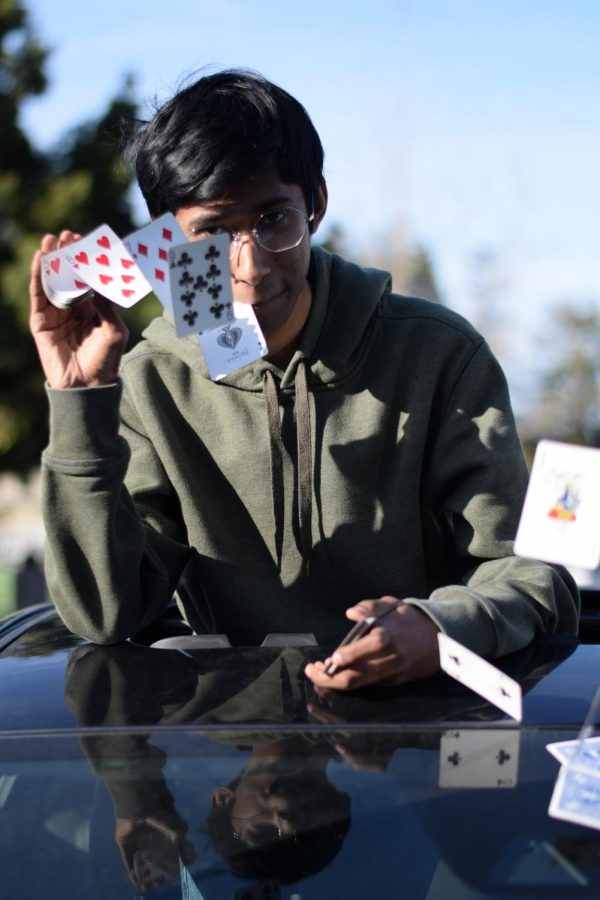
![“I'm not nearly there yet, but [my confidence has] definitely been getting better since I was pretty shy and timid coming into Harker my freshman year. I know that there's a lot of people that are really confident in what they do, and I really admire them. Everyone's so driven and that has really pushed me to kind of try to find my own place in high school and be more confident,” Alyssa Huang (’20) said.](https://harkeraquila.com/wp-content/uploads/2020/06/AlyssaHuang_EmilyChen_HoHPhoto-900x749.jpeg)




Death threats. Career-ending scandals. Ruinous addictions.
While these concepts might seem a far cry from casual sports fans participating in beer fantasy leagues or placing $10 wagers to make inconsequential games more engaging, they have all arisen directly from the sports betting industry’s explosive growth over the last decade.
Sports betting has become incredibly popular in the U.S., with hundreds of billions of dollars wagered each year on sports from baseball to bowling. Although banned in California, it is currently legal in 38 states, and online betting is allowed in 30. All major American sports leagues have partnered with sportsbooks, and teams across the country have established sponsorship agreements to promote gambling platforms like FanDuel, DraftKings, BetMGM and Caesars Sportsbook.
Despite the ban in California, the San Francisco Giants and Golden State Warriors have deals with PrizePicks and Betway, respectively; these deals are possible because California considers daily fantasy legally distinct from sports betting. The aforementioned partnerships have helped to normalize sports betting, just a few years after leagues like the NHL and NFL expressed that it threatened competitive integrity.
Indeed, the perverse incentives and behavioral risks associated with sports betting means that it must be more tightly regulated. The amount of money in this space pushes both players and fans to engage in unethical and even criminal acts, and the financial consequences of gambling addictions have devastated many families.
Athletes receive death threats, demands for money and social media abuse from disgruntled bettors, and the anonymity offered by online platforms makes it challenging to resolve this problem. Furthermore, the rise in problem gambling associated with the unrivaled accessibility of online sportsbooks means that there are far more angry gamblers than ever before.
The ease of use and availability of online sportsbooks means that tens of millions of Americans are able to gamble at any time, and the ubiquity of ads for these platforms means that they are constantly reminded of the potential for massive gains with minimal bets of just a few dollars. Aggressive and misleading marketing campaigns help lure in fans and get them addicted to gambling; some believe that their knowledge of sports will enable them to beat the odds, while others fall for the idea that huge wins are just a few clicks away.
Whenever I search for clips from the Warriors or find time to watch a Giants game, I’m bombarded with promotions from DraftKings and other gambling sites. Popups with messaging like “Bet $5 and Get $200 in Bonus Bets INSTANTLY!” appear frequently, leaving me to wonder how many recovering gamblers or irresponsible fans get sucked into the predatory and financially devastating world of sports betting.
Problem gambling, which refers to gambling behavior with the potential to harm a person or their family, is two times more common among sports bettors than gamblers in general, and states with legal sports betting have seen households save less money and experience more bankruptcies.
Players aren’t immune from the monetary incentives created by sports betting, as multiple have admitted to or been accused of altering actions in game to fix bets. Last year, NBA forward Jontay Porter was banned from the NBA for life for violating the league’s gambling rules, and MLB infielder Tucupita Marcano received a permanent ban for similar reasons. Although incidents involving player misconduct are infrequent, they significantly damage both the integrity and reputation of professional sports.
Before the landmark 2018 Supreme Court decision in Murphy v. National Collegiate Athletic Association, which allowed states to sanction sports betting, the Professional and Amateur Sports Protection Act (PASPA) essentially outlawed sports betting in the U.S. PASPA was passed in 1992 following the submission of the Dowd Report, which detailed how former baseball player Pete Rose bet on games while managing the Cincinnati Reds baseball team, to the MLB commissioner in 1989.
Despite the ban, exemptions for states with existing sports lotteries and for sports like dog racing meant that sports betting didn’t entirely disappear, and underground organizations popped up to meet the unmet demand for other events. Illegal gambling sites facilitated hundreds of billions of dollars in wagers, meaning that PASPA entirely failed to achieve its stated goal of “prohibit[ing] sports gambling under State law.” PASPA was judicially overturned in 2018 for infringing on states’ rights, and returning to a similar framework would neither protect fans nor the competitiveness of sports.
Taken together, the issues described above mean that professional sports leagues must rethink their acceptance of sports betting. Government regulators must clamp down on the industry with policies that limit the spread of sports betting while respecting states’ authority to establish their own policies. Unchecked, gambling transforms from an entertainment product to an addictive epidemic.
Existing regulations concerning sports betting don’t go far enough to limit the incidence of problem gambling, remove incentives for athletes to matchfix and ensure the integrity of sports. If athletic contests are tainted by the specter of external financial interests, over 100 years of history have yielded no progress.