

Bay Area embraces East, South Asian cultures


Just a few years ago, ordering a boba drink at U.S.-founded chains like Teaspoon or Boba Guys was the norm. Colorful flavor options, from bright green melon to deep purple ube, and an endless amount of toppings defined this Americanized take on Asian tea culture. Yet in recent years, a new generation of chains is bringing more traditional Asian flavors to the forefront.
Brands founded in China and Taiwan, like HEYTEA, Molly Tea and Chicha San Chen, have expanded rapidly in the Bay Area, part of a broader wave of Asian tea chains entering the U.S. market. Instead of focusing on add-ons, these companies emphasize the tea itself and East Asian flavors like lychee or osmanthus.
Senior Yena Yu, who has visited Asian-founded chains like HEYTEA, has watched this shift unfold throughout her time in high school.
“In the past, the trend was mostly about tapioca boba or popping boba, but now it has gone towards more traditional flavors like jasmine tea,” Yena said. “I’ve seen Molly Tea give out promotional things for events, like little scent packages that have more niche scents like apple jasmine that are uniquely East Asian. Even in the way they name the drinks — on the menus they put Chinese characters — is a pretty cool recent development.”
Chicha San Chen’s hallmark is brewing the tea for each individual drink to order, and Molly Tea builds its menu around jasmine tea and an “Eastern Modern” aesthetic that blends traditional Chinese tea culture with contemporary style. Rather than catering to a more American palate, these details reflect how brands are leaning into cultural specificity.
Customers aged 18 to 34 account for over 60% of U.S. bubble tea sales, according to an International Market Analysis Research and Consulting Group (IMARC) study. Boba fan Jessie Cao (10) has seen firsthand how, in the Bay Area, where there is a large Asian American population, the demand is especially strong.
“Because there are so many Asians who like getting boba, other people also get influenced and want to start trying it out, and then they realize they really like it,” Jessie said. “Places like Molly Tea — I don’t really go to them for the boba part, it’s more the tea. The tea has this rich taste to it, and it’s also calming.”
This ripple effect, where Asian American customers draw in people from diverse backgrounds to these shops, helps explain why places like the Bay Area serve as launchpads for brands to expand. Director of Annual Giving Jun Wang, who lived in Shanghai when boba tea was first growing popular, sees this impact.
“In China, whatever city you go to, there are so many boba tea places, and the Bay Area has so many boba tea places as well,” Wang said. “I think that’s a great thing — it gives people choices. Perhaps because we actually have a large Asian community in the area, people are longing for those things. There are many customers here. That’s the reason so many businesses are entering this area, and then they can expand.”
While many newer tea chains emphasize authenticity, the growing popularity of Asian flavors has led to their widespread adaptation beyond boba. Matcha, a finely ground tea powder with roots in Chinese tea traditions, has become ubiquitous in the Bay Area, exacerbated by social media trends. Yet this mainstream appeal raises questions about how these customs are interpreted and altered.
“It’s a bit frustrating to see the westernization of some cultural elements,” matcha fan Sophia Ou (12) said. “There are a lot of strange matcha drinks, especially at Starbucks, that don’t really make sense. In some way, it’s good that it’s more accessible for more people, but at the same time, you’re kind of losing some of the cultural significance and meaning behind things as they get appropriated.”
This surging boom of popularity has its downsides. With the huge crowds and ever-stretching waitlist, the current upward trend of Asia-inspired tea seems difficult to sustain long-term. Jessie pointed out how social media and word of mouth may affect people’s enthusiasm for these brands, while not actually appreciating the drink itself or the culture behind it.
“Part of [these stores] gets overhyped sometimes,” Jessie said. “Like at HEYTEA, why is the line so long? I feel like part of it is that people go not because they actually really like the drinks, but because of the name — people always talk about them, so other people want to try them as well.”
Yena expressed how, ultimately, the move toward more traditional tea brands and flavors reflects a change toward a greater acceptance.
“I think the shift is appropriate and reflects popular demand,” Yena said. “More underrepresented cultures are now coming into the spotlight, and it shows an interesting turn to an embrace of culture — embracing that part of culture with the taste and things that might not be generally seen otherwise.”
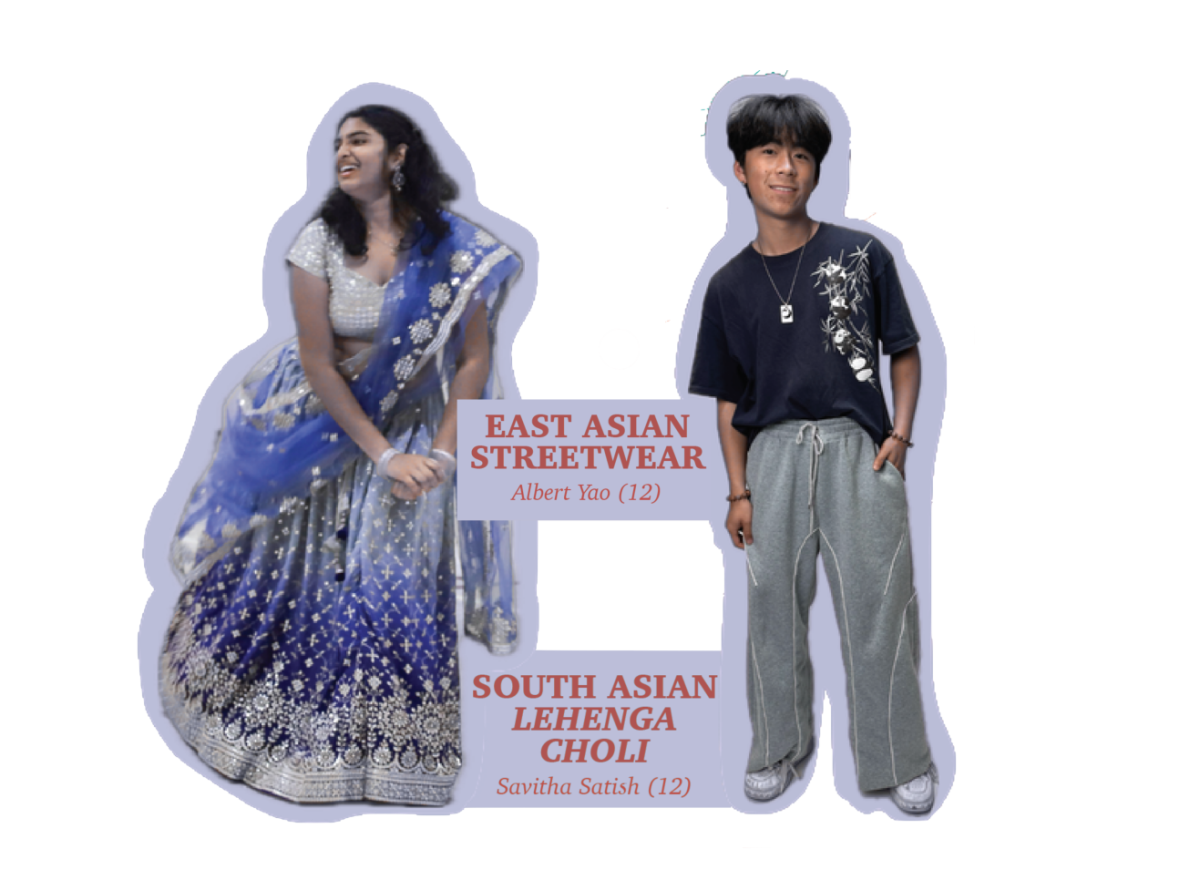
In recent years, Western fashion brands like Oh Polly and Edikted have rebranded South Asian styles as their own, marketing shawl-like garments that resemble dupattas and lehengas as a “Scandinavian scarf dress.”
Asian fashion and beauty traditions are more visible than ever in the U.S, but the path from cultural traditions to mainstream trends is not a clean one. It often involves renaming, repackaging and erasing the context. Sophomore Diya Deshpande has felt this personally.
“It feels unfair to generations who have put in the work to perfect their craft, or people who grew up bullied because of the way they dress, and now it’s just being called something else,” Diya said.
For computer science teacher Swati Mittal, who grew up in India, watching non-South Asians wear these styles gave her mixed emotions.
“The first reaction is like, ‘oh, how come?’” Mittal said. “Because it feels a little awkward to see someone else using our designs. But then they like it — they love the pattern and the color. I’ve come to like that it’s mixed, and I get to wear my cultural part. If Zara uses a pattern that belongs to South Asian culture, now it’s mixed with my Western clothing.”
While social media can erase origins, it can also amplify them. Many South Asian creators have used their platforms to correct the record and encourage audiences to learn the real names and histories behind the trends.
Senior Savitha Satish shares her perspective on the line between appreciation and appropriation.
“It feels great when it is labeled correctly,” Savitha said. “If you want to wear a bindi today, I’ll give you the bindi and tell you what it’s about. I am all for spreading and honoring my culture, because I lose nothing by it — if anything, I gain more awareness and acceptance. Appreciation is learning about the culture, being aware of the background of what you’re doing. Appropriation is just taking it, not respecting what came before it and not respecting the wishes of people.”
This increased exposure of Asian fashion also extends to East Asian trends. Recently, the influence of social media has accelerated that shift and made Asian aesthetics more visible on a global scale. Senior Albert Yao highlighted the ever-changing relationship to trends.
“For Asian Americans, this spread of Asian fashion is going to be something we see more of,” Albert said. “There’s always an evolution of fashion and expression. Some forms will seem overused, so people create new things and lean towards other ways of expression. We might see an interesting mix, especially from Asian Americans in the Bay and other places that fuses both their cultural elements and their modern way of life today.”
Korean and Chinese fashion labels have built global followings for both luxury and streetwear. Designs blend traditional factors like hanfu-inspired silhouettes with contemporary streetwear. Albert traces this shift to a convergence of factors.
“Back in the 2010s, when I visited China, people were just wearing American shirts and not paying much heed to it,” Albert said. “A combination of the pandemic, more internet, the younger generations seeing what else is going on in the world, and also the fact that a lot of production facilities are in Asia — that immediate access in the past few years probably contributed to that.”
On the beauty stage, the Filipino bebot and kikay makeup trends have gone viral. These videos reclaim early-2000s Filipina beauty aesthetics. Both trends have gone more international, with creators celebrating beauty standards rooted in Filipino culture rather than Eurocentric ideals.
Director of Annual Giving Jun Wang notes this contrast between beauty standards in the U.S. and East Asia.
“Japanese and Korean commercials always portray this egg white, flawless skin,” Jun Wang said. “In China, a lot of the advertisements are in this category — trying to promote more pale skin, flawless. And Korea has one of the biggest markets for plastic surgeries, which just shows the different beauty standards.”
Albert highlighted the subjective and blending nature of fashion.
“For me personally, I sometimes just don’t think too much about my outfits,” Albert said. “I just throw things together — it’s a vibes thing. A lot of people are just going by vibes. The experiences of our culture and the peers around us ultimately influence what fashion is.”

An animated film about demon-hunting K-pop idols set in Korea would have seemed like a niche concept five years ago. Instead, “K-pop Demon Hunters” has exploded into a global hit. The movie is now Netflix’s most-watched film and its accompanying music has become the highest charting soundtrack of 2025 on Billboard 200. Its two fictional idol groups have broken global Spotify records for K-pop girl groups and boy bands.
But it’s not just the explosive popularity of one viral film. From K-pop to Bollywood, Asian media is reaching wider American audiences and becoming part of mainstream pop culture.
Senior Sophia Ou first discovered Asian media through anime and later became involved with K-pop and K-dramas, gradually becoming a bigger fan as she found new artists and shows online.
“Asian media has definitely become way more popular, especially since I first got into it 5 or 6 years ago,” Sophia said. “You can definitely find other people who like the same Asian media as you, whereas I think when I first got into it, I didn’t know that many people who were also interested. The prevailing thing might still be Western culture, but Asian media is definitely on the rise.”
The growing popularity of Asian media is partly the result of greater accessibility. Streaming services have made international shows and music much easier to find and watch. For Sophia, watching C-dramas once meant scouring the Internet for obscure sites, but now many films and shows are readily available on Netflix. Social media has also accelerated that growth through clips of shows and K-pop dance challenges that go viral and circulate quickly across audiences.
“People like to make reels on C-dramas, and especially when you watch one drama and you really liked it, your feed might recommend you more dramas,” K-drama and C-drama fan Jessie Cao (10) said. “On Instagram, my friend and I would send reels of dramas that haven’t been released yet that we really want to watch.”
Many fans are also drawn to qualities in the content of Asian media itself that feel distinct from mainstream American entertainment. Jessie compared C-dramas to the popular American show “The Summer I Turned Pretty,” noting that Asian dramas often portray romance more subtly, focusing less on overt physical affection and more on the way characters interact with one another. The distinct story beats, aesthetics and fan cultures resonate with many audiences.
Director of Annual Giving and K-drama fan Jun Wang said one of her favorite aspects of K-dramas is their emphasis on family and community, which she noticed in one of her favorite shows, “Reply 1988.”
“[Reply 1988] really emphasized the community, and the people, the struggle and then the growing and the parents sacrificing for the kids,” Wang said. “There’s a sense of warmth for a lot of their dramas, how even during a very difficult time, there’s community and inner strength pushing people through.”
Asian media’s impact extends beyond entertainment as the distinctive aspects of Asian media draw more fans. For many viewers, increased exposure to different stories and perspectives can create a deeper understanding of cultures they may not encounter in their daily lives, especially for younger generations growing up watching more global content.
“When I was a kid I only saw mainly white or American people on screen, so I never saw many pieces of media with Asian people,” Sophia said. “As an Asian, it’s been very nice to see Asian culture more appreciated and seen. For non-Asian people, getting that global awareness outside of what is produced in your country is also really good because it can really open your eyes to seeing other cultures and societies.”
Beyond seeing their cultures represented on screen, viewers can also gain insight into how people live in other parts of the world. Jessie described how watching C-dramas helped her go beyond the clichés of Chinese culture and learn more about the everyday lives of, for example, Chinese students.
“You’re able to see this other side of Asian culture,” Jessie said. “Even though you can’t exactly understand the language, you’re able to see, for example, how students are at school and what the society is like. Sometimes not everything is depicted 100% accurately, but I do think it helps break the stereotypes.”
However, increased visibility does not always lead to deeper understanding. Because producers often tailor Asian media for global appeal, what we see on screen may not capture full cultural complexity.
“You learn a more surface-level understanding of Asian culture,” Sophia said. “You see the clothes and the food and certain handpicked cultural aspects that are the most marketable and appealing. You shouldn’t rely on only Asian media to understand these cultures because there’s a lot more depth to them. But in general, it helps people understand more about different East Asian cultures and what differentiates them, whereas before, most people thought of them as a monolith.”
Despite its imperfections, exposure through media can serve as a starting point rather than an endpoint. For many viewers, what begins as casual entertainment can lead to a deeper exploration of the culture behind it.
“The popularity of movies or TV series does bring people understanding,” Wang said. “Even for shows like Squid Game, people will watch it and then maybe they will be curious about what exactly that game is. Then you learn the culture behind it, why people are acting this way. It’s an opening for people to explore more and understand more.”