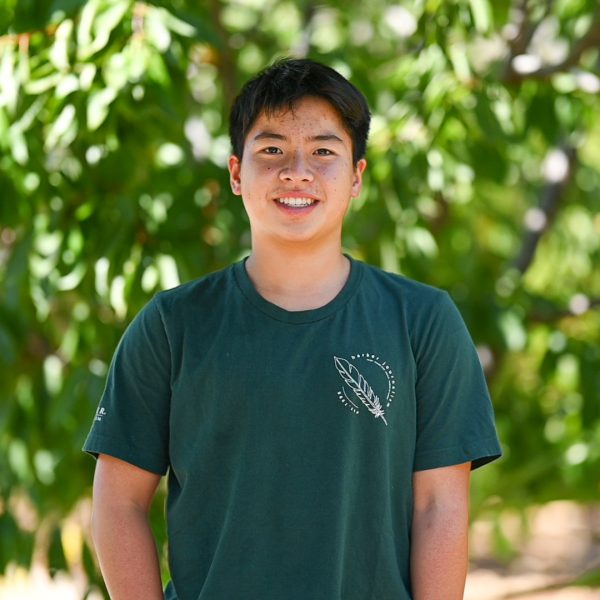
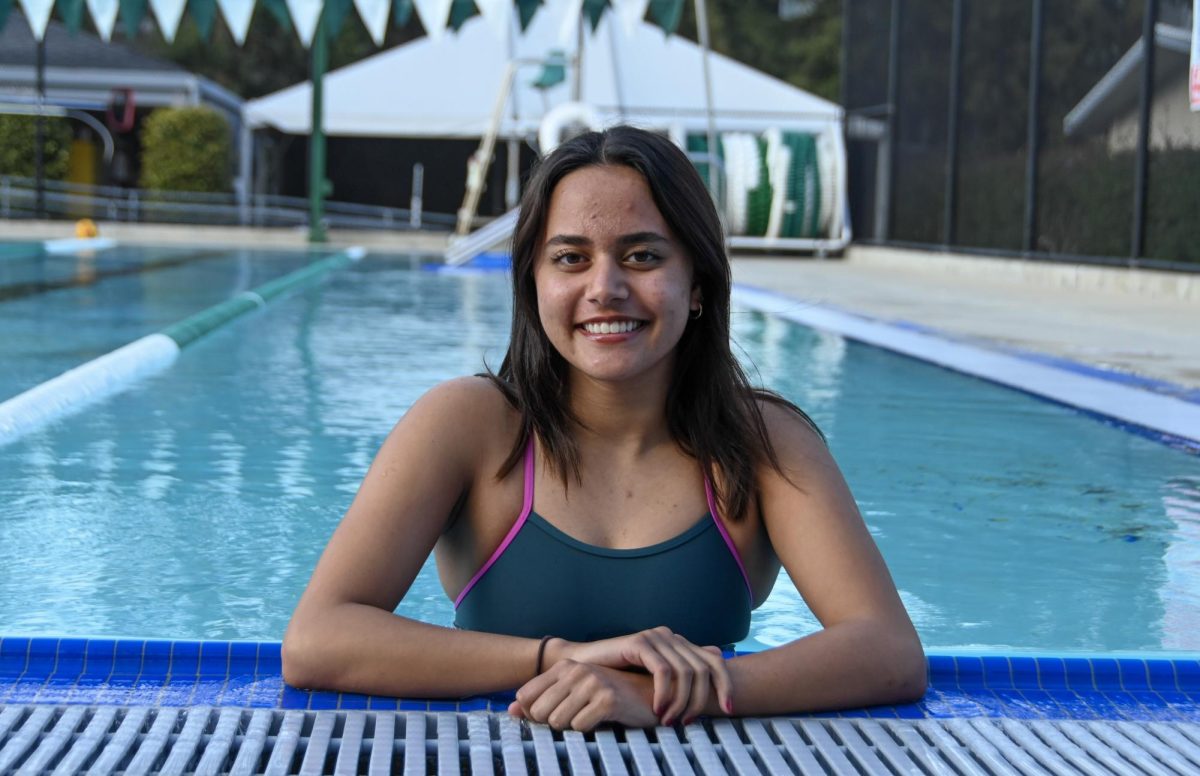
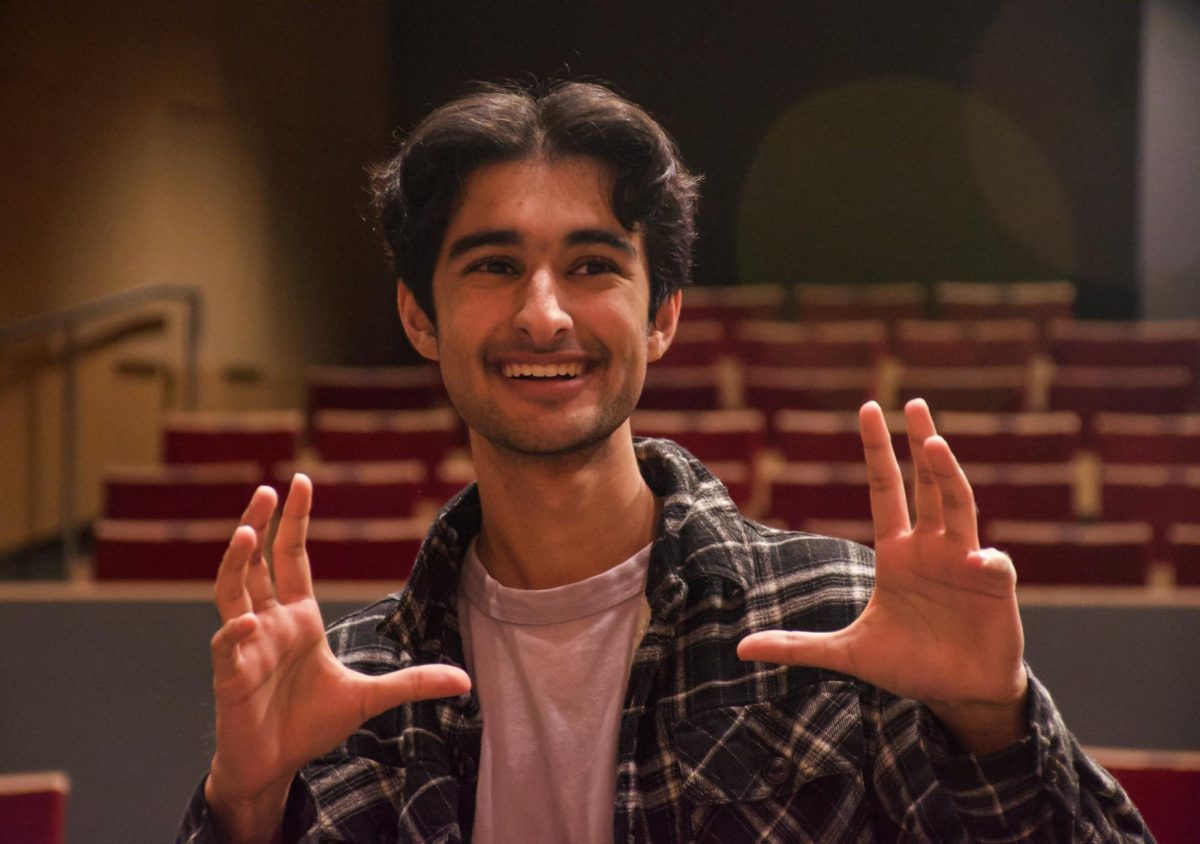
![“I wasn't discouraged by some of the obstacles we faced. I learned a lot from the leadership. I found that different people need different ways of receiving feedback — you can't [just] tell them to do something and expect the best. [Some] people needed more incentive. A large part of my role was to figure out what worked for everyone and to figure out how to lead all these separate individuals as a team,” Suhana Bhandare (’26) said.](https://harkeraquila.com/wp-content/uploads/2026/06/SuhanaBhandare_JasmineHansra-1-1200x798.jpg)
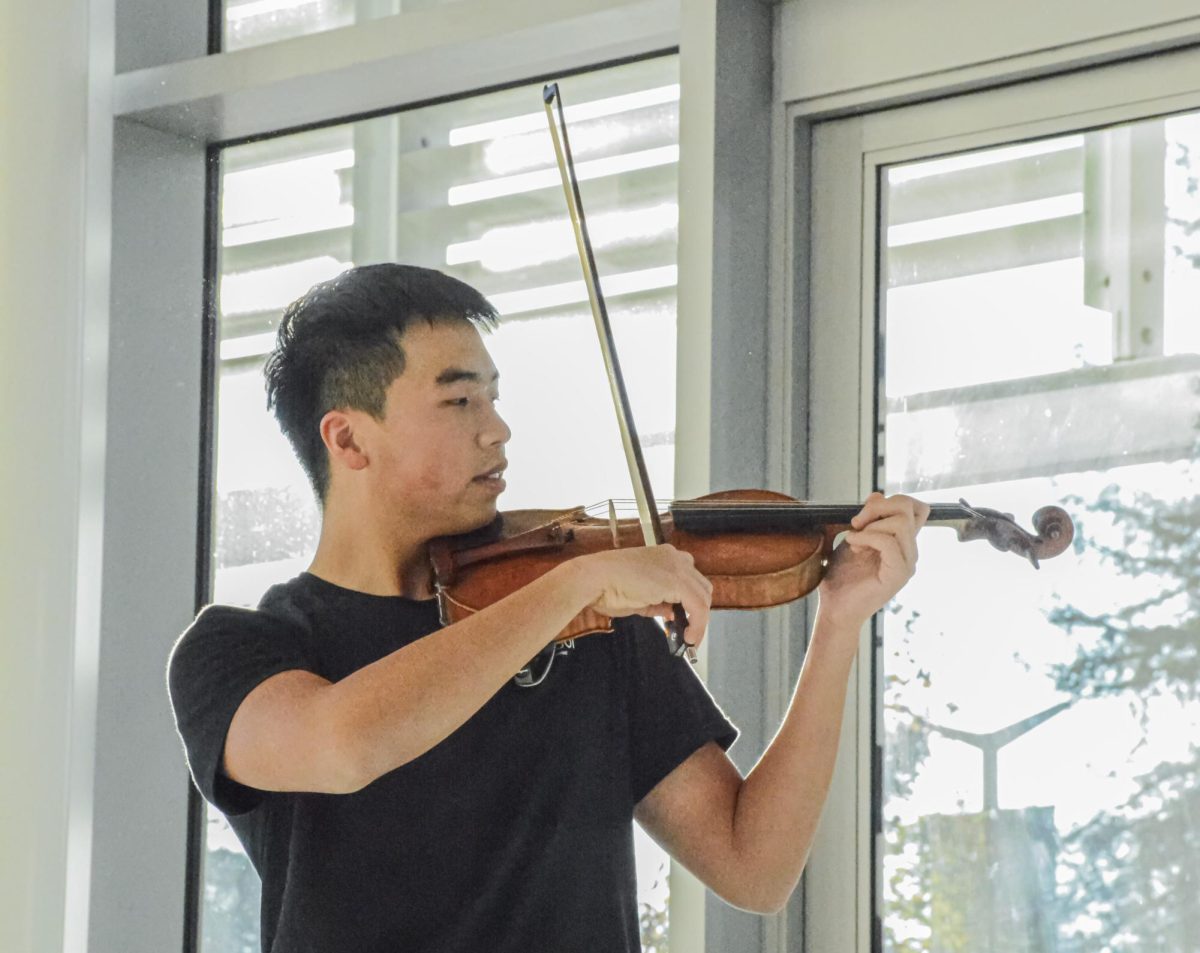
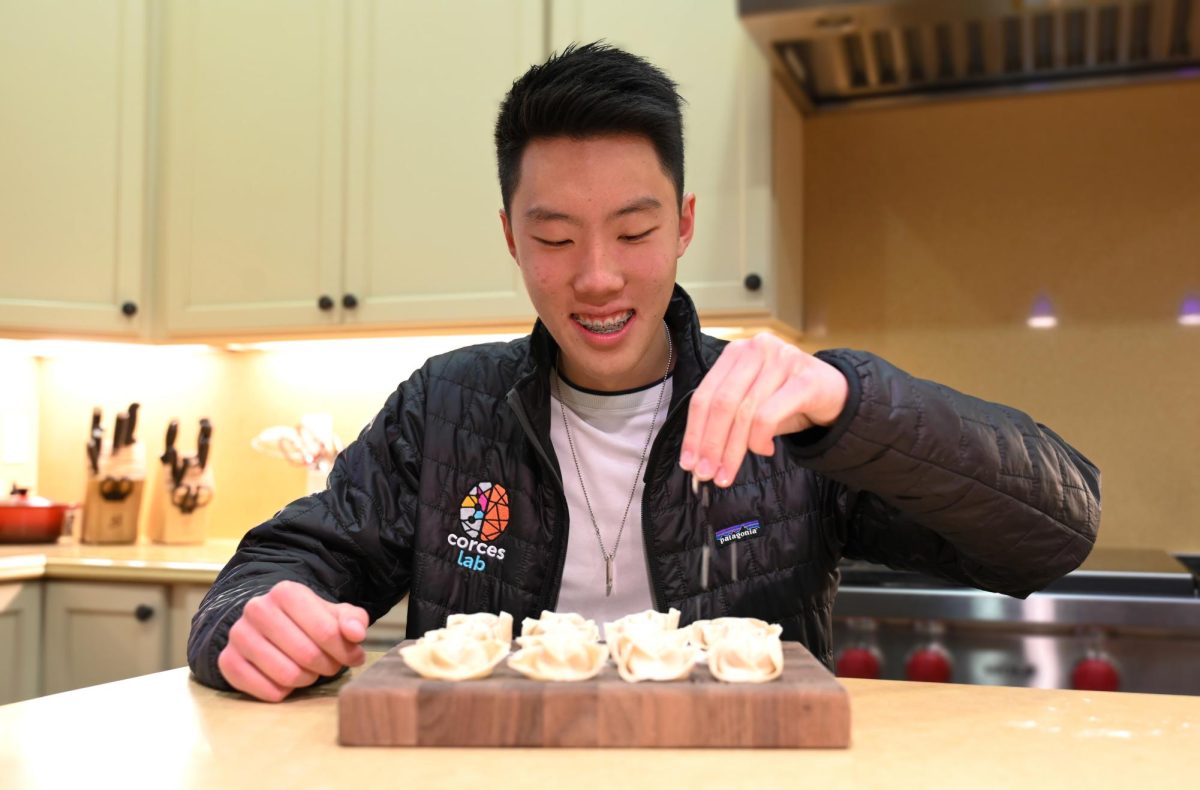
![“This is actually from Randy Pausch Randy P. Brick: ‘Walls are there for a reason. You have to show how much you want to overcome them.’ You have to show how much you want something. That's what I've always been able to do with tennis, Link Crew and getting that internship [with Kushy Baby]. It’s important pushing through that — getting around that brick wall, climbing over it or clawing through it,” Yash Sachdeva (’26) said.](https://harkeraquila.com/wp-content/uploads/2026/05/YashSachdeva_RamBatchu-copy-1200x1002.jpg)


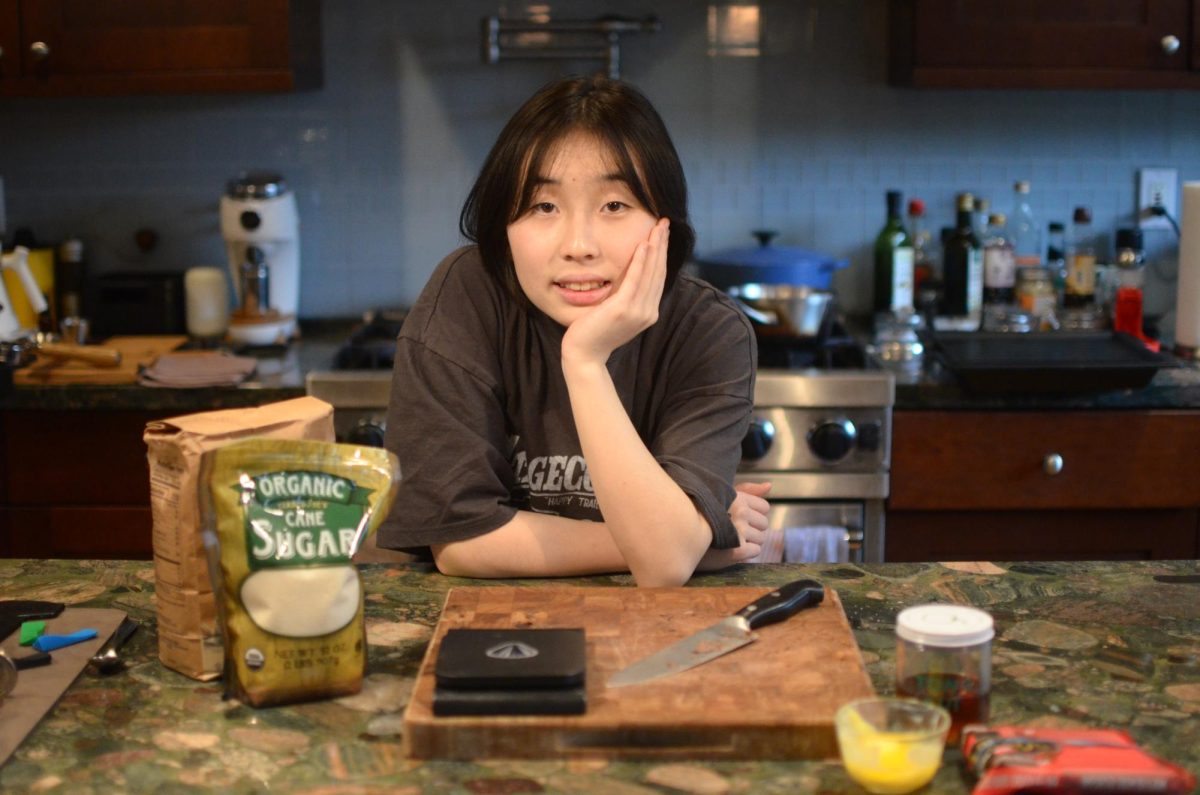


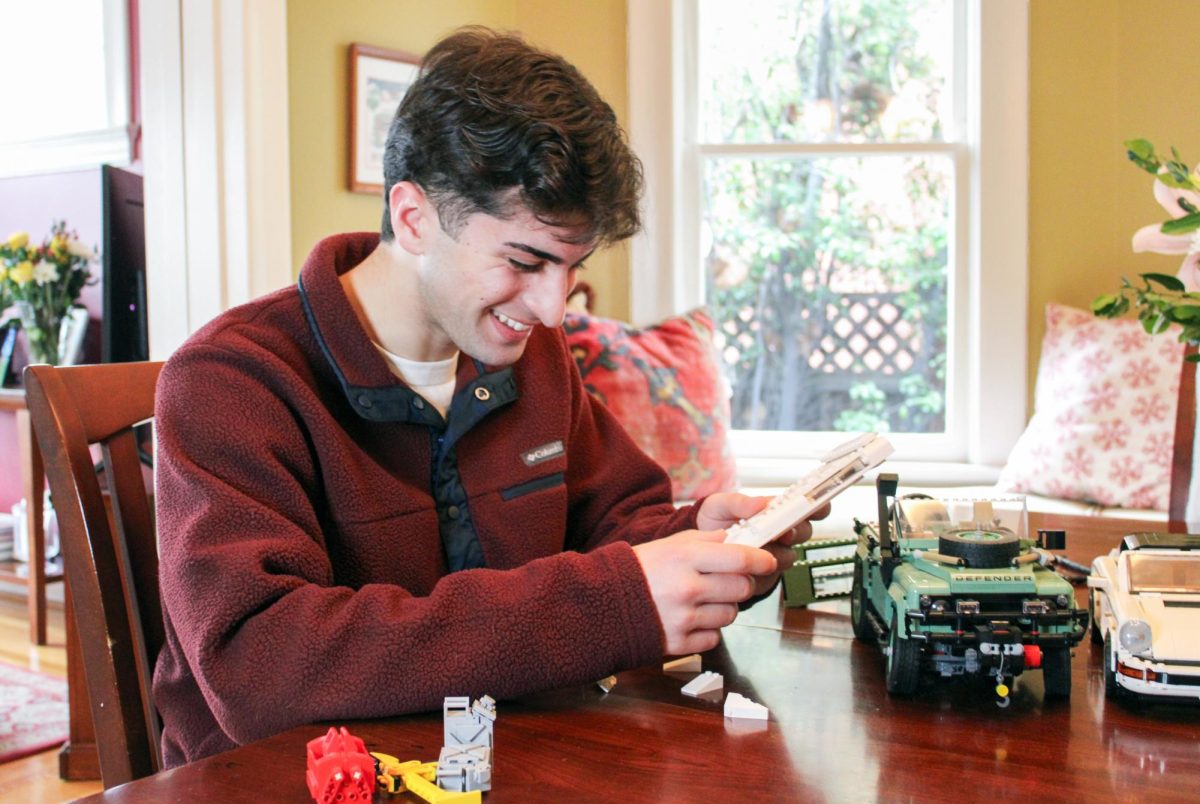

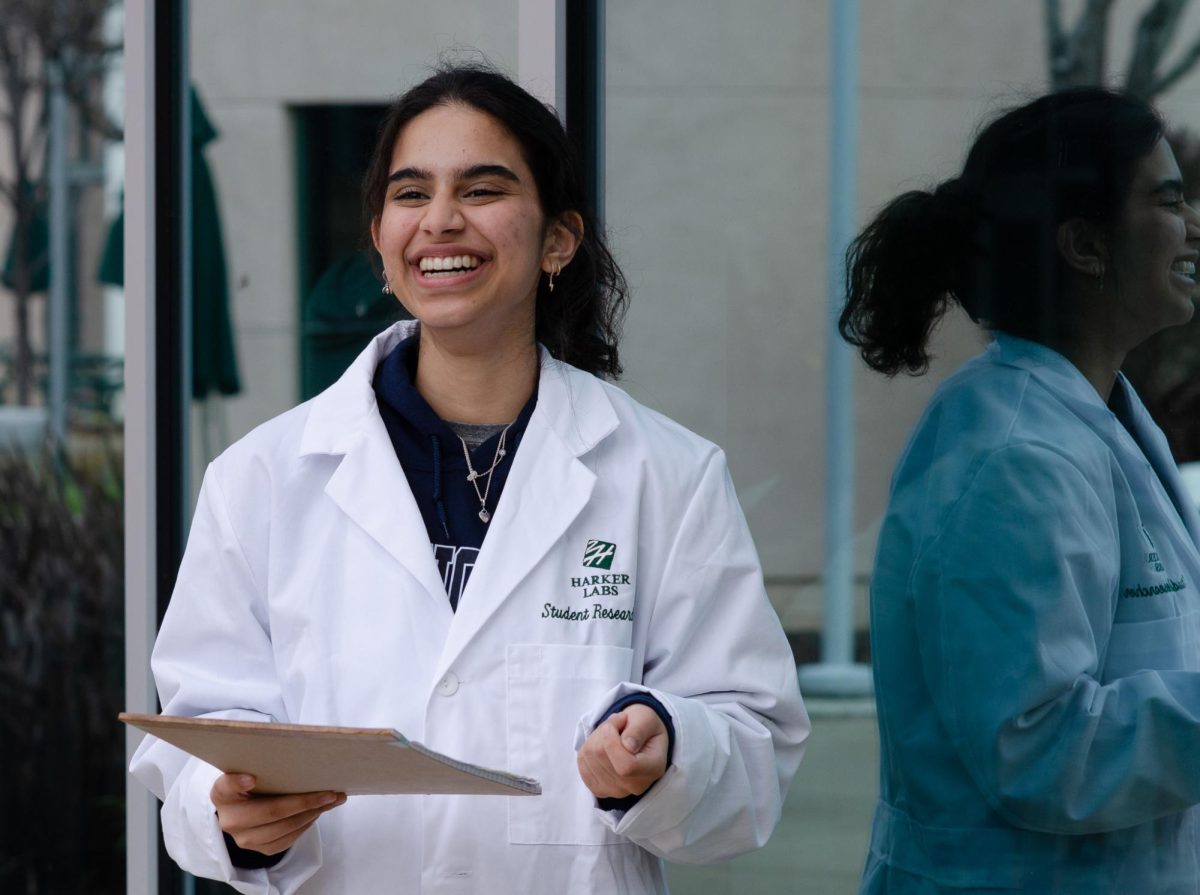
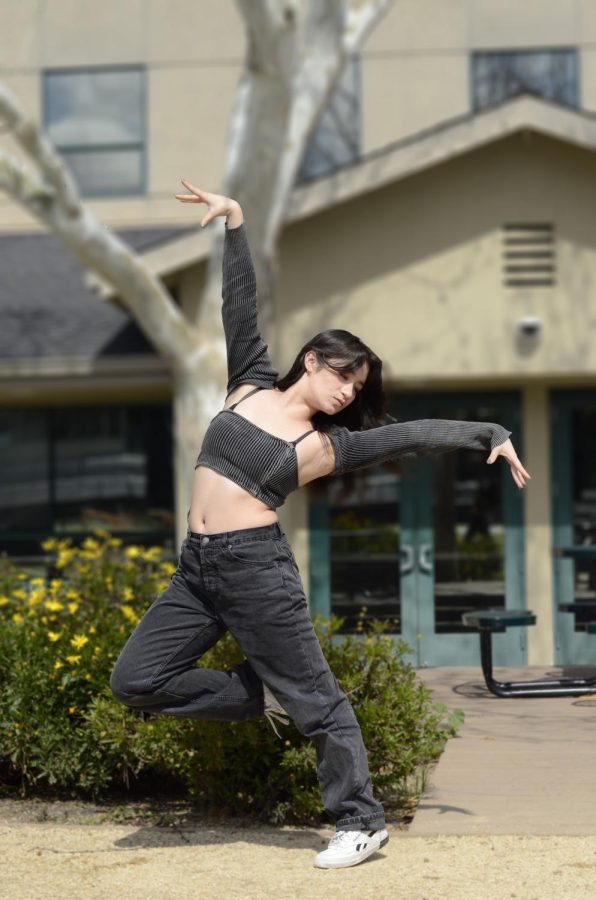

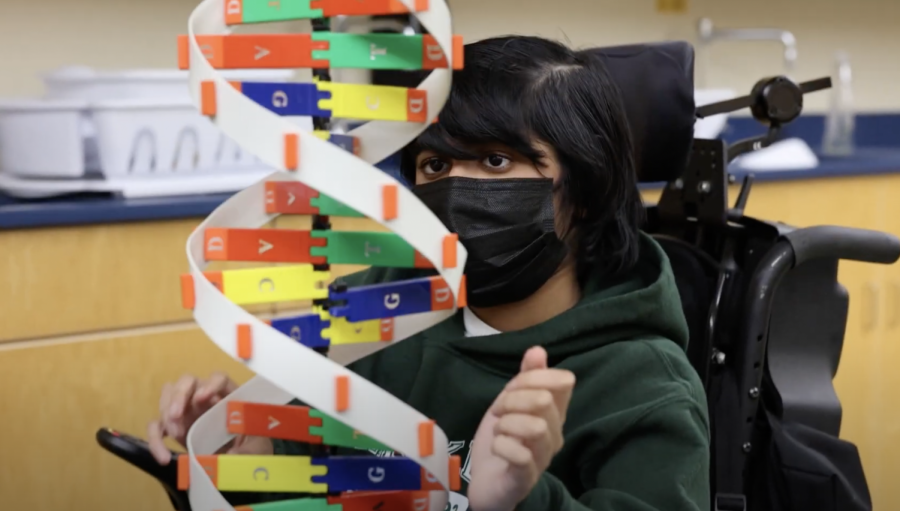
![“[Building nerf blasters] became this outlet of creativity for me that hasn't been matched by anything else. The process [of] making a build complete to your desire is such a painstakingly difficult process, but I've had to learn from [the skills needed from] soldering to proper painting. There's so many different options for everything, if you think about it, it exists. The best part is [that] if it doesn't exist, you can build it yourself," Ishaan Parate said.](https://harkeraquila.com/wp-content/uploads/2022/08/DSC_8149-900x604.jpg)
![“When I came into high school, I was ready to be a follower. But DECA was a game changer for me. It helped me overcome my fear of public speaking, and it's played such a major role in who I've become today. To be able to successfully lead a chapter of 150 students, an officer team and be one of the upperclassmen I once really admired is something I'm [really] proud of,” Anvitha Tummala ('21) said.](https://harkeraquila.com/wp-content/uploads/2021/07/Screen-Shot-2021-07-25-at-9.50.05-AM-900x594.png)

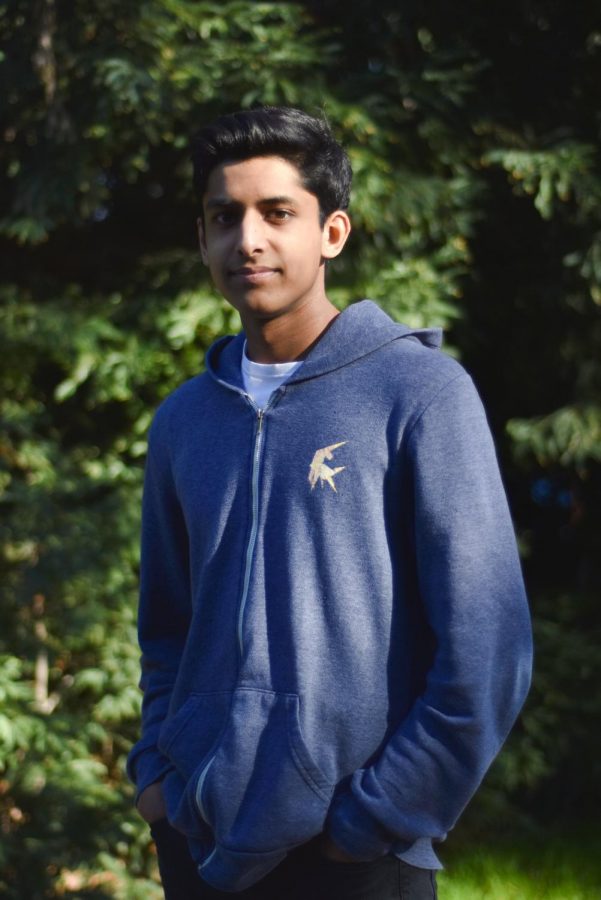

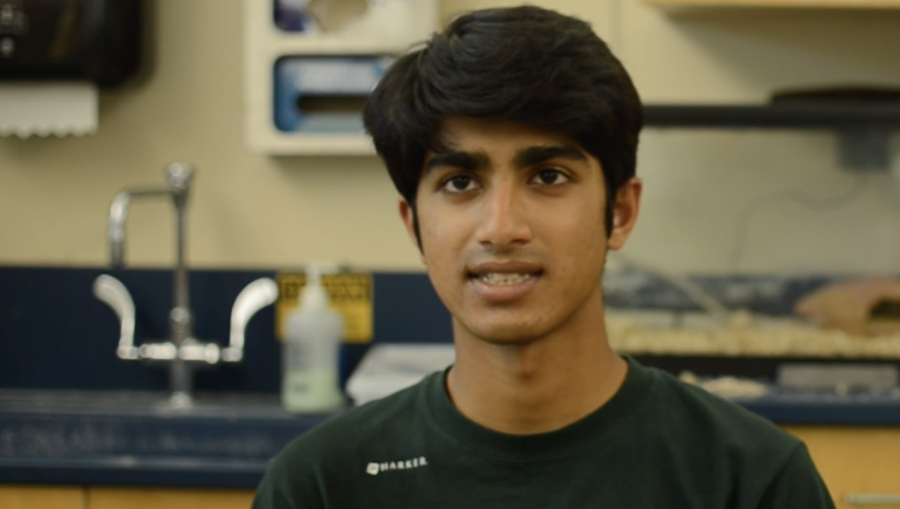
![“I think getting up in the morning and having a sense of purpose [is exciting]. I think without a certain amount of drive, life is kind of obsolete and mundane, and I think having that every single day is what makes each day unique and kind of makes life exciting,” Neymika Jain (12) said.](https://harkeraquila.com/wp-content/uploads/2017/06/Screen-Shot-2017-06-03-at-4.54.16-PM.png)

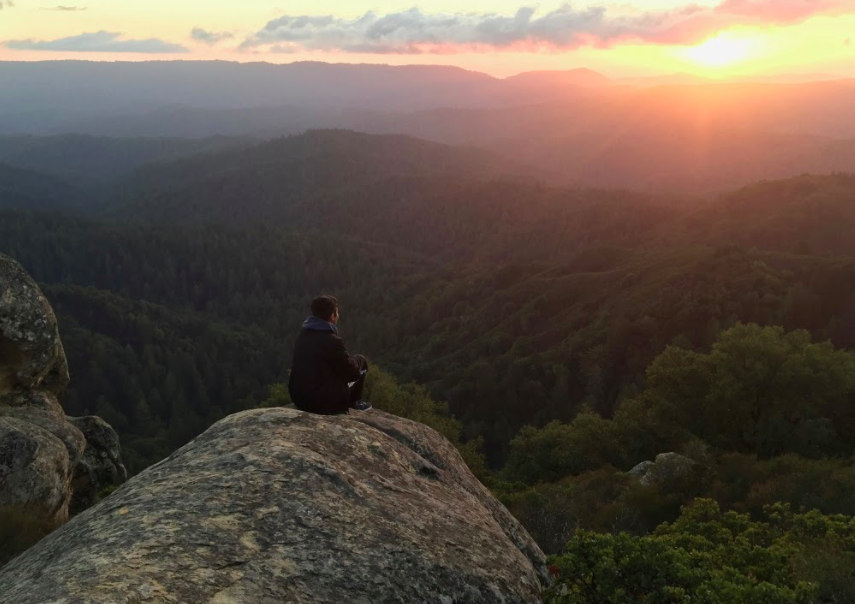
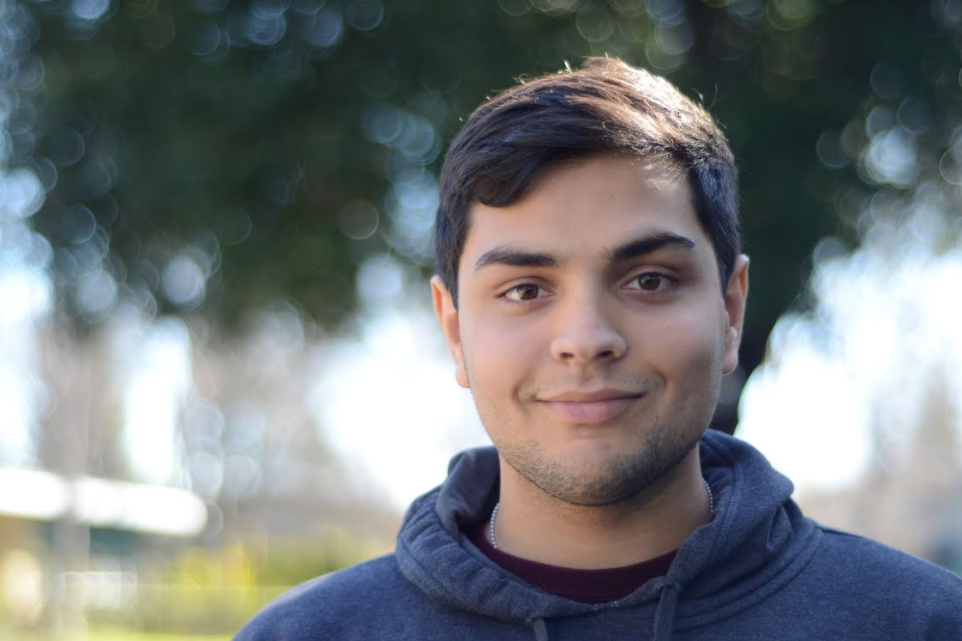
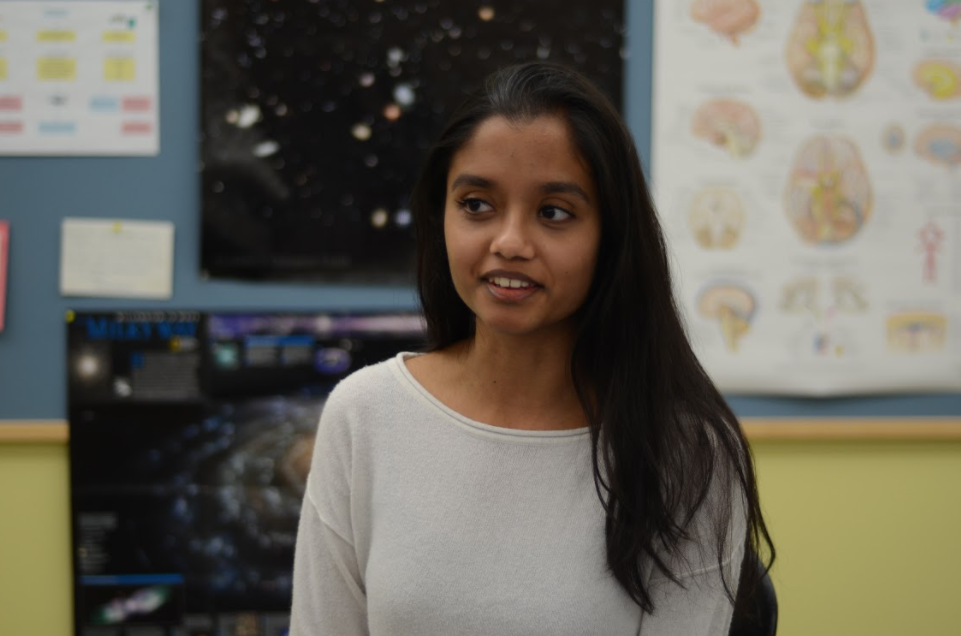
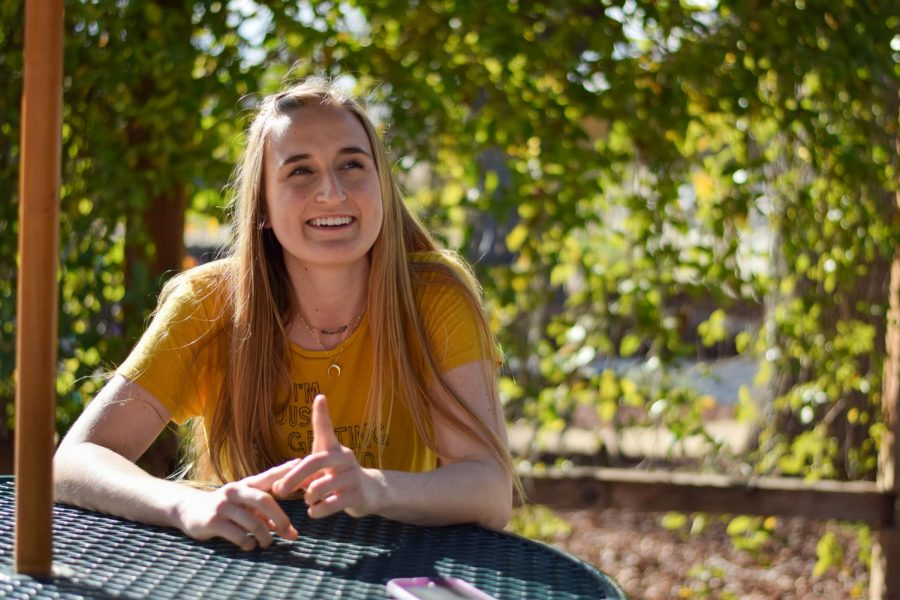
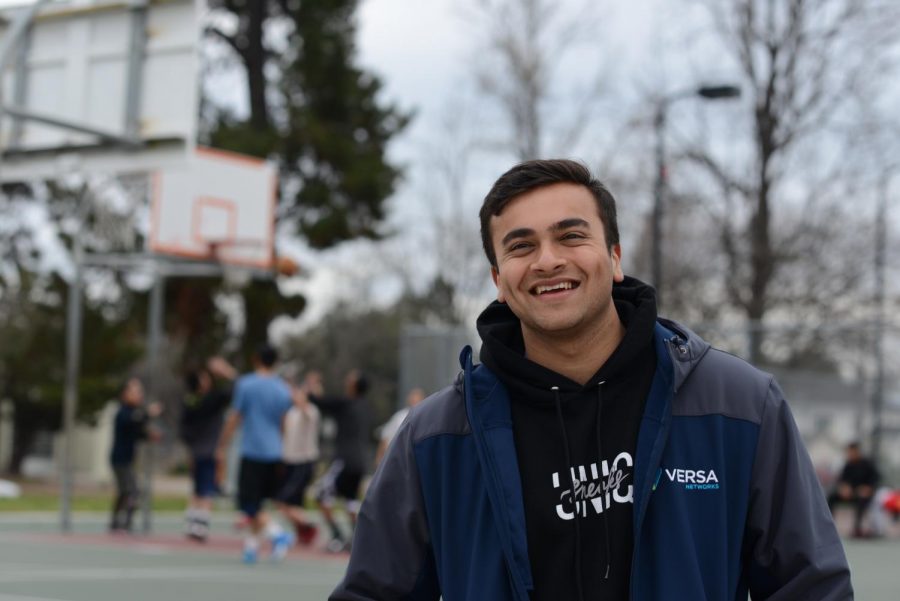
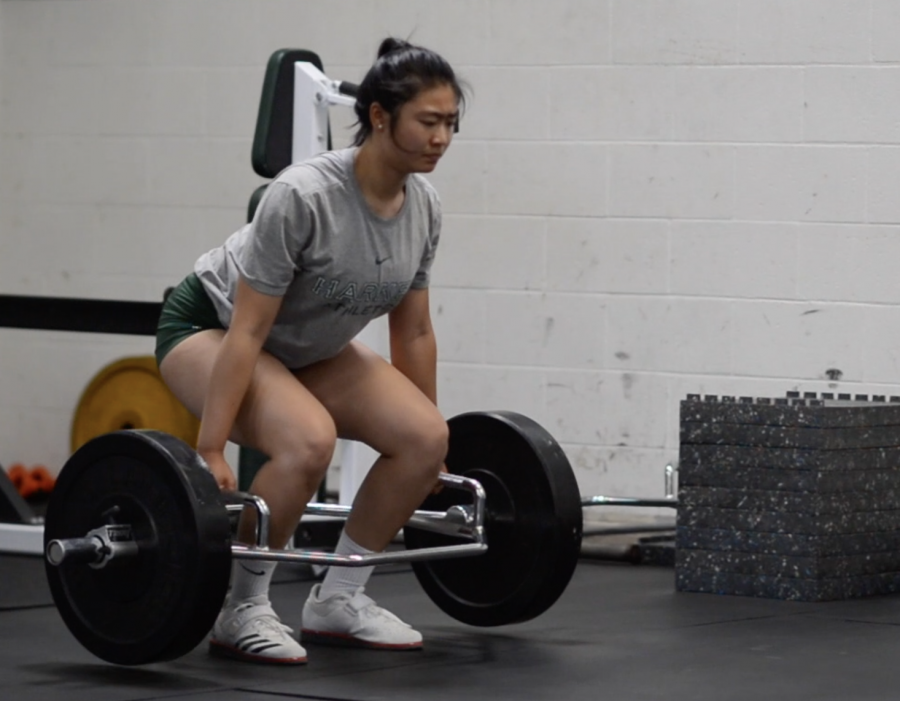
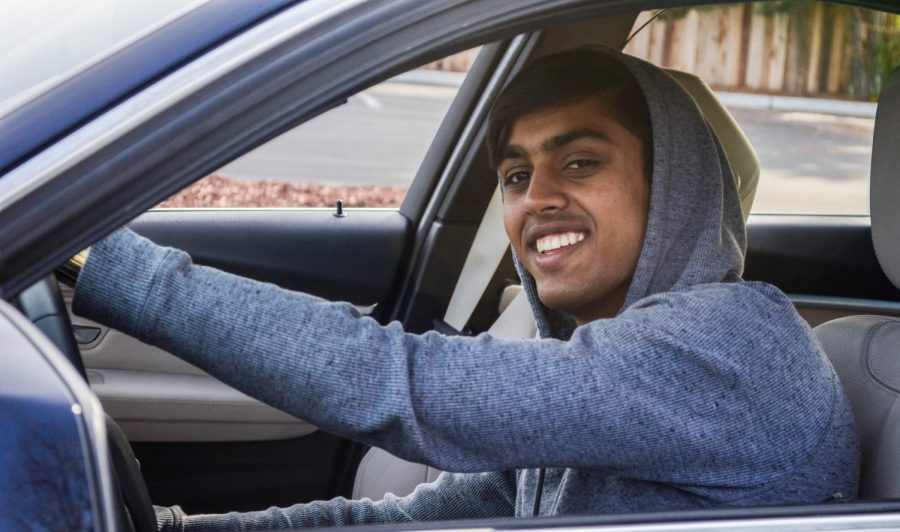
![“My slogan is ‘slow feet, don’t eat, and I’m hungry.’ You need to run fast to get where you are–you aren't going to get those championships if you aren't fast,” Angel Cervantes (12) said. “I want to do well in school on my tests and in track and win championships for my team. I live by that, [and] I can do that anywhere: in the classroom or on the field.”](https://harkeraquila.com/wp-content/uploads/2018/06/DSC5146-900x601.jpg)
![“[Volleyball has] taught me how to fall correctly, and another thing it taught is that you don’t have to be the best at something to be good at it. If you just hit the ball in a smart way, then it still scores points and you’re good at it. You could be a background player and still make a much bigger impact on the team than you would think,” Anya Gert (’20) said.](https://harkeraquila.com/wp-content/uploads/2020/06/AnnaGert_JinTuan_HoHPhotoEdited-600x900.jpeg)
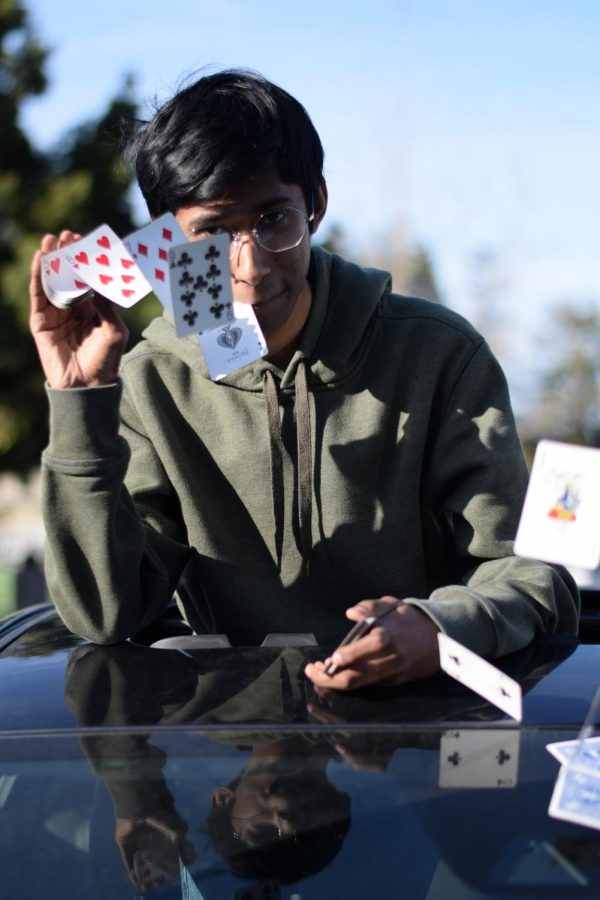
![“I'm not nearly there yet, but [my confidence has] definitely been getting better since I was pretty shy and timid coming into Harker my freshman year. I know that there's a lot of people that are really confident in what they do, and I really admire them. Everyone's so driven and that has really pushed me to kind of try to find my own place in high school and be more confident,” Alyssa Huang (’20) said.](https://harkeraquila.com/wp-content/uploads/2020/06/AlyssaHuang_EmilyChen_HoHPhoto-900x749.jpeg)

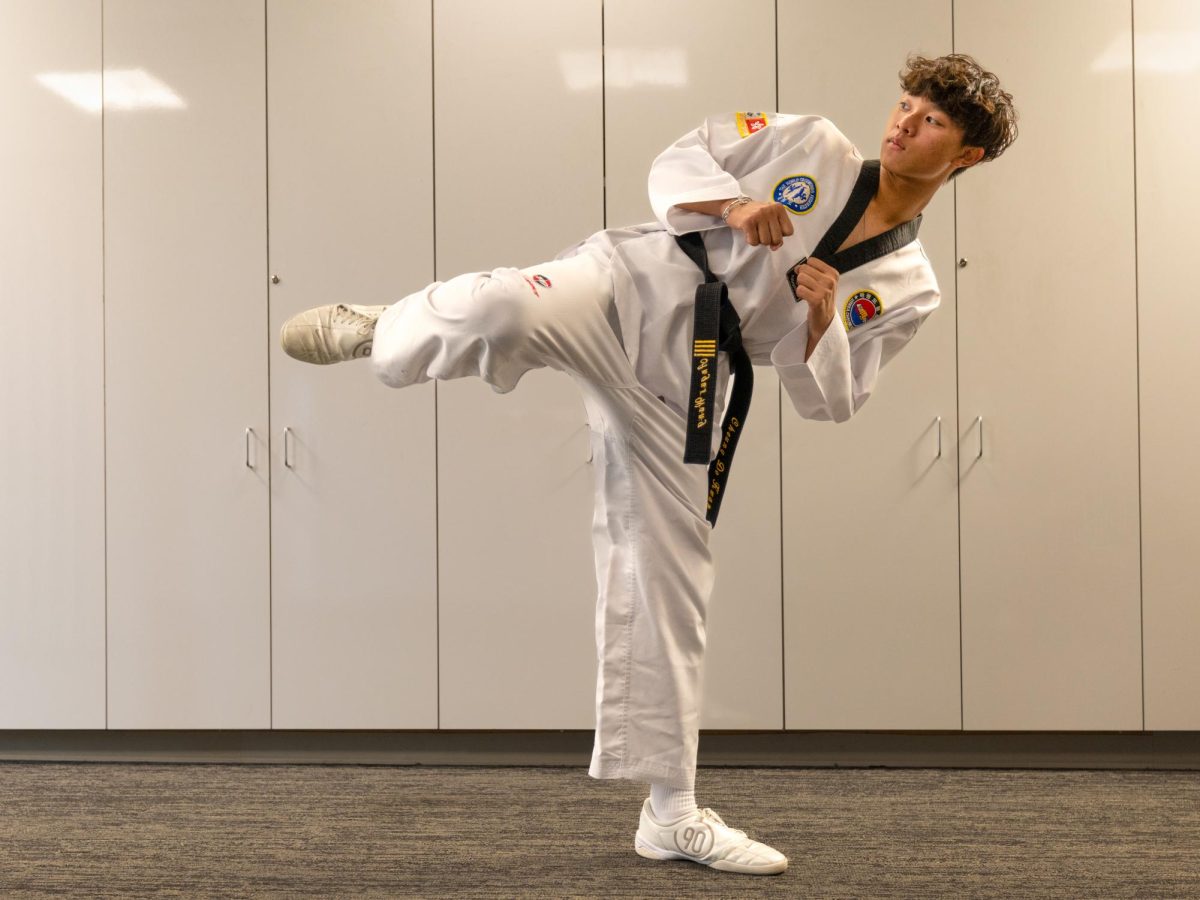
Sophomore Angus Wang plants his feet, eyes locked on the target in front of him. He launches himself into the air, driving his foot forward into a flawless triple kick. Three wooden boards splinter down the middle with a crack and rain fragments onto the mat before his feet even touch the ground.
“To level up in a test, you have to know your kicks,” Angus said. “I was really happy then because it took ages to perfect it. I had to make sure I could do it down the middle for the clean break, not just something where it’s off the side and the board kind of breaks.”
To take his taekwondo exam and progress from his previous rank, Angus flew back to his childhood training ground last year at the Cheung Do Kwan martial arts school in Hong Kong. Passing the hour-long test earned him his fourth Dan black belt, an elite rank that places him at the top of practitioners globally for his age. The rank usually requires more than a decade of training and high physical and mental requirements, which Angus completed when he was 15.
The rank is a benchmark of a martial arts journey that began when he was just 4 years old. Dominating local competitions during his youth in Hong Kong, Angus captured the number-one ranking for his age group within the World Taekwondo Federation organization.
His formal taekwondo instructor master Billy Woo witnessed this drive firsthand as Angus tackled increasingly difficult milestones.
“Angus’s journey in taekwondo is very inspiring,” Woo said. “From beginner to now, he never quit. Despite the many challenges he faced, he stayed strong and resilient. He is disciplined and mentally strong now, ready to take on any challenge that comes his way.”
In competitions, taekwondo operates on a point system: a punch to the chest is one point, a standard head kick is three, and a spinning head kick is five. Standing over six feet tall, Angus leans on his size to demonstrate striking power. Aiming for knockout blows, he embraces a calculated, high-risk strategy in the final minutes of tight matches.
“My style of form in taekwondo is really powerful,” Angus said. “It’s about striking and getting close, going for the hits rather than going for small points. I do a lot of baiting, so I’d let myself get hit a few times, and as I’m getting hit, I go for the attack. I don’t really feel it — I can take the hit.”
Reaching the top tier of a full-contact sport required a massive sacrifice of his time and health. Before moving to the U.S. in ninth grade, much of Angus’ life revolved around the training hall. On average, his practices lasted three hours, with various sparring sessions and in-game scenarios with coaches.
These days, Angus trains independently at home with a heavy bag setup to keep his striking sharp. While not competing locally, he extends his competitive drive onto the Harker soccer team, inspired by professional players who mirror his aggressive style.
“One of the soccer players I draw inspiration from is Sergio Ramos,” Angus said. “His soccer ability is really aggressive and similar to my taekwondo. He’s also really disciplined. The way he plays — aggressive, fearless, never backing down — is exactly how taekwondo trained me. In taekwondo, you can’t second-guess yourself, or you’ve already lost.”
His taekwondo philosophy is also centered around giving back. Angus volunteered at the Chung Do Kwan, tutoring martial artists of varying skill levels. Though frequently guiding lower-belt students older and physically larger than him, he was driven by a desire to help peers experience the joy of mastery.
“I believed that I could become better through teaching others,” Angus said. “It was really beneficial to not just me, but obviously the other people as well. I wanted to give back and see someone else have the joy of accomplishing something I was able to accomplish.”
Even from across the globe, this sense of loyalty and connection has left a lasting impression on the peers he trained alongside.
“Angus is very tenacious,” childhood friend from Hong Kong Steve Chan said. “Since he has moved to the United States, he still believes in creating time to spend with his peers back in Hong Kong. Through the use of his passion for taekwondo and studious mind, I’ve still been able to feel deeply connected with him.”
Angus aims to integrate his mentorship into his community work in America. Through the Bright Rise Foundation, a nonprofit he started with soccer teammates, he assists underprivileged students with tutoring and education.
“The five tenets of taekwondo are self-control, perseverance, integrity, courtesy and indomitable spirit,” Angus said. “You can apply these to your life skills, and that helps, especially in high school. As somebody who is a first-generation American, other kids who need help deserve that, and I can use my fundamental lessons from Taekwondo to help them through the Bright Rise Foundation.”
Incorporating these principles into his daily routine has transformed how Angus handles person and academic pressure.
“Taekwondo taught me not to give up, especially when you’re injured or facing a setback, because you can get to really high levels if you push through,” Angus said. “You stay disciplined, keep training and trust the process.”


![Sophomore Jessie Cao strikes a pose. “That feeling when you get a new skill, when you feel yourself improving on something you struggle with or when you overcome a mental block [is] really rewarding,” Jessie said. “As long as you push yourself and think you're trying your hardest, that's what matters the most.”](https://harkeraquila.com/wp-content/uploads/2025/10/250918_jessiecaoapex_AshleyM_1-2-727x1200.jpg)
![Sai Kaneshiro (10) warms up her swinging technique during a practice. “I try to not think about [the pressure] too much and just take it one day at a time, one tournament at a time,” Sai said.](https://harkeraquila.com/wp-content/uploads/2025/08/sai-kaneshiro-10-ashley-mo-min-2-e1756584218934-981x1200.jpg)