![“I wasn't discouraged by some of the obstacles we faced. I learned a lot from the leadership. I found that different people need different ways of receiving feedback — you can't [just] tell them to do something and expect the best. [Some] people needed more incentive. A large part of my role was to figure out what worked for everyone and to figure out how to lead all these separate individuals as a team,” Suhana Bhandare (’26) said.](https://harkeraquila.com/wp-content/uploads/2026/06/SuhanaBhandare_JasmineHansra-1-1200x798.jpg)
![“This is actually from Randy Pausch Randy P. Brick: ‘Walls are there for a reason. You have to show how much you want to overcome them.’ You have to show how much you want something. That's what I've always been able to do with tennis, Link Crew and getting that internship [with Kushy Baby]. It’s important pushing through that — getting around that brick wall, climbing over it or clawing through it,” Yash Sachdeva (’26) said.](https://harkeraquila.com/wp-content/uploads/2026/05/YashSachdeva_RamBatchu-copy-1200x1002.jpg)






![“[Building nerf blasters] became this outlet of creativity for me that hasn't been matched by anything else. The process [of] making a build complete to your desire is such a painstakingly difficult process, but I've had to learn from [the skills needed from] soldering to proper painting. There's so many different options for everything, if you think about it, it exists. The best part is [that] if it doesn't exist, you can build it yourself," Ishaan Parate said.](https://harkeraquila.com/wp-content/uploads/2022/08/DSC_8149-900x604.jpg)
![“When I came into high school, I was ready to be a follower. But DECA was a game changer for me. It helped me overcome my fear of public speaking, and it's played such a major role in who I've become today. To be able to successfully lead a chapter of 150 students, an officer team and be one of the upperclassmen I once really admired is something I'm [really] proud of,” Anvitha Tummala ('21) said.](https://harkeraquila.com/wp-content/uploads/2021/07/Screen-Shot-2021-07-25-at-9.50.05-AM-900x594.png)

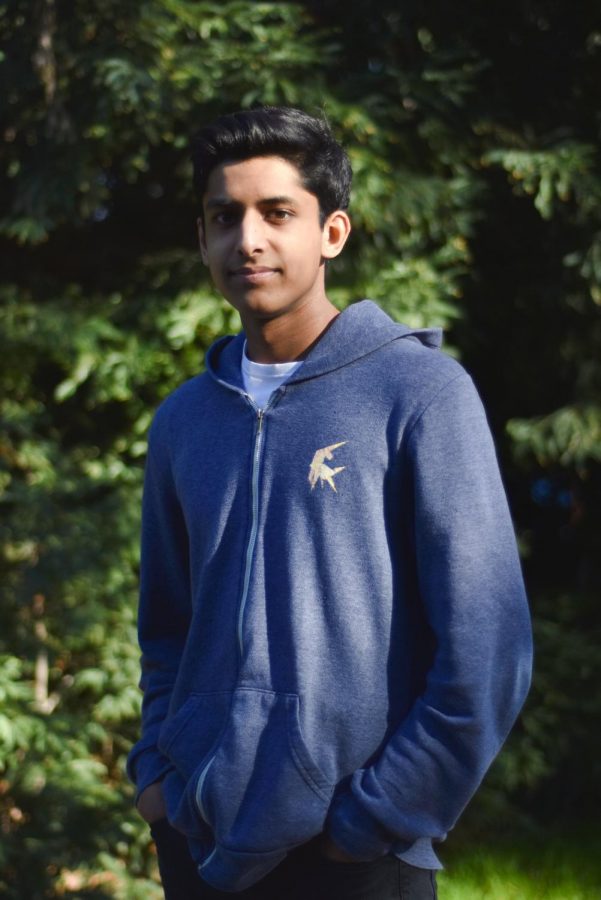

![“I think getting up in the morning and having a sense of purpose [is exciting]. I think without a certain amount of drive, life is kind of obsolete and mundane, and I think having that every single day is what makes each day unique and kind of makes life exciting,” Neymika Jain (12) said.](https://harkeraquila.com/wp-content/uploads/2017/06/Screen-Shot-2017-06-03-at-4.54.16-PM.png)
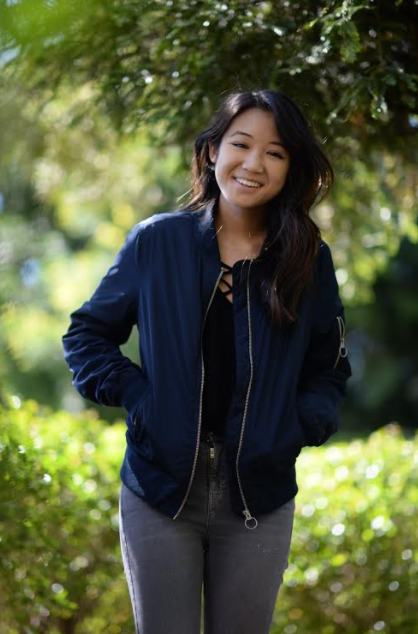

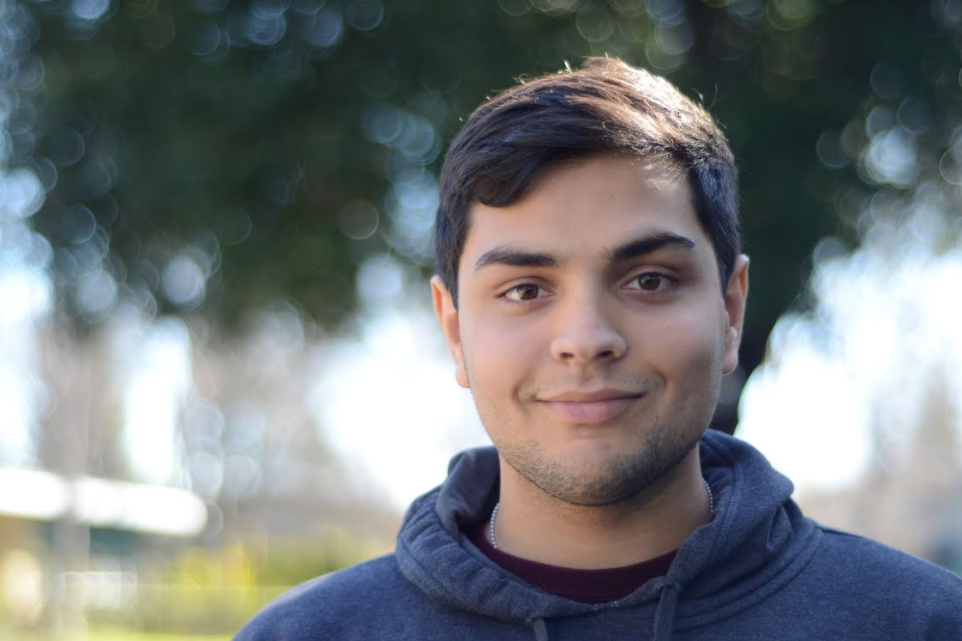
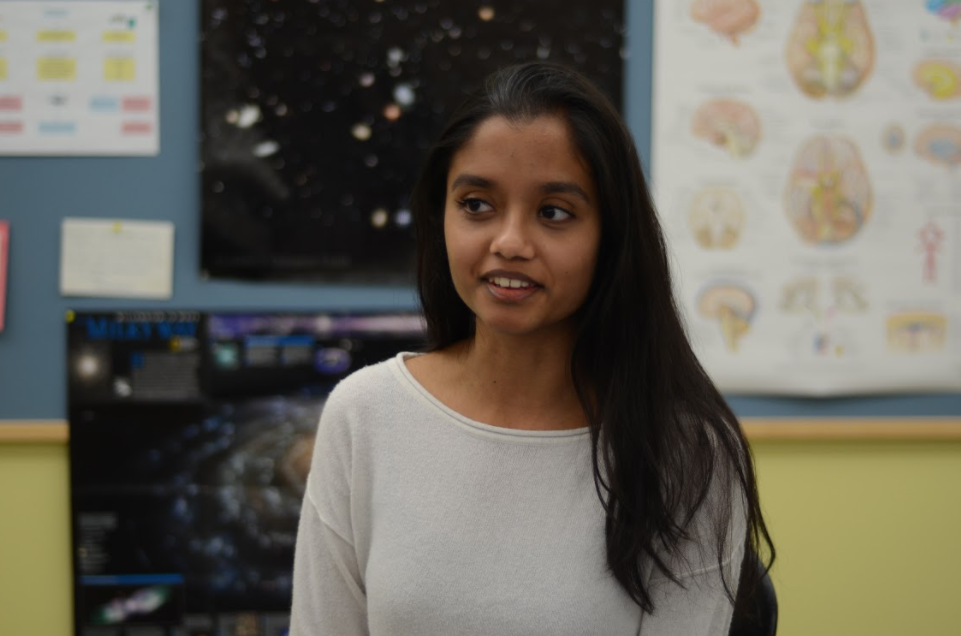

![“My slogan is ‘slow feet, don’t eat, and I’m hungry.’ You need to run fast to get where you are–you aren't going to get those championships if you aren't fast,” Angel Cervantes (12) said. “I want to do well in school on my tests and in track and win championships for my team. I live by that, [and] I can do that anywhere: in the classroom or on the field.”](https://harkeraquila.com/wp-content/uploads/2018/06/DSC5146-900x601.jpg)
![“[Volleyball has] taught me how to fall correctly, and another thing it taught is that you don’t have to be the best at something to be good at it. If you just hit the ball in a smart way, then it still scores points and you’re good at it. You could be a background player and still make a much bigger impact on the team than you would think,” Anya Gert (’20) said.](https://harkeraquila.com/wp-content/uploads/2020/06/AnnaGert_JinTuan_HoHPhotoEdited-600x900.jpeg)
![“I'm not nearly there yet, but [my confidence has] definitely been getting better since I was pretty shy and timid coming into Harker my freshman year. I know that there's a lot of people that are really confident in what they do, and I really admire them. Everyone's so driven and that has really pushed me to kind of try to find my own place in high school and be more confident,” Alyssa Huang (’20) said.](https://harkeraquila.com/wp-content/uploads/2020/06/AlyssaHuang_EmilyChen_HoHPhoto-900x749.jpeg)


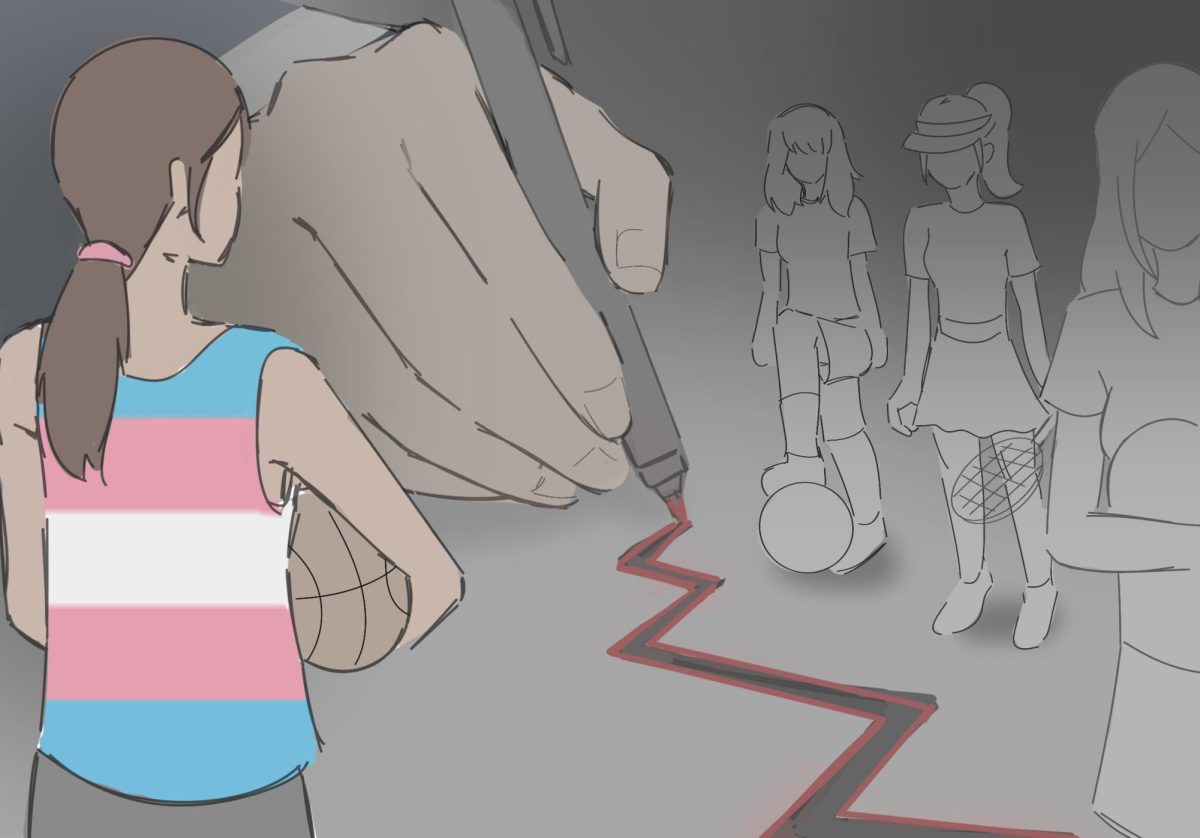
President Donald Trump signed an executive order banning transgender athletes from joining and competing on women’s sports teams on the third day of his term. Titled “Keeping Men Out of Women’s Sports,” this order allows agencies to require federally funded institutions to define athletes’ genders by their birth-assigned sex.
Transgender affinity group (TAG) co-president Fern Biswas (12) expressed concerns about the executive order, pointing out its potential broader implications.
“I noticed that the executive order was a lot more than making women’s sports equitable,” Fern said. “It had this additional layer of directly attacking trans people. Right now we’re discussing this in the context of banning trans women from women’s supports, but the president did not use the term ‘trans women.’ He used the term ‘men’, and directly invalidated the identities of trans women.”
The order threatens to impact high school and college athletes, and states decide whether to follow the president’s directions. Located in San Jose, Harker follows the California Interscholastic Federation policy. As of Feb. 7, the CIF stands firmly in abiding by state laws rather than the new federal order.
CIF bylaw section 505 emphasizes equal opportunity for all students, stating that their policies must ensure fairness regardless of factors including sex, gender identity or sexual orientation.
According to Fern, while over 30 upper school students registered for TAG, fewer than ten actively participate. Trump’s executive order targeting transgender athletes can create additional barriers to Harker’s transgender students’ feeling of inclusivity.
Laws beyond Harker and California intensify concerns about transgender individuals’ safety. New Mexico laws sate that student-athletes must compete as the gender listed on their birth certificate and only allow gender changes after 18 years old. Shortly after Trump’s executive order, the National Collegiate Athletic Association also changed its policies to ban student-athletes assigned male at birth from competing on any women’s team.
With the increasing complexity of sports policies across the nation, biology teacher and TAG adviser Eric Johnson affirmed the importance for transgender students to prepare for differing regulations.
“When my students leave Harker, they’ll see the future happening in front of us and will need to learn to protect themselves,” Johnson said. “Even now, a high school student could be doing club sports and traveling to a state that has laws different from California. So, let’s first strengthen ourselves here at Harker.”
Despite the current CIF policy, California’s position still lacks absolute clarity, as democratic governor Gavin Newsom agreed with Trump’s new executive order. While studies have shown that transgender women maintain certain muscular advantage over their cisgendered peers, policy makers that propose this as evidence for banning transgender athletes ignores the greater nuances.
Johnson noted that the current discussion regarding fairness also overlooks another demographic: intersex individuals.
“Science should not be used as a political tool,” Johnson said. “Science says that intersex people make up over 1% of the population, and trans people are almost 1% of the US population. We need to acknowledge that gender diversity. In science, you get a huge spectrum of biological sex. If we ground ourselves in the science, I’m confident that science doesn’t support discrimination.”
Because gender is more than a simple binary categorization, controversies have also risen for cisgender athletes. During the 2024 Olympics, Algerian boxer Imane Khelif faced accusations for testosterone levels, highlighting that the problem stems not from scientific roots but rather from social discrimination.
Varsity girls basketball player Finley Ho (10) views the order as unnecessary as it potentially disregards important considerations about fairness in sports.
“I just see it as a way to increase transphobia,” Finley said. “If you’re going to ban transgender women from women’s sports because of higher testosterone levels, what about cis women who naturally have high testosterone? I feel like this is just starting problems for no reason.”
While discussions about maintaining fair competition in athletics are ongoing, this ban immediately inflicts harm among the sports community by threatening greater rejection of transgender rights.
Varsity boys volleyball player Aydin Mesic (9) shared his perspective on the order.
“I sympathize with the transgender community because I believe everyone should be allowed to play their game,” Aydin said. “Not allowing them to play takes away that respect from their community. They should be a part of the conversation so that they can feel included and safe. I understand that there are two sides to this argument, but this isn’t the right resolution.”
The “Keeping Men Out of Women’s Sports” order will likely remain in effect throughout Trump’s presidency. Though this executive order may be overturned after his term, gender identity still lacks constitutional protection, allowing the continuation of discrimination against transgender individuals. Fern proposed steps forward and emphasized the importance of advocacy.
“I’ve seen many of my transgender friends, and myself also, feel increasingly insecure in our identities,” Fern said. “We feel attacked because now the federal government no longer recognizes us as valid. The best we can do is petition our political representatives and work to make sure that we are actively validating the identities of trans individuals.”