![“I wasn't discouraged by some of the obstacles we faced. I learned a lot from the leadership. I found that different people need different ways of receiving feedback — you can't [just] tell them to do something and expect the best. [Some] people needed more incentive. A large part of my role was to figure out what worked for everyone and to figure out how to lead all these separate individuals as a team,” Suhana Bhandare (’26) said.](https://harkeraquila.com/wp-content/uploads/2026/06/SuhanaBhandare_JasmineHansra-1-1200x798.jpg)

![“This is actually from Randy Pausch Randy P. Brick: ‘Walls are there for a reason. You have to show how much you want to overcome them.’ You have to show how much you want something. That's what I've always been able to do with tennis, Link Crew and getting that internship [with Kushy Baby]. It’s important pushing through that — getting around that brick wall, climbing over it or clawing through it,” Yash Sachdeva (’26) said.](https://harkeraquila.com/wp-content/uploads/2026/05/YashSachdeva_RamBatchu-copy-1200x1002.jpg)











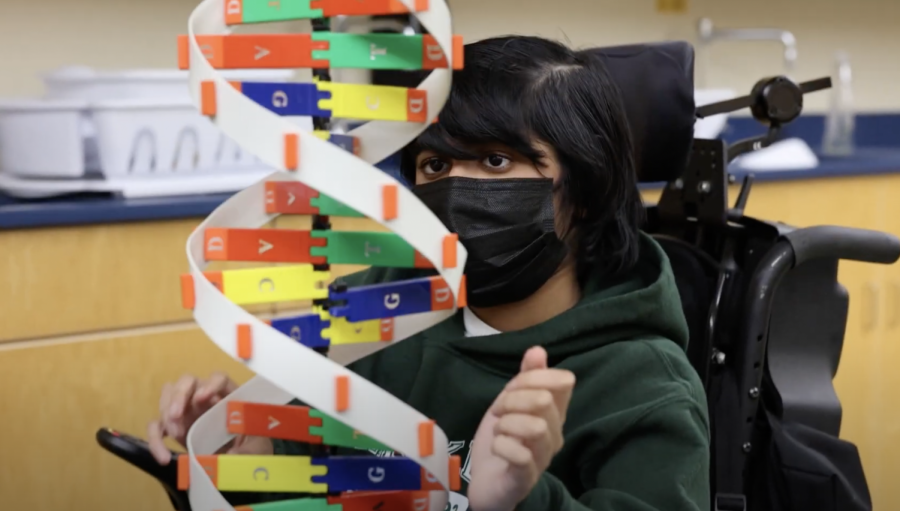
![“[Building nerf blasters] became this outlet of creativity for me that hasn't been matched by anything else. The process [of] making a build complete to your desire is such a painstakingly difficult process, but I've had to learn from [the skills needed from] soldering to proper painting. There's so many different options for everything, if you think about it, it exists. The best part is [that] if it doesn't exist, you can build it yourself," Ishaan Parate said.](https://harkeraquila.com/wp-content/uploads/2022/08/DSC_8149-900x604.jpg)
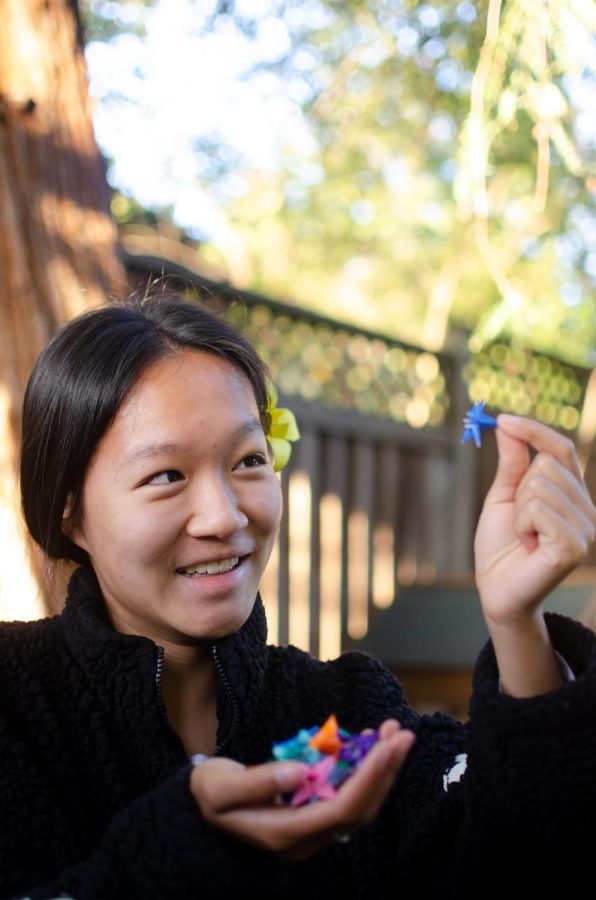


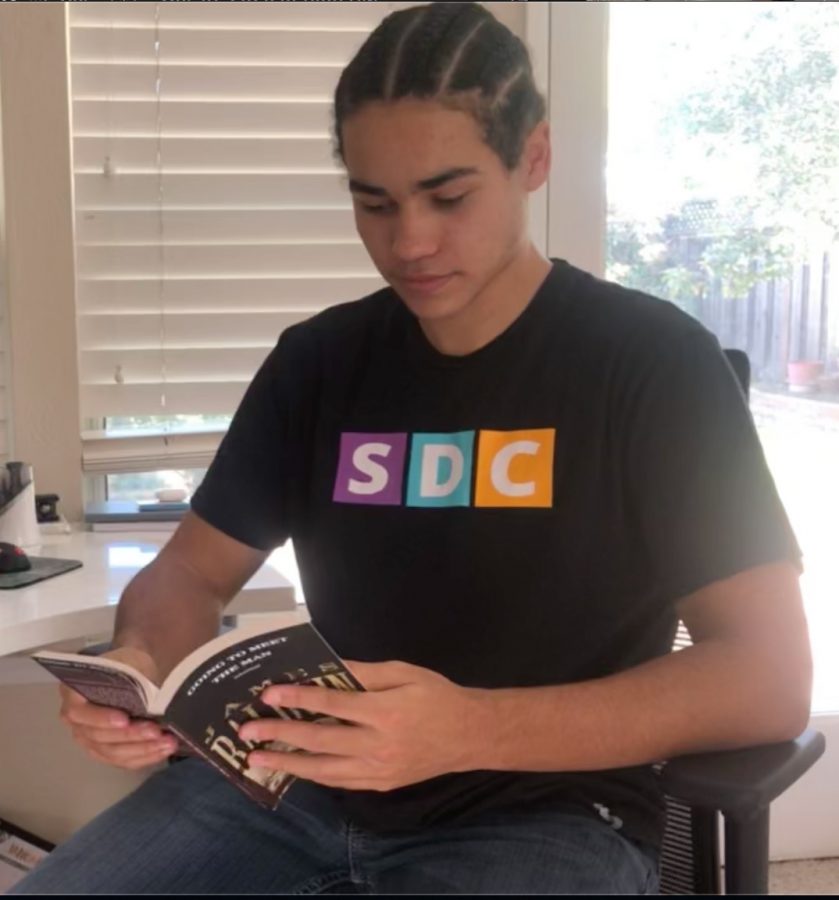
![“When I came into high school, I was ready to be a follower. But DECA was a game changer for me. It helped me overcome my fear of public speaking, and it's played such a major role in who I've become today. To be able to successfully lead a chapter of 150 students, an officer team and be one of the upperclassmen I once really admired is something I'm [really] proud of,” Anvitha Tummala ('21) said.](https://harkeraquila.com/wp-content/uploads/2021/07/Screen-Shot-2021-07-25-at-9.50.05-AM-900x594.png)

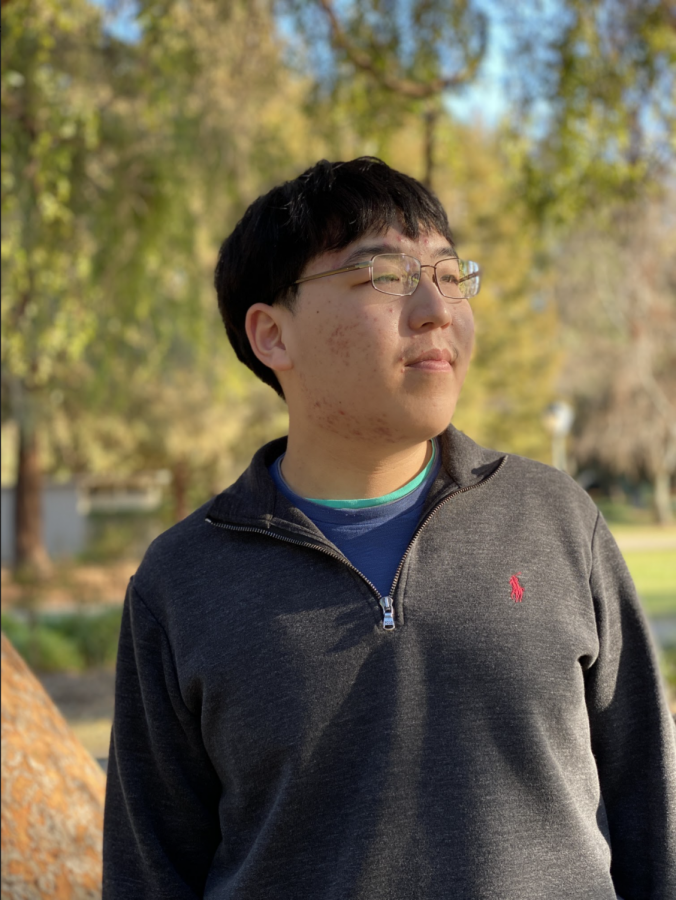


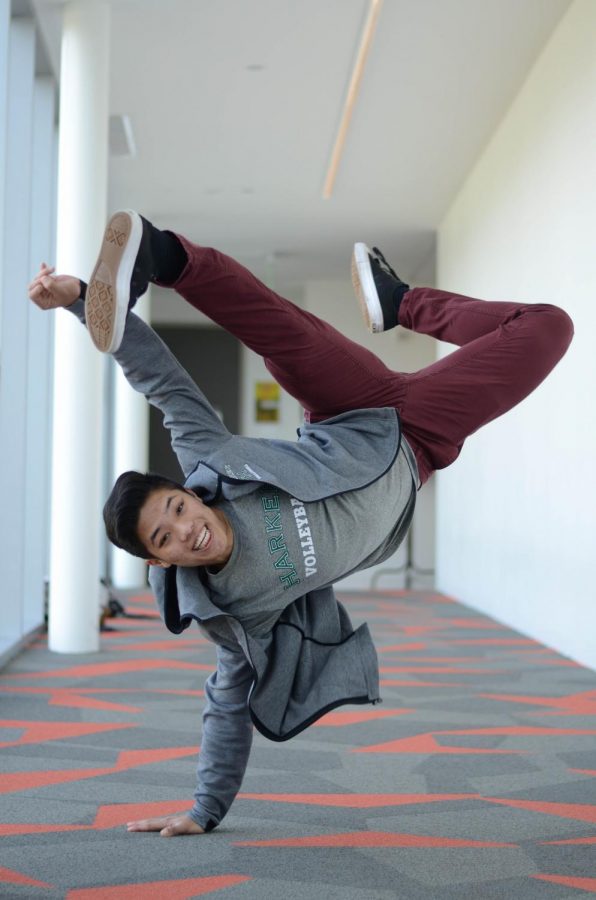


![“I think getting up in the morning and having a sense of purpose [is exciting]. I think without a certain amount of drive, life is kind of obsolete and mundane, and I think having that every single day is what makes each day unique and kind of makes life exciting,” Neymika Jain (12) said.](https://harkeraquila.com/wp-content/uploads/2017/06/Screen-Shot-2017-06-03-at-4.54.16-PM.png)






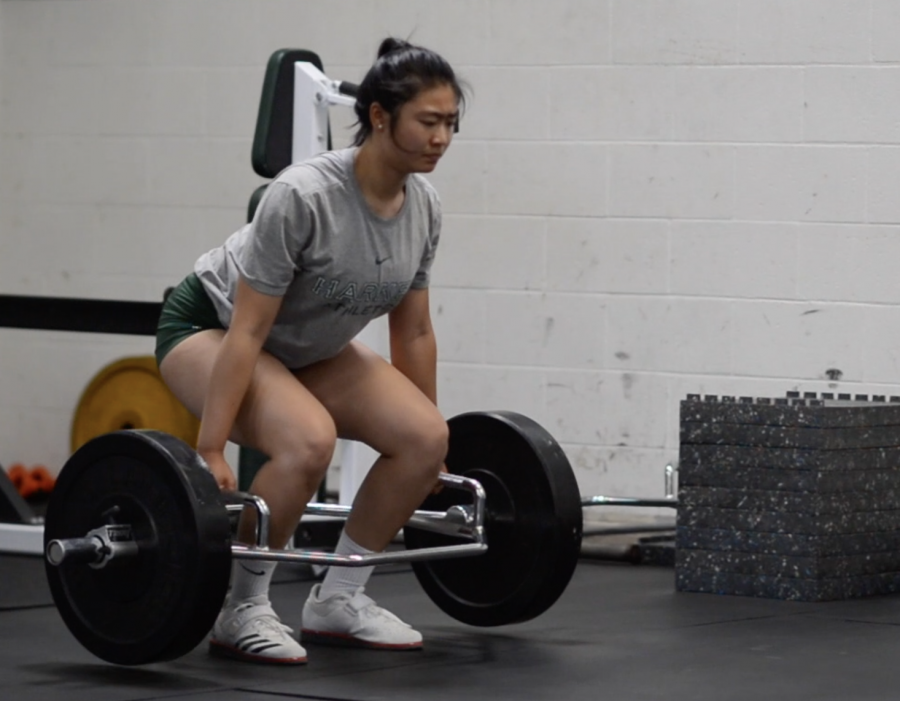

![“My slogan is ‘slow feet, don’t eat, and I’m hungry.’ You need to run fast to get where you are–you aren't going to get those championships if you aren't fast,” Angel Cervantes (12) said. “I want to do well in school on my tests and in track and win championships for my team. I live by that, [and] I can do that anywhere: in the classroom or on the field.”](https://harkeraquila.com/wp-content/uploads/2018/06/DSC5146-900x601.jpg)
![“[Volleyball has] taught me how to fall correctly, and another thing it taught is that you don’t have to be the best at something to be good at it. If you just hit the ball in a smart way, then it still scores points and you’re good at it. You could be a background player and still make a much bigger impact on the team than you would think,” Anya Gert (’20) said.](https://harkeraquila.com/wp-content/uploads/2020/06/AnnaGert_JinTuan_HoHPhotoEdited-600x900.jpeg)

![“I'm not nearly there yet, but [my confidence has] definitely been getting better since I was pretty shy and timid coming into Harker my freshman year. I know that there's a lot of people that are really confident in what they do, and I really admire them. Everyone's so driven and that has really pushed me to kind of try to find my own place in high school and be more confident,” Alyssa Huang (’20) said.](https://harkeraquila.com/wp-content/uploads/2020/06/AlyssaHuang_EmilyChen_HoHPhoto-900x749.jpeg)



“Wow, you’ve grown so much! You’re so skinny, have you been eating enough?” People I’ve never seen in my life jostle me around the room, shouts of exclamations in Chinese ringing in my ears. As is typical of a Chinese family gathering, at least 20 relatives congregate around the big glass table, all talking to me at once. I’m totally lost in the complex dialects, and as I struggle to respond to the bombardment of questions, all I can manage is stuttering and half English phrases. I desperately try to cover up my broken Chinese by laughing and making some vague gestures, yet I wish that I had been as impressively fluent as my cousin who grew up speaking Chinese in her household.
The rest of the dinner goes the exact same way, each grandparent passing by to interrogate me on my life in America. My heavy accent is obvious and I barely respond with a coherent sentence, feeling disconnected as I try to navigate the conversations around me. As I retreat into the corner of the room in shame, I think back to my Chinese classes and regret not paying attention. Although I had gone to Chinese school as a child, I never appreciated the value of it, shrugging off the lessons as something irrelevant. If I had put more effort into learning about the culture as much as the language, maybe I would remember the content and be able to connect with my relatives.
The impact of native culture is undeniably important to the children of Chinese immigrants. Most prominently, the disconnect between relatives in China and America proves one of the biggest consequences of not learning Chinese.
Without the communication and connection that comes with the Chinese language, it’s difficult to forge a bond with family members whom you’d otherwise learn significantly from, leading to a loss of cultural traditions in families over time. As a result, unwritten stories of childhood memories and grandparents’ delicious traditional recipes are lost to time.
It’s no secret that many Harker students are Chinese, but surprisingly few are proficient enough to read and write. With a schedule packed full with academics, most simply don’t have the time to learn Chinese, much less foster the curiosity to learn about the deep culture and traditions that are tied to its roots. In fact, in a survey of 127 students of Chinese descent at Harker, 27% considered themselves to be advanced in reading Mandarin, with only 20% advanced in writing.
I often hear students at Harker complain that languages are difficult to learn, but many students also regret not learning the culture thoroughly. In the survey, one student responded, “I want to be closer to my heritage, but my Chinese classes (which are outside of school) are extremely boring.” Another similarly stated that they regretted not learning reading and writing, as they felt they lost part of their cultural identity.
One respondent wrote at length about how proficiency tests did not accurately measure a student’s true ability to talk with a native speaker, while another reply mentioned that writing Chinese, “often [looked] like a toddler’s art project”, yet they felt it was worth the struggle because it “connects [them] to a history thousands of years old.”
I started Chinese school in first grade, spending my lower school years bent over the tedious and monotonous Chinese workbooks. By sixth grade, I felt that it wasn’t worth my time and quit. However, I recently reconnected with the language in an AP Chinese class outside of school. My teacher, an overly talkative and intensely passionate advocate for learning Chinese culture, forced us all to read articles on aspects of Chinese culture. Everything from pandas to Chinese school systems to kung fu stories inspired me to keep learning, even after the class ended. My teacher often encouraged us to talk to our parents and grandparents in Chinese, to ask about their life and practice listening skills. I didn’t realize it at first, but the small act of conversation with people I hadn’t considered deeply before helped connect me to my family much more.
Cultivating the desire to learn from your family a little more can make a huge difference. Putting down your phone during dinner and asking your parents about their life in their home country could bring a discussion that wouldn’t have occurred without prompting. Even if you don’t want to learn the native language, understanding the culture and traditions behind it will significantly improve your confidence and allow you to further connect with your family.
While Chinese culture occasionally still seems daunting to me, actively making little changes like speaking more in Chinese has brought me joy. Eagerness to learn can change your perspective of your native culture, no matter what ethnicity you are. Even if I’m not as fluent as a native speaker, at least I can outdo my cousin.