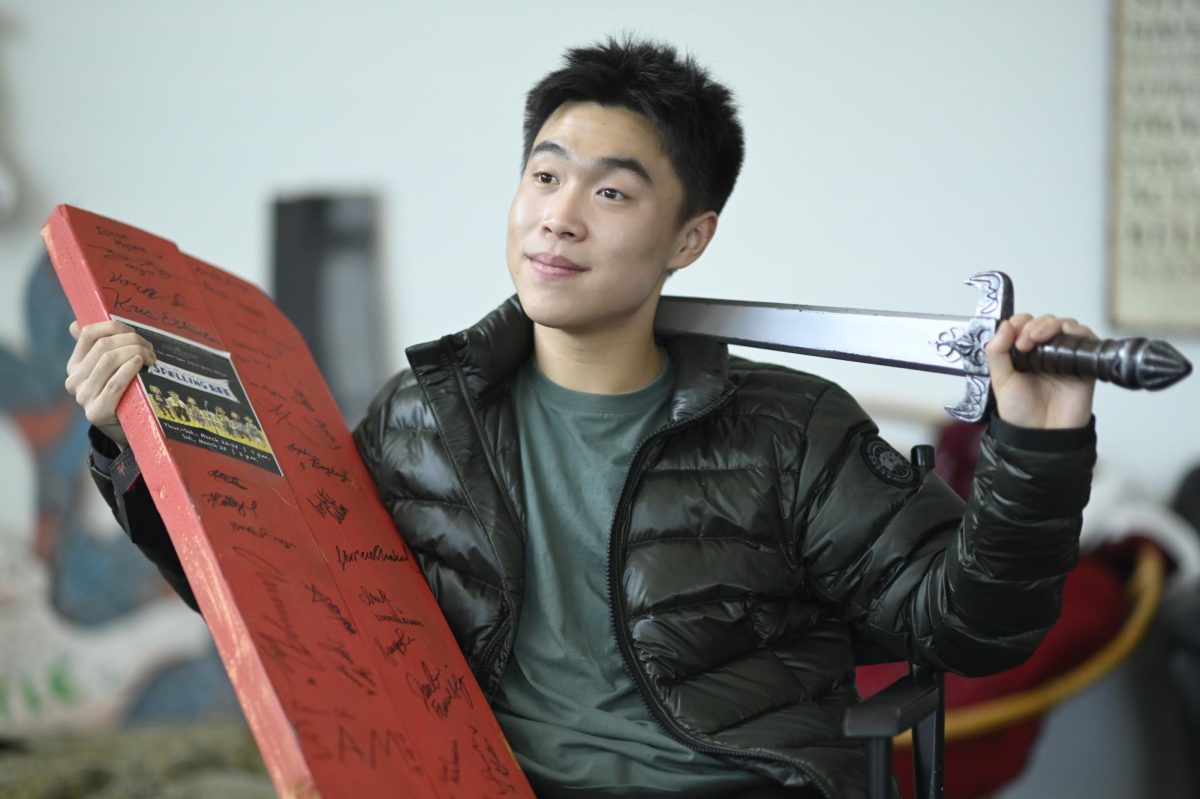
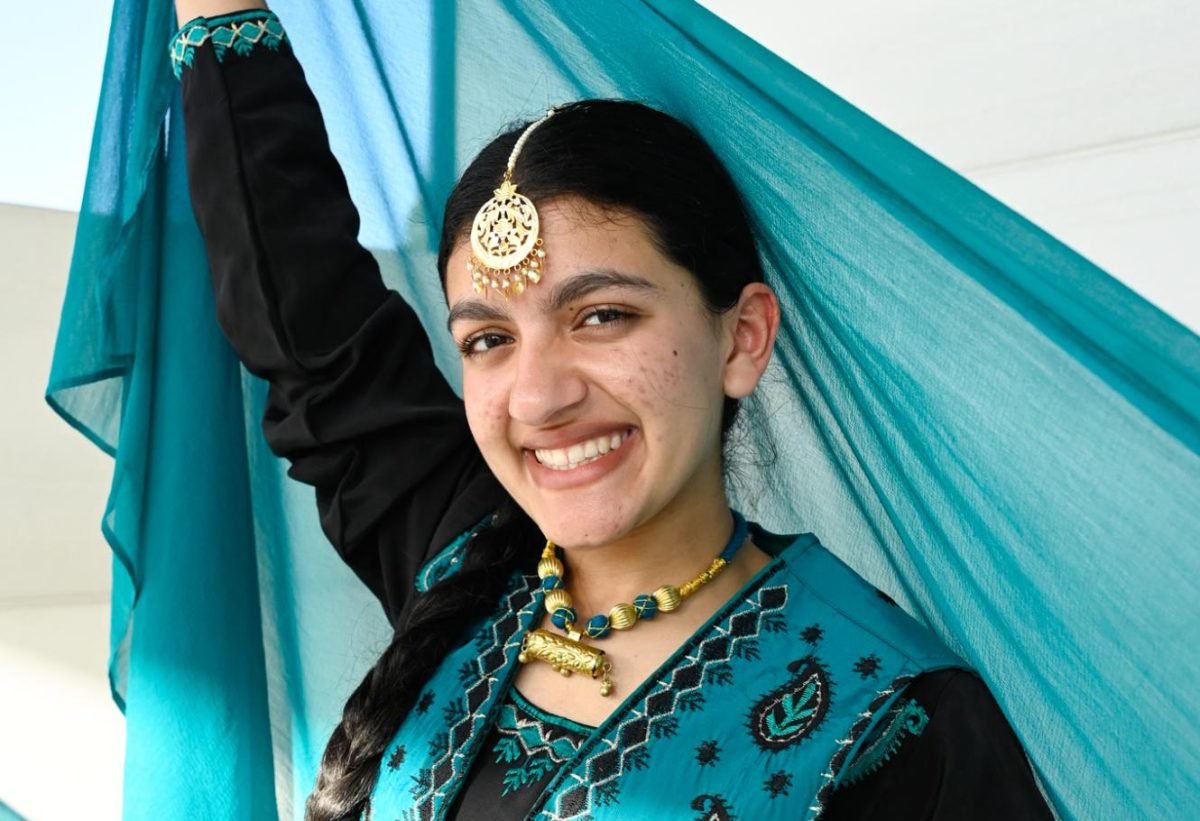
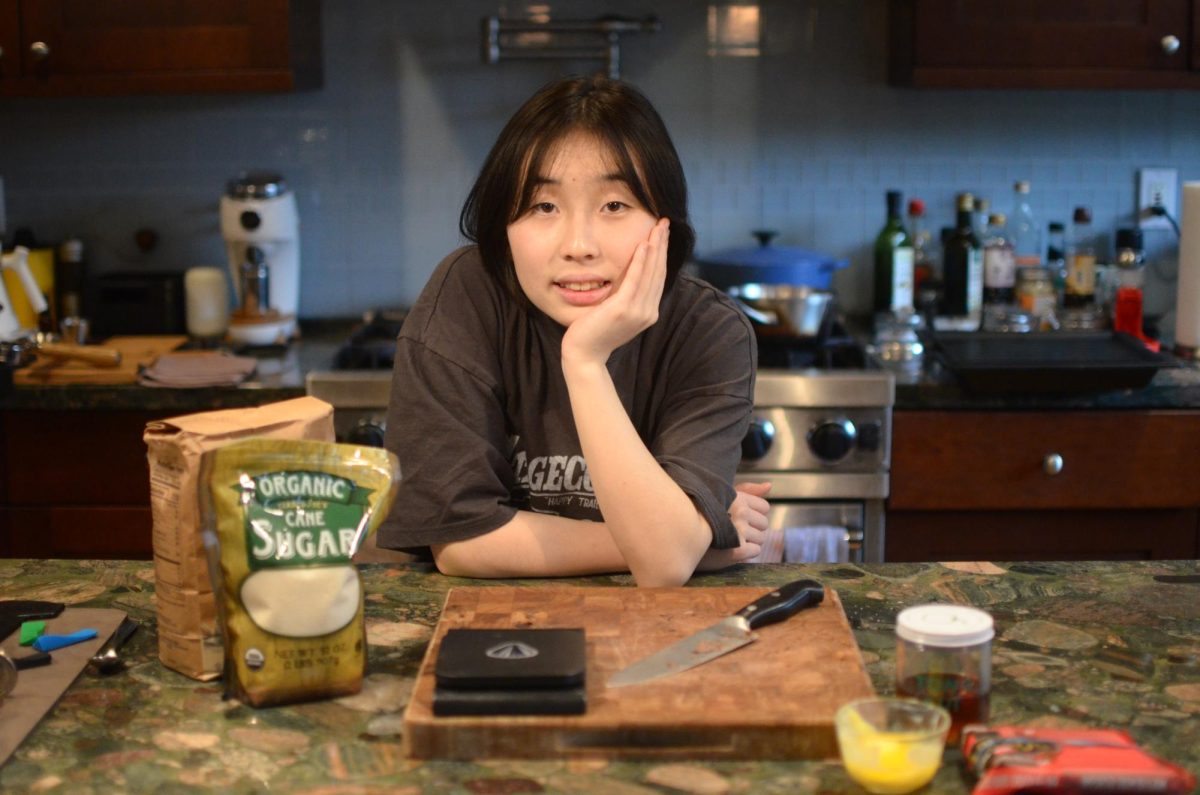
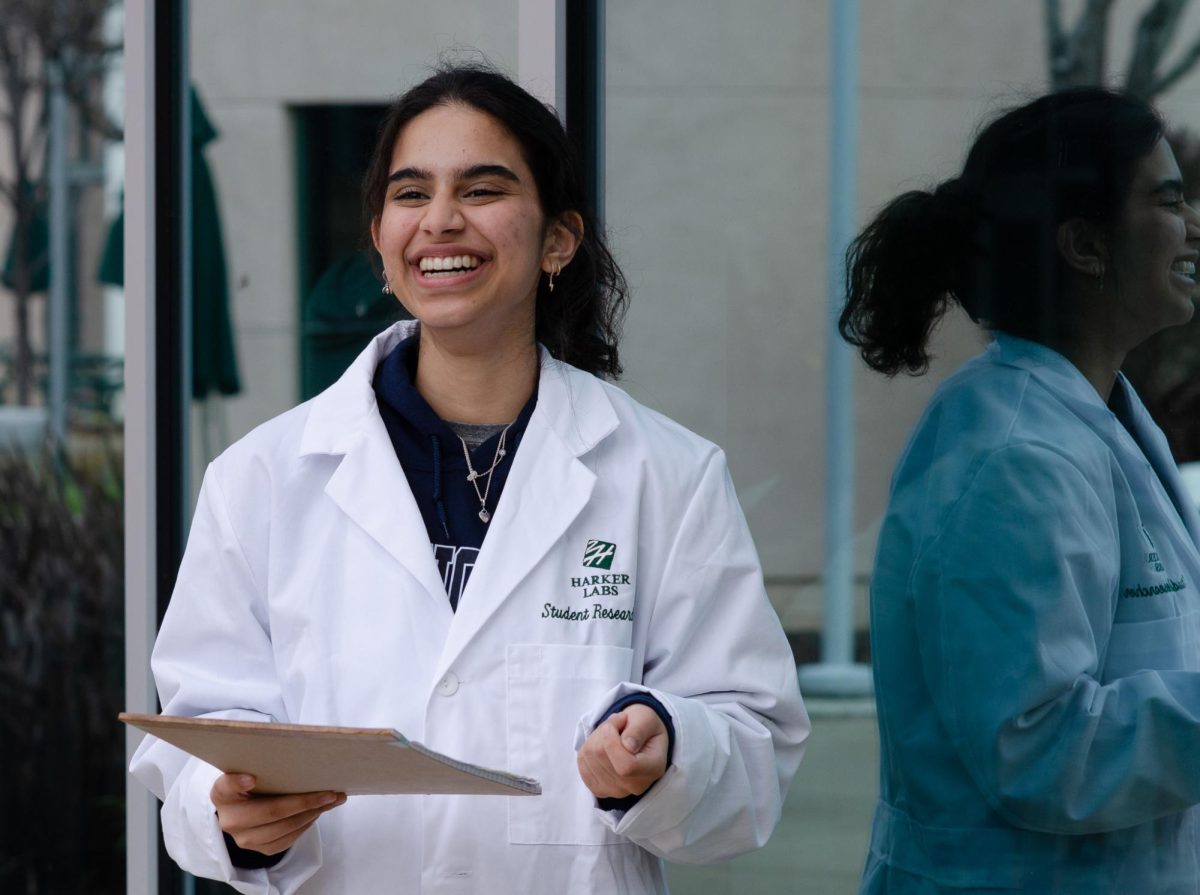
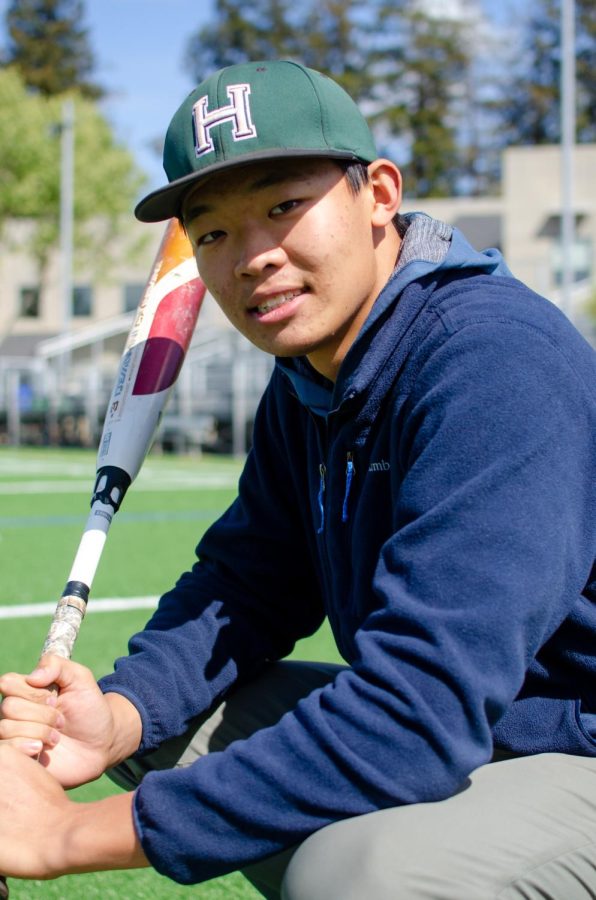
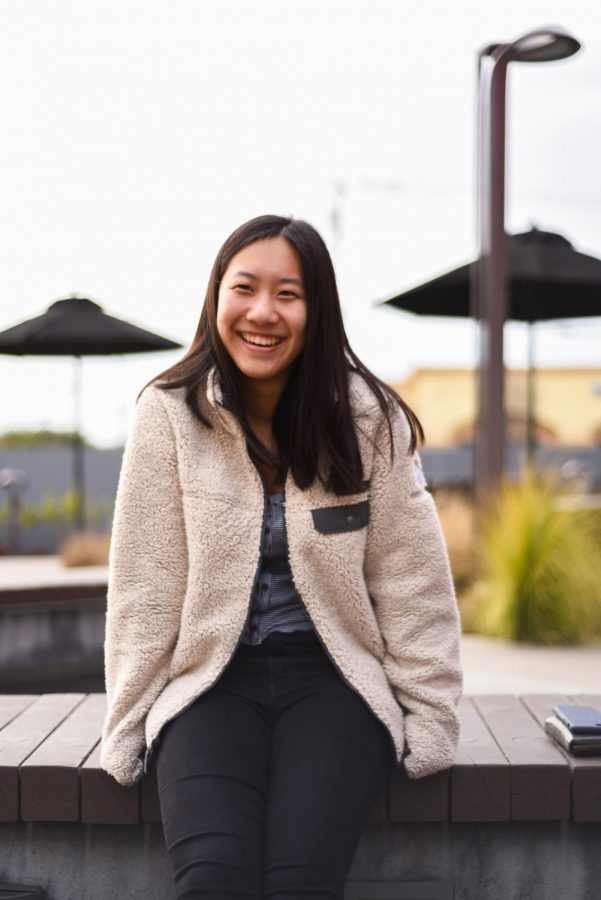
![“I wasn't discouraged by some of the obstacles we faced. I learned a lot from the leadership. I found that different people need different ways of receiving feedback — you can't [just] tell them to do something and expect the best. [Some] people needed more incentive. A large part of my role was to figure out what worked for everyone and to figure out how to lead all these separate individuals as a team,” Suhana Bhandare (’26) said.](https://harkeraquila.com/wp-content/uploads/2026/06/SuhanaBhandare_JasmineHansra-1-1200x798.jpg)
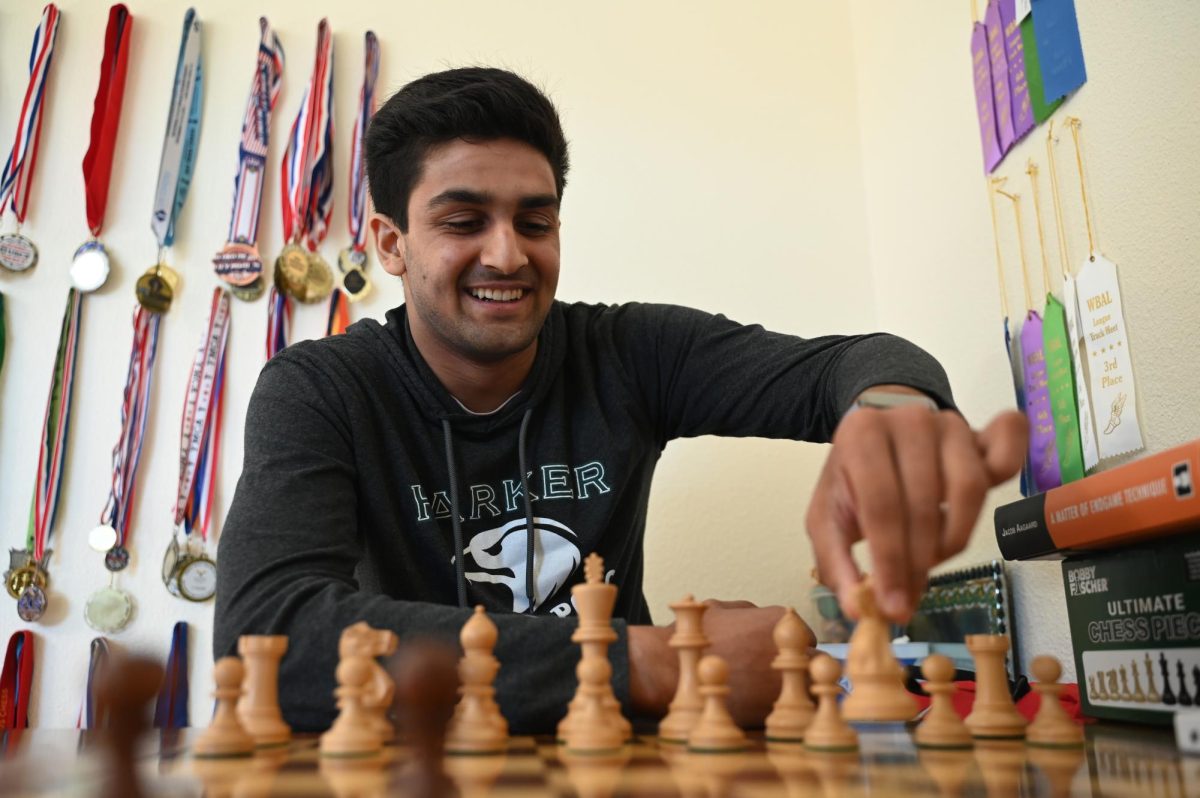
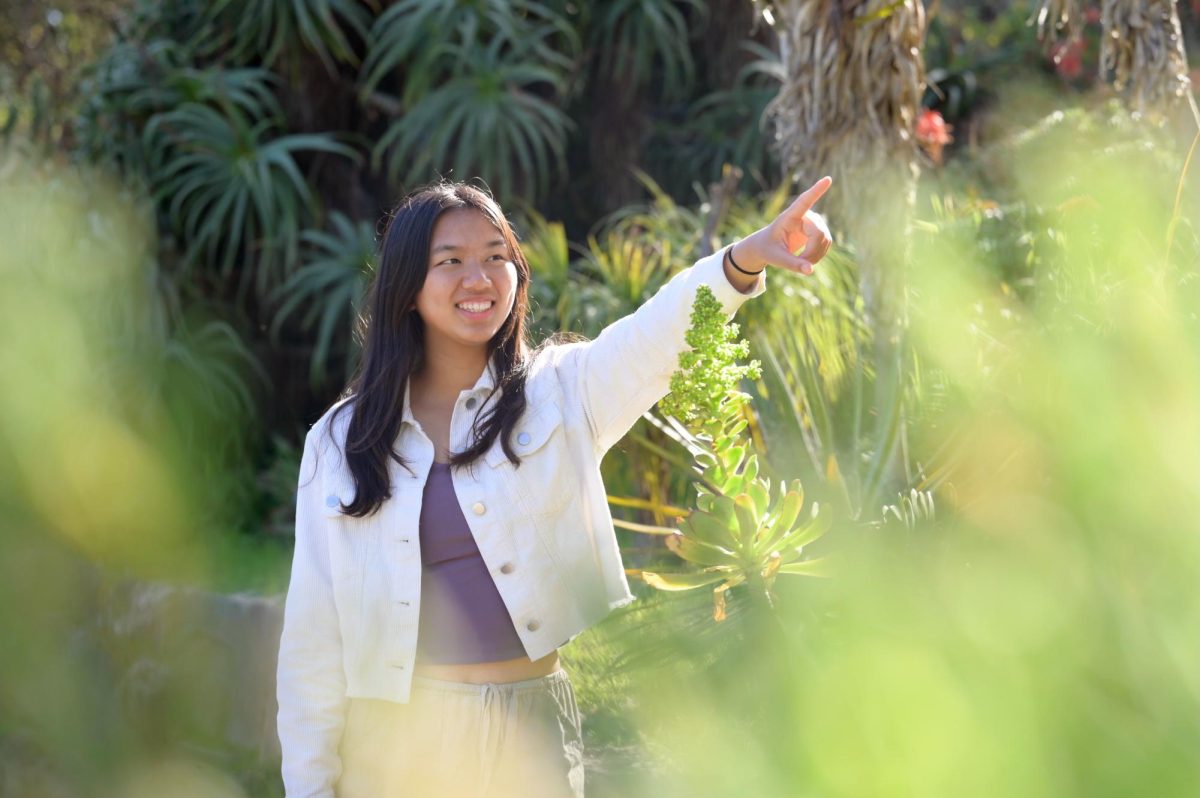
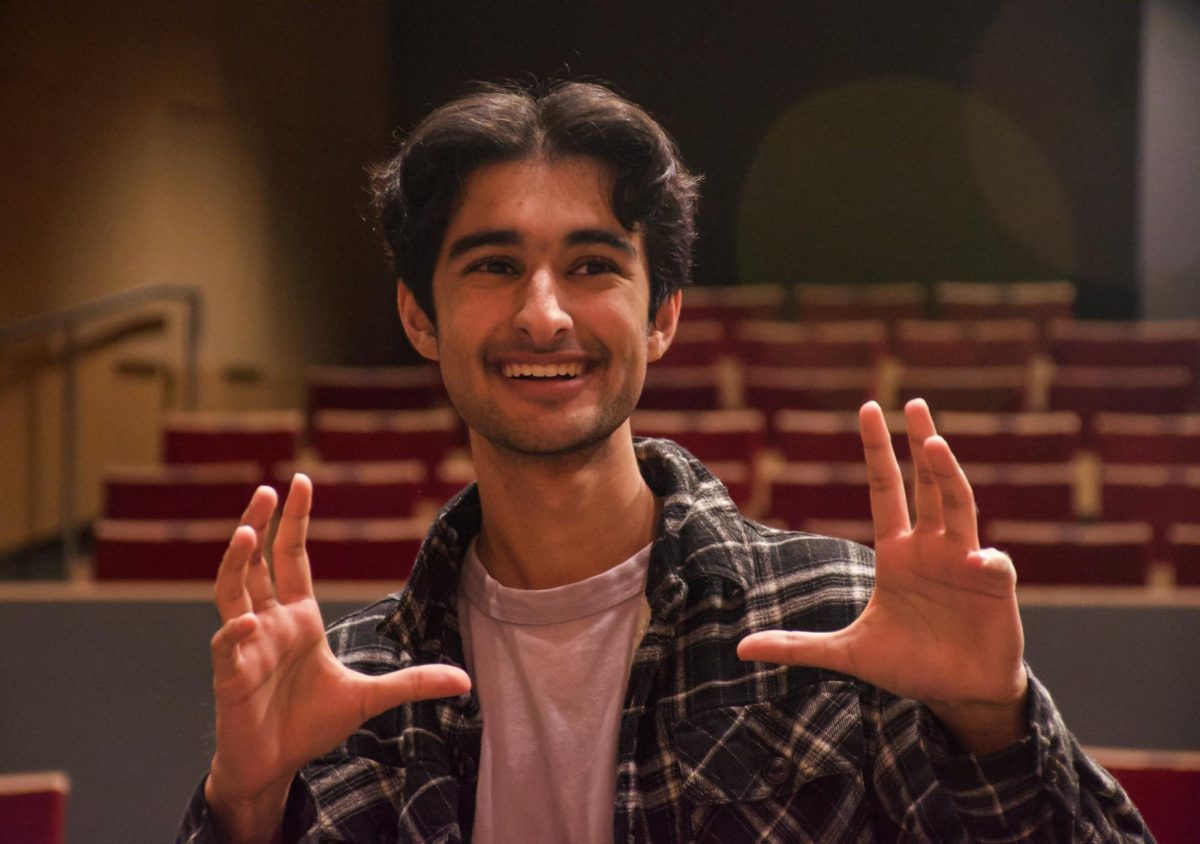
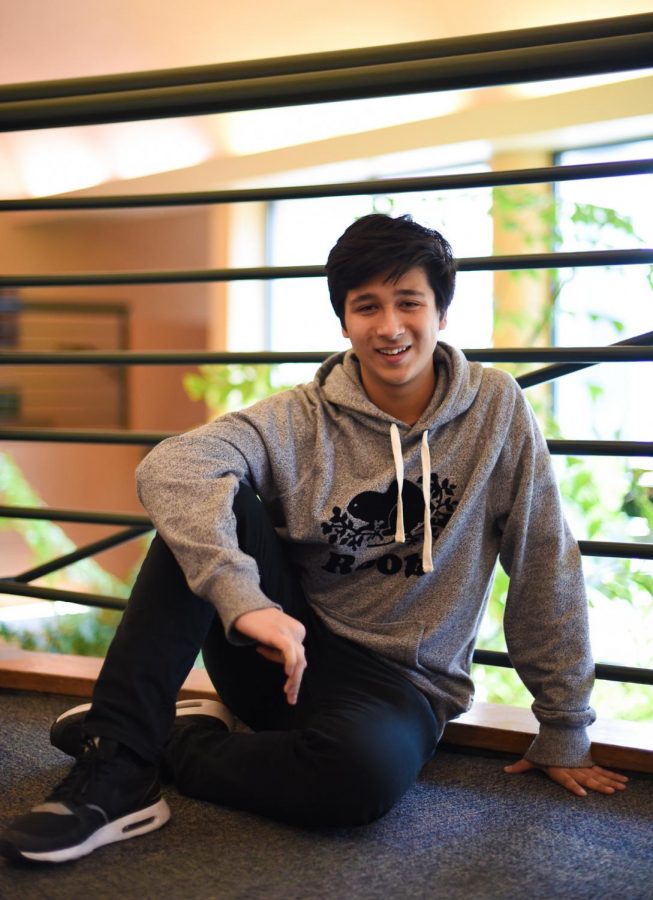
![“This is actually from Randy Pausch Randy P. Brick: ‘Walls are there for a reason. You have to show how much you want to overcome them.’ You have to show how much you want something. That's what I've always been able to do with tennis, Link Crew and getting that internship [with Kushy Baby]. It’s important pushing through that — getting around that brick wall, climbing over it or clawing through it,” Yash Sachdeva (’26) said.](https://harkeraquila.com/wp-content/uploads/2026/05/YashSachdeva_RamBatchu-copy-1200x1002.jpg)


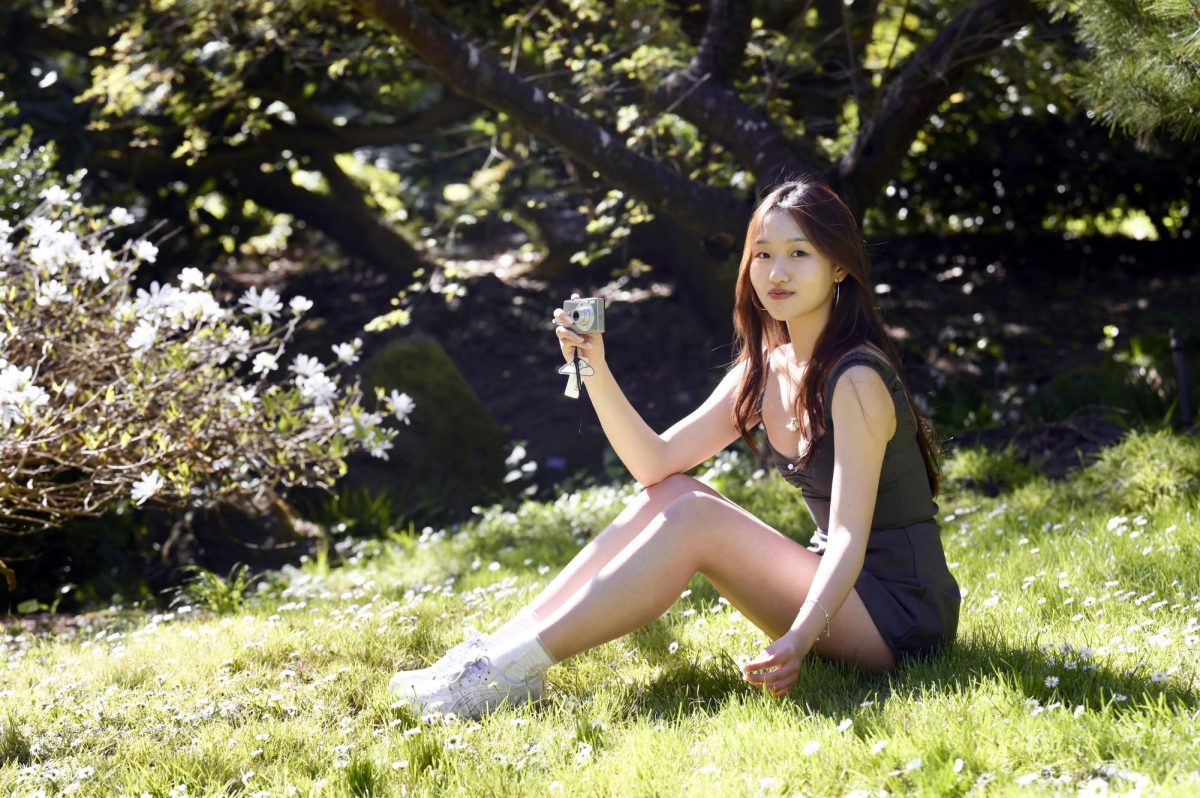
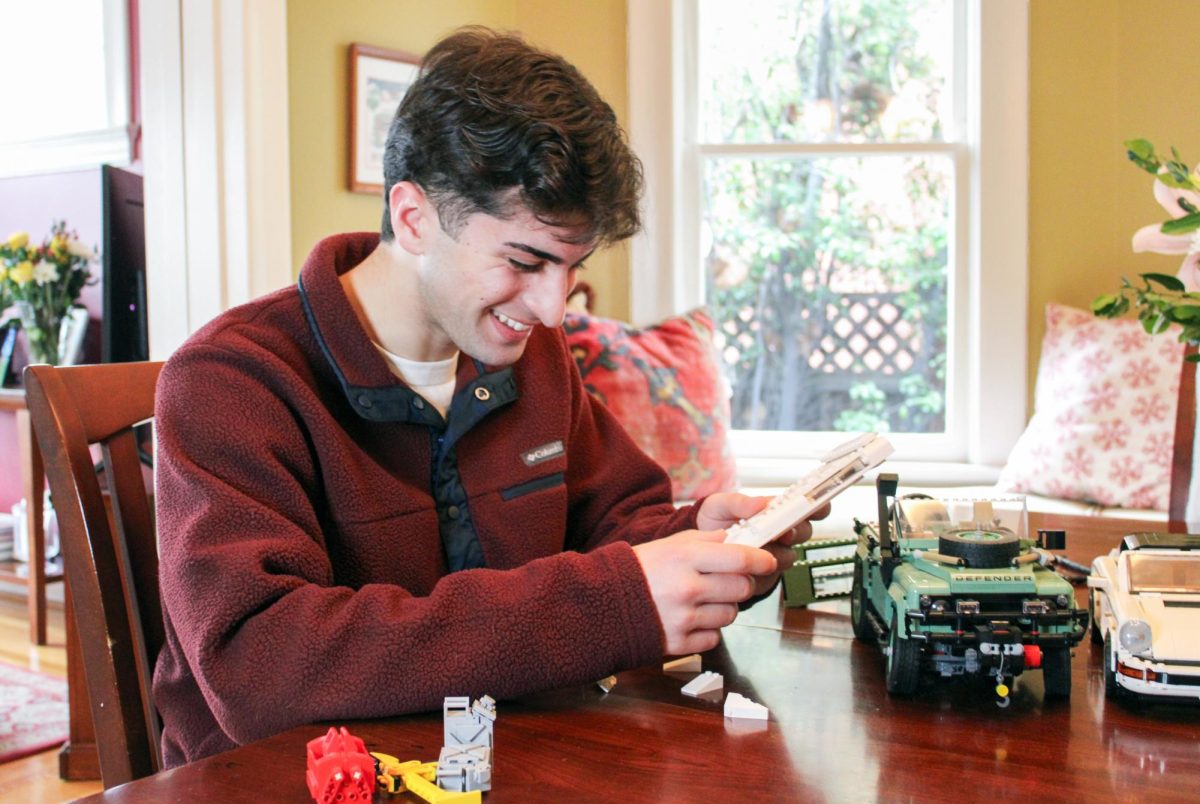

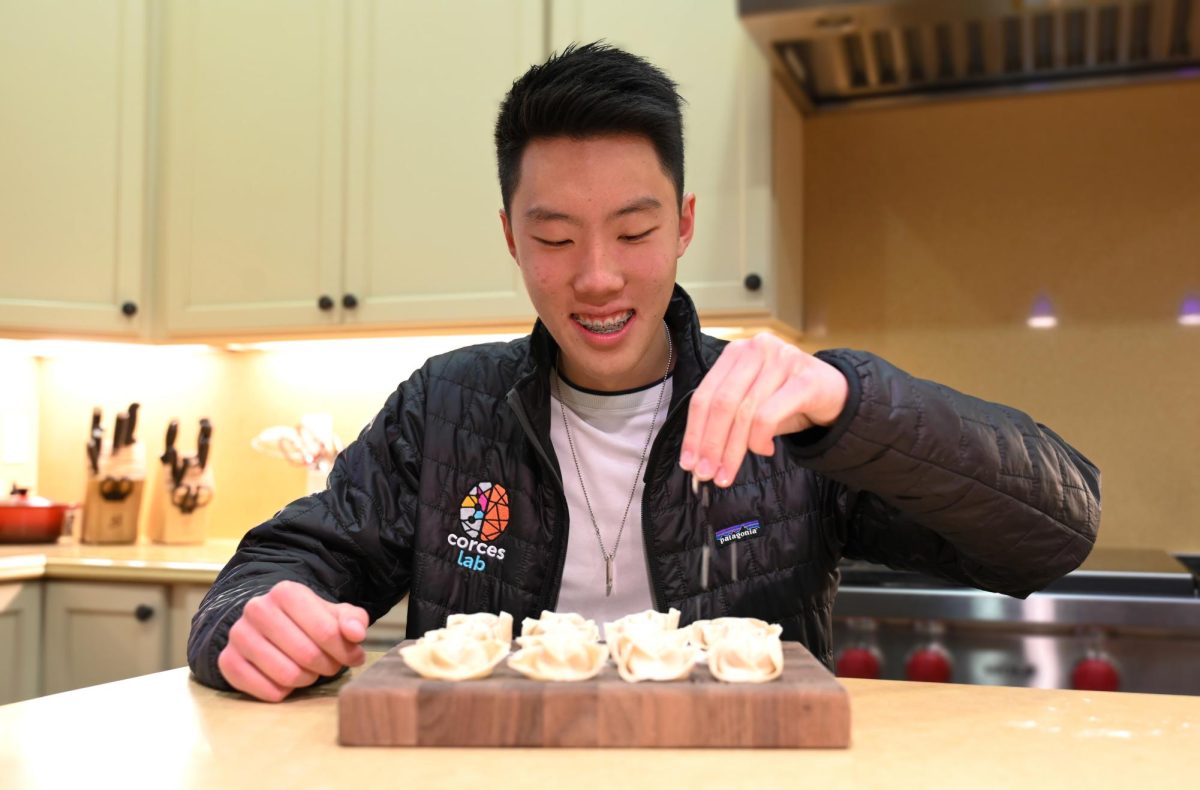
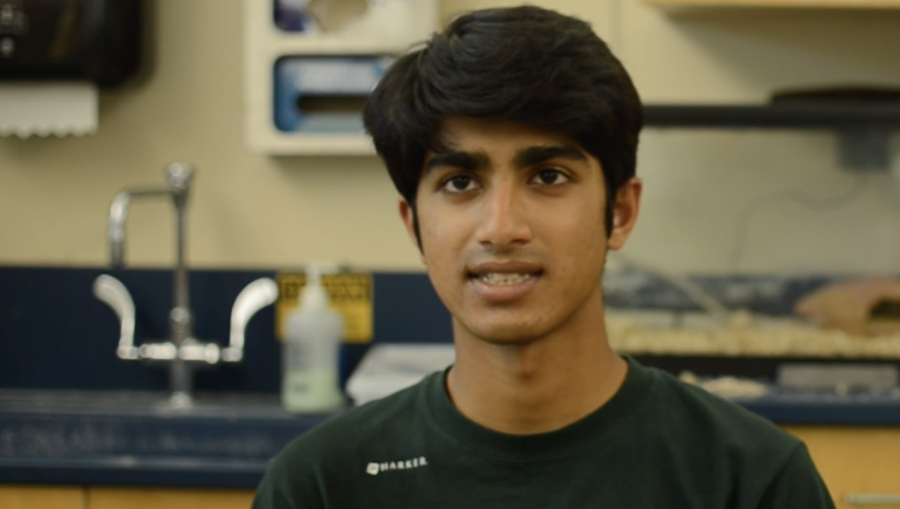
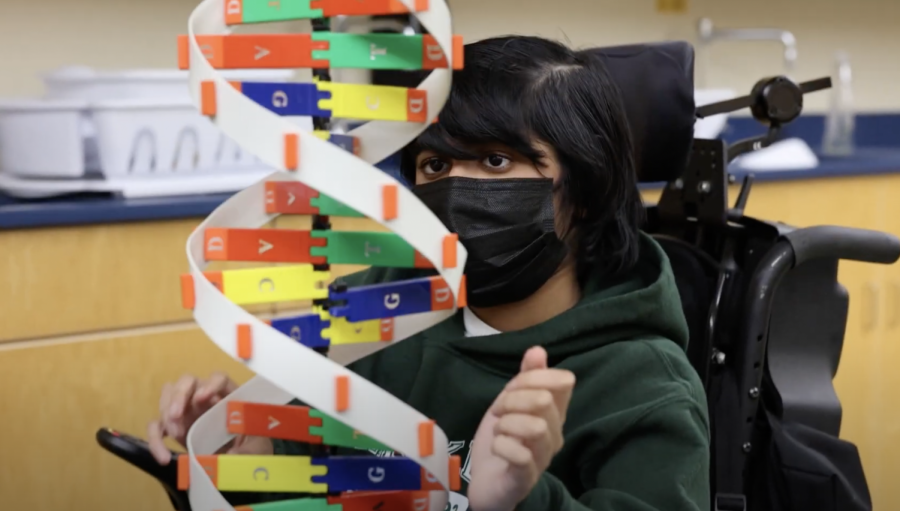
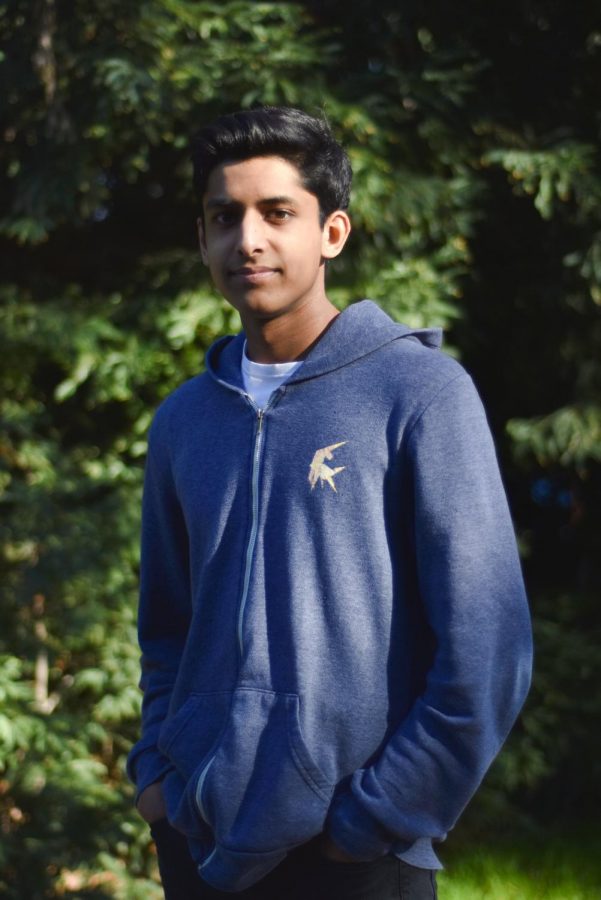
![“[Building nerf blasters] became this outlet of creativity for me that hasn't been matched by anything else. The process [of] making a build complete to your desire is such a painstakingly difficult process, but I've had to learn from [the skills needed from] soldering to proper painting. There's so many different options for everything, if you think about it, it exists. The best part is [that] if it doesn't exist, you can build it yourself," Ishaan Parate said.](https://harkeraquila.com/wp-content/uploads/2022/08/DSC_8149-900x604.jpg)
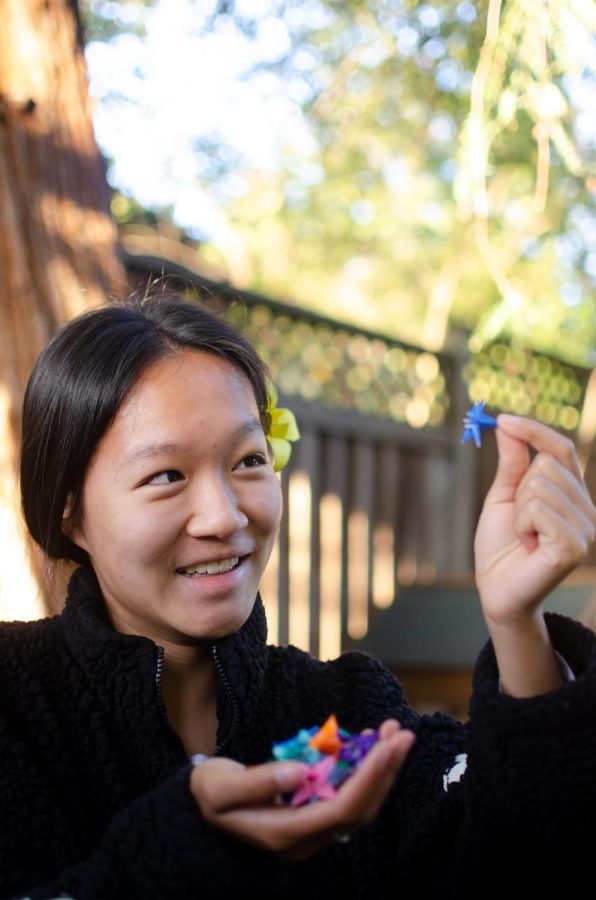
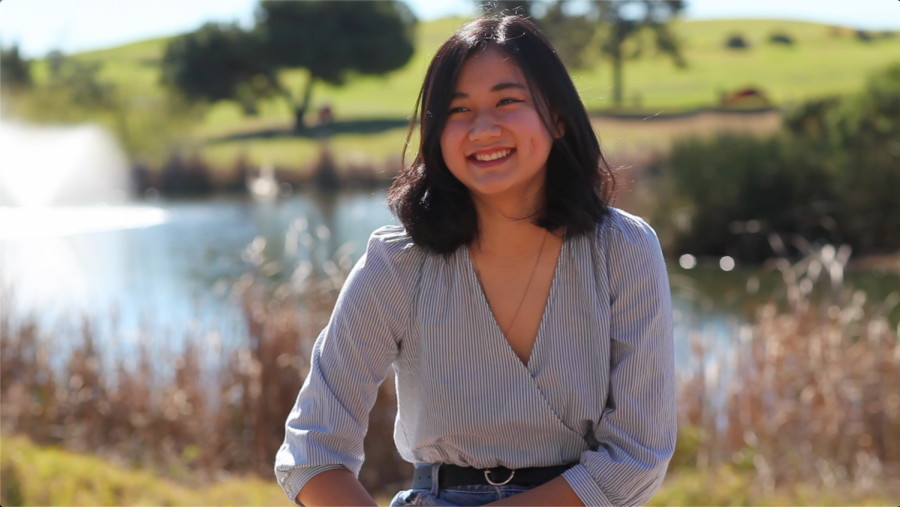
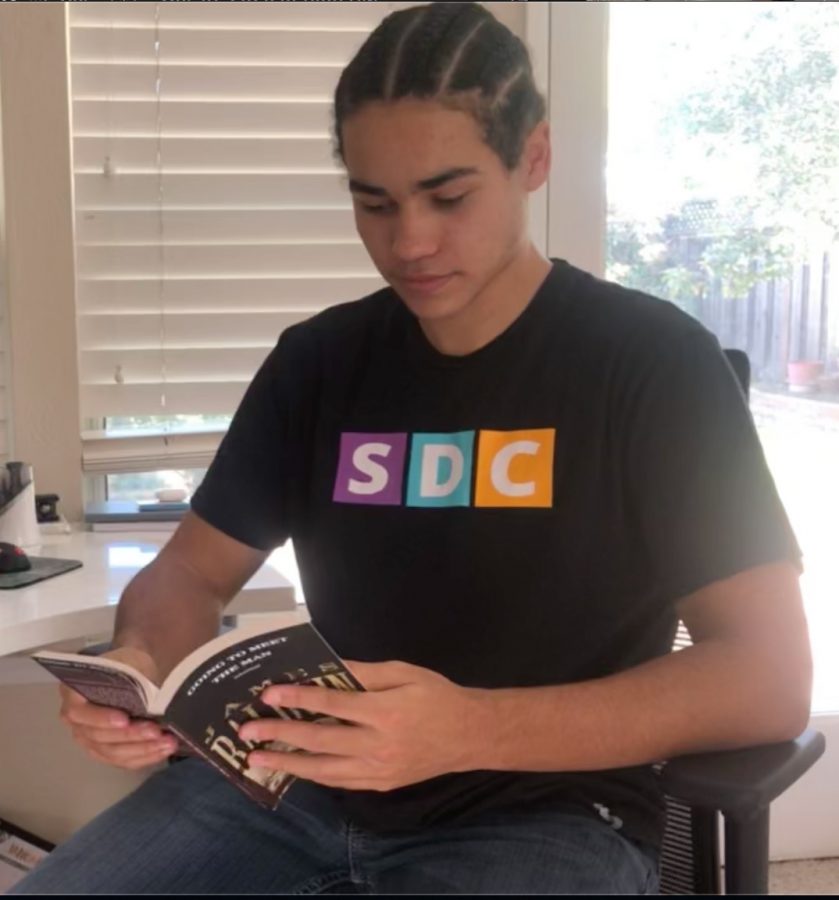
![“When I came into high school, I was ready to be a follower. But DECA was a game changer for me. It helped me overcome my fear of public speaking, and it's played such a major role in who I've become today. To be able to successfully lead a chapter of 150 students, an officer team and be one of the upperclassmen I once really admired is something I'm [really] proud of,” Anvitha Tummala ('21) said.](https://harkeraquila.com/wp-content/uploads/2021/07/Screen-Shot-2021-07-25-at-9.50.05-AM-900x594.png)

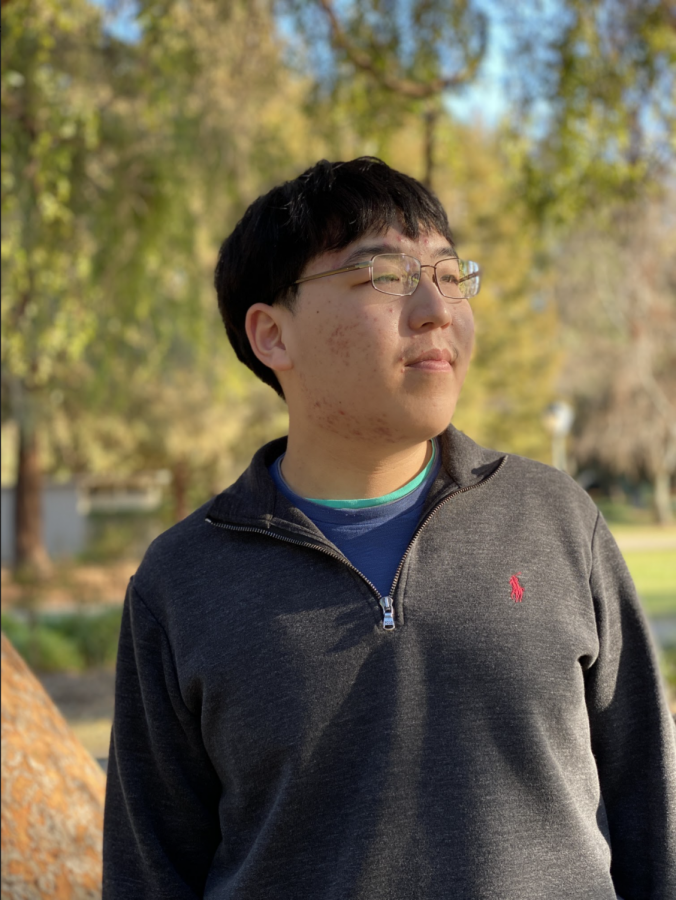

![“I think getting up in the morning and having a sense of purpose [is exciting]. I think without a certain amount of drive, life is kind of obsolete and mundane, and I think having that every single day is what makes each day unique and kind of makes life exciting,” Neymika Jain (12) said.](https://harkeraquila.com/wp-content/uploads/2017/06/Screen-Shot-2017-06-03-at-4.54.16-PM.png)
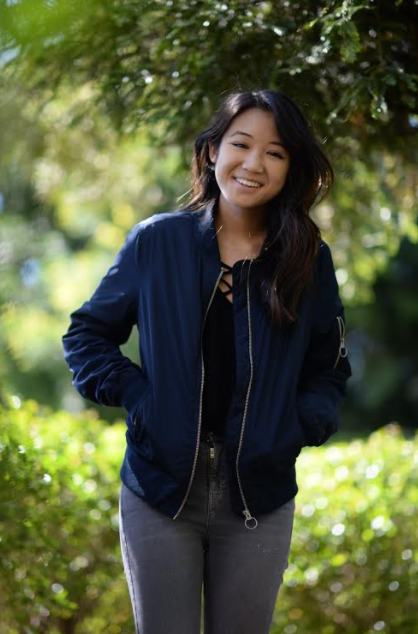
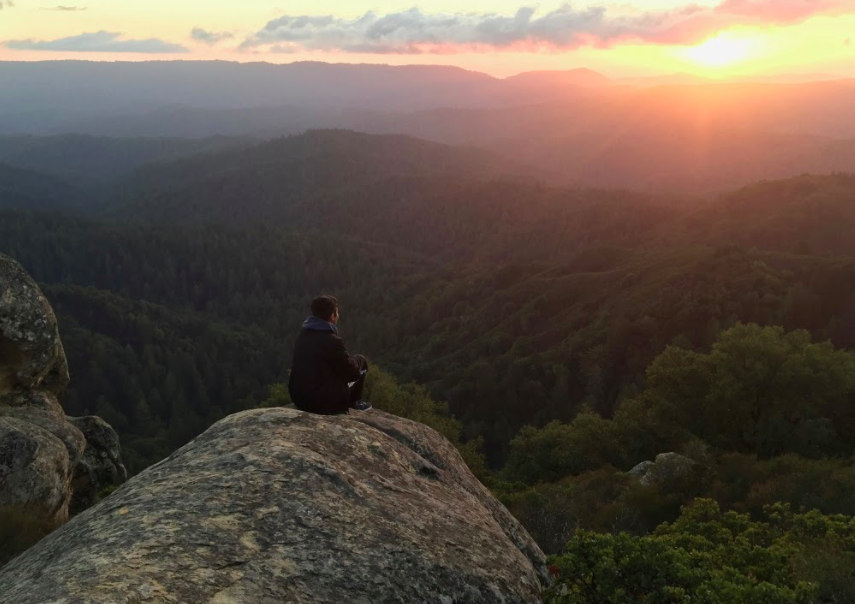
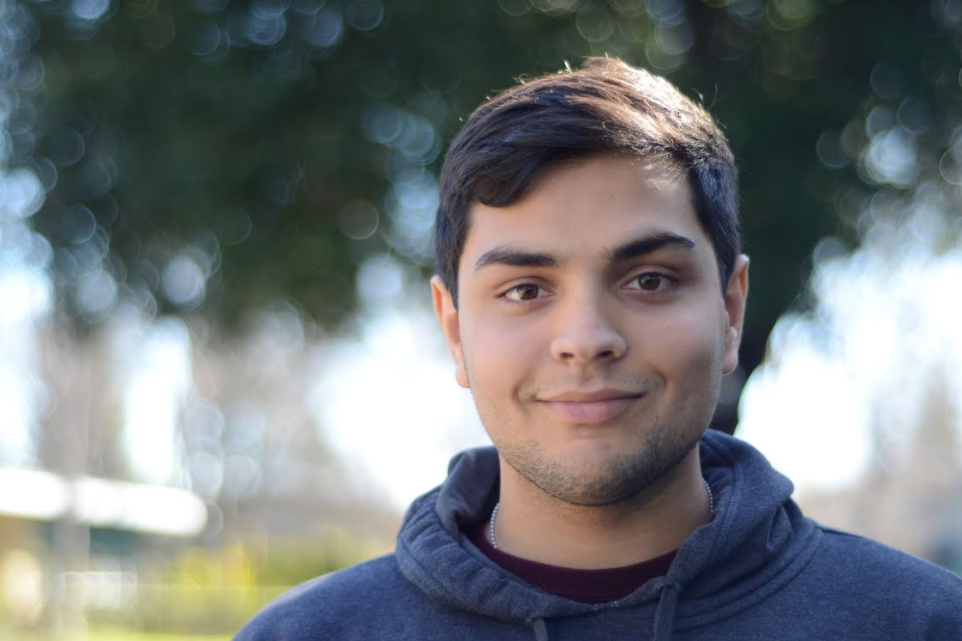
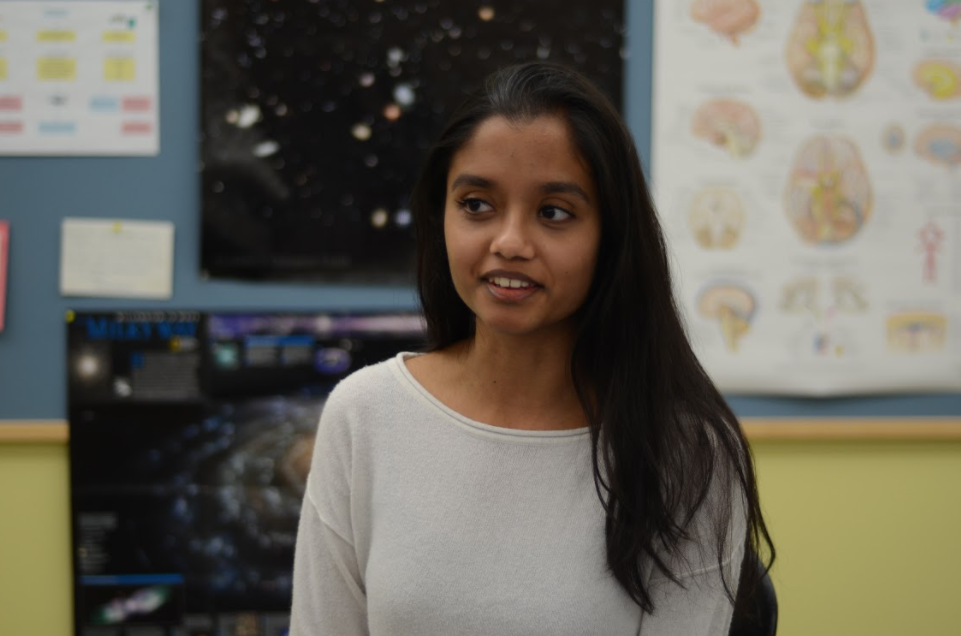
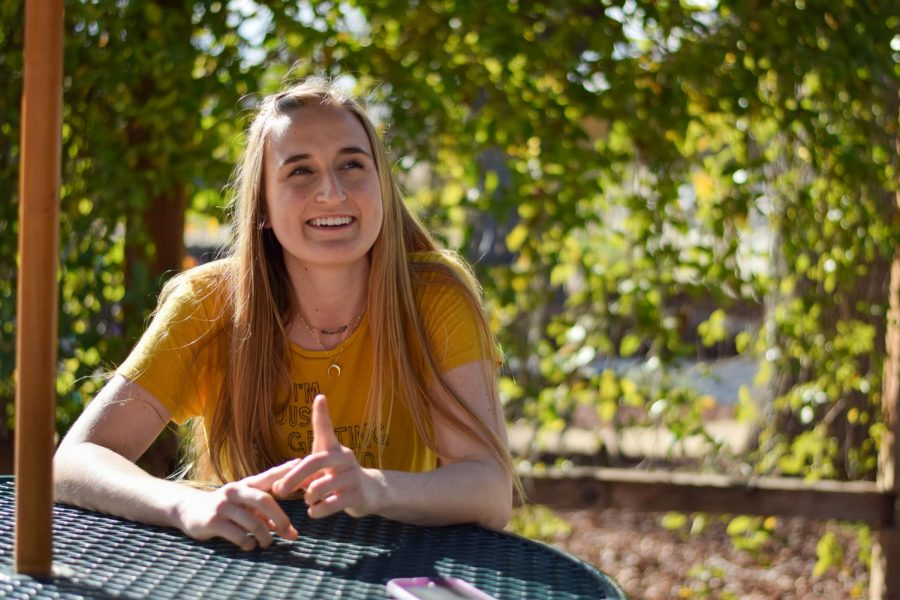
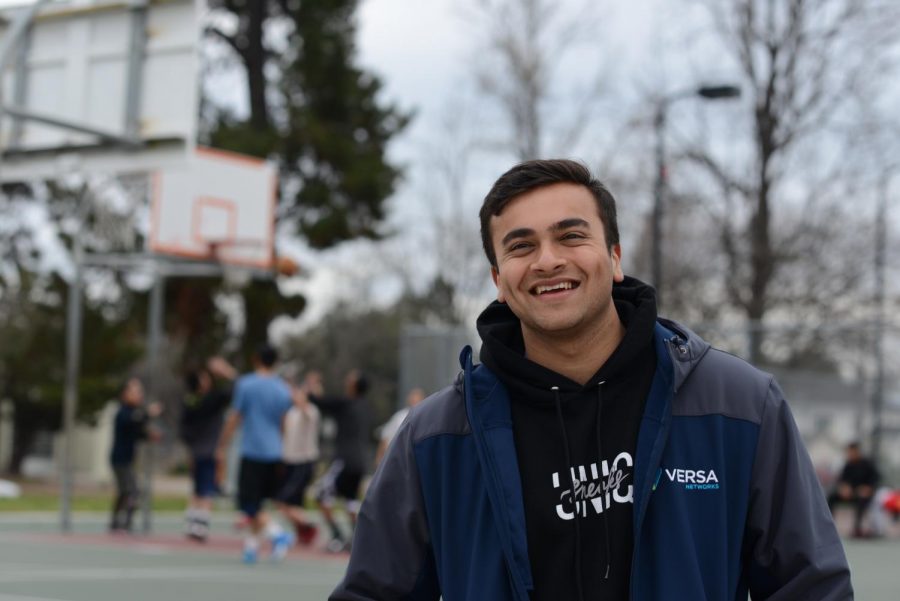
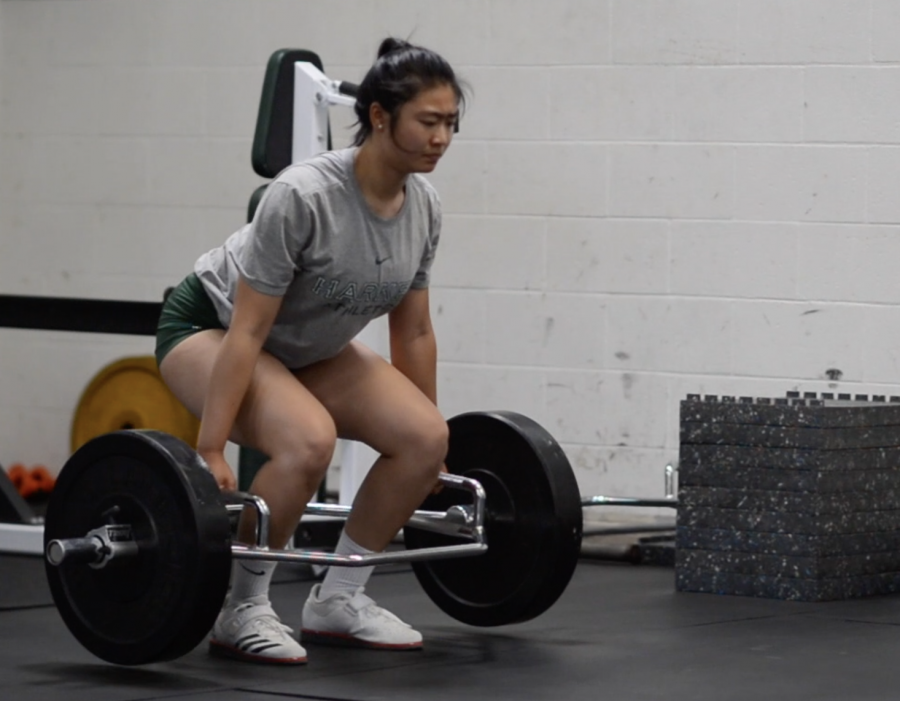

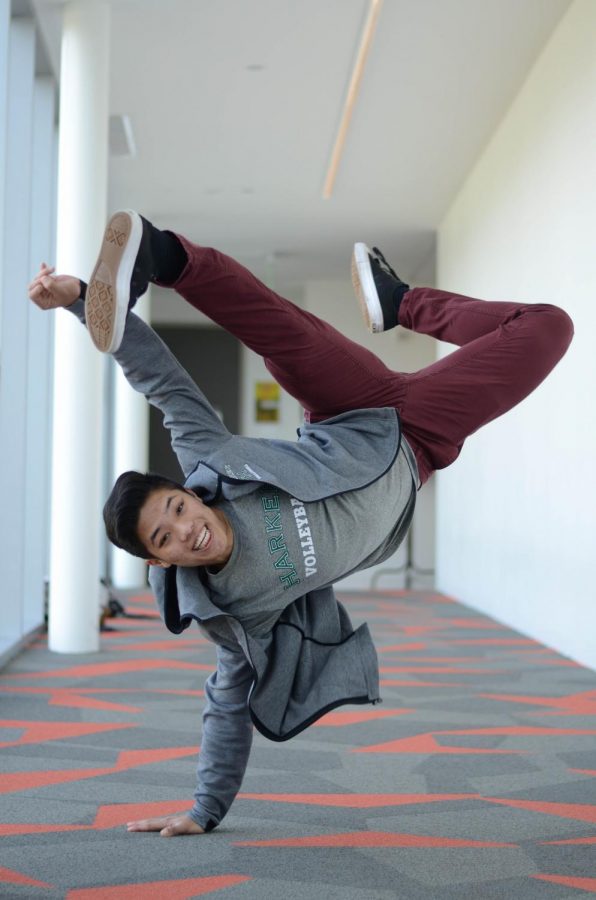
![“My slogan is ‘slow feet, don’t eat, and I’m hungry.’ You need to run fast to get where you are–you aren't going to get those championships if you aren't fast,” Angel Cervantes (12) said. “I want to do well in school on my tests and in track and win championships for my team. I live by that, [and] I can do that anywhere: in the classroom or on the field.”](https://harkeraquila.com/wp-content/uploads/2018/06/DSC5146-900x601.jpg)
![“[Volleyball has] taught me how to fall correctly, and another thing it taught is that you don’t have to be the best at something to be good at it. If you just hit the ball in a smart way, then it still scores points and you’re good at it. You could be a background player and still make a much bigger impact on the team than you would think,” Anya Gert (’20) said.](https://harkeraquila.com/wp-content/uploads/2020/06/AnnaGert_JinTuan_HoHPhotoEdited-600x900.jpeg)
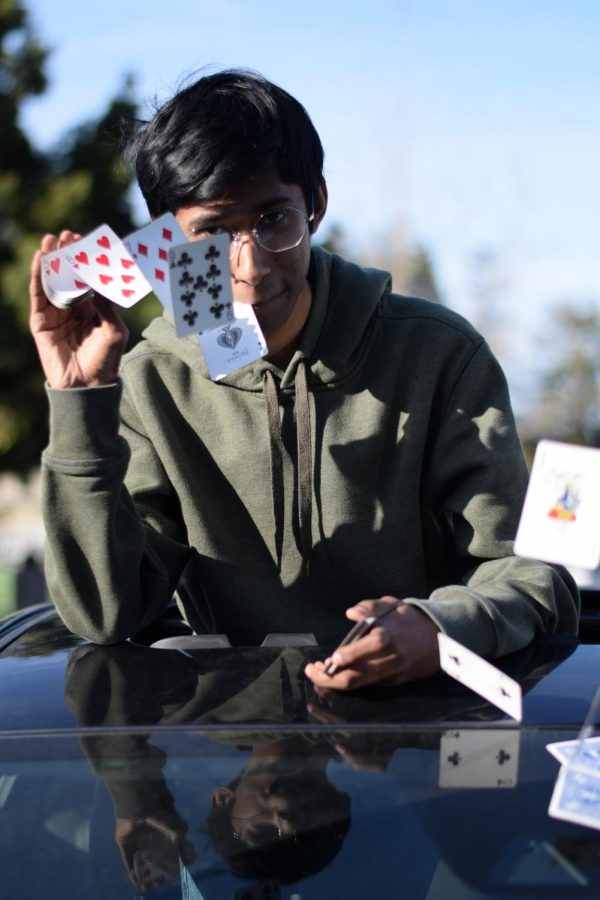
![“I'm not nearly there yet, but [my confidence has] definitely been getting better since I was pretty shy and timid coming into Harker my freshman year. I know that there's a lot of people that are really confident in what they do, and I really admire them. Everyone's so driven and that has really pushed me to kind of try to find my own place in high school and be more confident,” Alyssa Huang (’20) said.](https://harkeraquila.com/wp-content/uploads/2020/06/AlyssaHuang_EmilyChen_HoHPhoto-900x749.jpeg)


The articles below are a part of a continuing collaboration between The Winged Post and several other international schools in which an article topic is agreed upon and written about. Each school writes and edits their own article, which is then published as received in our publication. Stories and views expressed below are those from contributing schools and are not necessarily those of The Winged Post.
Australia Day, Saint Stephen’s College (Coomera, Australia)
As school students in Australia turn their attention to the fast-approaching Holiday Season, another well-celebrated holiday starts to emerge: Australia Day. Celebrated on the 26th of January each year since 1935, it commemorates the arrival of Captain Arthur Philip at Sydney Cove in 1788 and therefore marks the beginning of European settlement in Australia. Of late, however, its reception has been mixed, and with Australia fast becoming known as a cultural “melting pot”, the meaning of being “Australian” is evolving.
One would be hard-pressed to find an Australian that does not head down to the beach for a surf, a barbeque and a beer to celebrate Australia Day. As a celebration of the care-free and larrikin spirit often associated with the stereotypical Australian, the aforementioned activities seem pretty generic.
Year 11 Student Beth Scott, originally from Adelaide, acknowledges this.
“Australia Day is a time for the nation to come together and celebrate what Australia is all about: drinking beer and going to the beach are both significant parts of this.”
But, just as the divergent cultural and ethnic backgrounds of those who call Australia home differ, so does the way in which they celebrate Australia Day.
Arnaud Bogaerdt, a Year 11 International Student at Saint Stephen’s College from Belgium, has mixed emotions about Australia Day.
“I think it’s amazing how Australians celebrate a day for their country and are proud of their nationality, but I think the young people party a bit too hard on Australia Day. The Belgian Day isn’t as impressive as the Australia one. But, I love Australia Day and can’t wait to celebrate it and be proud of my new nationality.”
Events leading up to the 2005 Australia Day Celebrations showed that the divergent cultures within Australia do conflict.
Occurring only weeks before Australia Day, a series of sectarian clashes occurred after 5000 people gathered at Cronulla Beach in Sydney to protest against recent violence against locals. The situation turned when a man of “Middle Eastern appearance” was spotted in the crowd.
A week before, a group of Volunteer Beach Life Savers were assaulted by a group of men of “Middle Eastern appearance”. A stabbing and attacks against ambulance and police officers ensued as a direct result.
Two years to the day after this event, the then Prime Minister of Australia Day, Kevin Rudd, announced his planed apology to the Aboriginals displaced between the years of 1869 and 1969.
In an effort to quell fears about future racially motivated violence, the Ahmadiyya Muslim Association of Australia organises special celebrations for Australia Day. Australia Day organisers also go to additional efforts to acknowledge the Aboriginal and Torres Strait Peoples of Australia on Australia Day.
It is hoped that these measures will ensure more harmonious celebrations of Australia Day in order to unite all Australians.
Chinese New Year, Taipei American School (Taiwan)
Fifteen days of red envelopes, dragon dances, firecrackers and feast. Top that.
Chinese New Year is the most important holiday celebrated in Chinese culture. The high-intensity festival traditionally starts on the first day of the first month on the Chinese calendar. Families reunite, celebrate and make up for lost time. For fifteen days and nights, you can hear the crackling of firecrackers fill the streets, drumming and clanging of dragon-dancers meander through the cities and the cries of enthusiastic mahjong players as they swirl tiles on their tables.
“There are just so many aspects of Chinese New Year that make it awesome, even the smallest thought of infants parading around the neighborhood in their new clothes can get me in a good mood,” said Maxine Tu (11).
However, the importance of Chinese New Year is different for each person. “I think the best part of Chinese New Year is the red envelopes, it’s like Christmas but instead of presents, you get cash,” said Robert Tu (12). Traditionally, relatives distribute red envelopes filled with money to children. Red envelops symbolize good luck and are a charm to fend off bad spirits and omens. However, children rarely see past the physical significance of red envelopes.
Even as an American school, TAS is an institute that acknowledges the large percentage of students who are of Chinese heritage. Nearly two weeks of vacation are given to the students to celebrate Chinese New Year. “I find it preferable that TAS splits up its breaks based on the American and Chinese holidays despite the shorter lengths, it allows me to connect with both my American and Chinese culture,” said Andrew Hsieh (12). Students at TAS are in an American setting yet still have the opportunity to express and celebrate their Chinese cultural values.