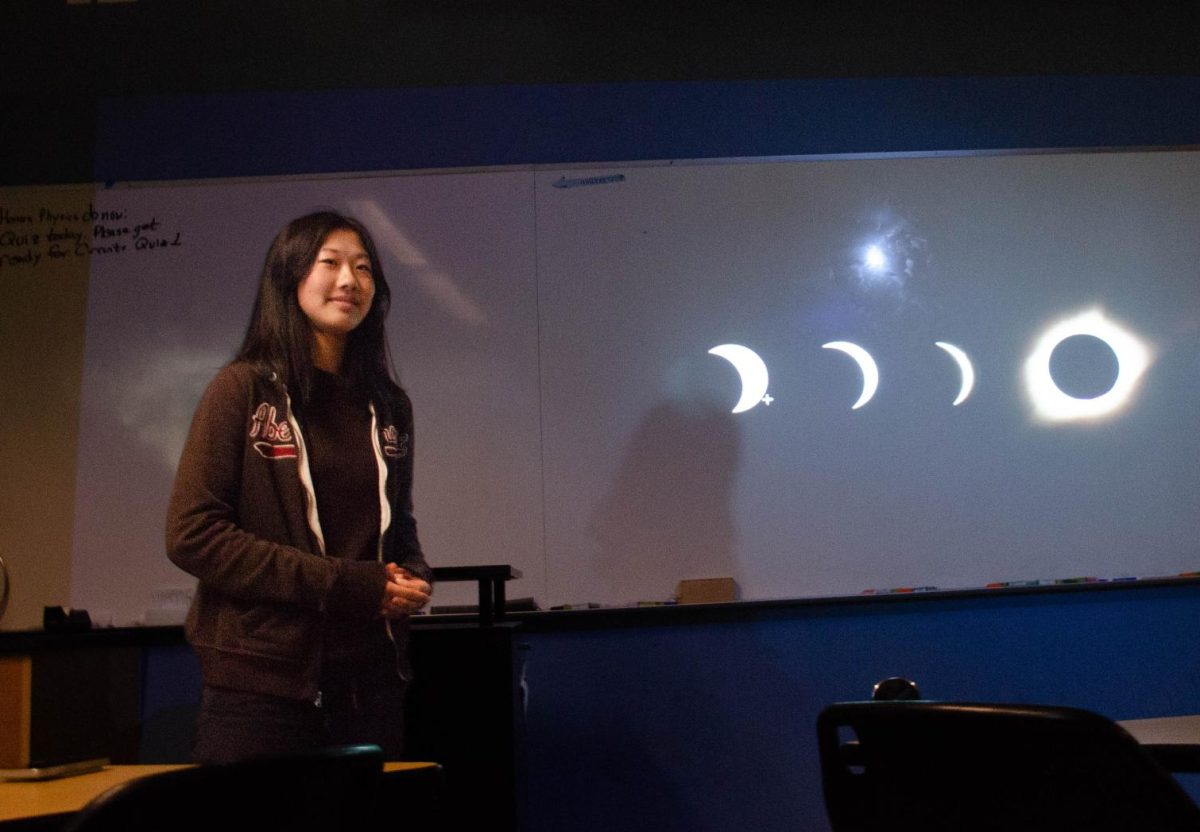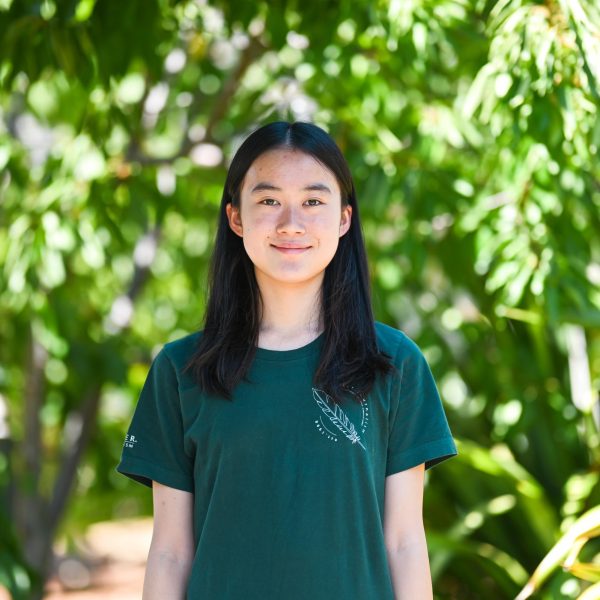
![“I wasn't discouraged by some of the obstacles we faced. I learned a lot from the leadership. I found that different people need different ways of receiving feedback — you can't [just] tell them to do something and expect the best. [Some] people needed more incentive. A large part of my role was to figure out what worked for everyone and to figure out how to lead all these separate individuals as a team,” Suhana Bhandare (’26) said.](https://harkeraquila.com/wp-content/uploads/2026/06/SuhanaBhandare_JasmineHansra-1-1200x798.jpg)


![“This is actually from Randy Pausch Randy P. Brick: ‘Walls are there for a reason. You have to show how much you want to overcome them.’ You have to show how much you want something. That's what I've always been able to do with tennis, Link Crew and getting that internship [with Kushy Baby]. It’s important pushing through that — getting around that brick wall, climbing over it or clawing through it,” Yash Sachdeva (’26) said.](https://harkeraquila.com/wp-content/uploads/2026/05/YashSachdeva_RamBatchu-copy-1200x1002.jpg)

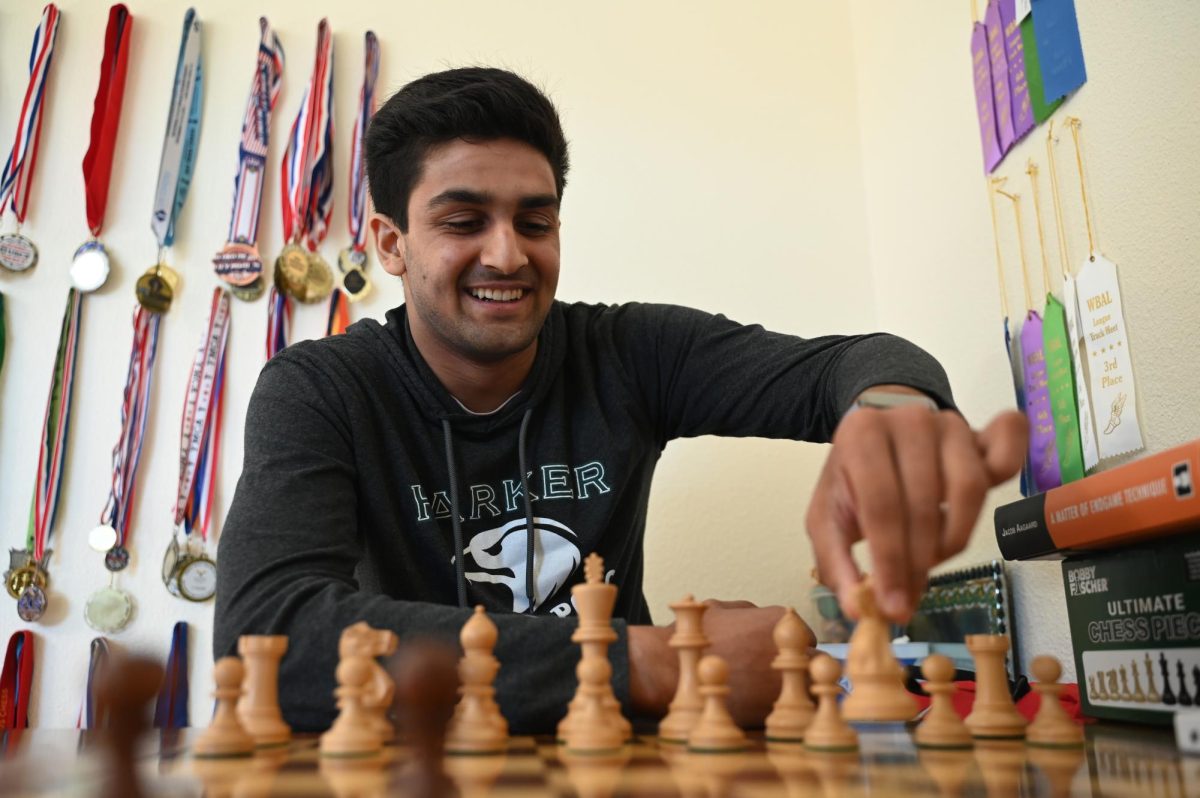
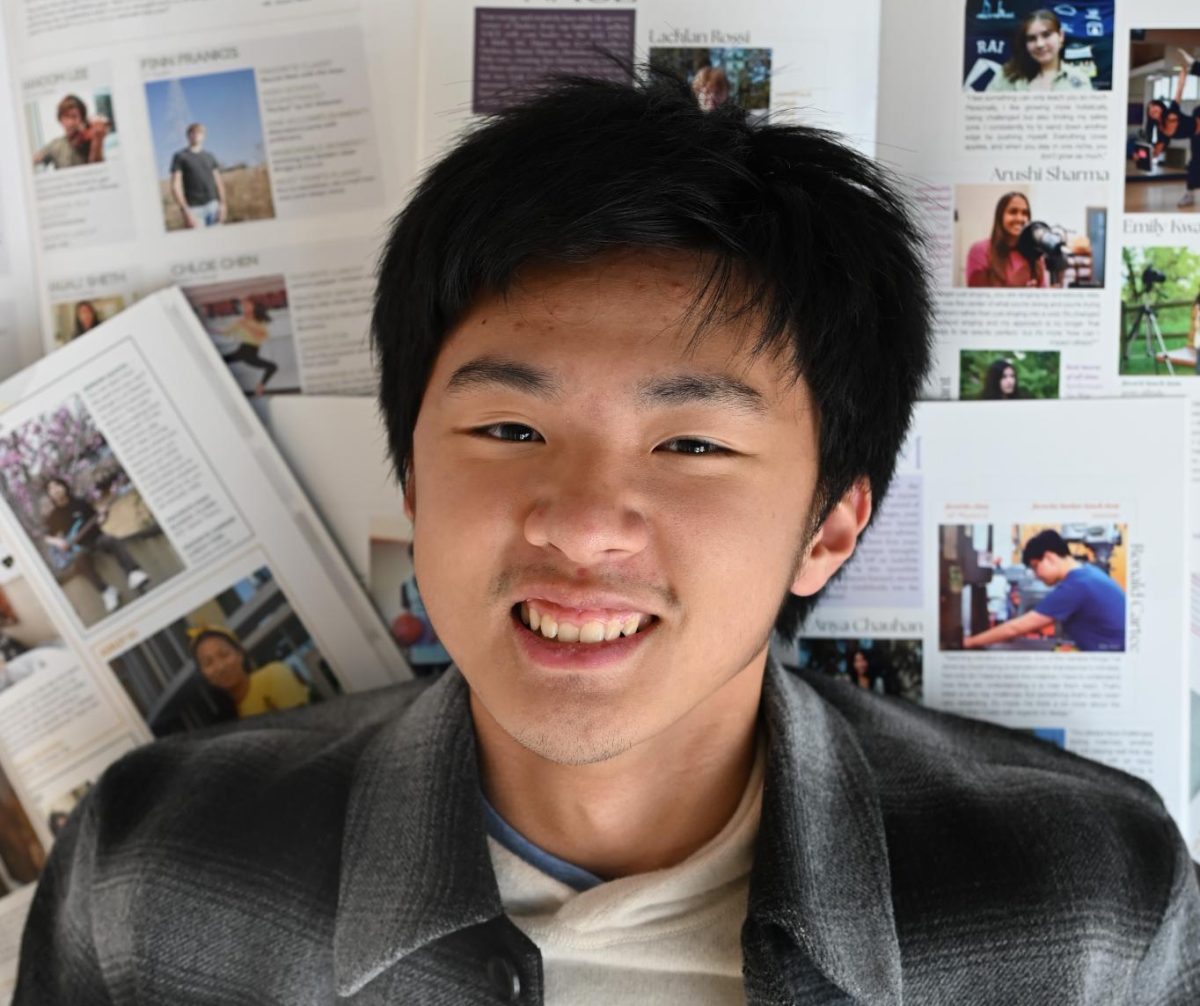








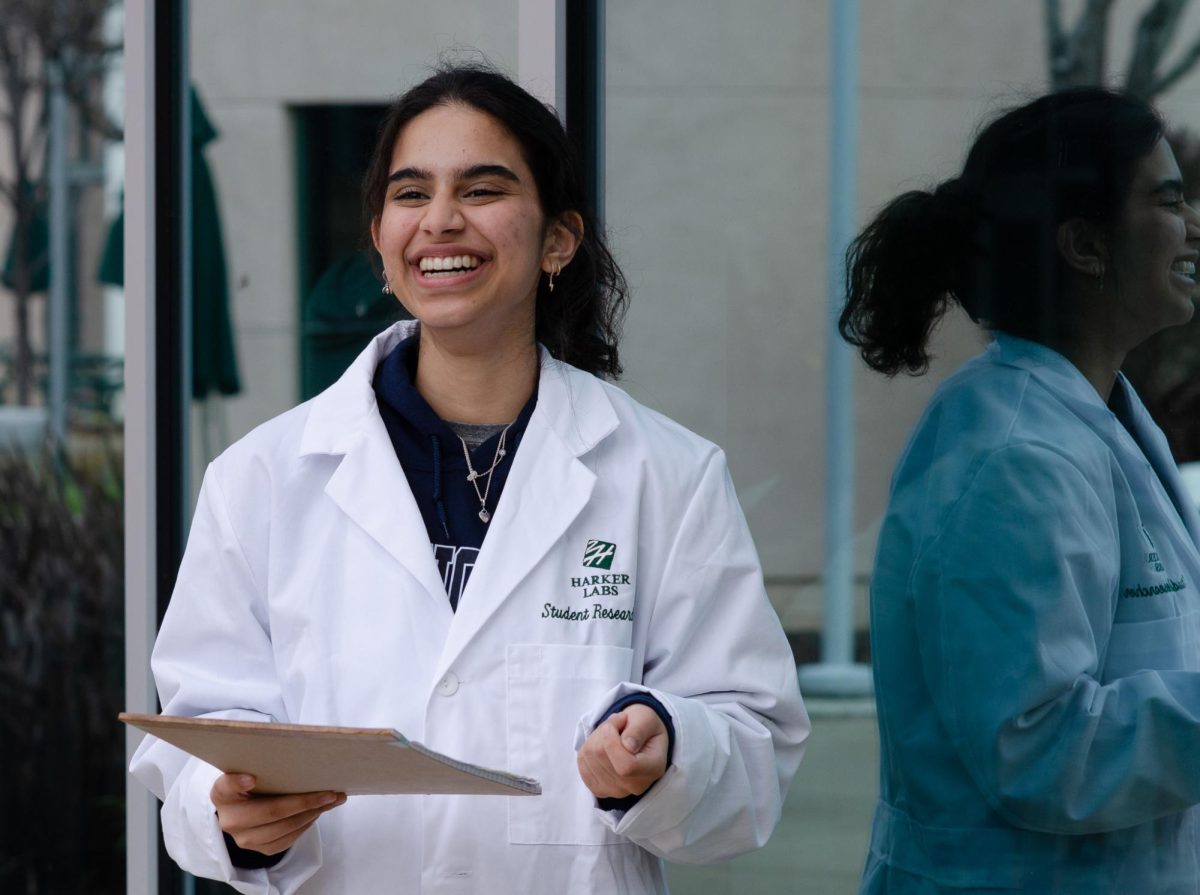
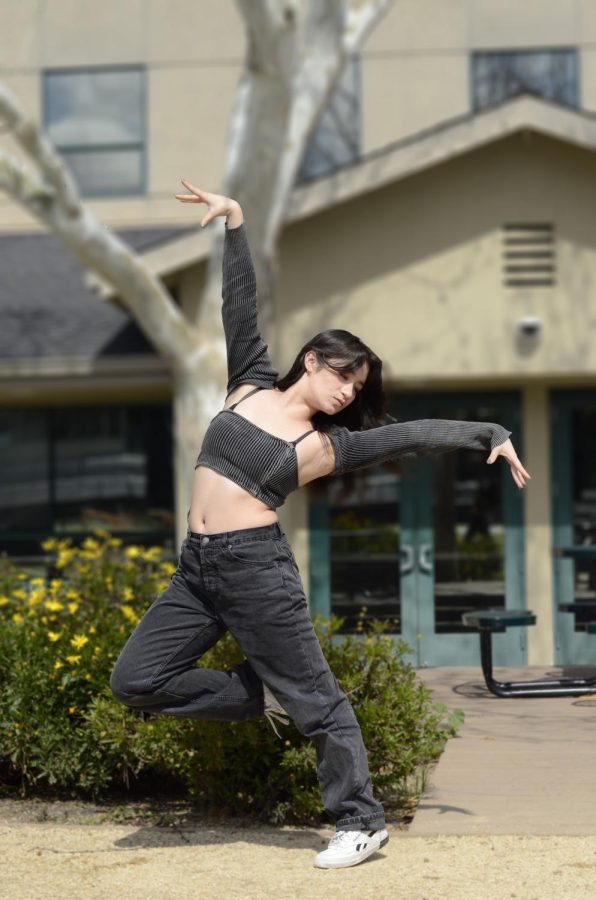
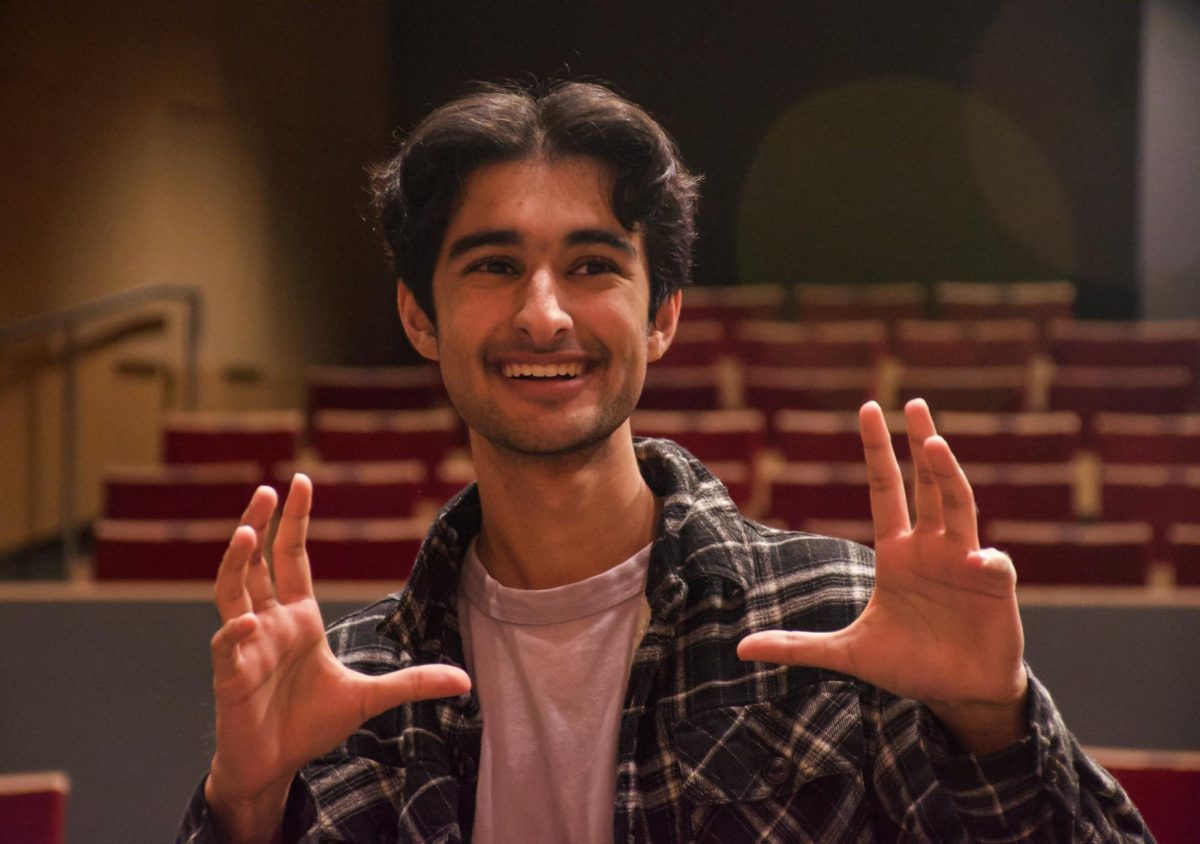


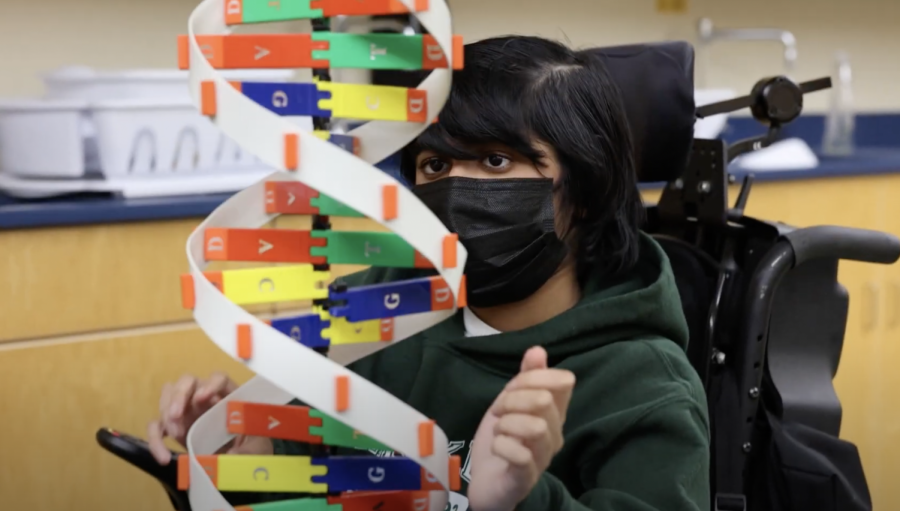
![“[Building nerf blasters] became this outlet of creativity for me that hasn't been matched by anything else. The process [of] making a build complete to your desire is such a painstakingly difficult process, but I've had to learn from [the skills needed from] soldering to proper painting. There's so many different options for everything, if you think about it, it exists. The best part is [that] if it doesn't exist, you can build it yourself," Ishaan Parate said.](https://harkeraquila.com/wp-content/uploads/2022/08/DSC_8149-900x604.jpg)



![“When I came into high school, I was ready to be a follower. But DECA was a game changer for me. It helped me overcome my fear of public speaking, and it's played such a major role in who I've become today. To be able to successfully lead a chapter of 150 students, an officer team and be one of the upperclassmen I once really admired is something I'm [really] proud of,” Anvitha Tummala ('21) said.](https://harkeraquila.com/wp-content/uploads/2021/07/Screen-Shot-2021-07-25-at-9.50.05-AM-900x594.png)






![“I think getting up in the morning and having a sense of purpose [is exciting]. I think without a certain amount of drive, life is kind of obsolete and mundane, and I think having that every single day is what makes each day unique and kind of makes life exciting,” Neymika Jain (12) said.](https://harkeraquila.com/wp-content/uploads/2017/06/Screen-Shot-2017-06-03-at-4.54.16-PM.png)







![“My slogan is ‘slow feet, don’t eat, and I’m hungry.’ You need to run fast to get where you are–you aren't going to get those championships if you aren't fast,” Angel Cervantes (12) said. “I want to do well in school on my tests and in track and win championships for my team. I live by that, [and] I can do that anywhere: in the classroom or on the field.”](https://harkeraquila.com/wp-content/uploads/2018/06/DSC5146-900x601.jpg)
![“[Volleyball has] taught me how to fall correctly, and another thing it taught is that you don’t have to be the best at something to be good at it. If you just hit the ball in a smart way, then it still scores points and you’re good at it. You could be a background player and still make a much bigger impact on the team than you would think,” Anya Gert (’20) said.](https://harkeraquila.com/wp-content/uploads/2020/06/AnnaGert_JinTuan_HoHPhotoEdited-600x900.jpeg)

![“I'm not nearly there yet, but [my confidence has] definitely been getting better since I was pretty shy and timid coming into Harker my freshman year. I know that there's a lot of people that are really confident in what they do, and I really admire them. Everyone's so driven and that has really pushed me to kind of try to find my own place in high school and be more confident,” Alyssa Huang (’20) said.](https://harkeraquila.com/wp-content/uploads/2020/06/AlyssaHuang_EmilyChen_HoHPhoto-900x749.jpeg)




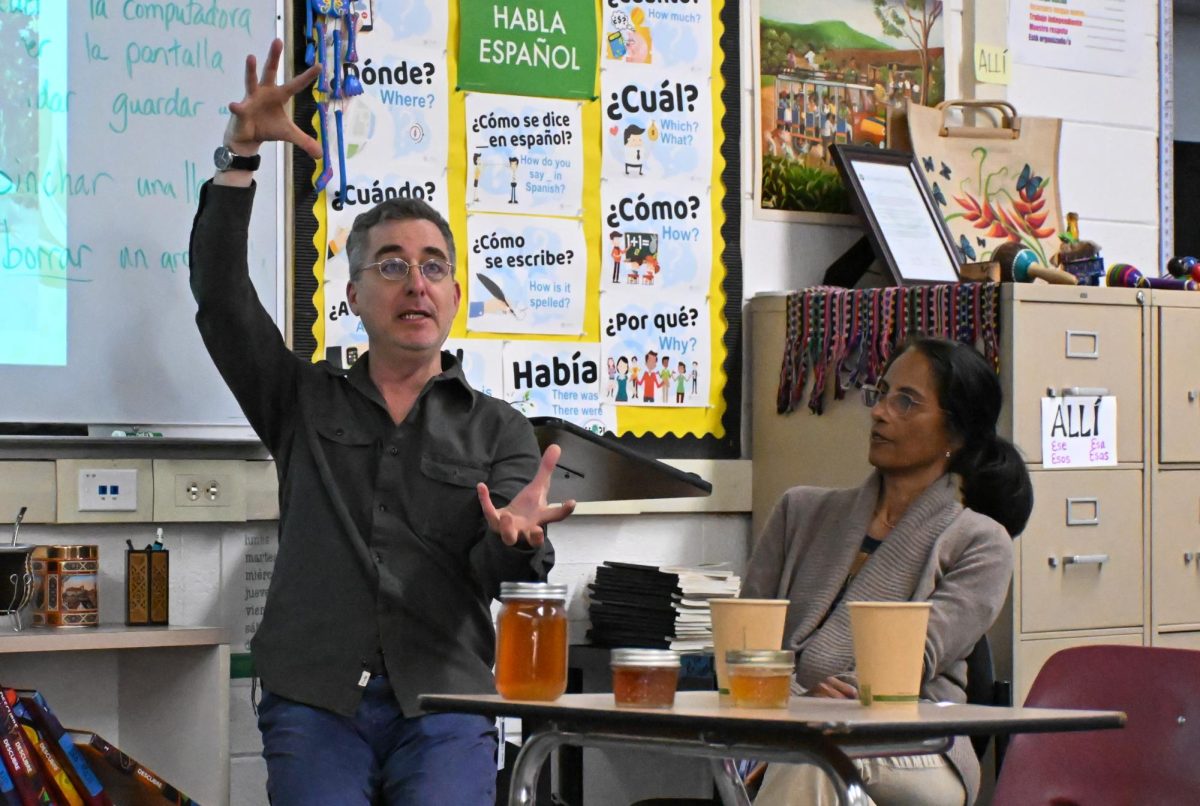
Mathematics professor and author William Dunham spoke about the history of Leonhard Euler and one of his famous infinite series proofs to Math Club on April 20.
Dunham began by introducing 18th-century mathematician Leonhard Euler, whose work formed the foundation of his lecture titled “Another infinite series: tan (π/4) + 1/2 tan(π/8) + 1/4 tan(π/16) + … : does it converge or diverge? It converges… and to what?” Dunham highlighted Euler’s extraordinary productivity, noting that he continued publishing mathematics even after becoming blind and produced over 50 papers in a single year by dictating his ideas to assistants.
“I love Euler because he could find exact answers to problems that seemed impossible,” Dunham said. “He was after a bigger game. He didn’t just want to know that something converged — he wanted the exact value.”
Dunham first showed that the trigonometric series mentioned in the lecture title converged by comparing it to a geometric series, proving its value had to lie between one and two. He explained that directly evaluating each tangent term with half-angle formulas quickly became messy and impractical. Introducing Euler’s original approach, Dunham began by repeatedly applying the double-angle identity for sine on the infinite series to rewrite an angle as an infinite product of sines and cosines.
Attendee Regina Zhang (10) appreciated how Dunham helped make a complex infinite series feel accessible rather than intimidating.
“I like how simple he made it seem,” Regina said. “If I were given that summation by myself, I would not have solved it. However, the way he made it really step by step, I felt like I could do it.”
He then demonstrated Euler’s key “magical” step: taking the natural logarithm of both sides to transform the infinite product into an infinite sum and then differentiating both sides. This allowed the trigonometric terms to collapse neatly into the original series. Substituting theta = π/4 produced the exact answer: the infinite series converges to 4/π.

“When he differentiated the equation, it was suddenly an ‘aha moment’ where everything just kind of came together into the final equation,” Regina said. “It was magical.”
Currently a research associate in mathematics at Bryn Mawr College and this spring’s Paul Halmos Professor of Mathematics at Santa Clara University, Dunham is known for his “Great Thinkers, Great Theorems” lecture series.
At the end of the talk, Dunham challenged students to find Euler’s alternate proof using a different trigonometric identity. He encouraged students to see the lecture not just as a lesson in infinite series, but as an opportunity to witness mathematical brilliance firsthand.
“I hope they took away a brush with greatness,” Dunham said. “You go see Barbra Streisand sing and say, ‘Wow, I just heard the best singer in the world.’ Here, you can say, ‘I just saw one of the greatest mathematicians who ever lived, and I looked over his shoulder and understood what he did.’”
Attendee and History Club Vice President Urvi Singhvi (11) enjoyed both the mathematical and historical sides of Professor William Dunham’s lecture. From a history perspective, Urvi also appreciated how Dunham framed Euler within the broader context of the 18th century.
“He even compared Euler with Benjamin Franklin, and that was kind of cool to see,” Urvi said. “Even if you weren’t more of a math person, you could still understand because he went pretty descriptive and piece by piece.”