![“I wasn't discouraged by some of the obstacles we faced. I learned a lot from the leadership. I found that different people need different ways of receiving feedback — you can't [just] tell them to do something and expect the best. [Some] people needed more incentive. A large part of my role was to figure out what worked for everyone and to figure out how to lead all these separate individuals as a team,” Suhana Bhandare (’26) said.](https://harkeraquila.com/wp-content/uploads/2026/06/SuhanaBhandare_JasmineHansra-1-1200x798.jpg)

![“This is actually from Randy Pausch Randy P. Brick: ‘Walls are there for a reason. You have to show how much you want to overcome them.’ You have to show how much you want something. That's what I've always been able to do with tennis, Link Crew and getting that internship [with Kushy Baby]. It’s important pushing through that — getting around that brick wall, climbing over it or clawing through it,” Yash Sachdeva (’26) said.](https://harkeraquila.com/wp-content/uploads/2026/05/YashSachdeva_RamBatchu-copy-1200x1002.jpg)











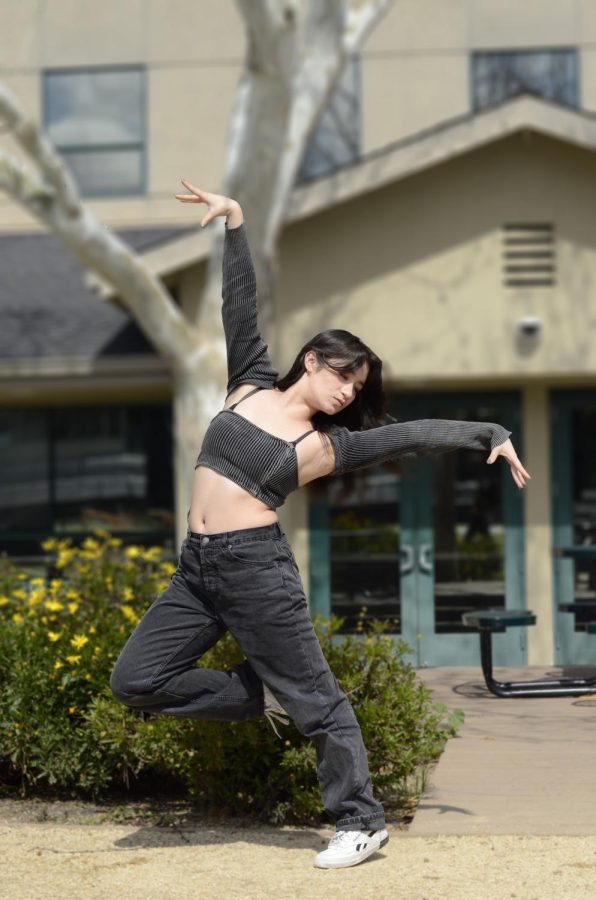
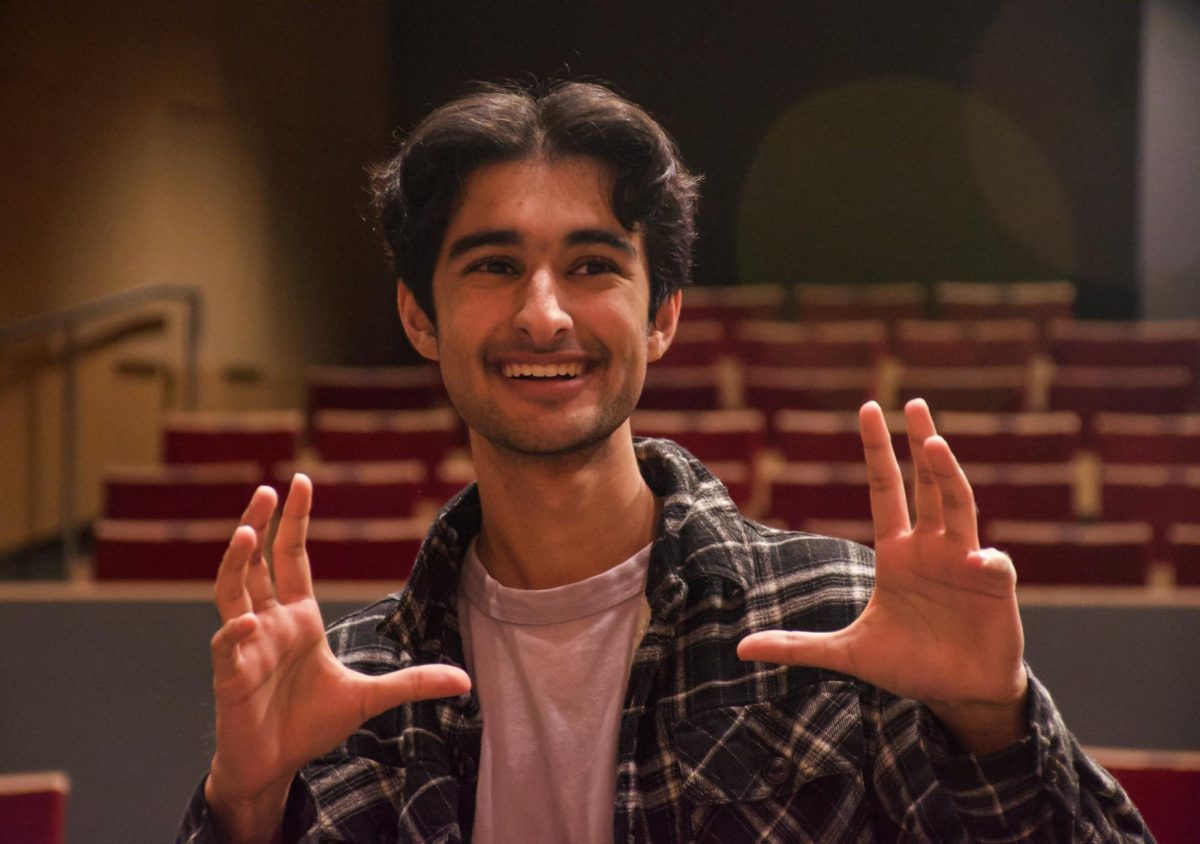


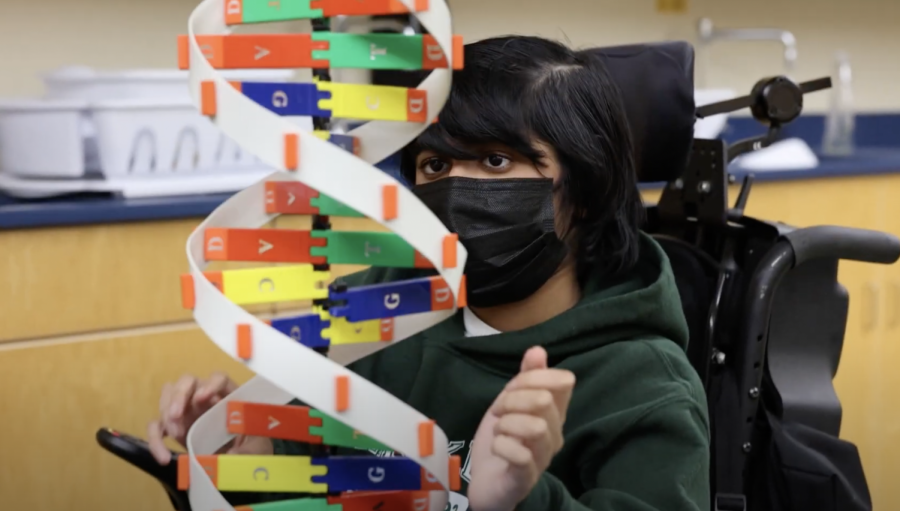
![“[Building nerf blasters] became this outlet of creativity for me that hasn't been matched by anything else. The process [of] making a build complete to your desire is such a painstakingly difficult process, but I've had to learn from [the skills needed from] soldering to proper painting. There's so many different options for everything, if you think about it, it exists. The best part is [that] if it doesn't exist, you can build it yourself," Ishaan Parate said.](https://harkeraquila.com/wp-content/uploads/2022/08/DSC_8149-900x604.jpg)



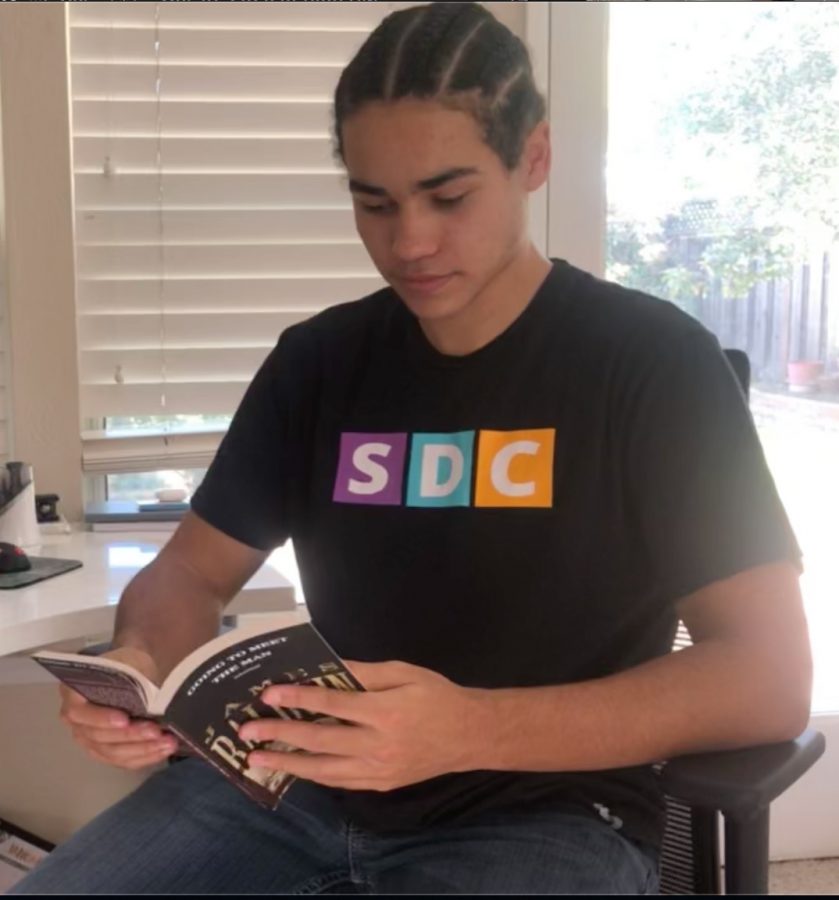
![“When I came into high school, I was ready to be a follower. But DECA was a game changer for me. It helped me overcome my fear of public speaking, and it's played such a major role in who I've become today. To be able to successfully lead a chapter of 150 students, an officer team and be one of the upperclassmen I once really admired is something I'm [really] proud of,” Anvitha Tummala ('21) said.](https://harkeraquila.com/wp-content/uploads/2021/07/Screen-Shot-2021-07-25-at-9.50.05-AM-900x594.png)

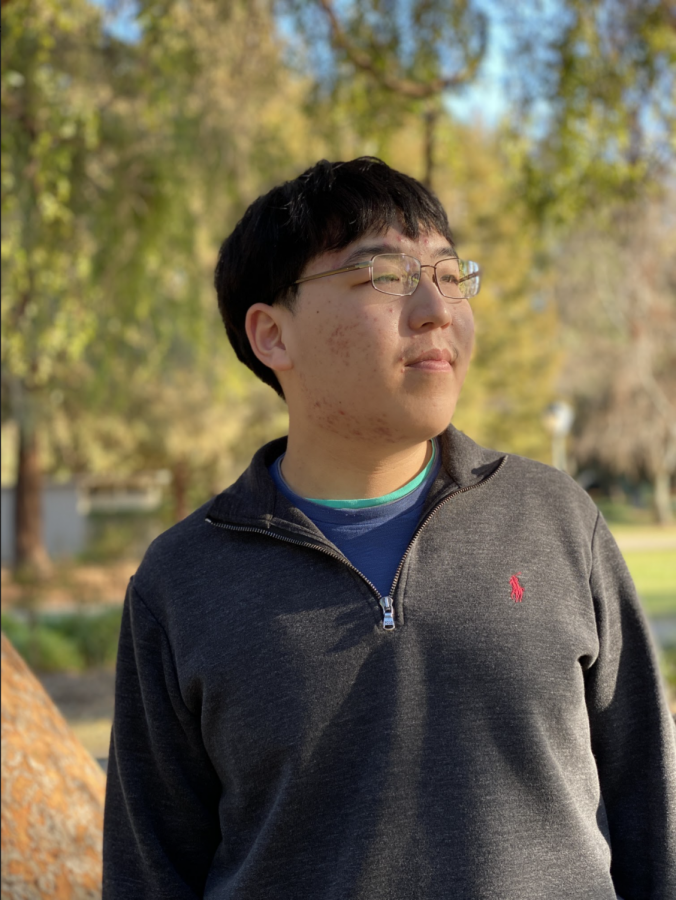





![“I think getting up in the morning and having a sense of purpose [is exciting]. I think without a certain amount of drive, life is kind of obsolete and mundane, and I think having that every single day is what makes each day unique and kind of makes life exciting,” Neymika Jain (12) said.](https://harkeraquila.com/wp-content/uploads/2017/06/Screen-Shot-2017-06-03-at-4.54.16-PM.png)



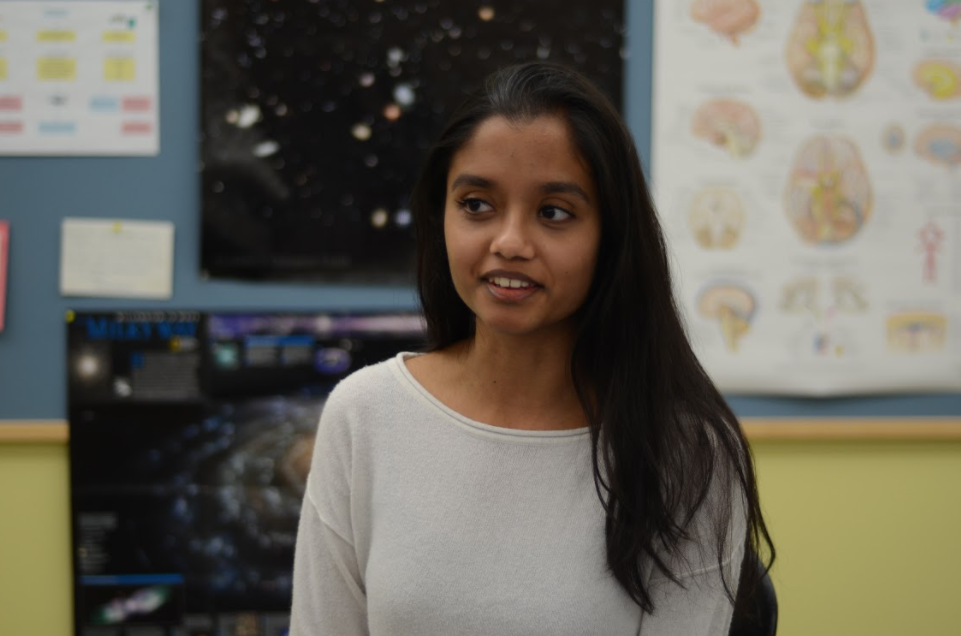


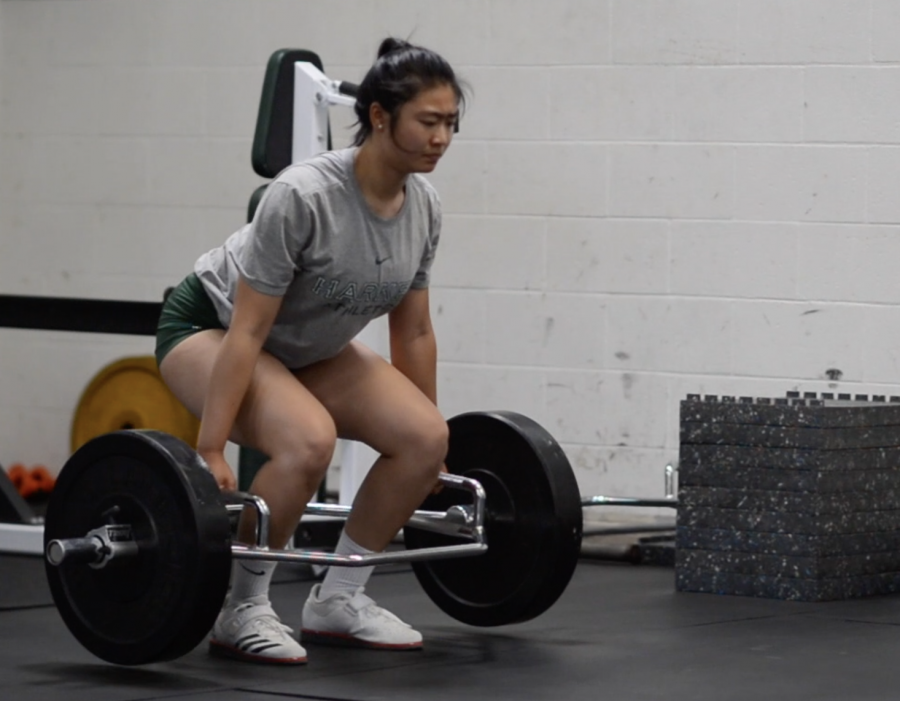

![“My slogan is ‘slow feet, don’t eat, and I’m hungry.’ You need to run fast to get where you are–you aren't going to get those championships if you aren't fast,” Angel Cervantes (12) said. “I want to do well in school on my tests and in track and win championships for my team. I live by that, [and] I can do that anywhere: in the classroom or on the field.”](https://harkeraquila.com/wp-content/uploads/2018/06/DSC5146-900x601.jpg)
![“[Volleyball has] taught me how to fall correctly, and another thing it taught is that you don’t have to be the best at something to be good at it. If you just hit the ball in a smart way, then it still scores points and you’re good at it. You could be a background player and still make a much bigger impact on the team than you would think,” Anya Gert (’20) said.](https://harkeraquila.com/wp-content/uploads/2020/06/AnnaGert_JinTuan_HoHPhotoEdited-600x900.jpeg)

![“I'm not nearly there yet, but [my confidence has] definitely been getting better since I was pretty shy and timid coming into Harker my freshman year. I know that there's a lot of people that are really confident in what they do, and I really admire them. Everyone's so driven and that has really pushed me to kind of try to find my own place in high school and be more confident,” Alyssa Huang (’20) said.](https://harkeraquila.com/wp-content/uploads/2020/06/AlyssaHuang_EmilyChen_HoHPhoto-900x749.jpeg)




Math researcher Nico Diaz-Wahl talked about diophantine equations, elliptic curves and cryptography to Math Club on Tuesday.
A fifth year Ph.D. student, Nico spoke about the primary focus of his research at Purdue, number theory. Having previously taught math classes for the Harker summer program, Diaz-Wahl wished to explore certain topics like elliptic curves more in-depth and to showcase some of their practical applications.
“I love sharing math that you probably wouldn’t see in high school,” Diaz-Wahl said. “A school curriculum kind of locks you into a specific mindset, and people get a certain idea of what mathematics is, but mathematics is so much more than that. Factoring equations, looking for integer solutions, things like that explode into these extremely vast research areas.”
Diaz-Wahl first discussed the history of diophantine equations, or polynomial equations requiring integer solutions. He then dove into the use of Pell’s equation, a specific type of Diophantine equation of the form x^2-ny^2=1. Diaz-Wahl explained how using a bijection on the unit circle and on the x-axis could allow one to characterize all rational Pythagorean triples.
Diaz-Wahl’s talk then moved towards Short Weistrauss Form elliptic curves, a special type of mathematical curve in the form of y^2=x^3+ax+b. He discussed the elliptic curve discrete logarithm problem, the challenge of figuring out how many times a point was added to itself on a curve, given only the starting point and the final result.
Essentially, repeatedly adding a point to itself on the elliptic curve is easy to compute, but figuring out how many points were added given only a final value is extremely difficult. He explained how Elliptic Curve Cryptography uses this one-way difficulty to secure digital communication.
Math Club member Keji Yuan (9) enjoyed the talk as an early introduction to higher-level mathematics and research.
“I hope that he can come back for a second lecture either this or next year,” Keji said. “The way he structured the lecture had a logical flow to it, and it was really engaging as a whole, especially when he demonstrated the point doubling in the elliptic curves, and used it to prove various topics associated with Fermat’s Last Theorem.”

As a fun demonstration, Diaz-Wahl ended the talk by showing the club a seemingly simple equation with three unknown variables that was being discussed on Mathematics Stack Exchange. Diaz-Wahl explained how solving such an equation required the use of a computer program and elliptic curves approach.
Director of Events & Outreach Elaine Xu (11) discussed her favorite parts of the meeting. Joining the Math Club team last year, Elaine manages the club’s instagram and saw connections between Diaz-Wahl’s research and her own math competition experience.
“He connected a lot of different areas, made it all relatable to us and also mentioned an olympiad problem,” Elaine said. “I found it really funny when he showed us the program he made with elliptic curve solutions 50 digits long and taught us how it related to cryptography.”
Diaz-Wahl hopes to continue sharing his passions with students at the Harker School. He will be teaching another Harker summer class on Algebra 2 this year.
“I want [students] to take away that there’s a lot under the surface of the math that they see in school,” Diaz-Wahl said. “Math has practical applications in our everyday lives, but what fascinates me are all these rich structures that we see in mathematics that are a little bit hidden under the surface at first.”