![“I wasn't discouraged by some of the obstacles we faced. I learned a lot from the leadership. I found that different people need different ways of receiving feedback — you can't [just] tell them to do something and expect the best. [Some] people needed more incentive. A large part of my role was to figure out what worked for everyone and to figure out how to lead all these separate individuals as a team,” Suhana Bhandare (’26) said.](https://harkeraquila.com/wp-content/uploads/2026/06/SuhanaBhandare_JasmineHansra-1-1200x798.jpg)

![“This is actually from Randy Pausch Randy P. Brick: ‘Walls are there for a reason. You have to show how much you want to overcome them.’ You have to show how much you want something. That's what I've always been able to do with tennis, Link Crew and getting that internship [with Kushy Baby]. It’s important pushing through that — getting around that brick wall, climbing over it or clawing through it,” Yash Sachdeva (’26) said.](https://harkeraquila.com/wp-content/uploads/2026/05/YashSachdeva_RamBatchu-copy-1200x1002.jpg)
















![“[Building nerf blasters] became this outlet of creativity for me that hasn't been matched by anything else. The process [of] making a build complete to your desire is such a painstakingly difficult process, but I've had to learn from [the skills needed from] soldering to proper painting. There's so many different options for everything, if you think about it, it exists. The best part is [that] if it doesn't exist, you can build it yourself," Ishaan Parate said.](https://harkeraquila.com/wp-content/uploads/2022/08/DSC_8149-900x604.jpg)



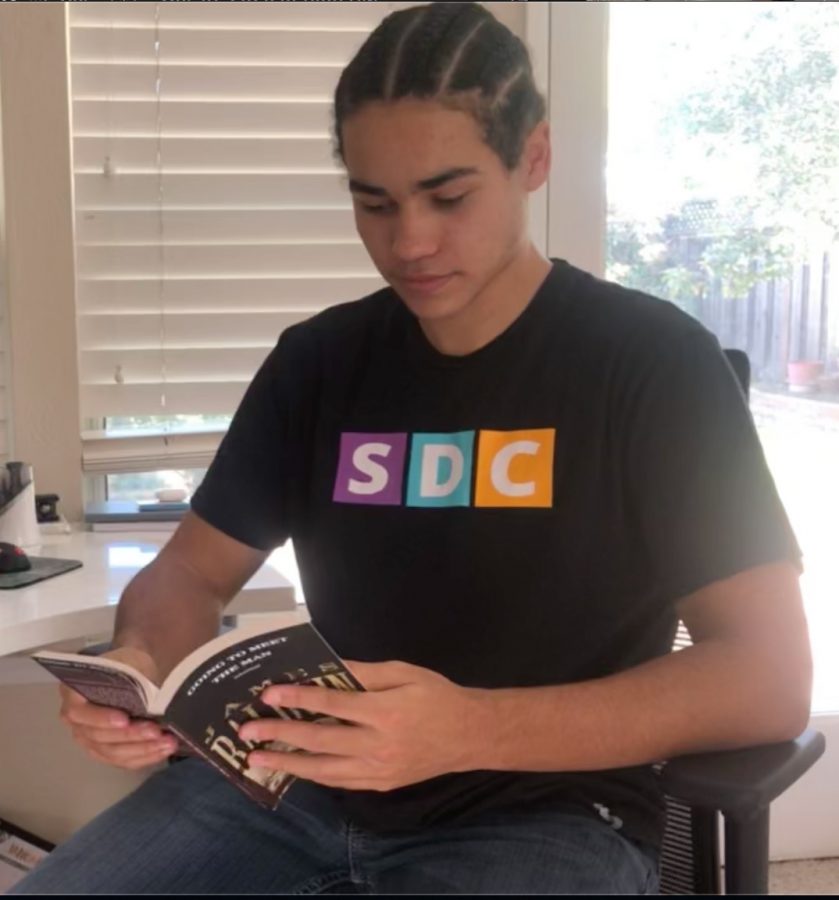
![“When I came into high school, I was ready to be a follower. But DECA was a game changer for me. It helped me overcome my fear of public speaking, and it's played such a major role in who I've become today. To be able to successfully lead a chapter of 150 students, an officer team and be one of the upperclassmen I once really admired is something I'm [really] proud of,” Anvitha Tummala ('21) said.](https://harkeraquila.com/wp-content/uploads/2021/07/Screen-Shot-2021-07-25-at-9.50.05-AM-900x594.png)







![“I think getting up in the morning and having a sense of purpose [is exciting]. I think without a certain amount of drive, life is kind of obsolete and mundane, and I think having that every single day is what makes each day unique and kind of makes life exciting,” Neymika Jain (12) said.](https://harkeraquila.com/wp-content/uploads/2017/06/Screen-Shot-2017-06-03-at-4.54.16-PM.png)






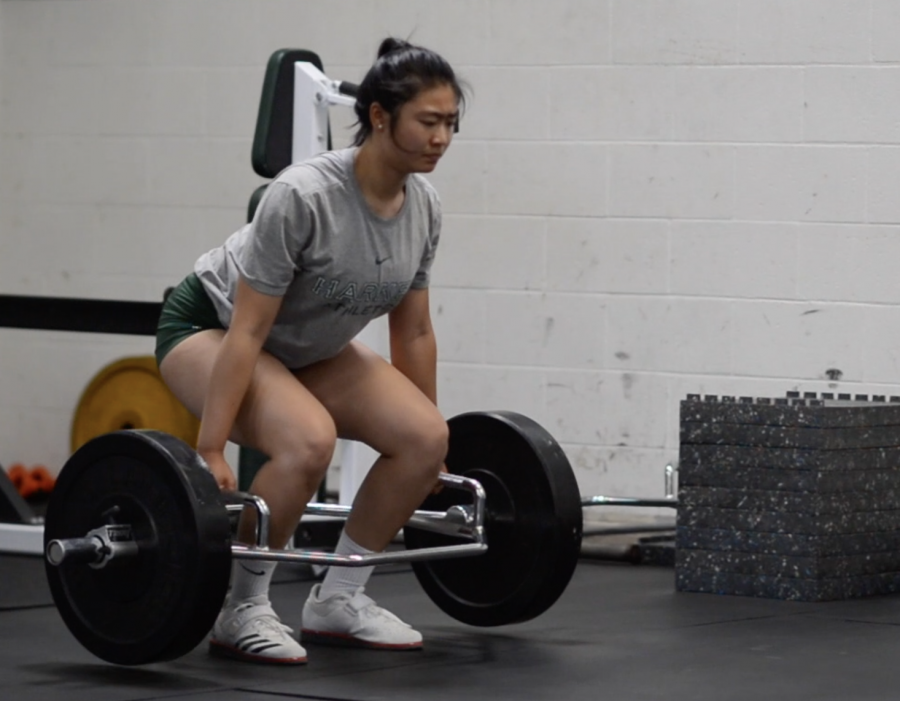

![“My slogan is ‘slow feet, don’t eat, and I’m hungry.’ You need to run fast to get where you are–you aren't going to get those championships if you aren't fast,” Angel Cervantes (12) said. “I want to do well in school on my tests and in track and win championships for my team. I live by that, [and] I can do that anywhere: in the classroom or on the field.”](https://harkeraquila.com/wp-content/uploads/2018/06/DSC5146-900x601.jpg)
![“[Volleyball has] taught me how to fall correctly, and another thing it taught is that you don’t have to be the best at something to be good at it. If you just hit the ball in a smart way, then it still scores points and you’re good at it. You could be a background player and still make a much bigger impact on the team than you would think,” Anya Gert (’20) said.](https://harkeraquila.com/wp-content/uploads/2020/06/AnnaGert_JinTuan_HoHPhotoEdited-600x900.jpeg)

![“I'm not nearly there yet, but [my confidence has] definitely been getting better since I was pretty shy and timid coming into Harker my freshman year. I know that there's a lot of people that are really confident in what they do, and I really admire them. Everyone's so driven and that has really pushed me to kind of try to find my own place in high school and be more confident,” Alyssa Huang (’20) said.](https://harkeraquila.com/wp-content/uploads/2020/06/AlyssaHuang_EmilyChen_HoHPhoto-900x749.jpeg)




You stare at the essay draft on your screen. It’s a mess: the wording is awkward and cluttered, the structure is underdeveloped, the ideas are half-formed. You can already see the hours slipping away as you painstakingly revise sentence by sentence, all in pursuit of something barely passable. Or you could simply open a new tab, paste the draft into ChatGPT and watch it return a polished, articulate essay that says everything you struggled to express. With just a few edits, it’s ready to turn in, returning a higher grade without the exhaustion.
The thought has crossed my mind, too, especially during my busiest weeks, when it feels like I can’t squander even a minute. Like many students, I’ve asked myself: why would I spend hours on something that can be accomplished in a few minutes?
The rise of chatbots has undeniably transformed how we work and learn: AI has probably saved me hundreds of hours of reading dense papers and debugging thousands of lines of code. It’s no surprise that people now turn to chatbots for everything from cheating on assignments to conducting groundbreaking research.
However, research published this year has revealed a dangerous consequence of this growing reliance. In a UK study of 666 participants, heavier AI use correlated with significantly lower scores on critical thinking measures. In an MIT study, 54 participants wrote essays either unaided, with Google Search or with ChatGPT while wearing EEG headsets. The results showed that ChatGPT users displayed the weakest and least distributed brain connectivity. Over repeated sessions, they demonstrated lower neural activation and weaker memory recall.
Critical thinking is a cognitively expensive process: recalling what you know, considering alternatives and challenging your assumptions is hard work. When you offload this struggle to a machine, you bypass the effort that strengthens your mind, weakening your capacity for deep thought.
Of course, using a chatbot to help brainstorm arguments or polish phrasing will not have the same mental effect as generating an entire essay from a prompt. But even small tasks, when repeated, can quietly erode our cognitive independence. While each skipped mental step may seem insignificant, over time it can accumulate into habit until the reliance becomes automatic.
Over the past few years, I’ve witnessed that dependence grow, to the point where I’ve seen peers using ChatGPT in class discussions to generate comments instead of forming their own. Is it that difficult to rely on your own mental processes to come up with a response? For some, AI has become not just a time-saver, but a way to avoid the discomfort of thinking itself.
Thinking is slow and uncertain and requires confronting the possibility of being wrong. The danger of replacing that doubt with effortless certainty is once we grow used to it, the struggle of genuine thought begins to feel intolerable. We start to conflate a lack of struggle with intelligence.
Cognitive offloading is not a new phenomenon. For centuries, humans have used this strategy to become more capable, from storing phone numbers in devices instead of memory to using calculators to perform mathematical operations. To some extent, cognitive offload is beneficial: by automating routine tasks, it can free our minds for more complex, creative pursuits. Just as calculators facilitate more advanced mathematics, some may wonder why we “waste” our mental effort on tasks that can be completed by AI.
The difference lies in what we’re offloading: not just data storage or mechanical computation, but often the entire process of reasoning itself. When machines handle our analysis and reflection, we risk weakening our very capacity for independent thought and creativity.
It’s hard to step away from AI when it saves so much time, and it’s unreasonable to completely cut out AI usage in a world that is increasingly built on it. But protecting your ability to think critically begins with a recognition that it’s at risk and a willingness to go out of your way to preserve it.
When the impulse to let AI solve your problems inevitably arises, resist it. Conversely, when AI is used with intention, it can challenge your thinking rather than replace it. It might mean asking what perspectives you’re overlooking in an argument or using it as a discussion partner to test your understanding of a challenging article. Taking a few extra minutes or hours to reason through a problem may seem inefficient, but in the long run, it sustains something far more valuable: the strength of the human mind.