![“I wasn't discouraged by some of the obstacles we faced. I learned a lot from the leadership. I found that different people need different ways of receiving feedback — you can't [just] tell them to do something and expect the best. [Some] people needed more incentive. A large part of my role was to figure out what worked for everyone and to figure out how to lead all these separate individuals as a team,” Suhana Bhandare (’26) said.](https://harkeraquila.com/wp-content/uploads/2026/06/SuhanaBhandare_JasmineHansra-1-1200x798.jpg)

![“This is actually from Randy Pausch Randy P. Brick: ‘Walls are there for a reason. You have to show how much you want to overcome them.’ You have to show how much you want something. That's what I've always been able to do with tennis, Link Crew and getting that internship [with Kushy Baby]. It’s important pushing through that — getting around that brick wall, climbing over it or clawing through it,” Yash Sachdeva (’26) said.](https://harkeraquila.com/wp-content/uploads/2026/05/YashSachdeva_RamBatchu-copy-1200x1002.jpg)




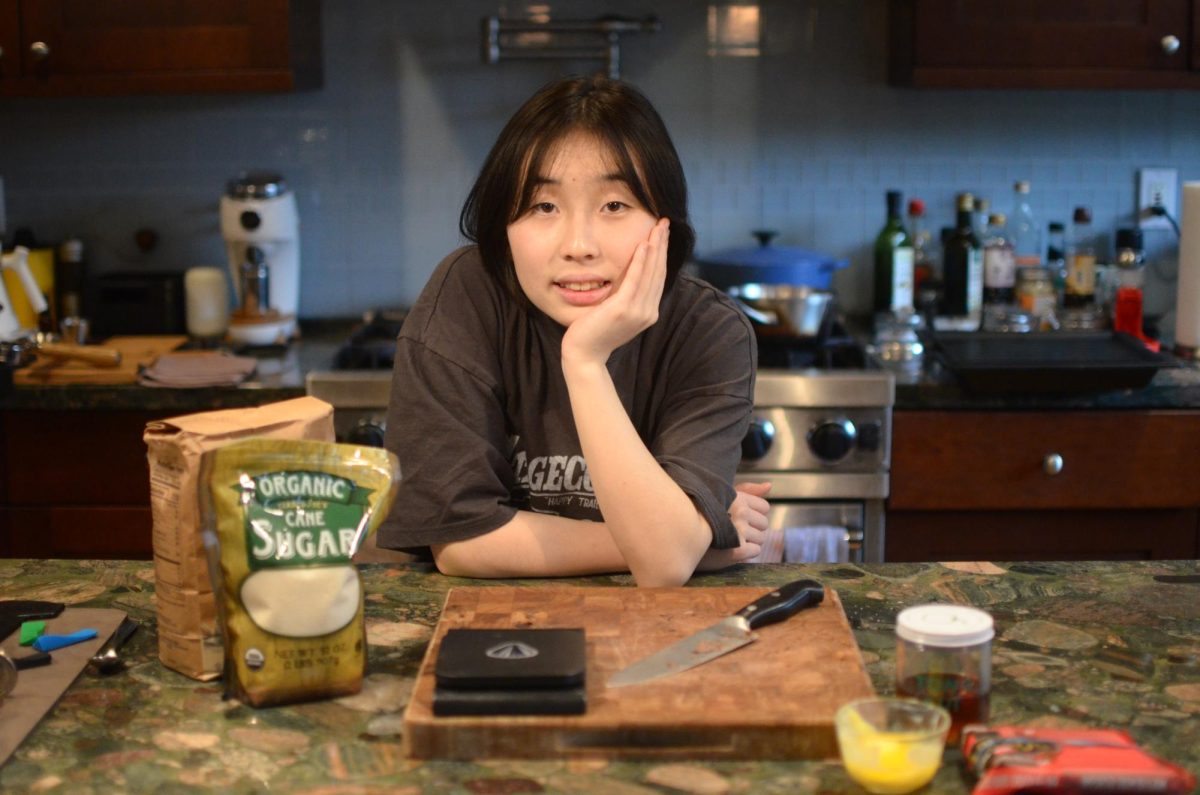


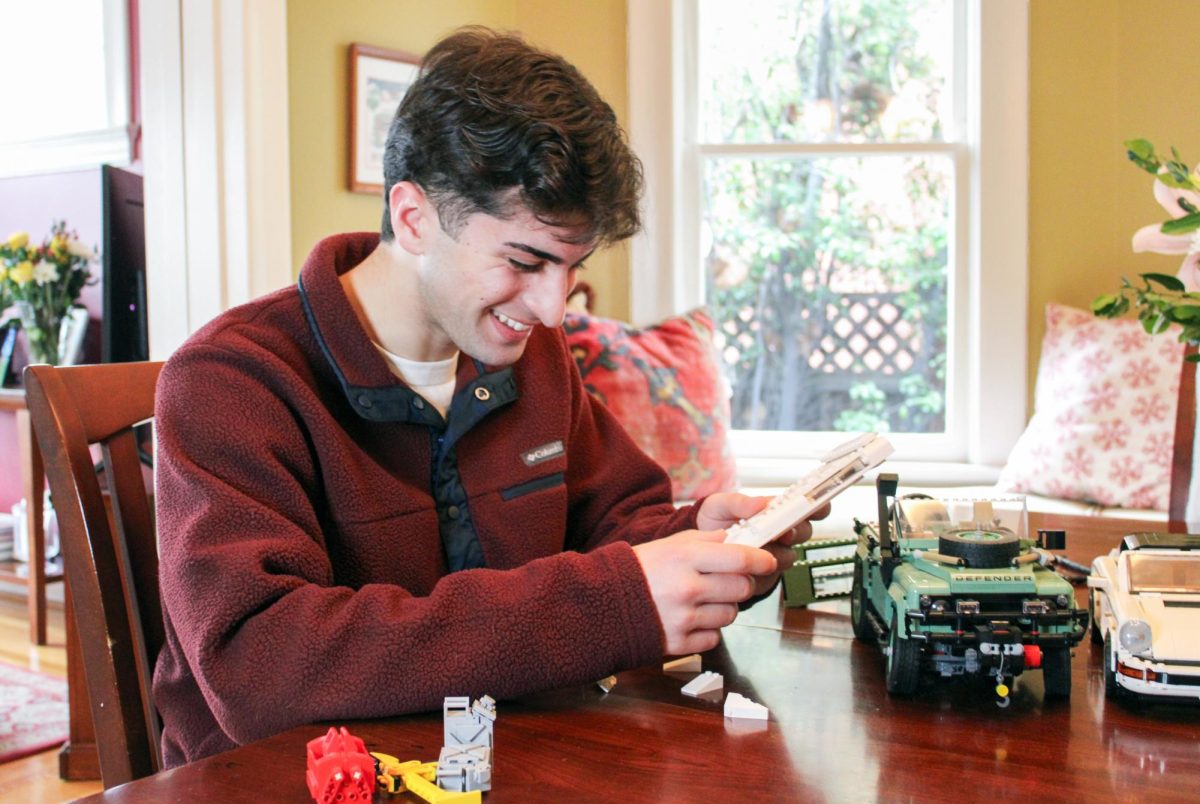

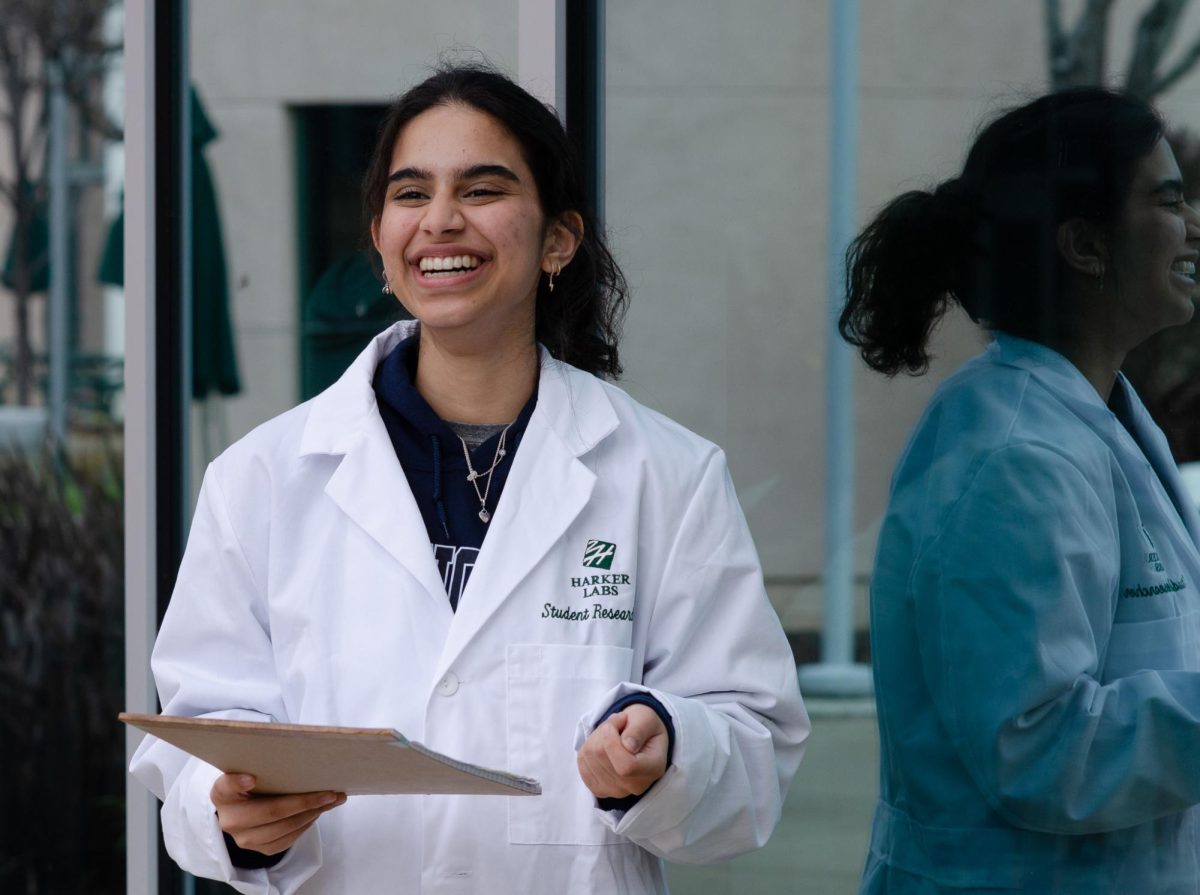
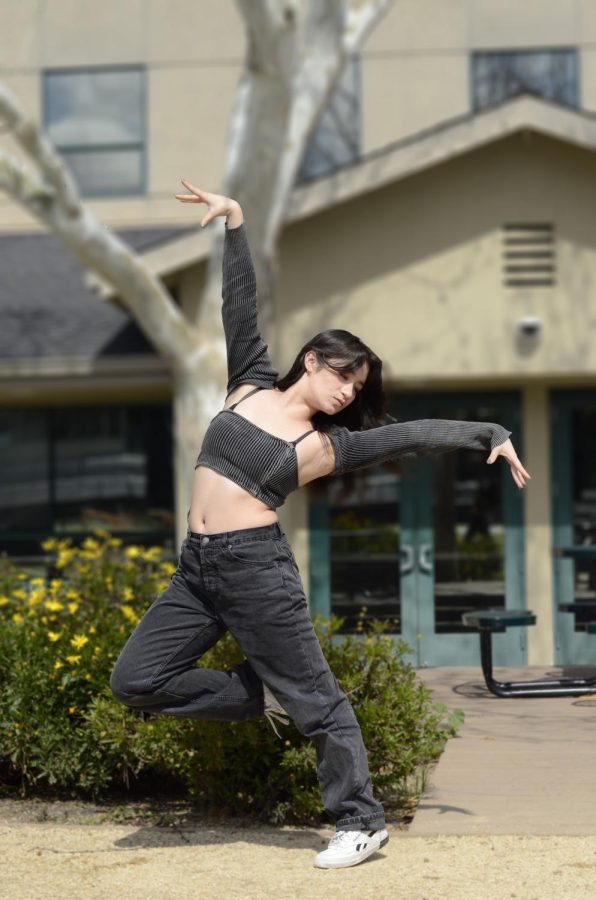
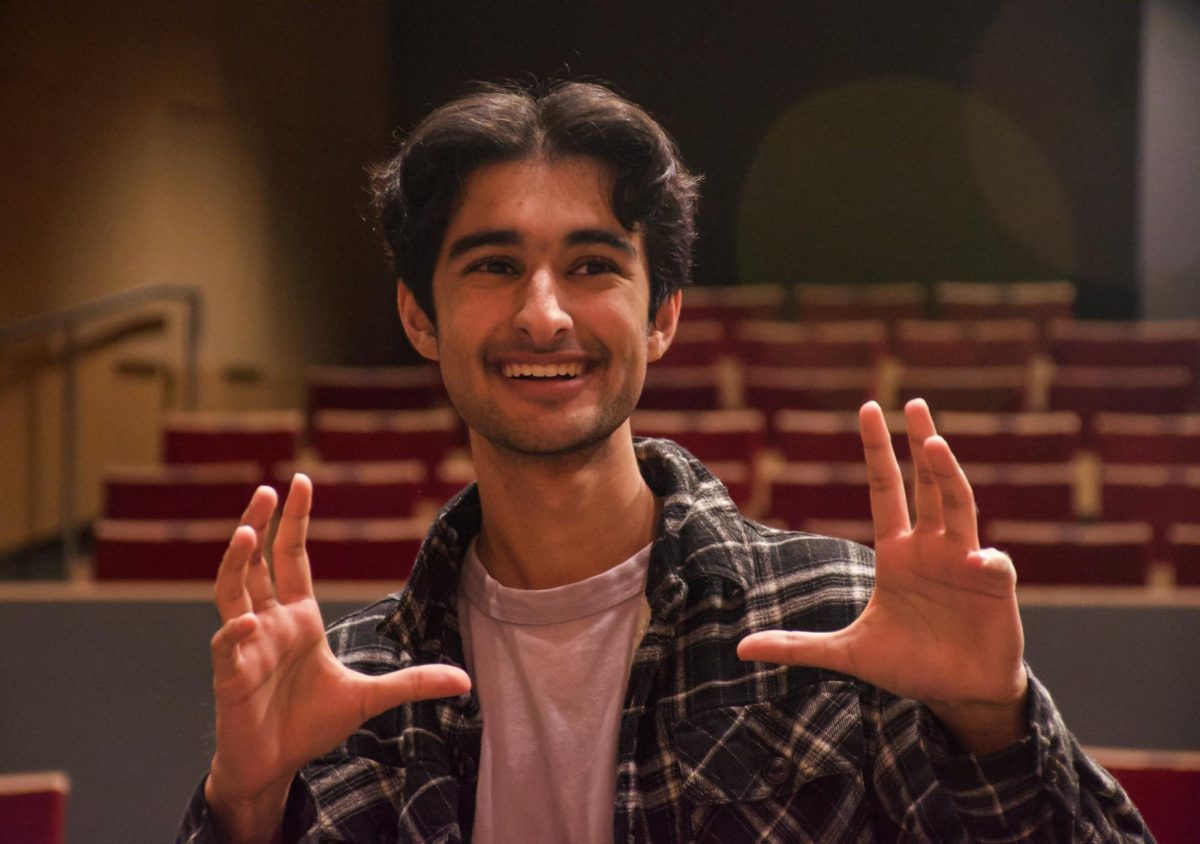

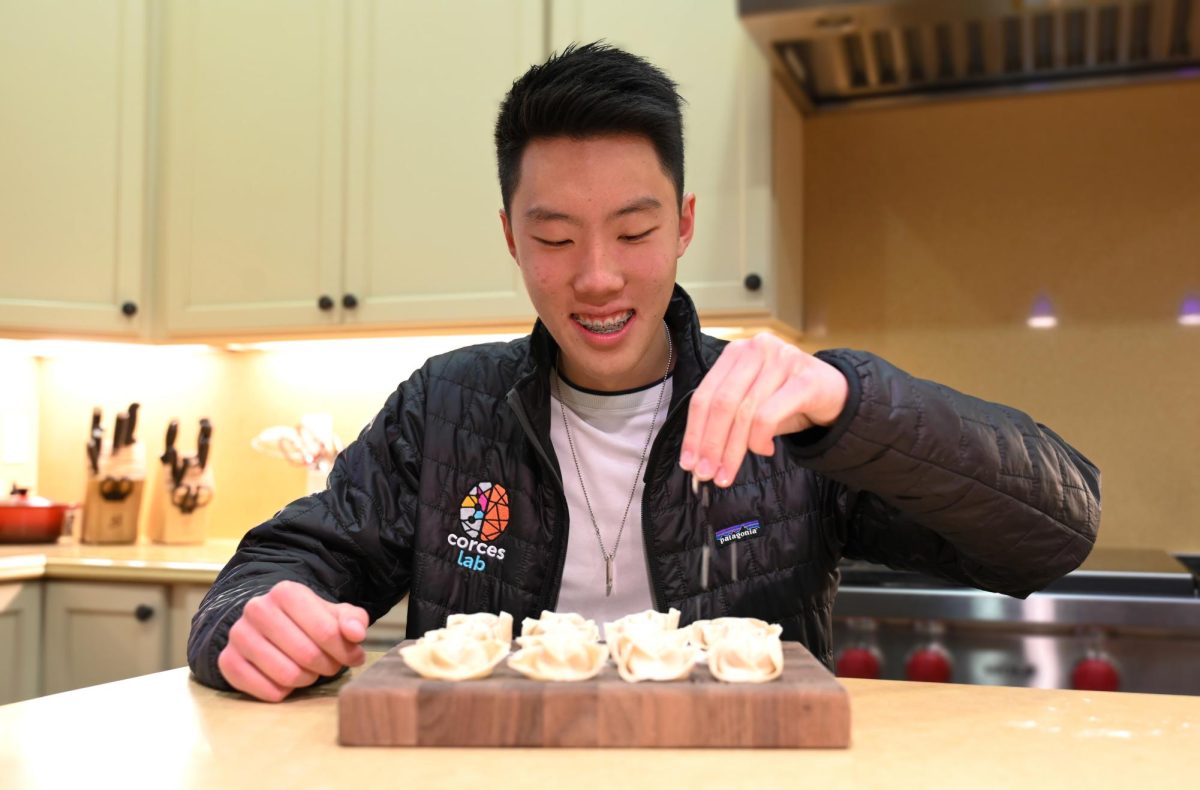
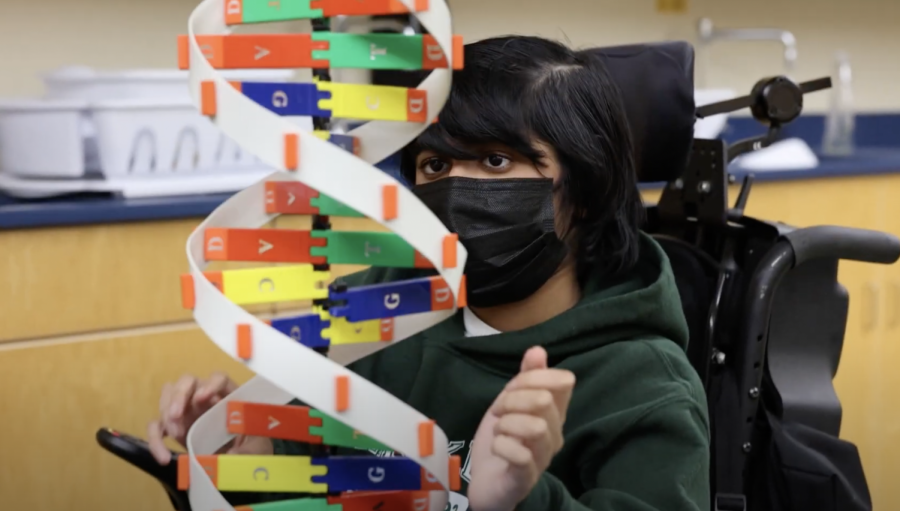
![“[Building nerf blasters] became this outlet of creativity for me that hasn't been matched by anything else. The process [of] making a build complete to your desire is such a painstakingly difficult process, but I've had to learn from [the skills needed from] soldering to proper painting. There's so many different options for everything, if you think about it, it exists. The best part is [that] if it doesn't exist, you can build it yourself," Ishaan Parate said.](https://harkeraquila.com/wp-content/uploads/2022/08/DSC_8149-900x604.jpg)
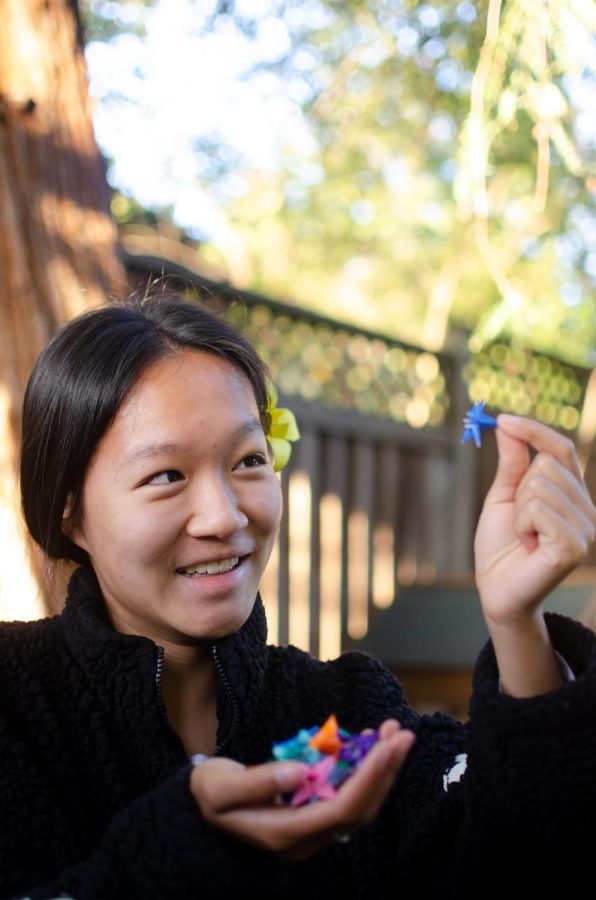
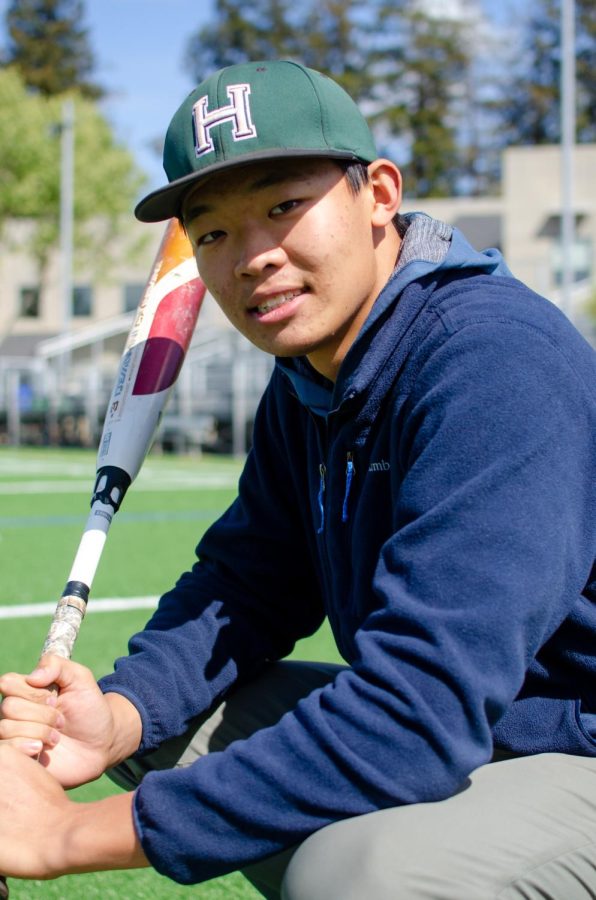

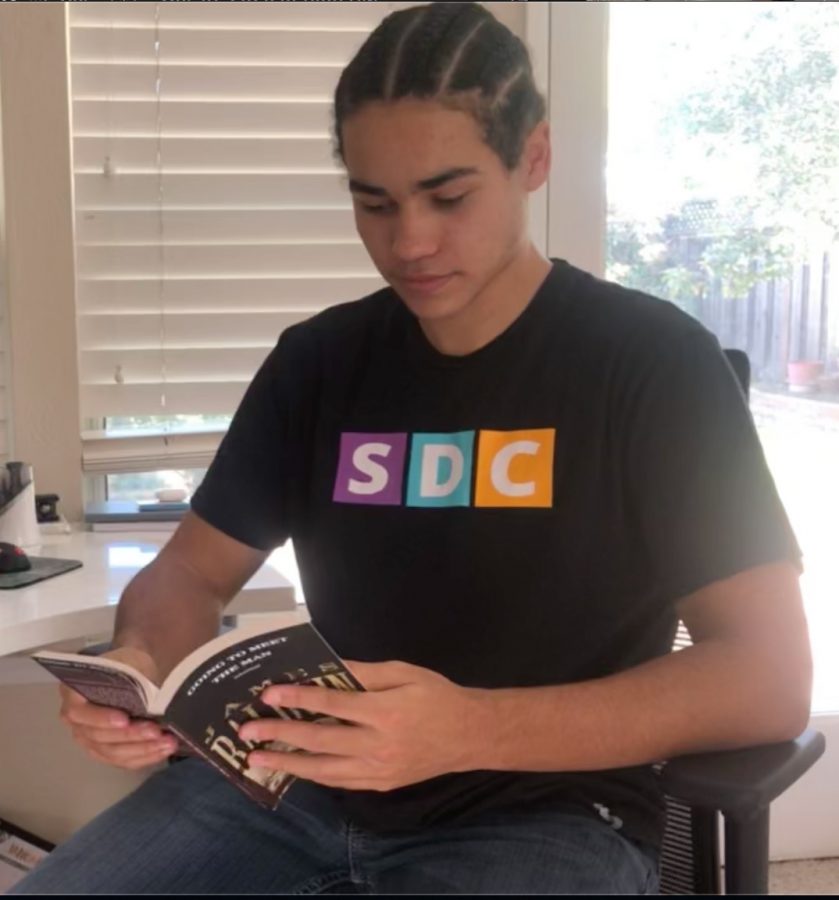
![“When I came into high school, I was ready to be a follower. But DECA was a game changer for me. It helped me overcome my fear of public speaking, and it's played such a major role in who I've become today. To be able to successfully lead a chapter of 150 students, an officer team and be one of the upperclassmen I once really admired is something I'm [really] proud of,” Anvitha Tummala ('21) said.](https://harkeraquila.com/wp-content/uploads/2021/07/Screen-Shot-2021-07-25-at-9.50.05-AM-900x594.png)
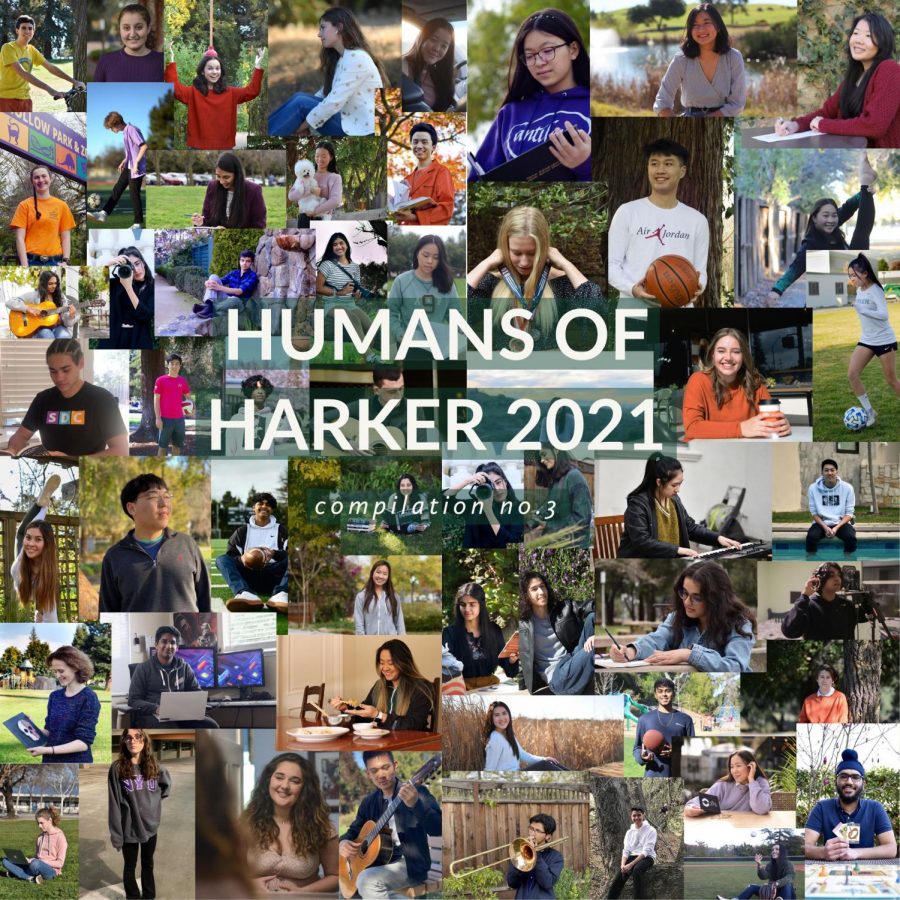



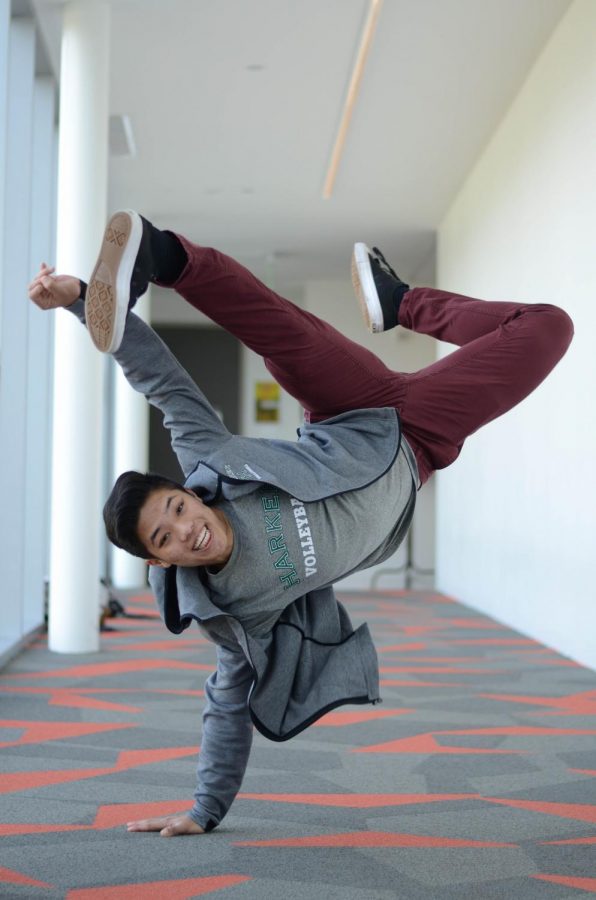


![“I think getting up in the morning and having a sense of purpose [is exciting]. I think without a certain amount of drive, life is kind of obsolete and mundane, and I think having that every single day is what makes each day unique and kind of makes life exciting,” Neymika Jain (12) said.](https://harkeraquila.com/wp-content/uploads/2017/06/Screen-Shot-2017-06-03-at-4.54.16-PM.png)

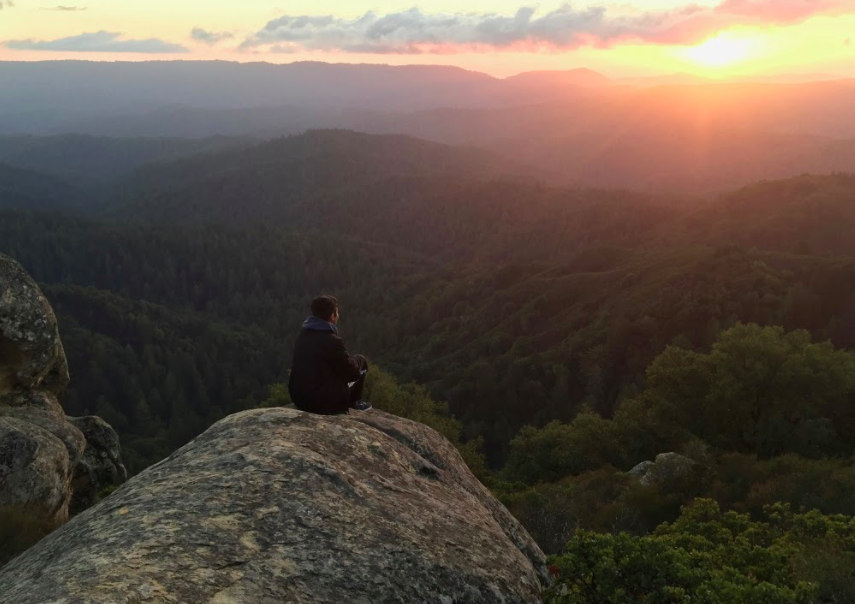

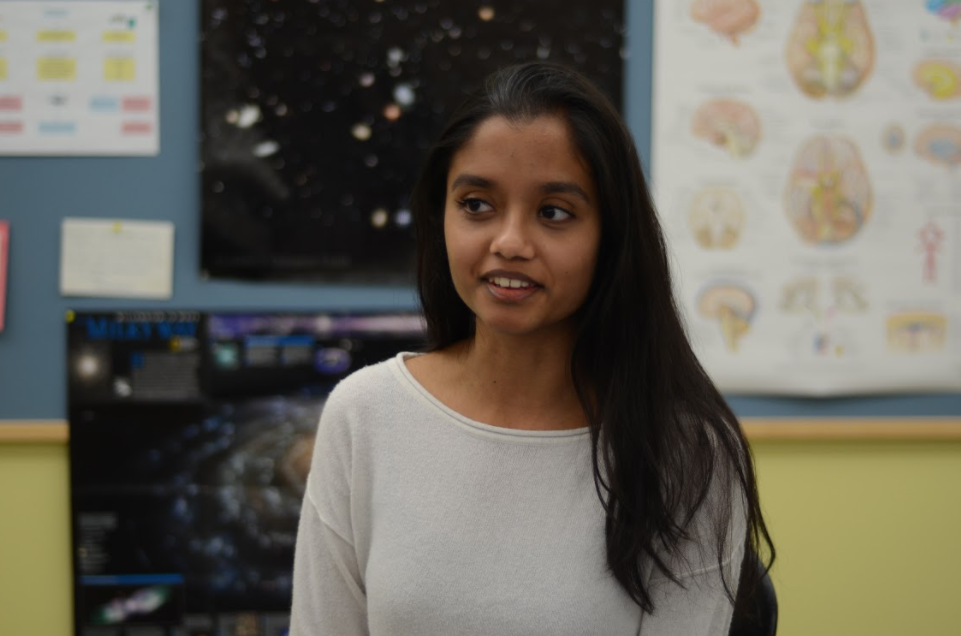


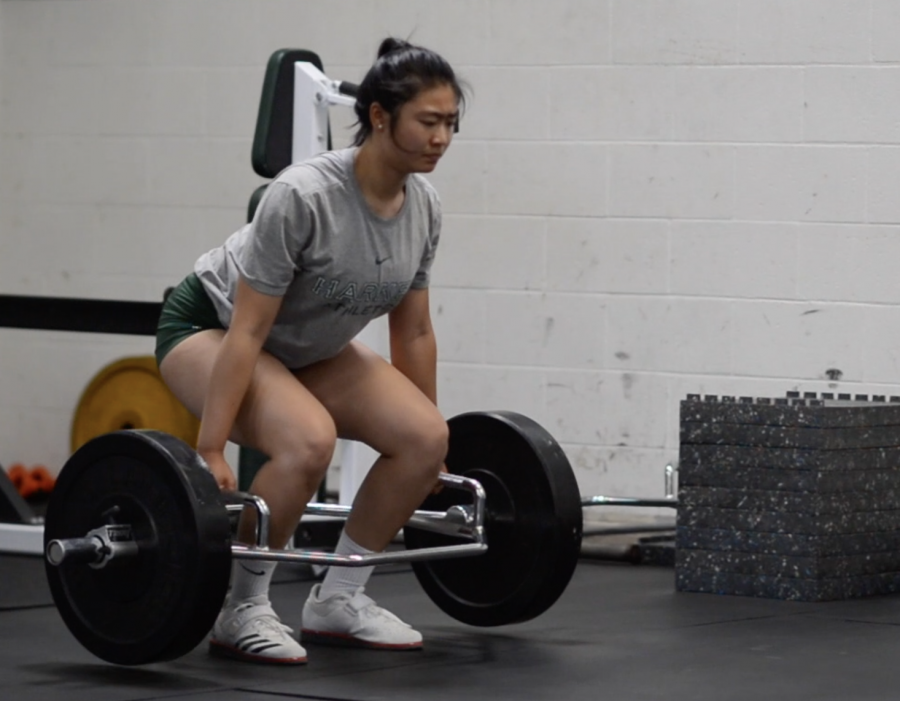

![“My slogan is ‘slow feet, don’t eat, and I’m hungry.’ You need to run fast to get where you are–you aren't going to get those championships if you aren't fast,” Angel Cervantes (12) said. “I want to do well in school on my tests and in track and win championships for my team. I live by that, [and] I can do that anywhere: in the classroom or on the field.”](https://harkeraquila.com/wp-content/uploads/2018/06/DSC5146-900x601.jpg)
![“[Volleyball has] taught me how to fall correctly, and another thing it taught is that you don’t have to be the best at something to be good at it. If you just hit the ball in a smart way, then it still scores points and you’re good at it. You could be a background player and still make a much bigger impact on the team than you would think,” Anya Gert (’20) said.](https://harkeraquila.com/wp-content/uploads/2020/06/AnnaGert_JinTuan_HoHPhotoEdited-600x900.jpeg)

![“I'm not nearly there yet, but [my confidence has] definitely been getting better since I was pretty shy and timid coming into Harker my freshman year. I know that there's a lot of people that are really confident in what they do, and I really admire them. Everyone's so driven and that has really pushed me to kind of try to find my own place in high school and be more confident,” Alyssa Huang (’20) said.](https://harkeraquila.com/wp-content/uploads/2020/06/AlyssaHuang_EmilyChen_HoHPhoto-900x749.jpeg)


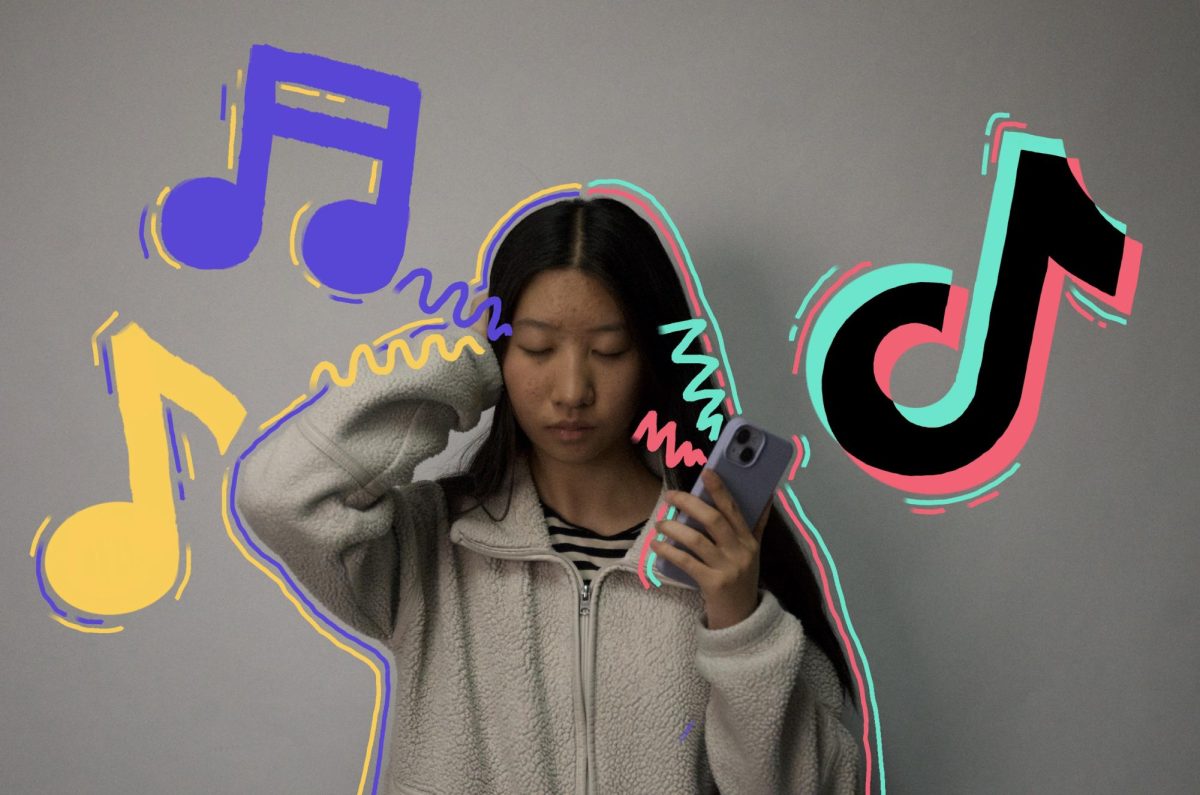
If someone had told me five years ago that all K-pop songs sounded the same, I would have responded with an angry rant and a recommended listening list to show them how wrong they were. Now, with the overflow of newly debuted K-pop groups offering nothing novel compared to past bands, I can’t help but agree.
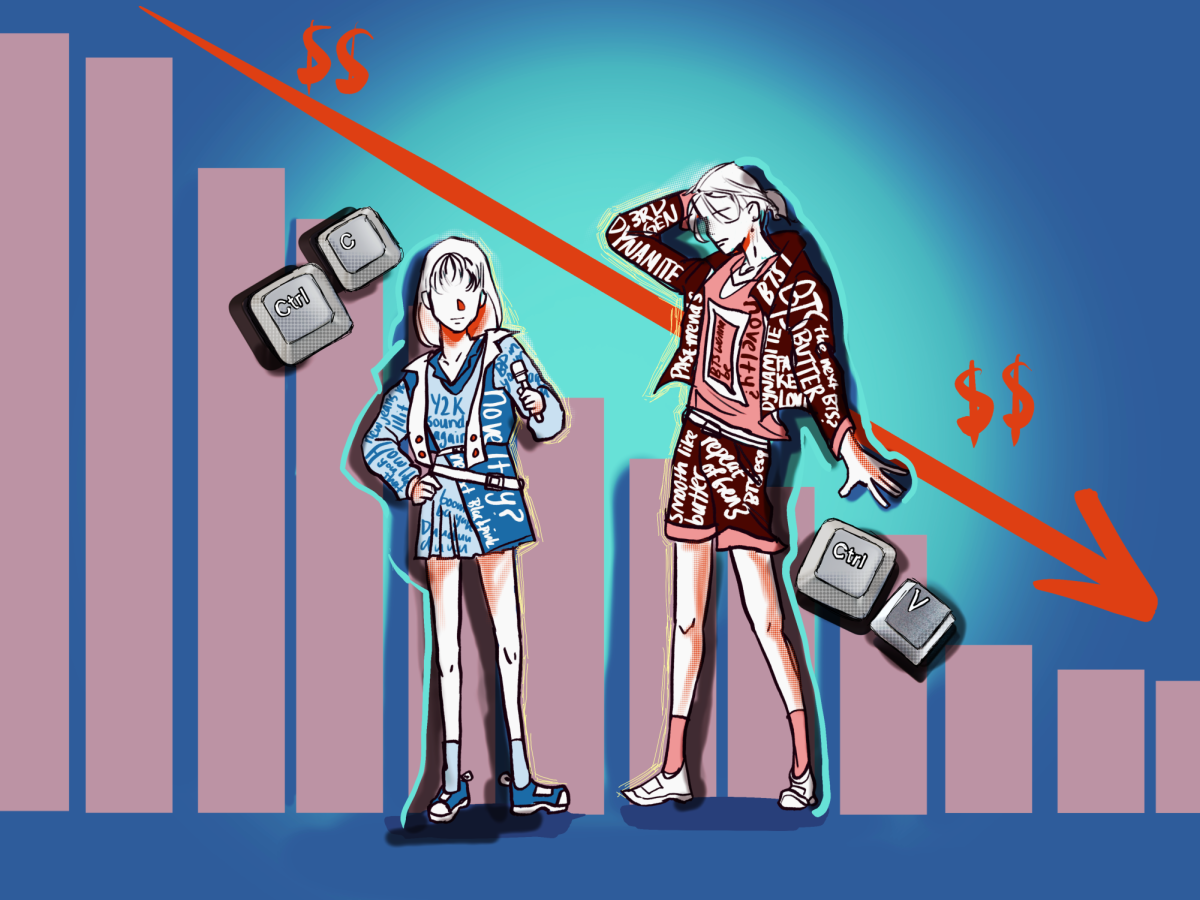
Despite consistent growth in album sales from 2014 to 2023, particularly during the pandemic years, the K-pop industry reported its first dip in domestic profits in 10 years in 2024. CD sales in South Korea slipped by around 20 percent from 2023 to 2024, while international growth slowed down. K-pop fans credit the market slump to the absence of releases from major K-pop groups BTS and BLACKPINK, due to military enlistment and solo activities respectively, and predict that sales will increase in 2025 in expectation of their reunions.
This highlights a fundamental problem with the current state of K-pop: top third-generation groups — those that debuted between 2012 and 2018 — are still leading the industry, while too many fourth (2018-2023) and fifth-generation (2023-present) bands are fighting to become the “next BTS or BLACKPINK” and climb to the top of a highly oversaturated market. Even worse, a large number of these groups revolve around heavily manufactured concepts, overarching themes that determine the visuals and music for releases, and imitate previously successful groups rather than developing their own sound.
Every time a group makes a minor breakthrough in popularity for their music, usually by simply reintroducing a genre that hasn’t been mainstream in the industry for a couple of years, a stream of groups flock over to that concept to compete for their slice of fame. When the girl group NewJeans debuted with the Y2K aesthetic with “Attention” in 2022, its music blew up for its perceived novelty; now, three years later, the industry is overflowing with Y2K to the point that it has lost its previous appeal, such as in the case of fifth-generation group Illit.
Copying existing formulas rather than paving a new path makes many groups sound stylistically similar. This lack of distinction is particularly problematic with the current oversaturation of the industry, as fans are bombarded continuously with new releases in repetitive styles.
Many fifth-generation boy bands, like RIIZE, ZEROBASEONE and BOYNEXTDOOR, don’t have any distinct qualities that differentiate them. On the fifth generation girl-group side, BABYMONSTER and MEOVV sound like BLACKPINK but hollow. There are also significantly more semi-popular girl groups, so most variations are used by so many groups that it loses its uniqueness.
K-pop idols are not at fault here, unless they self-produce; however, the majority of self-producing groups don’t face this problem. In the former case, these groups have basically no control over their music, which is determined by the image their company wants them to have.
One of the primary causes of the lack of distinctiveness among new groups is companies trying to push new groups to achieve instant popularity upon their debut instead of allowing them to follow a natural growth trajectory: starting small and gaining support steadily. Centering a new group on a currently trending sound is simply unsustainable: once the hype dies down, their popularity plummets.
Some groups try to differentiate themselves by their concept; however, unless that concept significantly impacts their sound and musical style, this effort at standing out is futile. The whole notion of concepts feels extremely forced: K-pop concepts are either very generic or so vague and confusing that no one actually knows what it is.
Instead of making surface-level changes to existing styles, companies need to debut groups with distinct musical identities and ramp up experimentation. This has been done in the past, like in the case of fourth-generation girl groups NMIXX and aespa, the latter of which won the 2025 Group of the Year award at the Billboard Women in Music event. However, I have yet to hear anything from fifth-generation groups that stands out to me.
Groups that debut with an experimental sound tend to either blow up or flop, but they have more chances with future releases; they need to stop sacrificing personal identity for short-term success. Sometimes, they are just a bit ahead of their time and will spike in popularity with time.
Companies also need to focus on promoting existing groups rather than repeatedly debuting new ones in short periods of time. Groups need time and effective promotion to have a chance at success, and that chance is diminished when companies direct their resources at churning out new, generic-sounding groups.
If K-pop companies and independent artists want to be taken seriously and appreciated for their music, particularly internationally, they need to step it up. I’m not asking for self-production or anything that fundamentally changes how the industry functions: just songs that make me start looking forward to new releases again.