![“I wasn't discouraged by some of the obstacles we faced. I learned a lot from the leadership. I found that different people need different ways of receiving feedback — you can't [just] tell them to do something and expect the best. [Some] people needed more incentive. A large part of my role was to figure out what worked for everyone and to figure out how to lead all these separate individuals as a team,” Suhana Bhandare (’26) said.](https://harkeraquila.com/wp-content/uploads/2026/06/SuhanaBhandare_JasmineHansra-1-1200x798.jpg)
![“This is actually from Randy Pausch Randy P. Brick: ‘Walls are there for a reason. You have to show how much you want to overcome them.’ You have to show how much you want something. That's what I've always been able to do with tennis, Link Crew and getting that internship [with Kushy Baby]. It’s important pushing through that — getting around that brick wall, climbing over it or clawing through it,” Yash Sachdeva (’26) said.](https://harkeraquila.com/wp-content/uploads/2026/05/YashSachdeva_RamBatchu-copy-1200x1002.jpg)







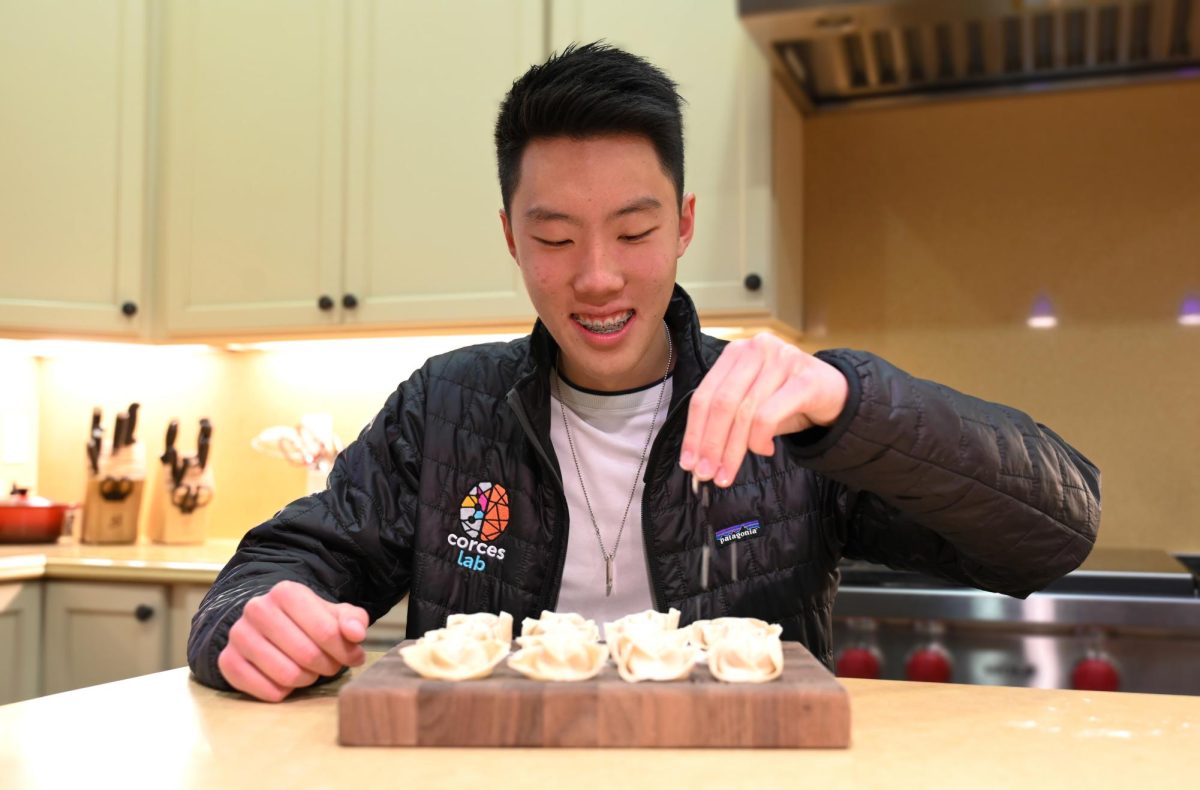
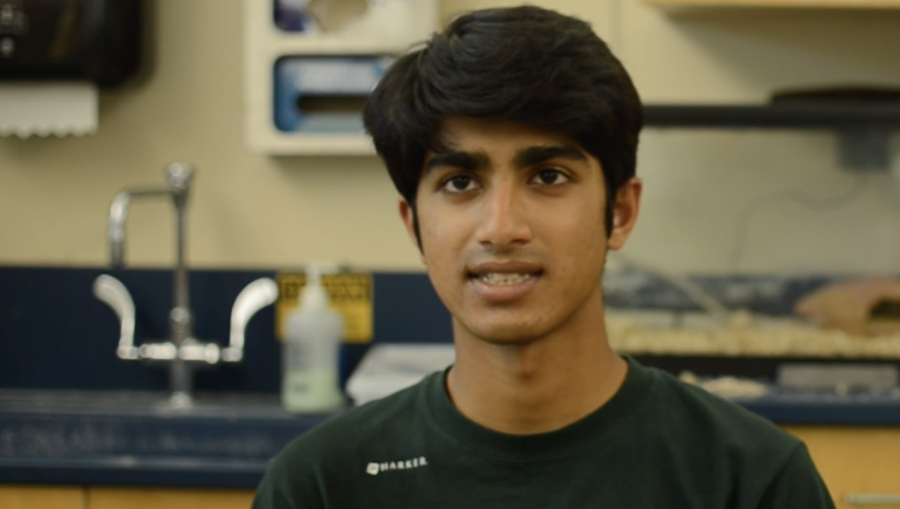
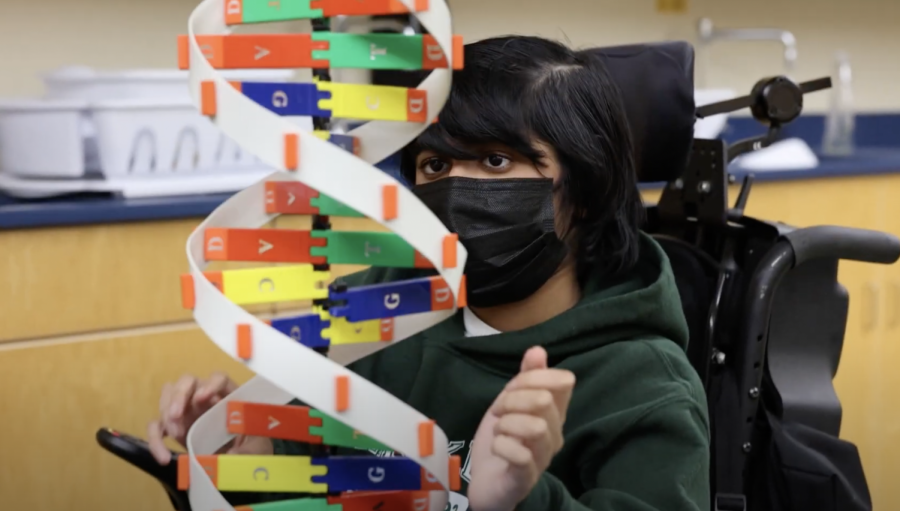
![“[Building nerf blasters] became this outlet of creativity for me that hasn't been matched by anything else. The process [of] making a build complete to your desire is such a painstakingly difficult process, but I've had to learn from [the skills needed from] soldering to proper painting. There's so many different options for everything, if you think about it, it exists. The best part is [that] if it doesn't exist, you can build it yourself," Ishaan Parate said.](https://harkeraquila.com/wp-content/uploads/2022/08/DSC_8149-900x604.jpg)
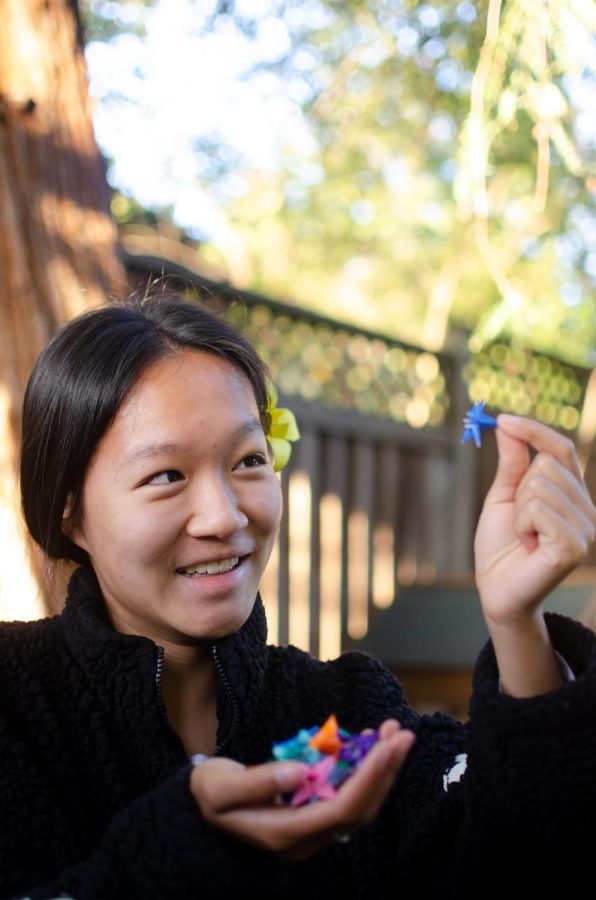

![“When I came into high school, I was ready to be a follower. But DECA was a game changer for me. It helped me overcome my fear of public speaking, and it's played such a major role in who I've become today. To be able to successfully lead a chapter of 150 students, an officer team and be one of the upperclassmen I once really admired is something I'm [really] proud of,” Anvitha Tummala ('21) said.](https://harkeraquila.com/wp-content/uploads/2021/07/Screen-Shot-2021-07-25-at-9.50.05-AM-900x594.png)





![“I think getting up in the morning and having a sense of purpose [is exciting]. I think without a certain amount of drive, life is kind of obsolete and mundane, and I think having that every single day is what makes each day unique and kind of makes life exciting,” Neymika Jain (12) said.](https://harkeraquila.com/wp-content/uploads/2017/06/Screen-Shot-2017-06-03-at-4.54.16-PM.png)



![“My slogan is ‘slow feet, don’t eat, and I’m hungry.’ You need to run fast to get where you are–you aren't going to get those championships if you aren't fast,” Angel Cervantes (12) said. “I want to do well in school on my tests and in track and win championships for my team. I live by that, [and] I can do that anywhere: in the classroom or on the field.”](https://harkeraquila.com/wp-content/uploads/2018/06/DSC5146-900x601.jpg)
![“[Volleyball has] taught me how to fall correctly, and another thing it taught is that you don’t have to be the best at something to be good at it. If you just hit the ball in a smart way, then it still scores points and you’re good at it. You could be a background player and still make a much bigger impact on the team than you would think,” Anya Gert (’20) said.](https://harkeraquila.com/wp-content/uploads/2020/06/AnnaGert_JinTuan_HoHPhotoEdited-600x900.jpeg)

![“I'm not nearly there yet, but [my confidence has] definitely been getting better since I was pretty shy and timid coming into Harker my freshman year. I know that there's a lot of people that are really confident in what they do, and I really admire them. Everyone's so driven and that has really pushed me to kind of try to find my own place in high school and be more confident,” Alyssa Huang (’20) said.](https://harkeraquila.com/wp-content/uploads/2020/06/AlyssaHuang_EmilyChen_HoHPhoto-900x749.jpeg)



Since the incredibly influential development of generative artificial intelligence with OpenAI’s GPT engine, Silicon Valley has been swarmed by startups that promise to help the consumer using this new technology. Most of them are practically useless, with some of them just being money grabs for the founders. The excitement will die down soon, and with it many ventures will be swept away in companies that create unnecessary issues to solve.
AI startup funding reached 42.5 billion dollars in 2023, yet most of that money is wasted on impossible projects. The failure rate for startups over their lifetime is 90 percent, and AI startups building upon exorbitant investor interest have had a failure rate of 80 percent within just the last few years. Investors have a flawed perception of the abilities of AI, leading to misaligned goals with engineering departments. These misconceptions create unrealistic expectations for what companies can create and disappointment when the impossible expectations are not met.
Most AI products are queries to large language models (LLMs), programs that generate responses to questions based on analyzed data. These models are owned by larger companies such as Microsoft. LLMS cost millions of dollars to create, and most startups cannot afford to create one. Their dependence on other companies’ frameworks sets many up for failure, as their product has no real manipulation of AI tools and could be reproduced rapidly by any competitor. Investment into these companies creates shovelware, software that is primarily focused on quantity rather than its quality and therefore creates bloat.
Around 42% of startups fail for the simple reason that their product is not practical. An example of this product is Humane’s AI pin. Intended to free users from the screens of mobile devices, the product was a total flop due to a combination of both underdeveloped artificial intelligence and giant goals that went unfulfilled. The investment in this company was based on baseless product promises and ultimately $240 million dollars of investors’ money went to waste. The willingness of investors to participate in gambles on unfounded technology doesn’t create the same potential jackpots as other startups, as the technology is continuously being rehashed and regulations are still being established.
Many startups chase the allure of investor capital, while failing to create useful products. AI is overpromoted and allows their founders to reap the rewards of the market while not creating real-world value. Olive, an AI company that specialized in healthcare, failed in 2023. The company pivoted 23 times into different medical fields and received more than 900 million dollars in investment—all while creating no actual usable product. This money could have been spent on more tangible research, but the allure of an “artificially intelligent” medical system was more alluring than that.
OpenAI has lost 5 billion dollars this year in expenditures, and almost all of its funding is derived from investment from Microsoft, giving it a safety net. Startups without the backing of a corporation are not expected to thrive in creating the infrastructure of artificial intelligence.
Already, the technology boom of 2020 and 2021 is dying down. As we reach the limits of our current understanding of artificial intelligence, through LLMs, the idea of revolutionizing human lives with a promising new technology will become an unfulfillable hope for startups.
Blossoming startups should let tech giants work with AI instead, as AI products are currently exorbitantly expensive to run and do not excel as consumer products. The startup bubble is about to burst, and investors who sink money into hype will be faced with the consequences of failed products, which wastes both human time and resources that could be better spent on other technologies.