![“I wasn't discouraged by some of the obstacles we faced. I learned a lot from the leadership. I found that different people need different ways of receiving feedback — you can't [just] tell them to do something and expect the best. [Some] people needed more incentive. A large part of my role was to figure out what worked for everyone and to figure out how to lead all these separate individuals as a team,” Suhana Bhandare (’26) said.](https://harkeraquila.com/wp-content/uploads/2026/06/SuhanaBhandare_JasmineHansra-1-1200x798.jpg)

![“This is actually from Randy Pausch Randy P. Brick: ‘Walls are there for a reason. You have to show how much you want to overcome them.’ You have to show how much you want something. That's what I've always been able to do with tennis, Link Crew and getting that internship [with Kushy Baby]. It’s important pushing through that — getting around that brick wall, climbing over it or clawing through it,” Yash Sachdeva (’26) said.](https://harkeraquila.com/wp-content/uploads/2026/05/YashSachdeva_RamBatchu-copy-1200x1002.jpg)

















![“[Building nerf blasters] became this outlet of creativity for me that hasn't been matched by anything else. The process [of] making a build complete to your desire is such a painstakingly difficult process, but I've had to learn from [the skills needed from] soldering to proper painting. There's so many different options for everything, if you think about it, it exists. The best part is [that] if it doesn't exist, you can build it yourself," Ishaan Parate said.](https://harkeraquila.com/wp-content/uploads/2022/08/DSC_8149-900x604.jpg)




![“When I came into high school, I was ready to be a follower. But DECA was a game changer for me. It helped me overcome my fear of public speaking, and it's played such a major role in who I've become today. To be able to successfully lead a chapter of 150 students, an officer team and be one of the upperclassmen I once really admired is something I'm [really] proud of,” Anvitha Tummala ('21) said.](https://harkeraquila.com/wp-content/uploads/2021/07/Screen-Shot-2021-07-25-at-9.50.05-AM-900x594.png)






![“I think getting up in the morning and having a sense of purpose [is exciting]. I think without a certain amount of drive, life is kind of obsolete and mundane, and I think having that every single day is what makes each day unique and kind of makes life exciting,” Neymika Jain (12) said.](https://harkeraquila.com/wp-content/uploads/2017/06/Screen-Shot-2017-06-03-at-4.54.16-PM.png)








![“My slogan is ‘slow feet, don’t eat, and I’m hungry.’ You need to run fast to get where you are–you aren't going to get those championships if you aren't fast,” Angel Cervantes (12) said. “I want to do well in school on my tests and in track and win championships for my team. I live by that, [and] I can do that anywhere: in the classroom or on the field.”](https://harkeraquila.com/wp-content/uploads/2018/06/DSC5146-900x601.jpg)
![“[Volleyball has] taught me how to fall correctly, and another thing it taught is that you don’t have to be the best at something to be good at it. If you just hit the ball in a smart way, then it still scores points and you’re good at it. You could be a background player and still make a much bigger impact on the team than you would think,” Anya Gert (’20) said.](https://harkeraquila.com/wp-content/uploads/2020/06/AnnaGert_JinTuan_HoHPhotoEdited-600x900.jpeg)
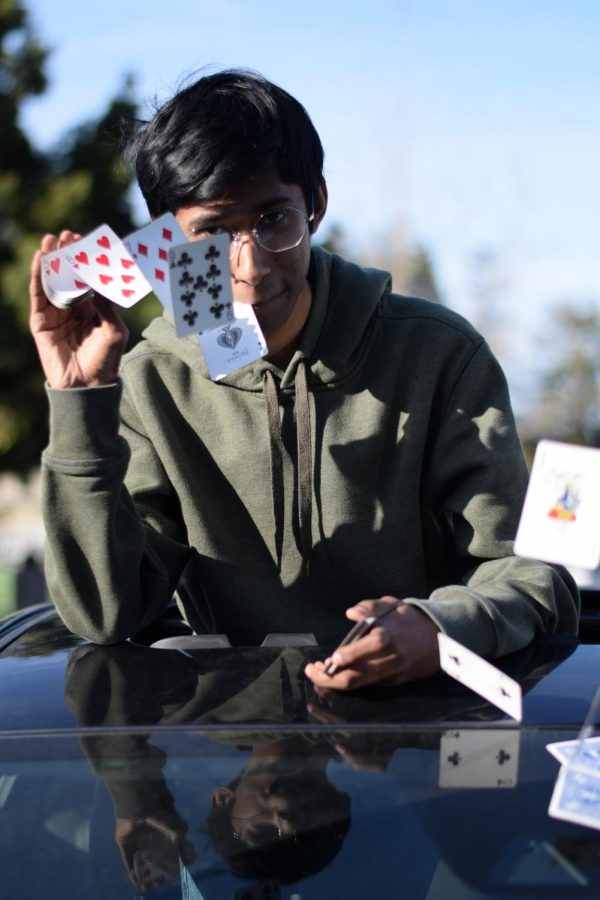
![“I'm not nearly there yet, but [my confidence has] definitely been getting better since I was pretty shy and timid coming into Harker my freshman year. I know that there's a lot of people that are really confident in what they do, and I really admire them. Everyone's so driven and that has really pushed me to kind of try to find my own place in high school and be more confident,” Alyssa Huang (’20) said.](https://harkeraquila.com/wp-content/uploads/2020/06/AlyssaHuang_EmilyChen_HoHPhoto-900x749.jpeg)



Books assigned in the English curriculum can often be a hit or miss, but regardless of our opinions, we all have to read, analyze and write about them. Throughout ninth, tenth and eleventh grade, we experience the same stories, cementing these pieces of literature as recognized components of the student community. As I near my senior year, where reading material is less standardized in English courses, I decided to look back on the English curricula of years past for some nostalgia. I’ve compiled a list of my top five favorite books from the past three years of high school English. If you’ve read any of these, I hope this list evokes some fond memories of these works.
5. Crazy Brave
“Crazy Brave,” which we read in ninth grade, is an autobiography written by Joy Harjo about her experience growing up as a Native American and citizen of the Muscogee Nation. Even though we only spent around a month with this book, I enjoyed its descriptiveness. The imagery was powerful throughout, and I was able to form a vivid mental picture of the various scenes in Harjo’s life. The story’s expressive language made it immersive and engaging to follow. However, compared to others on this list, my connection with this book was not as strong as we didn’t spend much time with it.
4. Frankenstein
Next up is Mary Shelley’s classic gothic novel “Frankenstein.” Prior to tenth grade English, most students have heard of the titular character—or his creation—but not many know what the book is actually about. “Frankenstein” pleasantly surprised me, as the story was much more nuanced than the aggressive monster and mad scientist caricatures we often see in pop culture. The novel’s late 18th century setting also made it an intriguing read. I especially appreciated the plot’s mystery element, with the start of the book utilizing in medias res, provoking intrigue as to what events had unfolded prior. Overall, “Frankenstein” is a hidden gem and solid choice within the English reading curriculum.
3. The Joy Luck Club
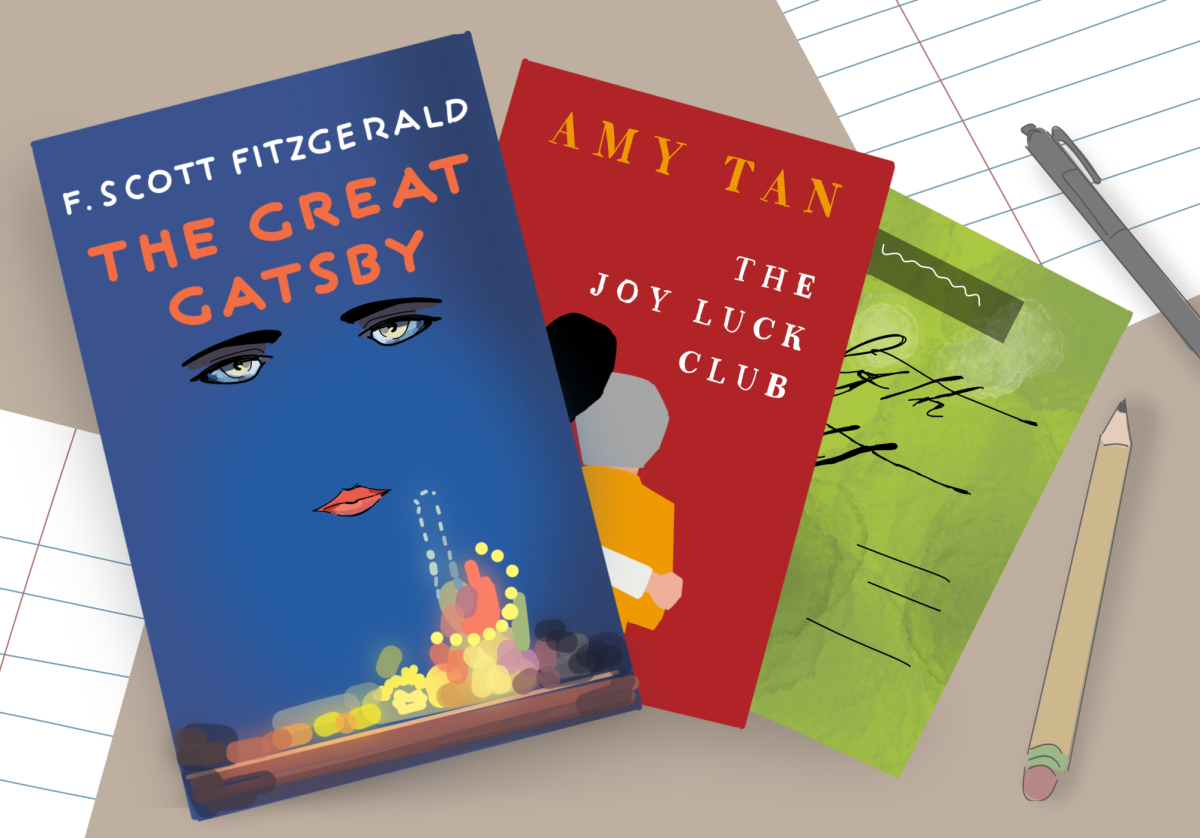
Exploring the cultural dichotomy between immigrant Chinese parents and their second-generation American-born children, “The Joy Luck Club” was a relatable read for me. Before we read this novel in ninth grade, English readings had primarily been composed of the works of Shakespeare or 20th-century greats. In this way, “The Joy Luck Club,” exploring the modern-day Chinese American experience, stood out among the book selection and resonated deeply with me. Because it was written recently compared to some others on this list, the book’s contemporary writing style made it easy to analyze and annotate. As such, it was an engaging read and could have been something I enjoyed in my free time. Moreover, different character viewpoints and alternating time periods made the story constantly interesting to read, and I delighted in noticing the broader connections between the various plot points and character arcs.
2. Twelfth Night
Despite being one of Shakespeare’s plays— typically not my favorite in an academic context— I highly enjoyed “Twelfth Night,” which we read in ninth grade, for its entertaining premise and humor. Centered around crossdressing, false identities and misunderstandings, “Twelfth Night”’s plot could easily be a cheesy 2000s romcom movie (and in fact was made into one).
This play is definitely one of the more lighthearted Shakespeare works that we’ve read. Peppered with jokes and excitement throughout, it doesn’t take itself too seriously, a far cry from works like “Romeo and Juliet” or “The Tempest.” Moreover, it has a satisfying ending: unlike the typical tragic or open-ended Shakespeare conclusion, every character gets their happy ending by the end of the narrative. In general, “Twelfth Night” is a lively addition to the English book list, providing an amusing contrast to the deeper themes found in books like “The Joy Luck Club” and “Frankenstein.”
1. The Great Gatsby
“The Great Gatsby” by F. Scott Fitzgerald, which we read in junior year, tops the list. Exploring class dynamics and the corrupt upper class, the book’s descriptive imagery and intricate themes made me look forward to analyzing it every class; I found myself enthralled with the narrative’s depictions of luxurious 1920s high society and its darker undertones of decadence and immorality.
Fitzgerald packs the novel with detail: the book’s references to settings like the mural of Doctor T.J. Eckleburg’s eyes and descriptions of attendees at Gatsby’s parties seemed random at times, but I appreciated the imagery nonetheless as it built upon the story’s intricate world. As we discussed the book in class, however, I realized that every detail— however small— served a purpose, acting as symbolism, strengthening themes or helping to advance characterization. Similarly, I love the nuanced characterization for the core cast of protagonist Nick, the titular Gatsby, Daisy, Jordan and Tom: dialogue is witty and realistic, and just like with the book’s imagery, even seemingly arbitrary statements reveal facets of characters’ personalities and motives.
Catching the foreshadowing and characterization hidden in these subtle elements made reading this book constantly engaging. Rather than feeling like I was getting through an assignment, I genuinely delighted in reading this novel, not only for class but also out of my own enjoyment. With its numerous details, layered themes and vivid writing style, “The Great Gatsby” is my favorite book from the cumulative English curriculum.