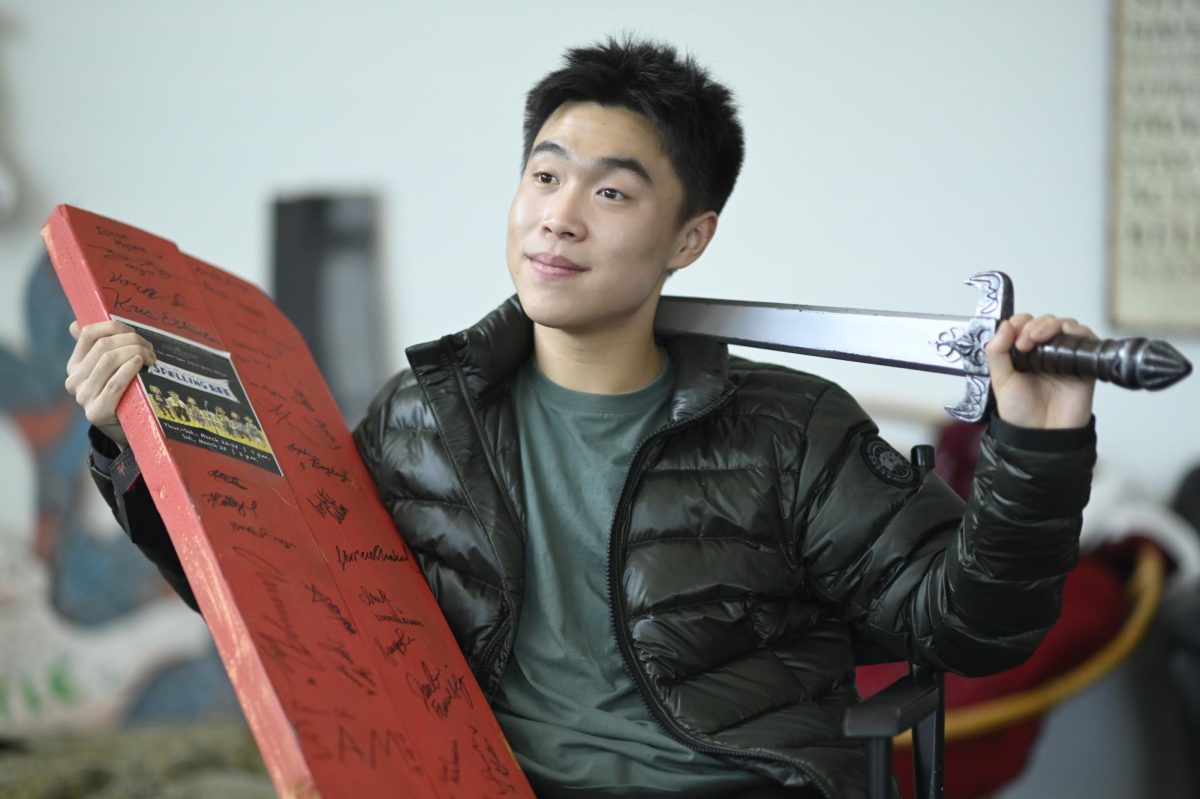
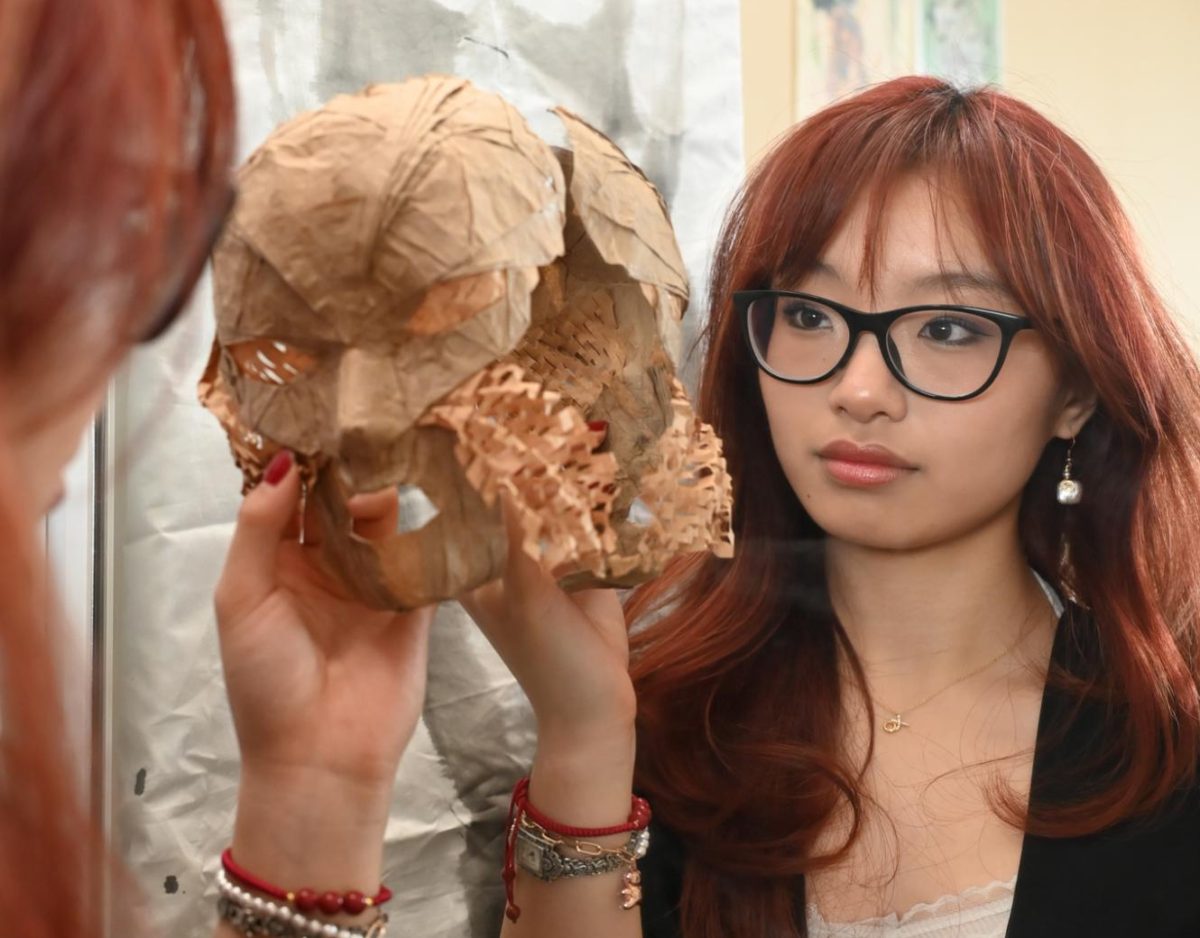
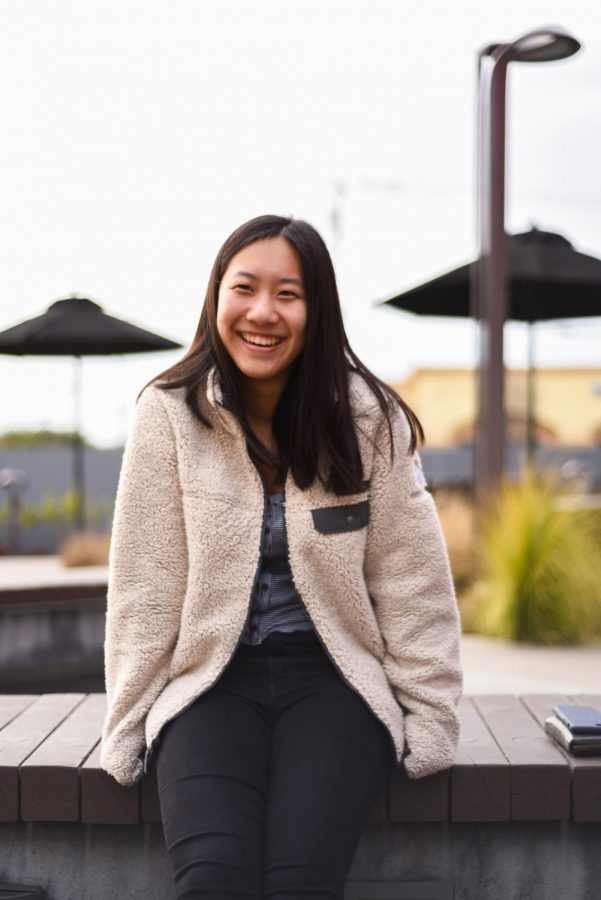
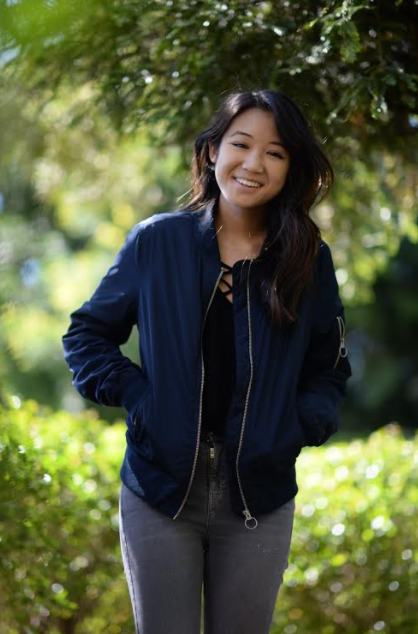
![“I wasn't discouraged by some of the obstacles we faced. I learned a lot from the leadership. I found that different people need different ways of receiving feedback — you can't [just] tell them to do something and expect the best. [Some] people needed more incentive. A large part of my role was to figure out what worked for everyone and to figure out how to lead all these separate individuals as a team,” Suhana Bhandare (’26) said.](https://harkeraquila.com/wp-content/uploads/2026/06/SuhanaBhandare_JasmineHansra-1-1200x798.jpg)
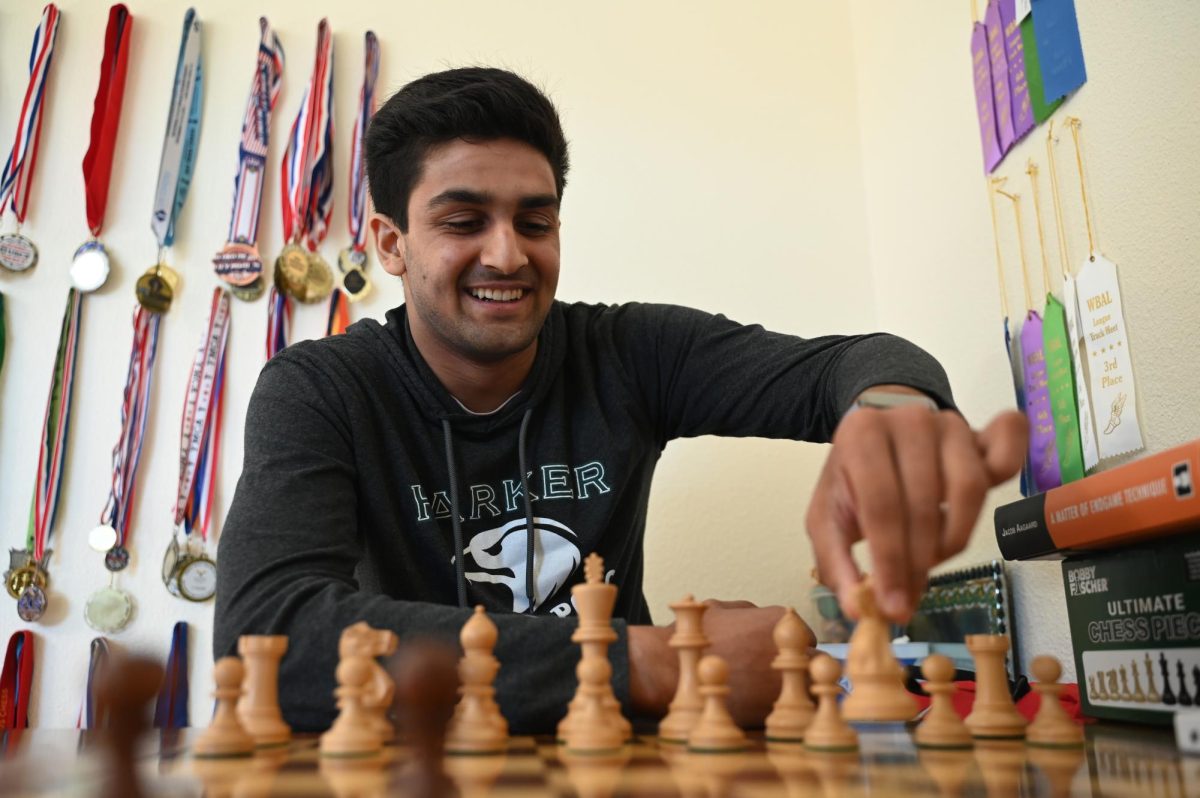
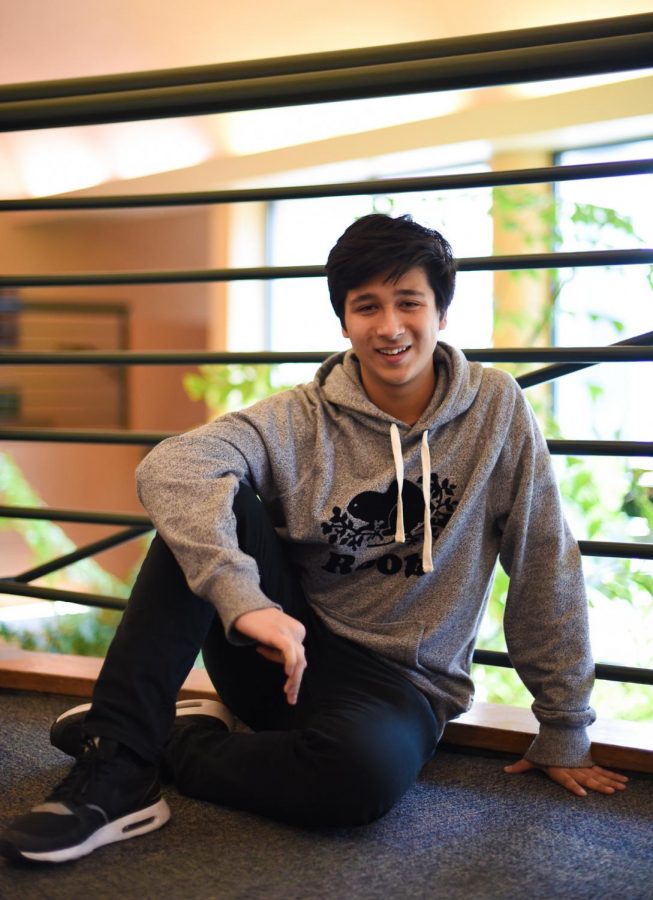
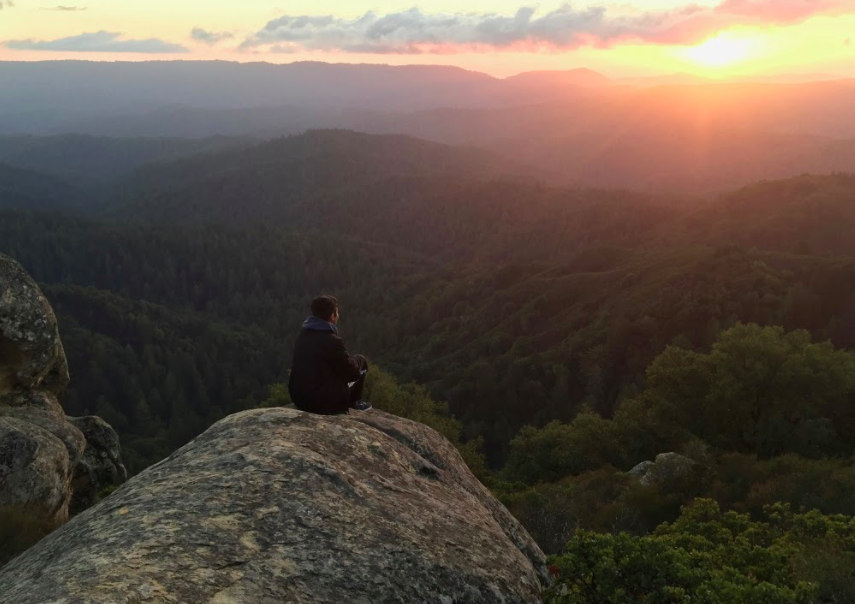
![“This is actually from Randy Pausch Randy P. Brick: ‘Walls are there for a reason. You have to show how much you want to overcome them.’ You have to show how much you want something. That's what I've always been able to do with tennis, Link Crew and getting that internship [with Kushy Baby]. It’s important pushing through that — getting around that brick wall, climbing over it or clawing through it,” Yash Sachdeva (’26) said.](https://harkeraquila.com/wp-content/uploads/2026/05/YashSachdeva_RamBatchu-copy-1200x1002.jpg)
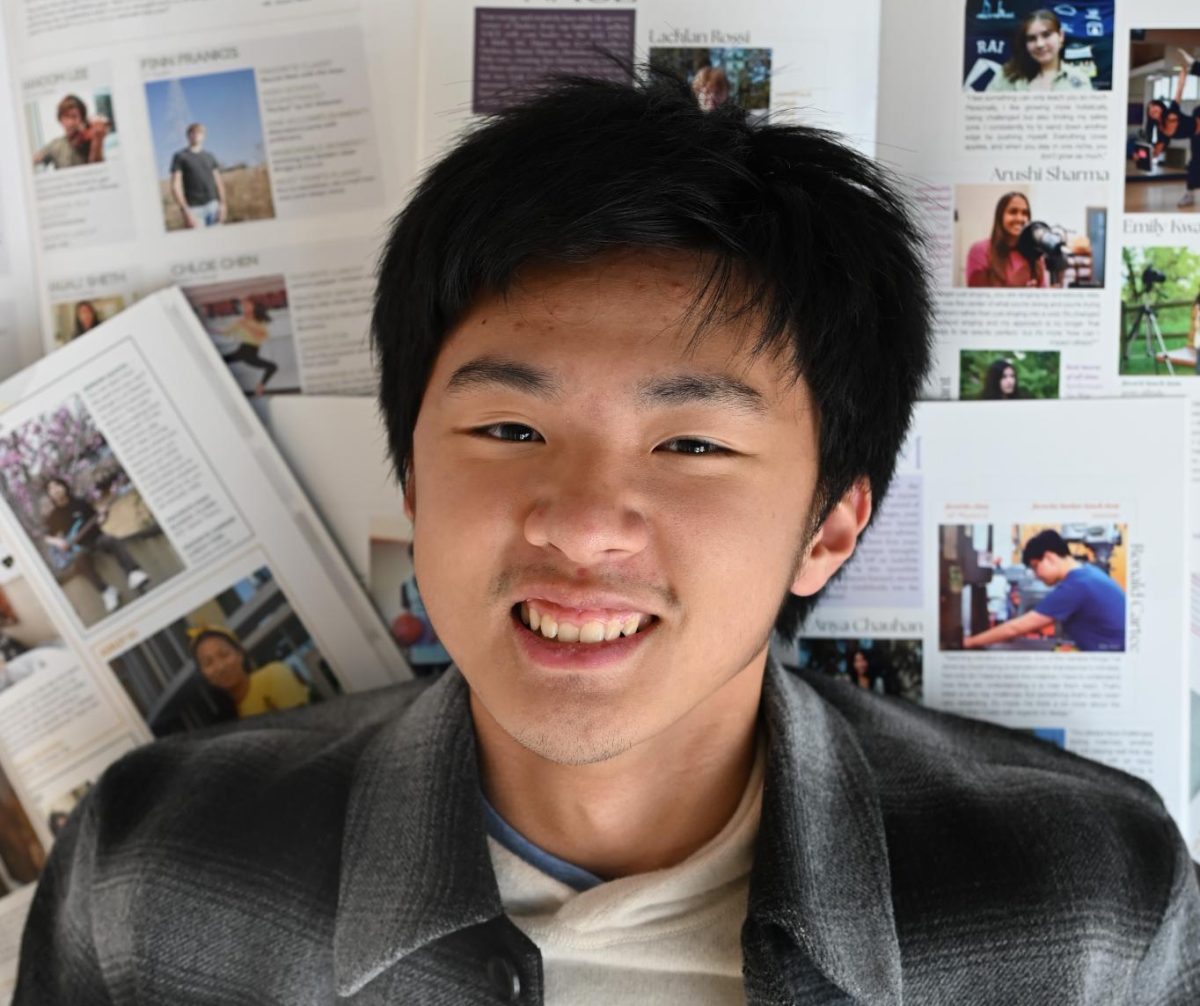




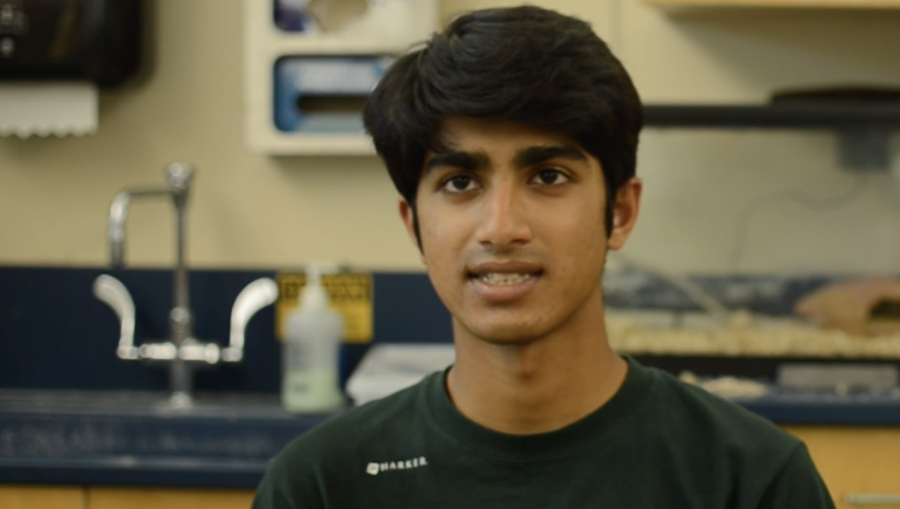
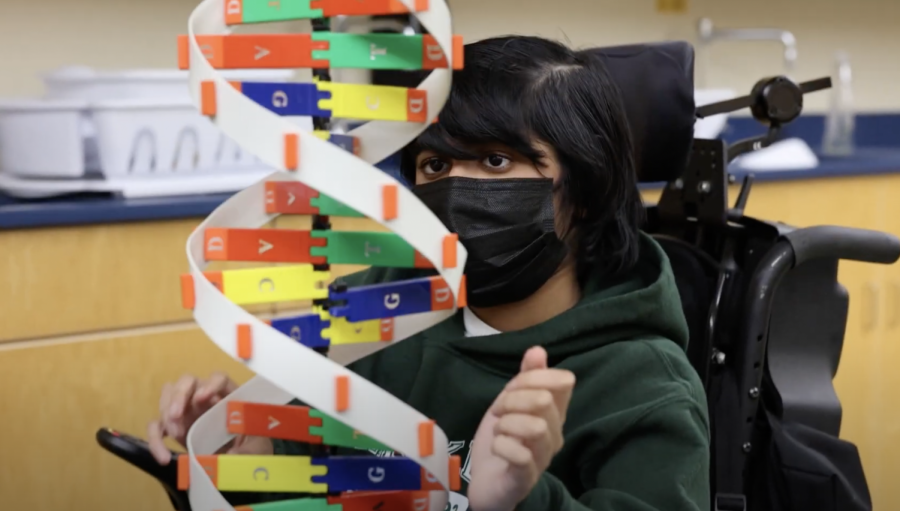
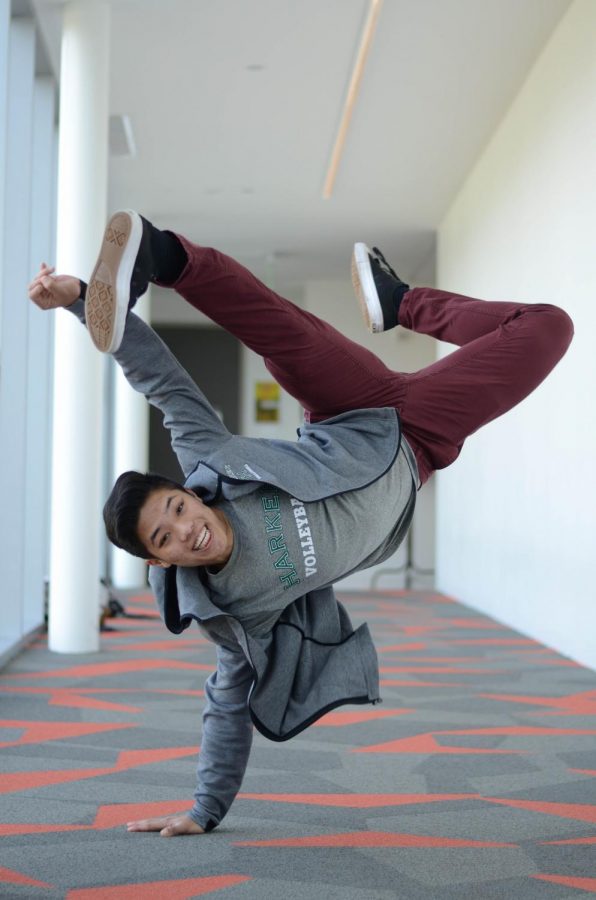
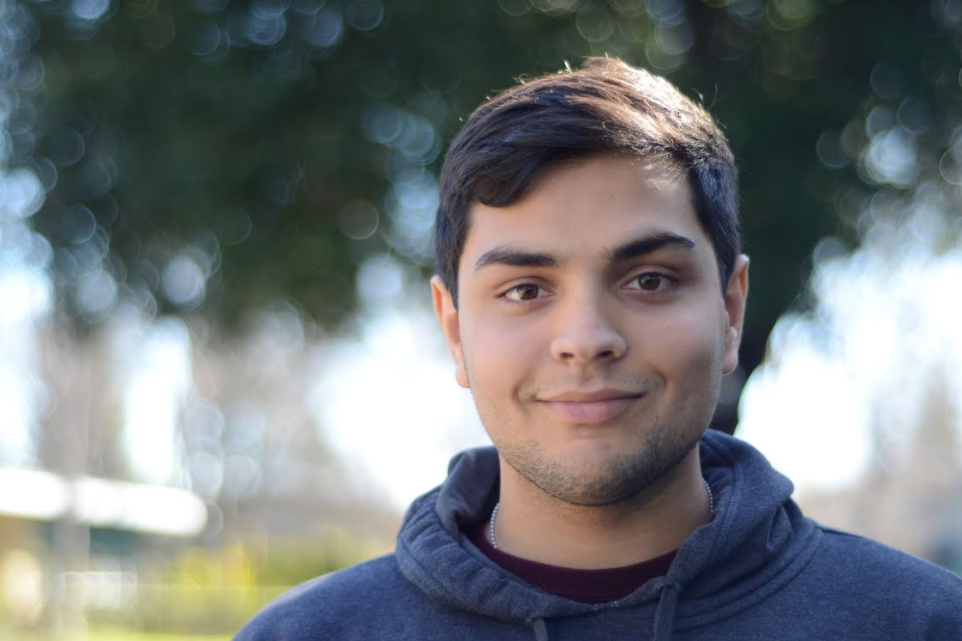
![“[Building nerf blasters] became this outlet of creativity for me that hasn't been matched by anything else. The process [of] making a build complete to your desire is such a painstakingly difficult process, but I've had to learn from [the skills needed from] soldering to proper painting. There's so many different options for everything, if you think about it, it exists. The best part is [that] if it doesn't exist, you can build it yourself," Ishaan Parate said.](https://harkeraquila.com/wp-content/uploads/2022/08/DSC_8149-900x604.jpg)
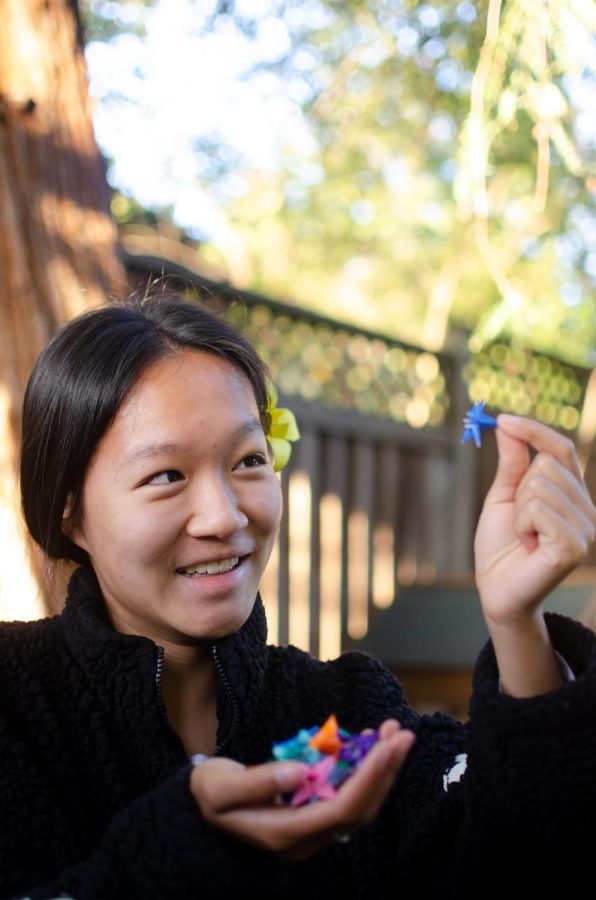
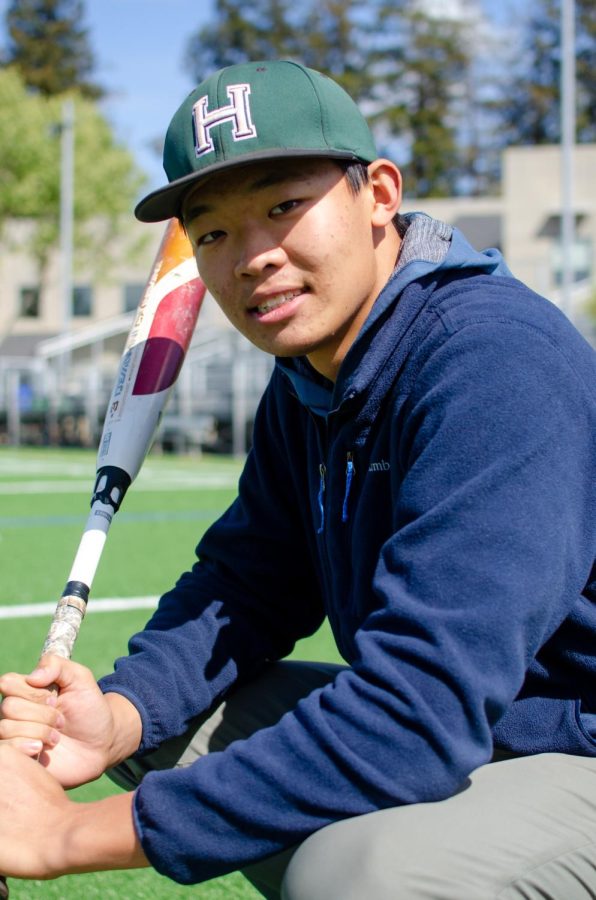
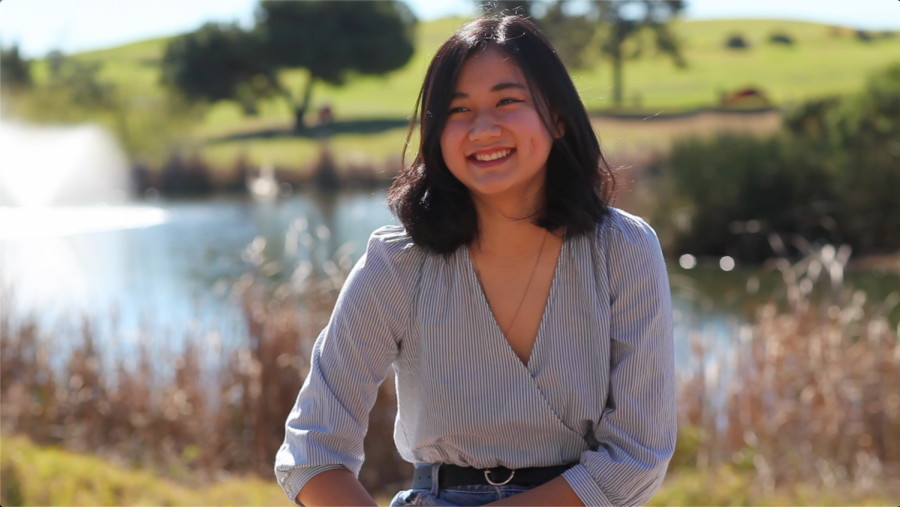
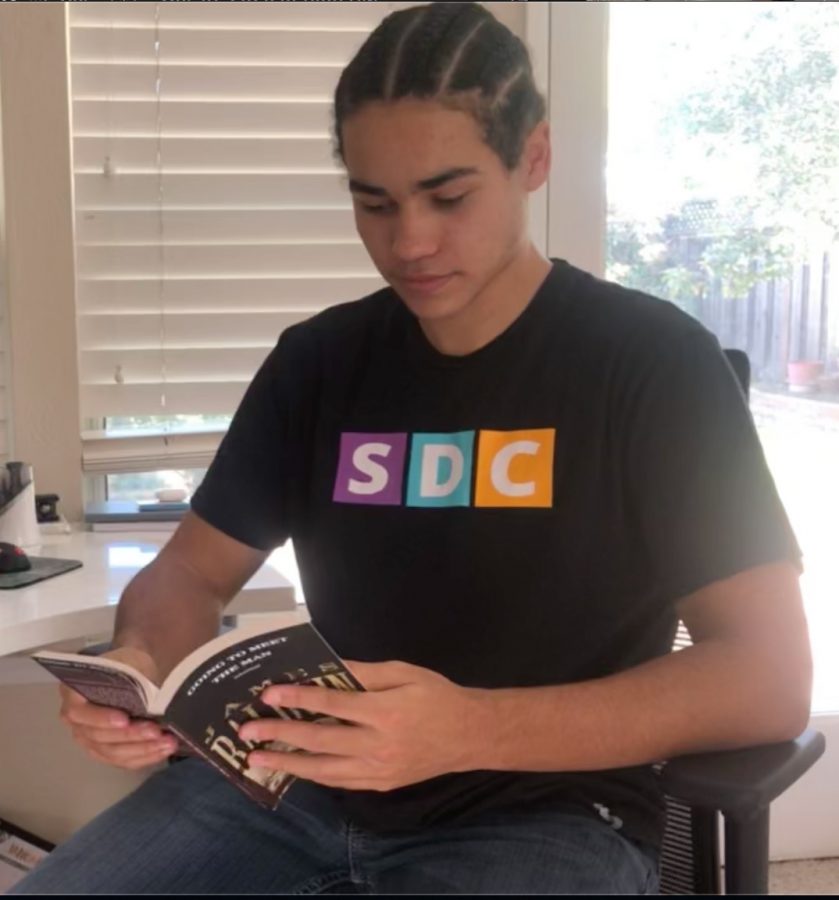
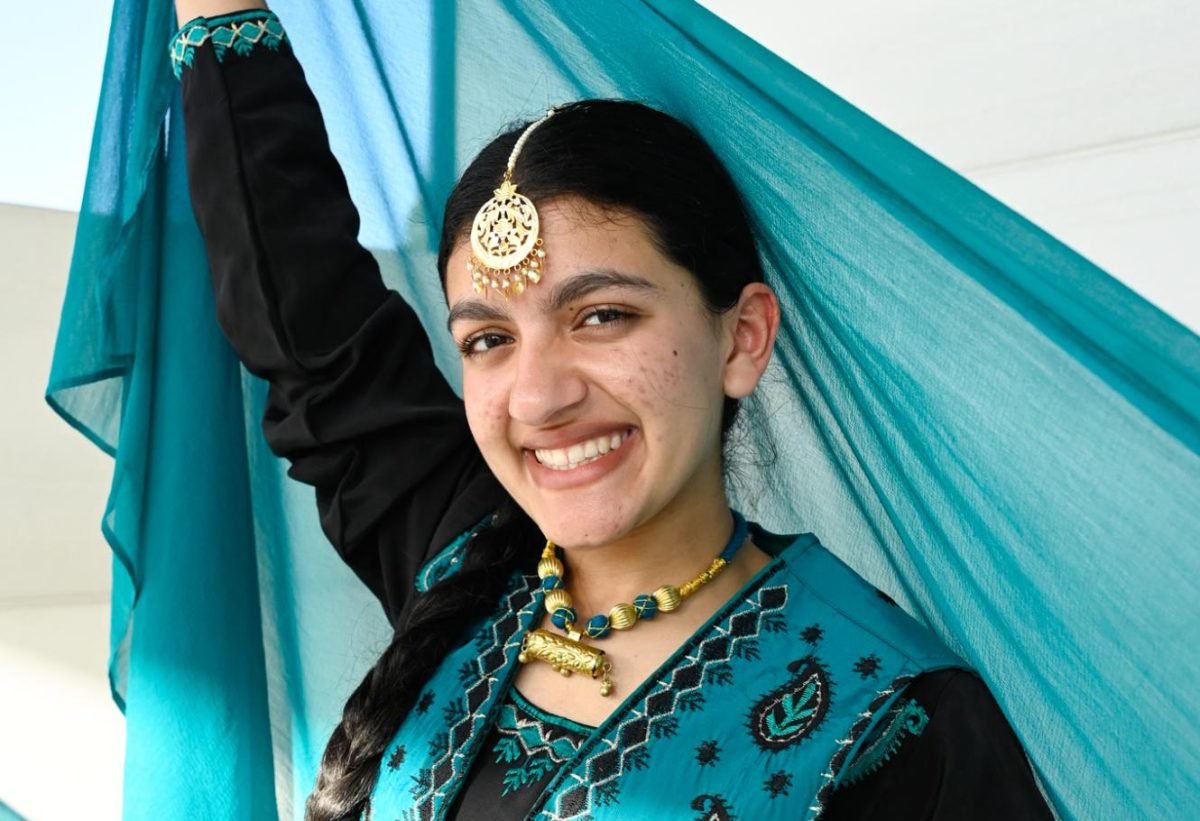
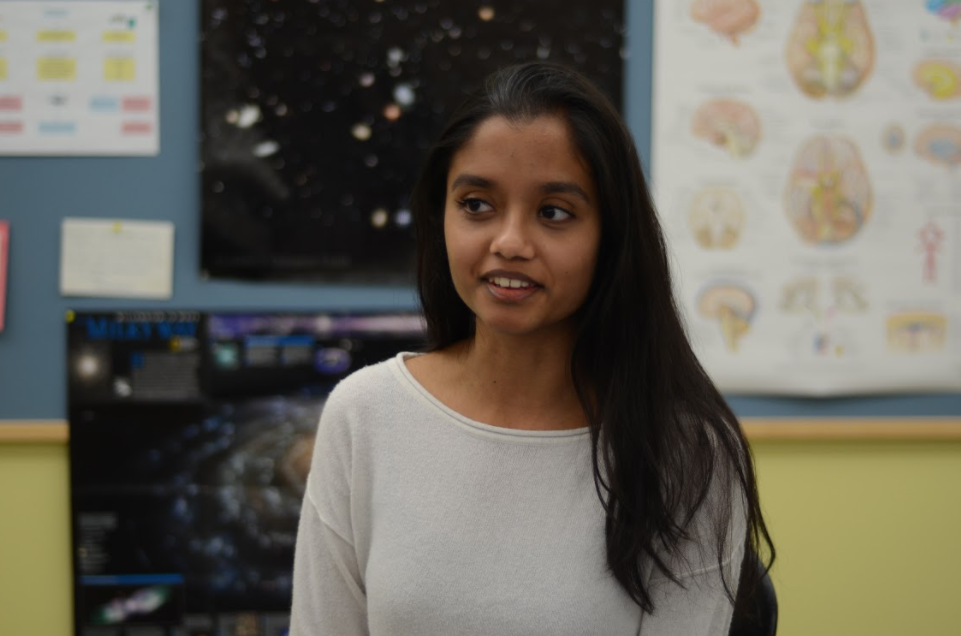
![“When I came into high school, I was ready to be a follower. But DECA was a game changer for me. It helped me overcome my fear of public speaking, and it's played such a major role in who I've become today. To be able to successfully lead a chapter of 150 students, an officer team and be one of the upperclassmen I once really admired is something I'm [really] proud of,” Anvitha Tummala ('21) said.](https://harkeraquila.com/wp-content/uploads/2021/07/Screen-Shot-2021-07-25-at-9.50.05-AM-900x594.png)
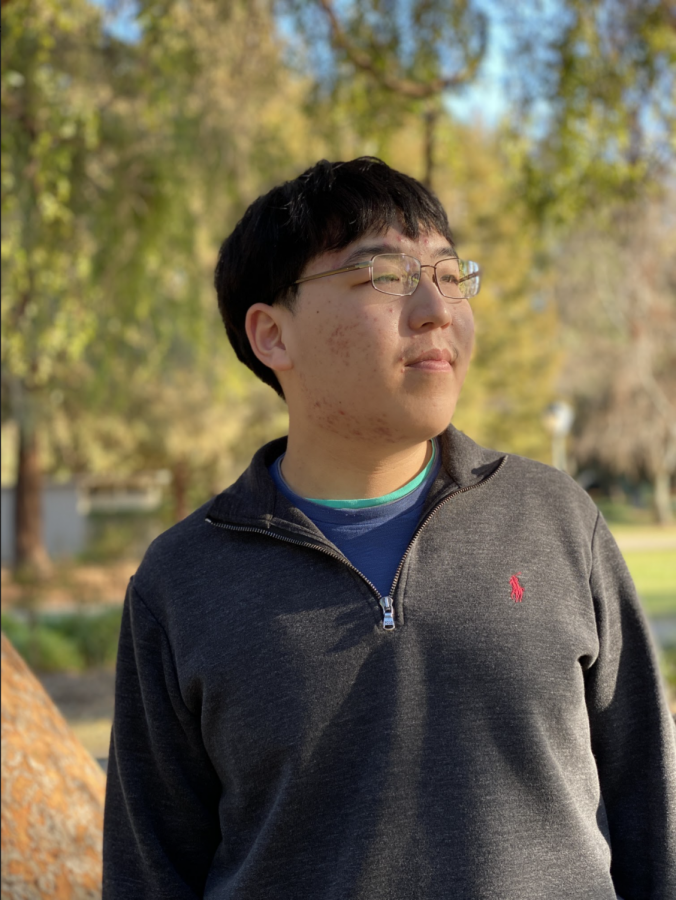
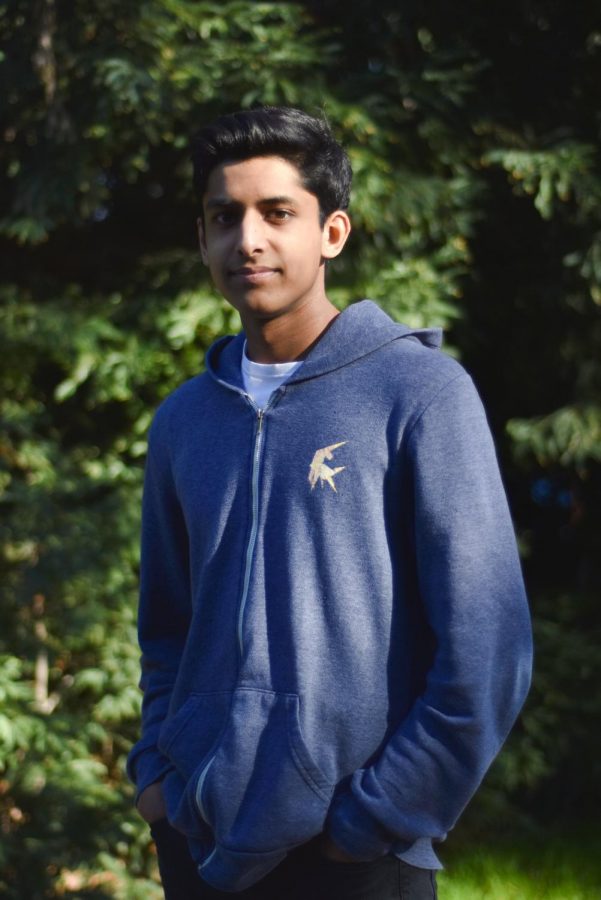

![“I think getting up in the morning and having a sense of purpose [is exciting]. I think without a certain amount of drive, life is kind of obsolete and mundane, and I think having that every single day is what makes each day unique and kind of makes life exciting,” Neymika Jain (12) said.](https://harkeraquila.com/wp-content/uploads/2017/06/Screen-Shot-2017-06-03-at-4.54.16-PM.png)
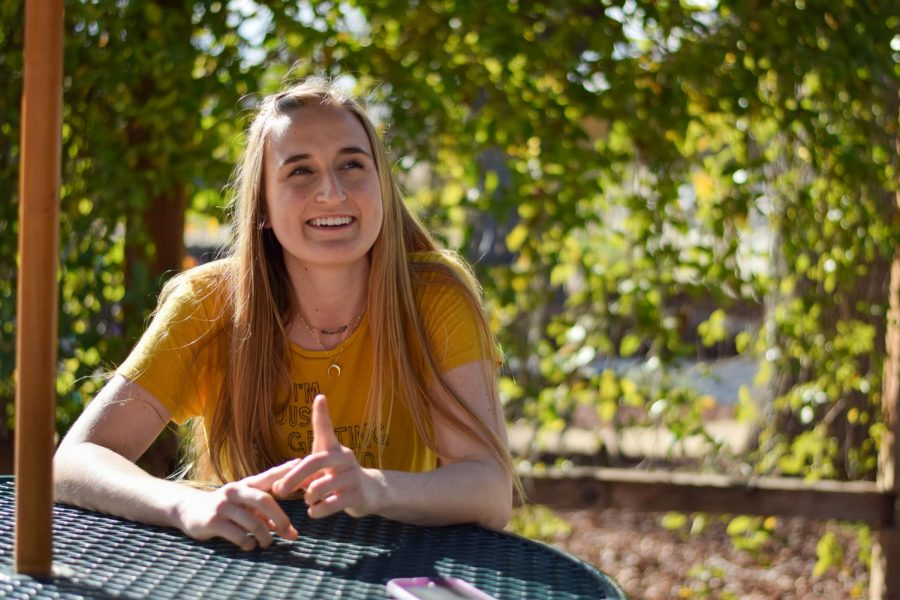
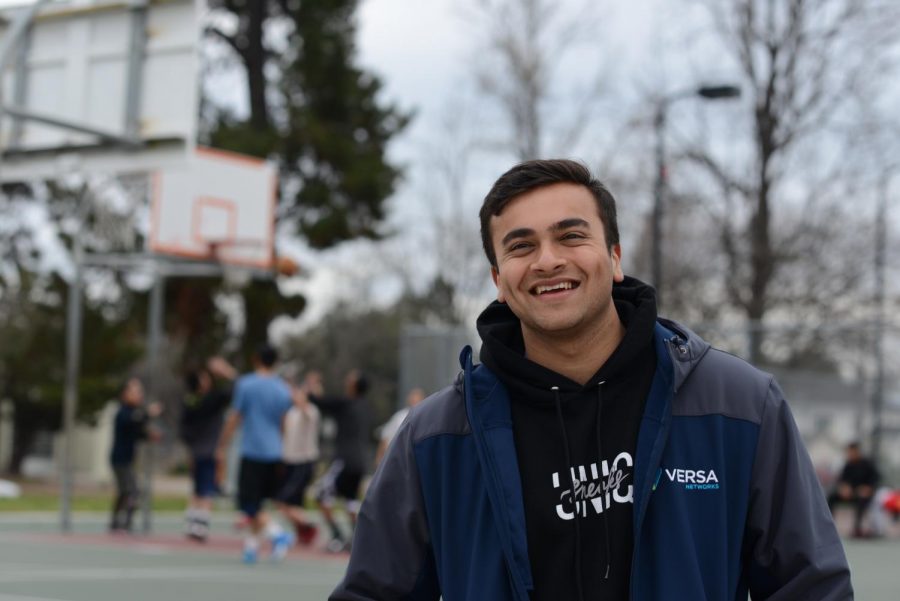
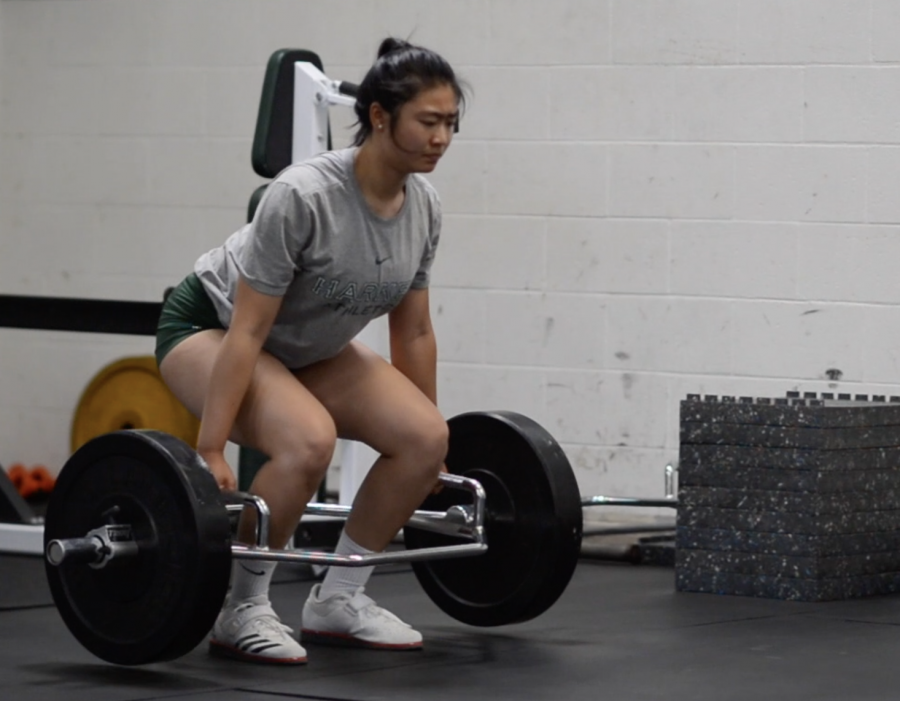

![“My slogan is ‘slow feet, don’t eat, and I’m hungry.’ You need to run fast to get where you are–you aren't going to get those championships if you aren't fast,” Angel Cervantes (12) said. “I want to do well in school on my tests and in track and win championships for my team. I live by that, [and] I can do that anywhere: in the classroom or on the field.”](https://harkeraquila.com/wp-content/uploads/2018/06/DSC5146-900x601.jpg)
![“[Volleyball has] taught me how to fall correctly, and another thing it taught is that you don’t have to be the best at something to be good at it. If you just hit the ball in a smart way, then it still scores points and you’re good at it. You could be a background player and still make a much bigger impact on the team than you would think,” Anya Gert (’20) said.](https://harkeraquila.com/wp-content/uploads/2020/06/AnnaGert_JinTuan_HoHPhotoEdited-600x900.jpeg)
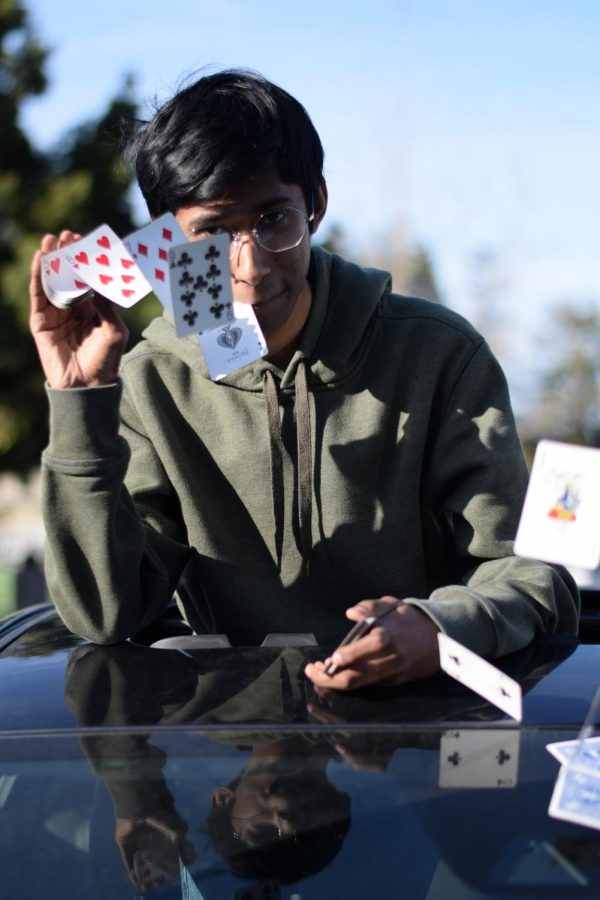
![“I'm not nearly there yet, but [my confidence has] definitely been getting better since I was pretty shy and timid coming into Harker my freshman year. I know that there's a lot of people that are really confident in what they do, and I really admire them. Everyone's so driven and that has really pushed me to kind of try to find my own place in high school and be more confident,” Alyssa Huang (’20) said.](https://harkeraquila.com/wp-content/uploads/2020/06/AlyssaHuang_EmilyChen_HoHPhoto-900x749.jpeg)

This is the seventh installment of Research Revelations: Conversations with Our Student Researchers, a podcast where Aquila staff members talk to student researchers about their projects and research goals. In this episode, STEM Editor Jonathan Szeto (11) and Assistant STEM Editor Nathan Yee (10) meet with Cyrus Ghane (11) to discuss his work in the neuroscience of macaque monkey brains.
Jonathan: Hi everyone, I’m Jonathan.
Nathan: I’m Nathan.
Jonathan: And welcome back to Research Revelations: Conversations With Our Student Researchers.
Nathan: Today, we’re with junior Cyrus Ghane to talk about his work with the neuroscience of macaque monkey brains.
Jonathan: Thanks for joining us today, Cyrus. We first want to ask you: What’s your research all about, and how did you get started?
Cyrus: My research primarily concerns detailing how the brain is organized, so I try to find a correlation between the spatial organization of the brain and the temporal organization of the brain. To do that, I used some fMRI imaging, and I did it on the macaque monkey. I got into it in a summer program called the Harvard Open Biopsy Institute, a free program over the summer, and I was paired with a PhD mentor. I wrote a paper and did a poster from there.
Nathan: Why did you choose this topic and why are you interested in it?
Cyrus: I was always pretty interested in interdisciplinary research. This research kind of combines physics and neuroscience and a bit of biology too. I was pretty interested in kind of combining all those disciplines and seeing how they interact to lead to, you know, further research in the brain.
Jonathan: Can you walk us through the steps you took in your research?
Cyrus: First, we needed to acquire the fMRI data. That was done prior to the start of my research. It takes time. We imaged six macaque monkeys, and we got five different runs. We took the fMRI data and then we did some preprocessing to correct for some small motion when the monkeys move their heads. We correct for that. After that, I did some analysis. To quantify that temporal organization, I calculated what’s called intrinsic time scales for the brain.
Jonathan: Could you expand more on what does the time scale mean?
Cyrus: Let’s say you trip over a rock. In the very short time scales after you trip, in the milliseconds and seconds, you’re thinking primarily about bracing for impact, right? In the minutes after you trip, you’re thinking about finding a bandage or some kind of medical assistance. In hours after you trip, you’re thinking of long term recovery. That’s kind of illustrating the range of time skills the brain operates over, and that’s how we quantify the temporal organization of the brain. For the spatial organization, I calculated functional connectivity, which kind of says how different areas of the brain are functionally related. A voxel is just a little three cube of the brain. You segment the brain into millions of different voxels, and then to find functional connectivity, we correlate the time series of different voxels in the brain. So if two voxels in different regions of the brain have simultaneous signals, that means they’re basically functionally correlated and they’re being activated at the same time. We say those two regions are functionally correlated. So I quantified those metrics using what’s called a functional connectivity gradient. Then I correlated those two using the Pearson correlation coefficient. Finally, I generated some brain images using various neuroimaging softwares.
Nathan: How did you get the images of the monkey brains? Did you actually scan them?
Cyrus: I’m not allowed actually to interact with the monkeys because I’m under 18, and there’s a possibility of disease transmission. We put the monkeys in the MRI machine, then we got the brain images, and then I did the preprocessing after, but I wasn’t involved with the actual data collection.
Nathan: Are the monkeys local? Where are they from?
Cyrus: No, the program is virtual. My mentor actually did the monkey scanning before I started. She did it sometime in March or April. I got the data and you know, from there did the analysis.
Nathan: Were there any major obstacles you faced while conducting your research?
Cyrus: I would say the biggest thing is orienting myself with the neuroimaging softwares. There’s a decently high learning barrier. When I was first getting started, it was difficult to learn the ropes of you know, how exactly do I input images? How do I generate brain images? I think it really helps to watch. There is like a playlist on youtube and I ask questions to my mentor. Now looking back, it makes sense. But I remember at the time I found it pretty confusing and there were a lot of errors that I ran into.
Jonathan: In the end, what was the main outcome of your project?
Cyrus: We eventually found a correlation between time scales and functional connectivity. What that means is we found a correlation between the spatial organization of the brain and the temporal organization of the brain. The implication of that is during disease states, you have these networks kind of disrupted. So we can measure one or the other and it’s, most of the time, easier to measure the spatial organization, so we can measure that to see how it’s changing during disease states and that has implications for developing therapeutic strategies for curing diseases.
Jonathan: What about surprises? Was there anything unexpected you encountered?
Cyrus: I would say with our results. I looked at the visual cortex in the macaque brain, so there are six areas there. Previous literature has correlated the function of the visual cortex to the area. For instance, the medial part of the visual area corresponds with more fine grained visual details. We actually found the time scales in that area also decreased. That was something that hasn’t been confirmed in research and is like an area of further study that we’ll be pursuing.
Jonathan: What was your favorite part of the research process?
Cyrus: I would say my favorite part is seeing the images after they’re generated. Especially with neuroimaging, you can make some pretty aesthetically pleasing images. The softwares are getting pretty advanced these days and you can really see exactly how, for instance, the time scales are changing across brain regions or things like that. It’s really just satisfying at the end of the day to see your work pay off with those images.
Nathan: You said your research could help create new strategies for curing diseases. Is that one of the potential steps you’re planning to take in the future to build on your work?
Cyrus: Yeah, I would hope so. This was setting the stage for some clinical research. There [is] visual snow syndrome, for example, in the visual cortex. That’s something we were hoping to look into soon and just seeing how is this organization in the brain disrupted during that disease and if we can somehow design some kind of therapeutics, you know, that’s a long shot. If possible, that would be great to cure diseases like that.
Jonathan: And would that impact be just on monkeys or also on humans potentially?
Cyrus: Usually in neuroimaging, monkeys are a bit easier to work with just because the brains are a bit smaller. We get higher resolution. They’re pretty similar to human brains, and usually when you do monkey research, you have hopes of extending it to humans. That’s what we hope to do too.
Jonathan: What’s the biggest thing you took away from your project personally or academically that stood out to you?
Cyrus: I think one big thing was don’t be afraid to ask questions. I think in the past, I’ve been a bit more timid in asking questions. I found during the research process, whenever I had a question, whether it be about reading papers or something in the methodology or even software, I would immediately ask my mentor and that really helped. Don’t be afraid to ask questions, especially when you’re starting out and researching there. Your mentor is an expert in the field, right? And you’re not, so they may not be able to understand where you’re coming from. Just be sure to ask whatever and don’t be afraid to do so.
Nathan: If you are a student researcher and would like to be featured next, please feel free to email us at [email protected].
Jonathan: This is Jonathan.
Nathan: And this is Nathan.
Jonathan: And we’ll see you next time.