
![“I wasn't discouraged by some of the obstacles we faced. I learned a lot from the leadership. I found that different people need different ways of receiving feedback — you can't [just] tell them to do something and expect the best. [Some] people needed more incentive. A large part of my role was to figure out what worked for everyone and to figure out how to lead all these separate individuals as a team,” Suhana Bhandare (’26) said.](https://harkeraquila.com/wp-content/uploads/2026/06/SuhanaBhandare_JasmineHansra-1-1200x798.jpg)


![“This is actually from Randy Pausch Randy P. Brick: ‘Walls are there for a reason. You have to show how much you want to overcome them.’ You have to show how much you want something. That's what I've always been able to do with tennis, Link Crew and getting that internship [with Kushy Baby]. It’s important pushing through that — getting around that brick wall, climbing over it or clawing through it,” Yash Sachdeva (’26) said.](https://harkeraquila.com/wp-content/uploads/2026/05/YashSachdeva_RamBatchu-copy-1200x1002.jpg)












![“[Building nerf blasters] became this outlet of creativity for me that hasn't been matched by anything else. The process [of] making a build complete to your desire is such a painstakingly difficult process, but I've had to learn from [the skills needed from] soldering to proper painting. There's so many different options for everything, if you think about it, it exists. The best part is [that] if it doesn't exist, you can build it yourself," Ishaan Parate said.](https://harkeraquila.com/wp-content/uploads/2022/08/DSC_8149-900x604.jpg)


![“When I came into high school, I was ready to be a follower. But DECA was a game changer for me. It helped me overcome my fear of public speaking, and it's played such a major role in who I've become today. To be able to successfully lead a chapter of 150 students, an officer team and be one of the upperclassmen I once really admired is something I'm [really] proud of,” Anvitha Tummala ('21) said.](https://harkeraquila.com/wp-content/uploads/2021/07/Screen-Shot-2021-07-25-at-9.50.05-AM-900x594.png)




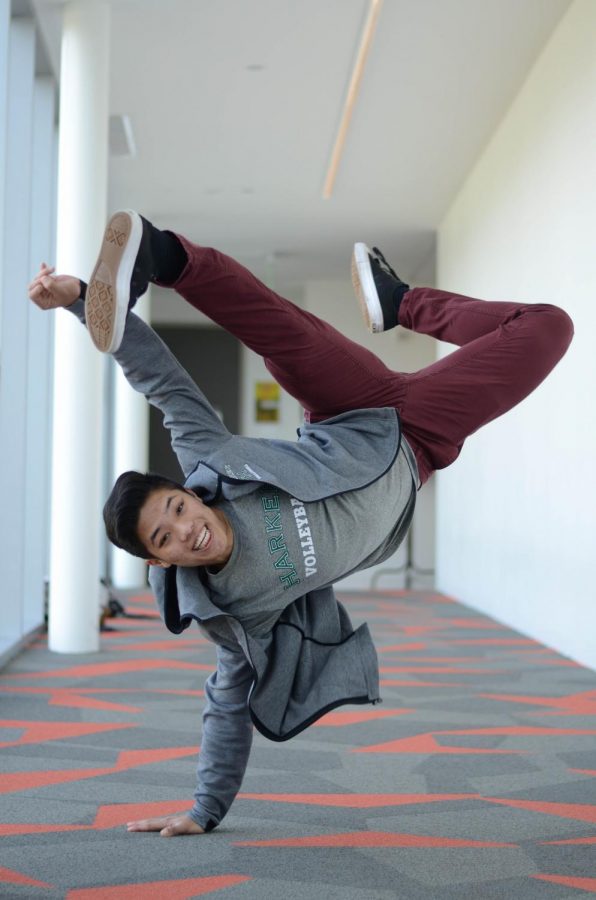


![“I think getting up in the morning and having a sense of purpose [is exciting]. I think without a certain amount of drive, life is kind of obsolete and mundane, and I think having that every single day is what makes each day unique and kind of makes life exciting,” Neymika Jain (12) said.](https://harkeraquila.com/wp-content/uploads/2017/06/Screen-Shot-2017-06-03-at-4.54.16-PM.png)




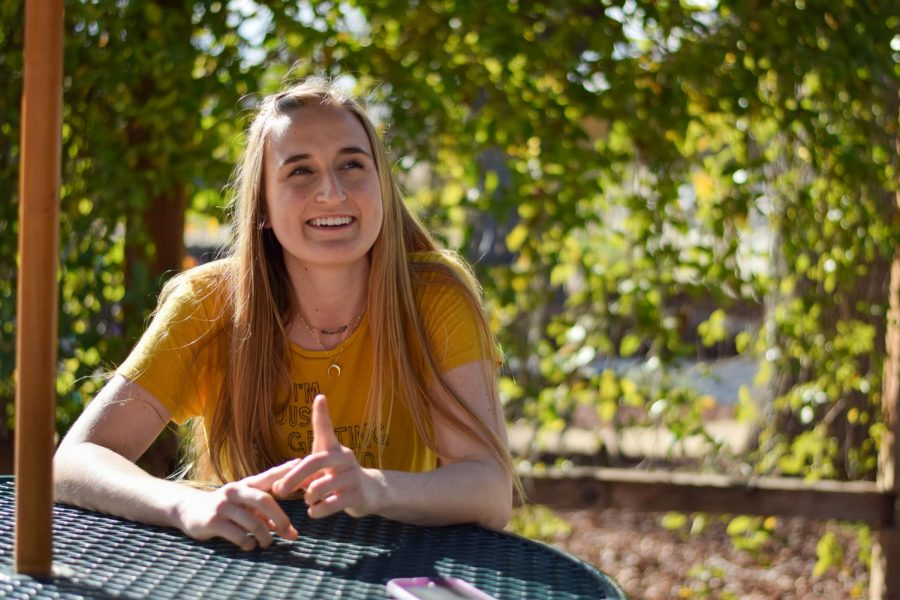

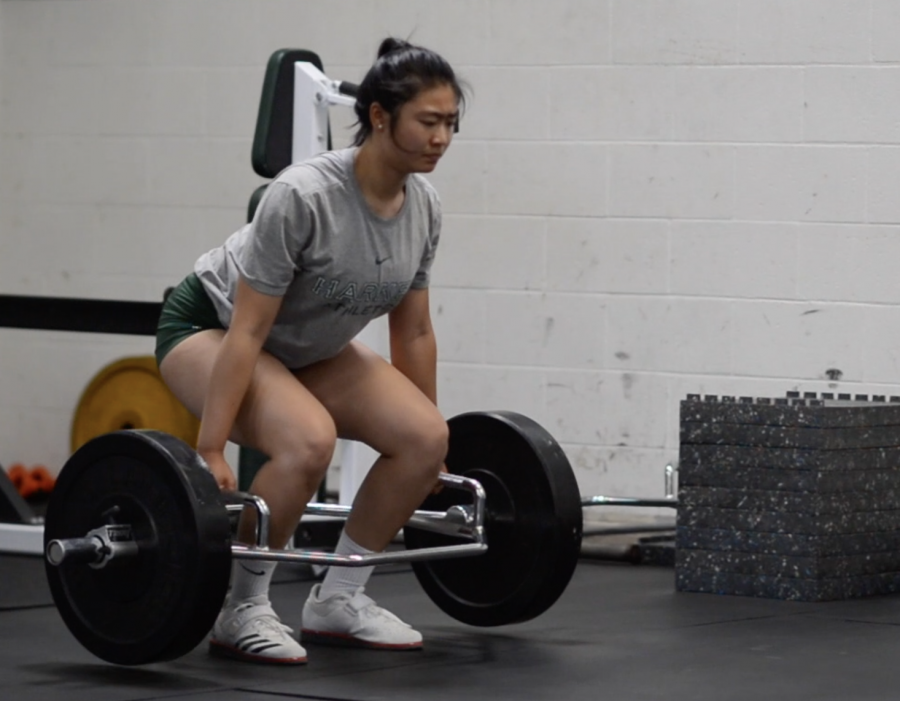

![“My slogan is ‘slow feet, don’t eat, and I’m hungry.’ You need to run fast to get where you are–you aren't going to get those championships if you aren't fast,” Angel Cervantes (12) said. “I want to do well in school on my tests and in track and win championships for my team. I live by that, [and] I can do that anywhere: in the classroom or on the field.”](https://harkeraquila.com/wp-content/uploads/2018/06/DSC5146-900x601.jpg)
![“[Volleyball has] taught me how to fall correctly, and another thing it taught is that you don’t have to be the best at something to be good at it. If you just hit the ball in a smart way, then it still scores points and you’re good at it. You could be a background player and still make a much bigger impact on the team than you would think,” Anya Gert (’20) said.](https://harkeraquila.com/wp-content/uploads/2020/06/AnnaGert_JinTuan_HoHPhotoEdited-600x900.jpeg)

![“I'm not nearly there yet, but [my confidence has] definitely been getting better since I was pretty shy and timid coming into Harker my freshman year. I know that there's a lot of people that are really confident in what they do, and I really admire them. Everyone's so driven and that has really pushed me to kind of try to find my own place in high school and be more confident,” Alyssa Huang (’20) said.](https://harkeraquila.com/wp-content/uploads/2020/06/AlyssaHuang_EmilyChen_HoHPhoto-900x749.jpeg)



50% Off! Buy now! You won’t want to miss this offer! Right after Thanksgiving, the annual rush begins. Inboxes and social media feeds fill with a barrage of “can’t-miss” deals, and everyone races to buy items they didn’t know they wanted.
Black Friday and Cyber Monday return year after year, growing into global events that define the holiday shopping season. Their popularity shows no signs of stopping: last year, 13.7 million Americans made purchases on Black Friday, spending over $10 billion in online shipping.
Within the Harker community, the annual shopping craze is equally familiar. In a survey sent to the upper school with 127 responses, 62.2% of respondents said that they would be shopping during Black Friday or Cyber Monday, and over a quarter of respondents indicated that they typically spend 100-250 dollars when shopping.
Frosh Jessica Xu notes that the overwhelming majority of “wanters” at Harker influences her outlook on spending money. When she sees social media influencers with trendy items, she pauses to ask whether she truly likes the product or is just drawn to the influencer promoting it.
Yet behind the rush of purchases lies more complicated motivations — many students and staff struggle between buying products they “want” versus truly “need.” While 59.1% of respondents indicated that they purchase items they want, only 15.7% of respondents said they buy items they need. People often buy items in the heat of the moment from the pressure of wanting to get a good deal, instead of actually considering if it’s something they want in the long term.
“The consumerism [at Harker] kind of convinces me to not buy things,” Jessica said. “When I see a lot of people walking around with new shoes that everyone is obsessed with or labubus, it makes me think, ‘I don’t want to be like that.’ It’s made me not buy things that are trendy, but also most of the time the things that I want are not things that everyone else wants.”
Even when purchases feel justified in the moment, many people question their decisions after. The concept of buyer’s or shopper’s remorse, in which people feel a sense of guilt after purchasing items, is pervasive — one in four survey respondents said that they regretted buying an item after Black Friday or Cyber Monday. Junior Phoebe Lee noted that to prevent this feeling, she often starts looking for items she wants long before November.
“Throughout the year, I have my eye on a ton of items already, so Black Friday is when I actually go buy them,” Phoebe said. “That way, I don’t have buyer’s remorse because I’ve already been looking at them for a while. If I buy clothes or shoes, I wear them a lot. In terms of makeup, I use makeup really slowly, but they also do get used up.”
However, the truth is that most Black Friday or Cyber Monday purchases do not last. 32.3% of students who purchased items during these shopping events said they use them occasionally, compared to all the time, rarely, or never. This trend has pushed some students to approach Black Friday sales with more intention and planning.
“Before Black Friday, around 1 or 2 months before, I try to make a list of all the things that I want at that time,” frosh Jessica Xu said. “When Black Friday actually comes, I think about if I still want these things, and if I still do, then I’ll probably get them, but if I don’t, then I won’t. Most of the things that I get are plushies, decorations or collectibles, and I don’t regret [buying] them because sometimes I’ll just look at them and it makes me really happy.”
When students see classmates with the newest technology or friends and family showing off recent purchases, the anxiety of being excluded from an experience shared by people nationwide can pressure individuals into buying things they never planned to.
“If everyone’s out there getting these great deals and you’re not, you might feel like you’re missing something important,” AP Psychology teacher Jeff Sutton said. “That push to not be left out really drives people to participate even if they don’t actually need anything. Since everyone’s doing it, people feel like they need to do it as well. I always hear stories about crowds lining up at 4 a.m. and people getting hurt, and it all feeds into that pressure of being part of what everyone else is doing.”
The modern conception of Black Friday differs from the term’s original meaning. The phrase “Black Friday” originally emerged in Philadelphia in the 1950s, describing the chaos on the day after Thanksgiving as crowds filled the city’s shops before the annual Army-Navy football game.
But by the late 1980s, the modern version of Black Friday took shape. Retailers reworked the meaning of “black” to that of making profits, as the term “in the black” represented profits and “in the red” represented financial losses for business. Through the 1990s, producers learned to induce mass interest through tactics like opening at odd hours or offering early-bird discounts, and many even pushing low-quality products by making them seem exclusive. “Flash sales” became a psychological tool, creating the modern Black Friday.
Buyers should consider that a deal may not be a real deal if the product wasn’t one they wanted before the sale. In the frenzy of Black Friday, many find themselves buying products that they would not actually care about in the long run, influenced by the need to benefit from limited-time deals.
“Companies make you think this is the deal of a lifetime and it’s only going to happen on Black Friday,” Sutton said. “If you don’t go that day, you feel like you’re going to miss out forever. That sense of scarcity is incredibly effective at pushing people to buy.”
In the age of the internet, a large portion of Black Friday shopping has moved to be fully online. When companies have access to buyers’ browsing data, they are able to much more easily manipulate prices of certain goods that appeal to certain consumers in order to maximize profit. This causes many buyers to spend much more than they would have otherwise.
According to Economics teacher Sam Lepler, common profit-maximizing tactics by businesses include raising prices ahead of Black Friday and then lowering it the day of. Another strategy is anchoring, pricing a visibly-worse decoy product and the actual product at similar prices to make the normal product seem like a deal.
Retailers further create a sense of franticness with the idea of the limited-time sale, leading some shoppers to make a difficult decision: buy now, or lose out.
“One thing to be careful of is the idea that prices will rise soon,” Lepler said. “ A lot of times, like a week after Black Friday, stuff is returned and then they’ve got to get rid of it, so the deal is actually even better post Black Friday. But that ‘hurry, hurry, hurry’ is designed to create this image that this price must be good because they’re advertising it so much.”
Others find themselves enthralled in the experience of mass buying during flash sales. Sutton explained that some shoppers are motivated by the rush of competing to take advantage of discounts before someone else claims them. This competitive atmosphere can turn shopping into a challenge rather than a necessity.
“For some people, Black Friday itself is the excitement,” Sutton said. “It’s like a game, trying to find the best deal. They see it as an adventure, and that feeling can drive them to buy things they don’t need simply because the experience is so stimulating.”
After hours of searching for deals, shoppers may encounter decision fatigue, the phenomenon where the abundance of options and good deals leads them to experience exhaustion. Consumers in these situations often end up buying products that they don’t need or want because they can no longer think clearly.
Sutton encourages students to avoid Black Friday and Cyber Monday sales altogether, arguing that they can make more rational, logical purchases when not in the mindset of flash sales and a pressure to buy in the moment.
“My biggest advice is: don’t do it,” Sutton said. “Try not to impulse buy. If something can wait, let it wait — don’t fall for the trap of immediate gratification. Make decisions when you’re rested and thinking clearly, not when you’re tired and overwhelmed like you often are during the school year.”