![“I wasn't discouraged by some of the obstacles we faced. I learned a lot from the leadership. I found that different people need different ways of receiving feedback — you can't [just] tell them to do something and expect the best. [Some] people needed more incentive. A large part of my role was to figure out what worked for everyone and to figure out how to lead all these separate individuals as a team,” Suhana Bhandare (’26) said.](https://harkeraquila.com/wp-content/uploads/2026/06/SuhanaBhandare_JasmineHansra-1-1200x798.jpg)


![“This is actually from Randy Pausch Randy P. Brick: ‘Walls are there for a reason. You have to show how much you want to overcome them.’ You have to show how much you want something. That's what I've always been able to do with tennis, Link Crew and getting that internship [with Kushy Baby]. It’s important pushing through that — getting around that brick wall, climbing over it or clawing through it,” Yash Sachdeva (’26) said.](https://harkeraquila.com/wp-content/uploads/2026/05/YashSachdeva_RamBatchu-copy-1200x1002.jpg)













![“[Building nerf blasters] became this outlet of creativity for me that hasn't been matched by anything else. The process [of] making a build complete to your desire is such a painstakingly difficult process, but I've had to learn from [the skills needed from] soldering to proper painting. There's so many different options for everything, if you think about it, it exists. The best part is [that] if it doesn't exist, you can build it yourself," Ishaan Parate said.](https://harkeraquila.com/wp-content/uploads/2022/08/DSC_8149-900x604.jpg)
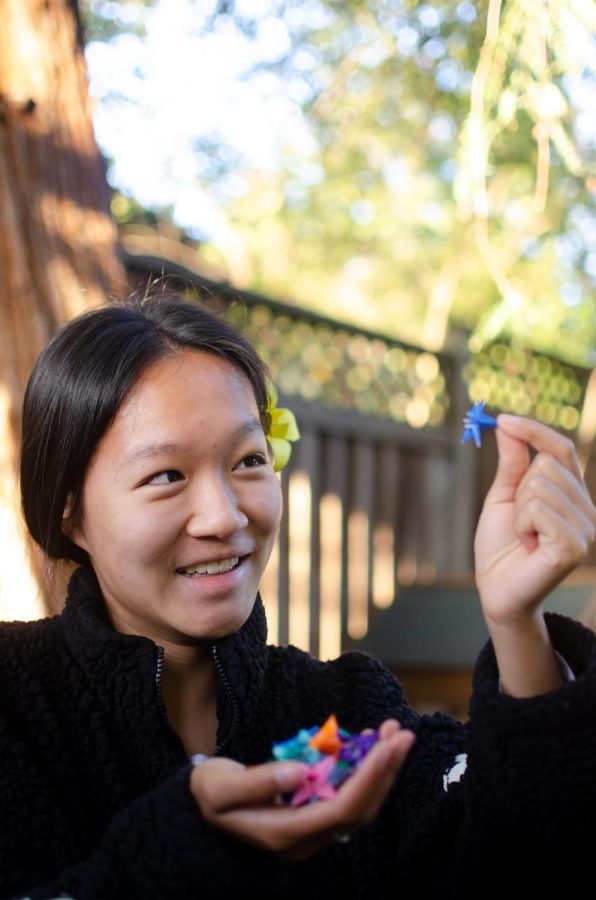



![“When I came into high school, I was ready to be a follower. But DECA was a game changer for me. It helped me overcome my fear of public speaking, and it's played such a major role in who I've become today. To be able to successfully lead a chapter of 150 students, an officer team and be one of the upperclassmen I once really admired is something I'm [really] proud of,” Anvitha Tummala ('21) said.](https://harkeraquila.com/wp-content/uploads/2021/07/Screen-Shot-2021-07-25-at-9.50.05-AM-900x594.png)

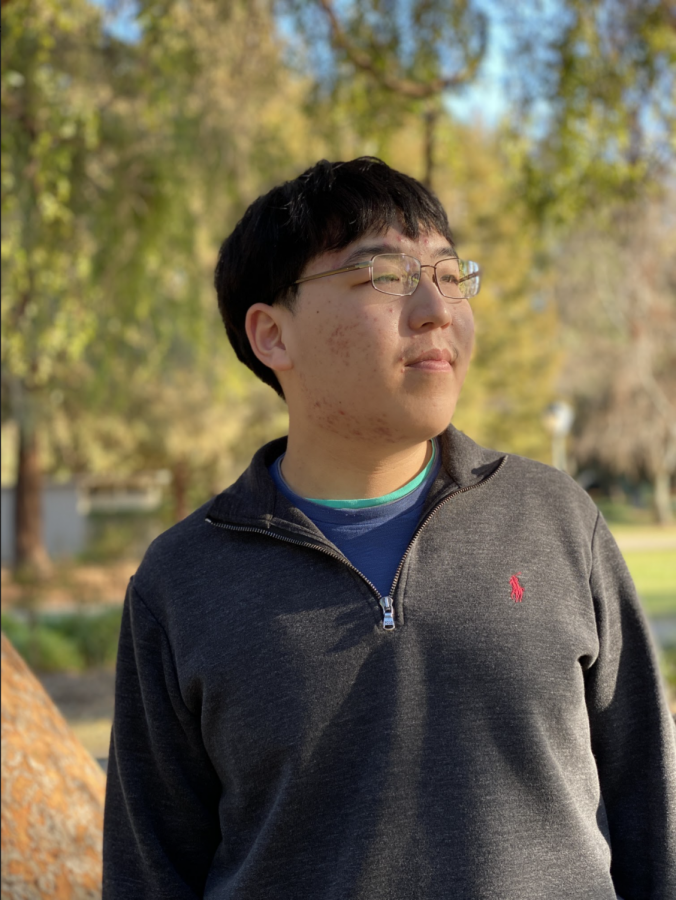





![“I think getting up in the morning and having a sense of purpose [is exciting]. I think without a certain amount of drive, life is kind of obsolete and mundane, and I think having that every single day is what makes each day unique and kind of makes life exciting,” Neymika Jain (12) said.](https://harkeraquila.com/wp-content/uploads/2017/06/Screen-Shot-2017-06-03-at-4.54.16-PM.png)

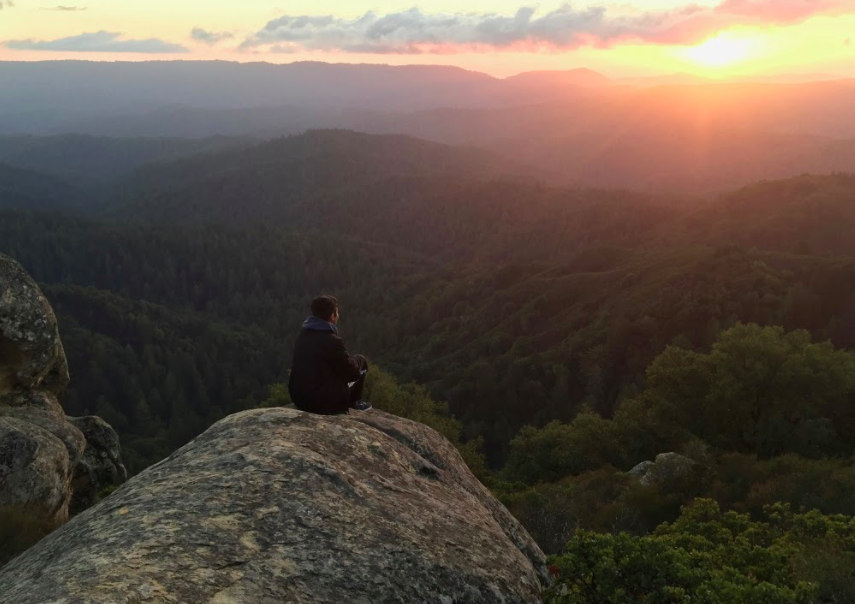






![“My slogan is ‘slow feet, don’t eat, and I’m hungry.’ You need to run fast to get where you are–you aren't going to get those championships if you aren't fast,” Angel Cervantes (12) said. “I want to do well in school on my tests and in track and win championships for my team. I live by that, [and] I can do that anywhere: in the classroom or on the field.”](https://harkeraquila.com/wp-content/uploads/2018/06/DSC5146-900x601.jpg)
![“[Volleyball has] taught me how to fall correctly, and another thing it taught is that you don’t have to be the best at something to be good at it. If you just hit the ball in a smart way, then it still scores points and you’re good at it. You could be a background player and still make a much bigger impact on the team than you would think,” Anya Gert (’20) said.](https://harkeraquila.com/wp-content/uploads/2020/06/AnnaGert_JinTuan_HoHPhotoEdited-600x900.jpeg)
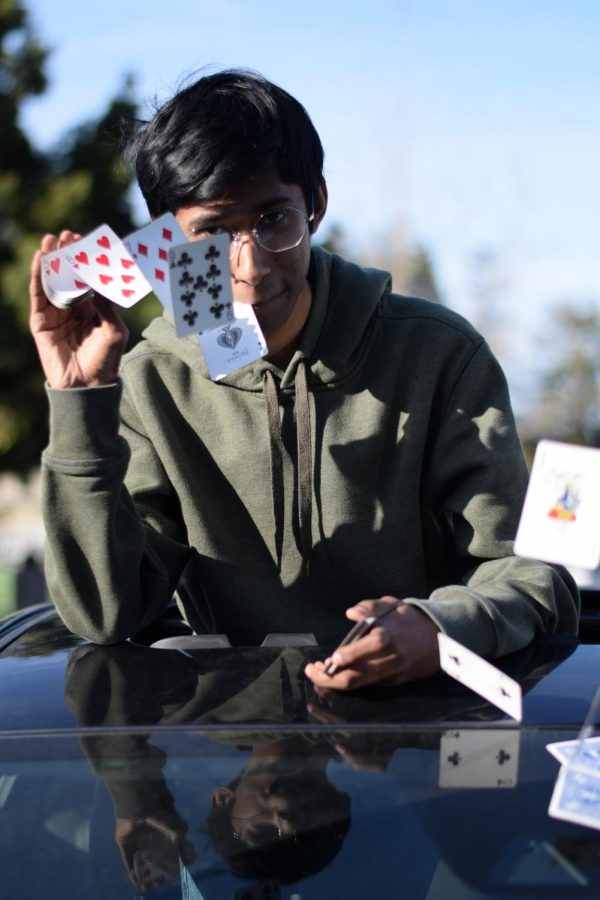
![“I'm not nearly there yet, but [my confidence has] definitely been getting better since I was pretty shy and timid coming into Harker my freshman year. I know that there's a lot of people that are really confident in what they do, and I really admire them. Everyone's so driven and that has really pushed me to kind of try to find my own place in high school and be more confident,” Alyssa Huang (’20) said.](https://harkeraquila.com/wp-content/uploads/2020/06/AlyssaHuang_EmilyChen_HoHPhoto-900x749.jpeg)



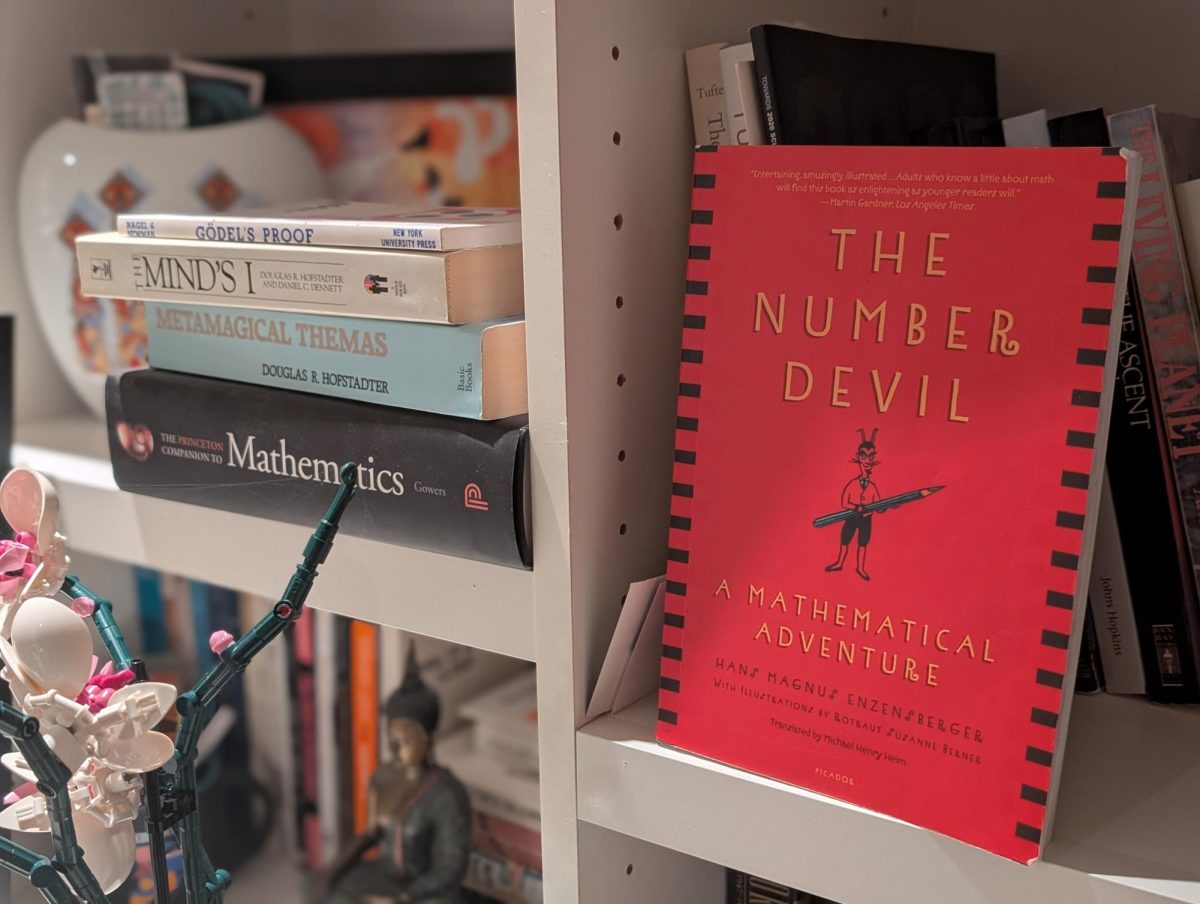
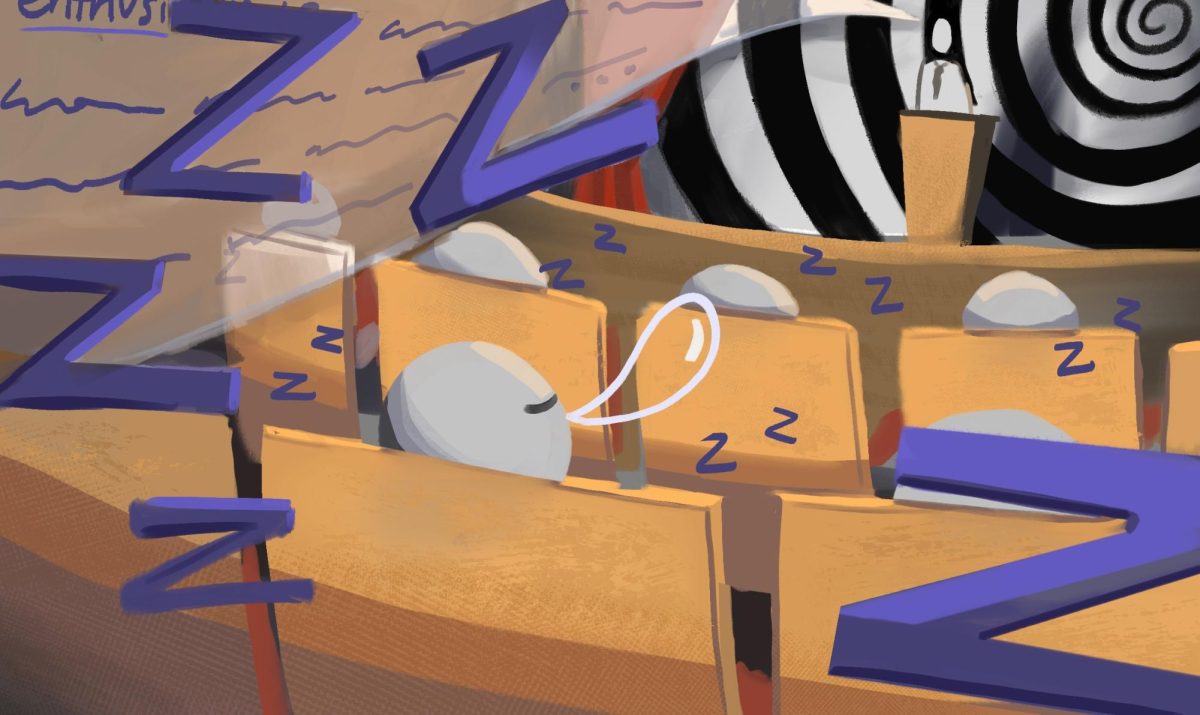
In your dreams, a mysterious talking beetle confronts you with vexing mathematical queries. Do you ignore it and wake up, convinced that not even sleep provides respite from your algebra homework, or plunge into a bizarre adventure filled with more strange questions?
Robert, protagonist of “The Number Devil,” is a 12-year-old boy who faces this choice and opts to follow his curiosity through a world of math despite not enjoying the subject at school. Written by Hans Magnus Enzensberger and illustrated by Rotraut Susanne Berner, “The Number Devil” follows Robert throughout his imaginary adventures as he explores fields ranging from number theory and geometry to combinatorics and logic.
“The Number Devil” is structured as a series of 12 nights, each covering a different and increasingly complex topic. Fractions give way to fractals as Enzensberger and Berner use vivid imagery to make abstract concepts intuitively understandable.
Robert quickly learns that the aforementioned beetle is the titular number devil and gradually comes to appreciate his new teacher. The devil’s teaching methods appear highly unconventional, and Robert is initially hesitant to embrace them, but he soon comes to enjoy his nightly lessons.
Endless chains of numbers hooked to the devil’s walking stick represent repeated decimals, while infinite rabbit families illustrate the growth of Fibonacci numbers. Enzensberger captures the sheer wonder experienced by students forming connections between seemingly unrelated fields in his fantastical depiction of seemingly unintuitive ideas, allowing me to experience the joy of figuring something out for the first time all over again.
By abandoning standard notation for more imaginative terminology — square roots are rutabagas, factorials are vroom numbers, primes are prima donnas and irrational numbers are unreasonable numbers — he separates math from any preconceived notions of complexity. Reading “The Number Devil” didn’t teach me how to solve differential equations or find 2D convex hulls, but it did help me appreciate math as more than an academic subject.
On the final night, Robert learns that the number nevil’s real name is Teplotaxl and is invited to Number Heaven. After reaching the entrance, Robert worries that he’s misplaced his invitation and may not be allowed in, to which the number devil responds: “Don’t worry. Anyone who really wants to can enter. The trick is to get here in the first place. And that, as you can imagine, very few manage.”
Mathematical thinking represents a way of approaching problems just as much as it is knowledge of how to solve them. What I’ve learned about geometry might not directly apply to a proof in game theory but could help me appreciate a common theme or idea. My own experiences with math have taught me to seek out the unexpected connections between vastly different fields, and developing a desire to explore beyond textbooks has helped me enjoy math for its own sake.
As Robert learns, the biggest factor distinguishing mathematical titans like Pythagoras from students struggling with geometry is simply an interest in learning more. Curiosity isn’t a substitute for understanding, but knowledge without passion can never become insight.
Although the number devil is unable to guide Robert along his journey any further, devastating both, Robert’s newfound love of math enables him to thrive in a class he previously detested. His independent derivation of Gauss’s formula for triangular numbers shocks his teacher, and Robert “silently thank[s] the number devil” for teaching him how to approach and appreciate mathematics.
I’ve always enjoyed learning about the beautiful patterns found in math, but reading “The Number Devil” helped me appreciate why mysterious patterns have enamored humans for thousands of years. Math becomes magic through Enzensberger’s writing, and I find “The Number Devil” utterly captivating; each time I return, something new puzzles and delights me. “The Number Devil” is no ordinary series of math lessons, and any student can learn from both Enzensberger’s delightful prose and Robert’s approach to learning.
Rating: 5/5