
![“I wasn't discouraged by some of the obstacles we faced. I learned a lot from the leadership. I found that different people need different ways of receiving feedback — you can't [just] tell them to do something and expect the best. [Some] people needed more incentive. A large part of my role was to figure out what worked for everyone and to figure out how to lead all these separate individuals as a team,” Suhana Bhandare (’26) said.](https://harkeraquila.com/wp-content/uploads/2026/06/SuhanaBhandare_JasmineHansra-1-1200x798.jpg)


![“This is actually from Randy Pausch Randy P. Brick: ‘Walls are there for a reason. You have to show how much you want to overcome them.’ You have to show how much you want something. That's what I've always been able to do with tennis, Link Crew and getting that internship [with Kushy Baby]. It’s important pushing through that — getting around that brick wall, climbing over it or clawing through it,” Yash Sachdeva (’26) said.](https://harkeraquila.com/wp-content/uploads/2026/05/YashSachdeva_RamBatchu-copy-1200x1002.jpg)
















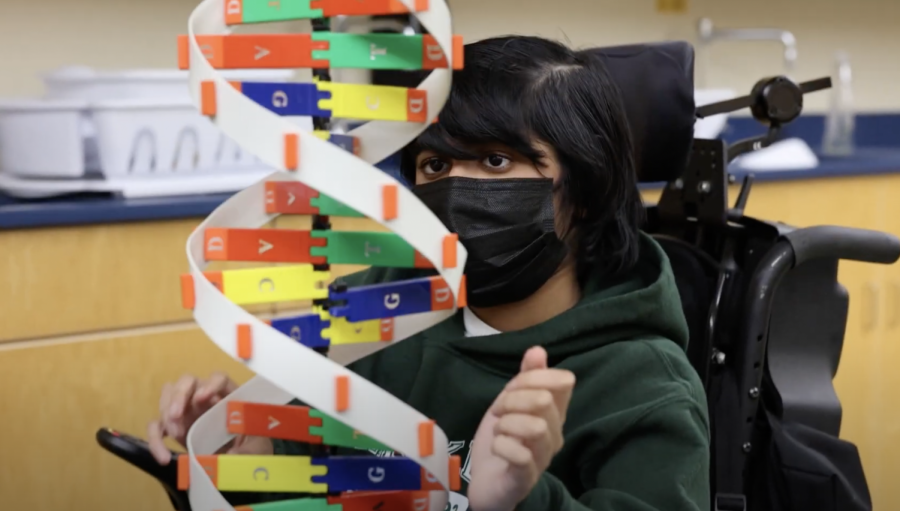
![“[Building nerf blasters] became this outlet of creativity for me that hasn't been matched by anything else. The process [of] making a build complete to your desire is such a painstakingly difficult process, but I've had to learn from [the skills needed from] soldering to proper painting. There's so many different options for everything, if you think about it, it exists. The best part is [that] if it doesn't exist, you can build it yourself," Ishaan Parate said.](https://harkeraquila.com/wp-content/uploads/2022/08/DSC_8149-900x604.jpg)



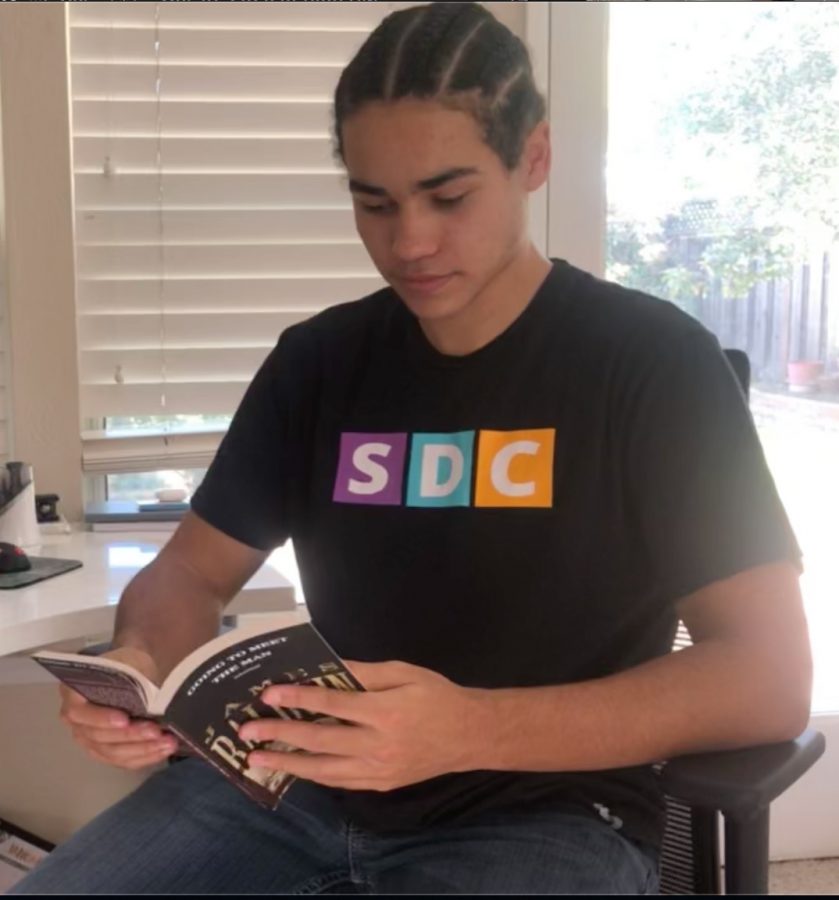
![“When I came into high school, I was ready to be a follower. But DECA was a game changer for me. It helped me overcome my fear of public speaking, and it's played such a major role in who I've become today. To be able to successfully lead a chapter of 150 students, an officer team and be one of the upperclassmen I once really admired is something I'm [really] proud of,” Anvitha Tummala ('21) said.](https://harkeraquila.com/wp-content/uploads/2021/07/Screen-Shot-2021-07-25-at-9.50.05-AM-900x594.png)







![“I think getting up in the morning and having a sense of purpose [is exciting]. I think without a certain amount of drive, life is kind of obsolete and mundane, and I think having that every single day is what makes each day unique and kind of makes life exciting,” Neymika Jain (12) said.](https://harkeraquila.com/wp-content/uploads/2017/06/Screen-Shot-2017-06-03-at-4.54.16-PM.png)






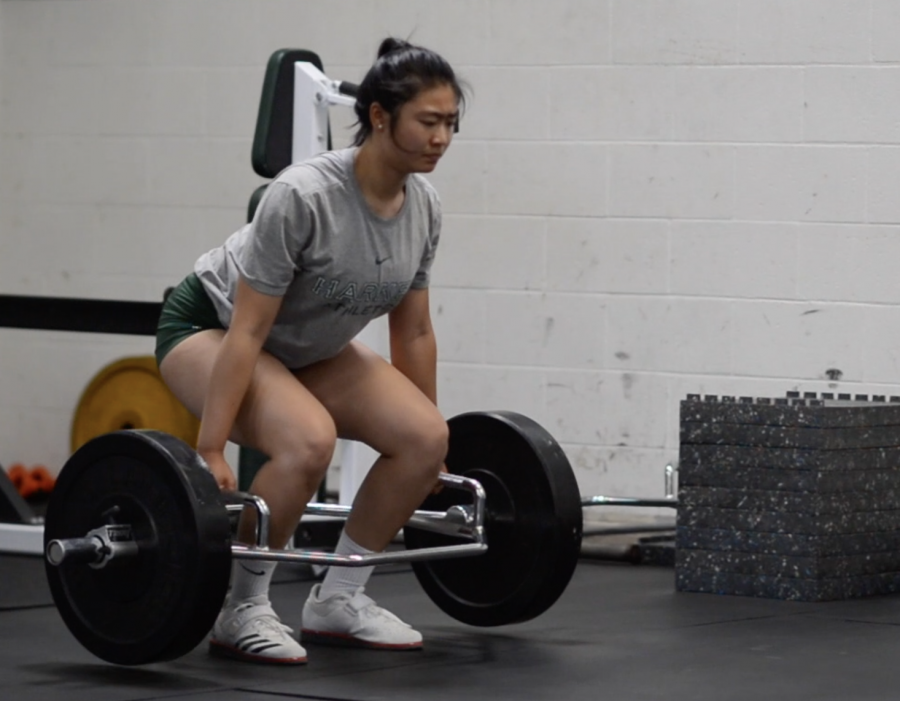

![“My slogan is ‘slow feet, don’t eat, and I’m hungry.’ You need to run fast to get where you are–you aren't going to get those championships if you aren't fast,” Angel Cervantes (12) said. “I want to do well in school on my tests and in track and win championships for my team. I live by that, [and] I can do that anywhere: in the classroom or on the field.”](https://harkeraquila.com/wp-content/uploads/2018/06/DSC5146-900x601.jpg)
![“[Volleyball has] taught me how to fall correctly, and another thing it taught is that you don’t have to be the best at something to be good at it. If you just hit the ball in a smart way, then it still scores points and you’re good at it. You could be a background player and still make a much bigger impact on the team than you would think,” Anya Gert (’20) said.](https://harkeraquila.com/wp-content/uploads/2020/06/AnnaGert_JinTuan_HoHPhotoEdited-600x900.jpeg)

![“I'm not nearly there yet, but [my confidence has] definitely been getting better since I was pretty shy and timid coming into Harker my freshman year. I know that there's a lot of people that are really confident in what they do, and I really admire them. Everyone's so driven and that has really pushed me to kind of try to find my own place in high school and be more confident,” Alyssa Huang (’20) said.](https://harkeraquila.com/wp-content/uploads/2020/06/AlyssaHuang_EmilyChen_HoHPhoto-900x749.jpeg)




On Wednesday, the California Institute of Technology announced that standardized test scores would be required for incoming college applications. Harvard University followed suit on Thursday. Over the last two months, Dartmouth College, Yale University, Brown University and the University of Texas at Austin have all similarly rejected their standardized test-optional policy implemented four years ago in response to the COVID-19 pandemic.
Most colleges required SAT or ACT scores in their admissions process before 2020, but after the shift to online testing, many colleges removed that policy due to chaotic pandemic-era restrictions. On Feb. 5, Dartmouth reinstated a standardized testing requirement, and a few other top colleges have joined suit since, with the University of Texas at Austin most recently adopting the change on March 11. The earliest school to reinstate a standardized testing requirement after the pandemic was the Massachusetts Institute of Technology in March 2022.
One reason that standardized testing is useful for college admissions is its general ability to predict a student’s academic capabilities, Harker Director of College Counseling Nicole Burrell explains.
“Having worked in admissions and remembering how that goes, if you don’t know a particular high school, and maybe it doesn’t look like it’s as rigorous as high schools you’re familiar with, having a strong test score can give you some reassurance about that student’s ability to do the work,” Burrell said.
Before 2020 many schools, like the University of Chicago, had already begun shifting away from requiring standardized test scores, citing inequity among low-income and minority students. Low-income students often have access to fewer resources, which causes them to score lower on American College Testing and Scholastic Aptitude Tests.
Students are also not submitting their test scores to colleges as much as they had in the past. 43% of U.S. students submitted their test scores in the 2022-2023 application season, a large drop from the nearly 75% before the pandemic.
After the COVID-19 pandemic began, ACT and SAT testing sites moved online, furthering concerns about socioeconomic disparities and calling into question the integrity of standardized tests. As a result, near the start of 2020, over 1,900 colleges across the country removed their standardized testing requirement. Though in-person ACT and SAT exams have resumed, most colleges have maintained their test-optional policy.
Test optional policies have affected standardized testing prep centers like AJ Tutoring, which rely on student and parent interest in improving testing scores for business. AJ Tutoring Test Book Director Andrew Schor remarked that though standardized testing is important, many other factors determine college admissions decisions.
“I would hope that the period we’ve had of test-optional has maybe changed people’s perspective on seeing it as more a component of a whole application process,” Schor said. “It might be a really important one as these schools are saying, but it’s in conjunction with other things like personal statements and recommendations and everything else that also contributes.”
Some colleges now view standardized test scores to be more indicative of student success in higher education. Studies that Dartmouth, Yale and Brown recently conducted internally found that standardized test scores outperformed grades, essays and recommendation letters in predicting the GPA of first-year college students, citing data from admissions officers.
In their research, Dartmouth found that SAT scores correlate to around 22% of variation in first-year GPA, compared to high school GPA, which accounted for only 9%. Their study also found that the SAT predicted around 14% and 21% of the variation in first-year GPAs for disadvantaged students.
In addition to predicting academic success, researchers found that test-optional policies negatively impacted low-income applicants, as they often chose not to submit their comparatively lower SAT or ACT scores to colleges. Due to the holistic evaluation methods, which look at an applicant’s background and access to resources, these scores otherwise would have acted as examples of their tenacity and potential to admission boards.
Sophomore Andrew Tran, took online SAT prep classes prior to his exam and found them somewhat useful for the actual SAT test, but he believes that standardized testing is not an accurate measure of academic performance.
“I think it’s honestly less about academic knowledge and more about someone’s ability to deal with stress during standardized testing, which is important,” said Andrew. “However, it’s inaccurate to phrase SAT and ACT testing as evaluations of academic skill.”