



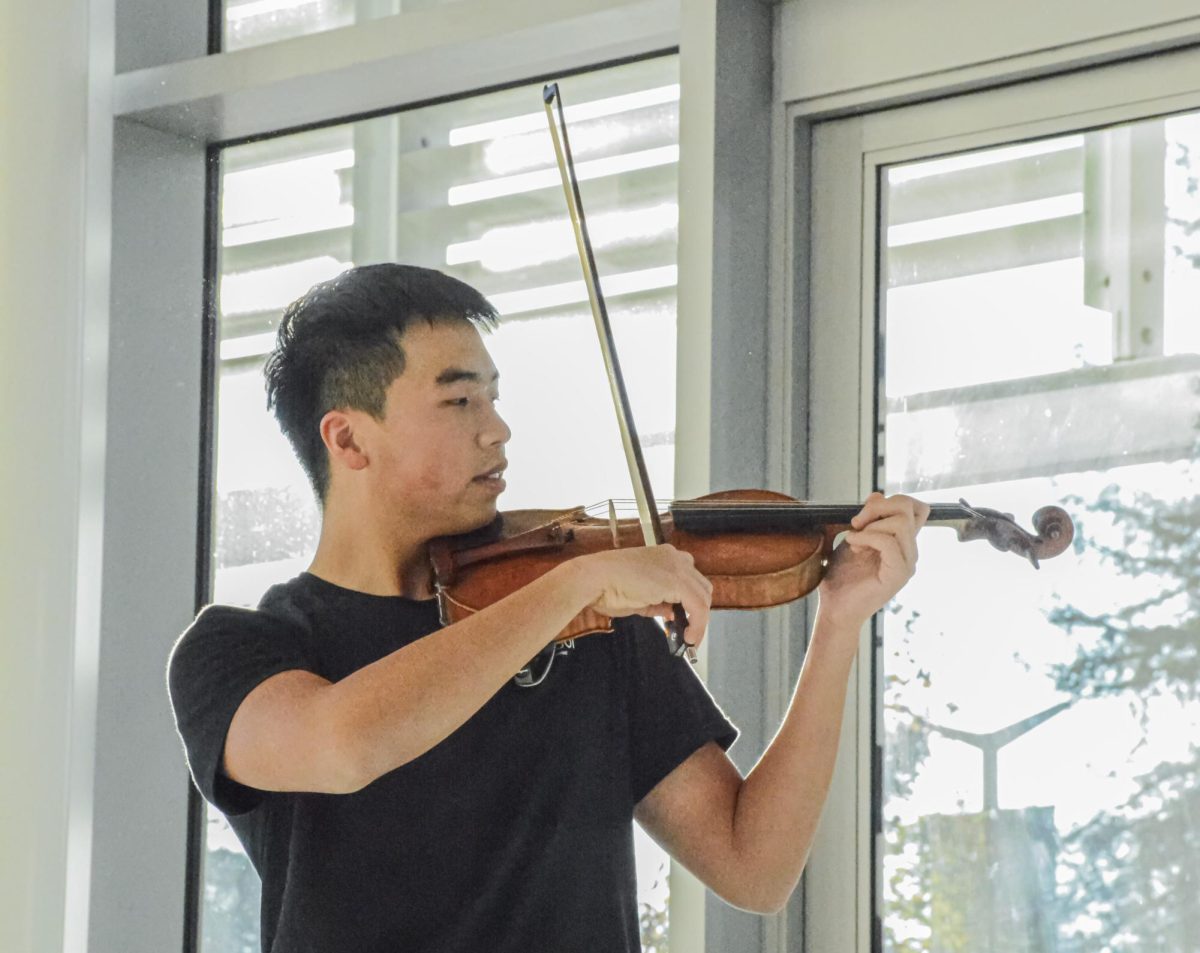
![“I wasn't discouraged by some of the obstacles we faced. I learned a lot from the leadership. I found that different people need different ways of receiving feedback — you can't [just] tell them to do something and expect the best. [Some] people needed more incentive. A large part of my role was to figure out what worked for everyone and to figure out how to lead all these separate individuals as a team,” Suhana Bhandare (’26) said.](https://harkeraquila.com/wp-content/uploads/2026/06/SuhanaBhandare_JasmineHansra-1-1200x798.jpg)

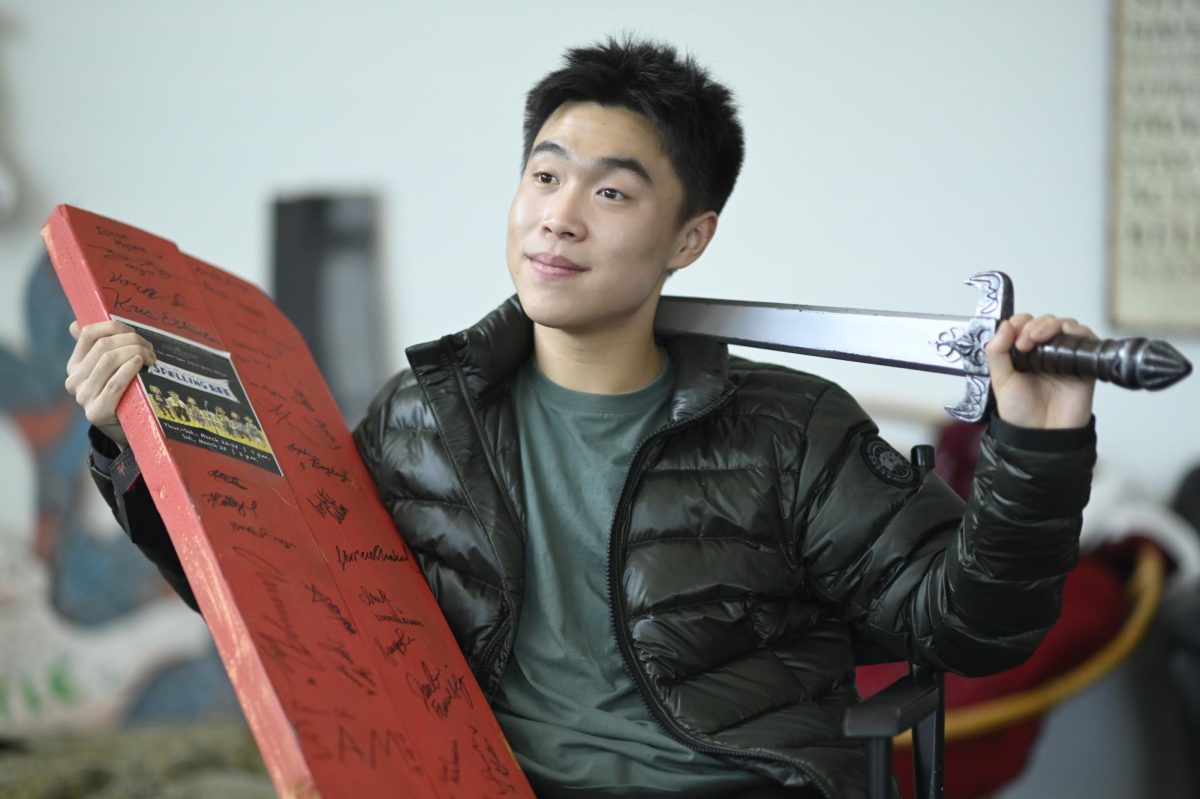
![“This is actually from Randy Pausch Randy P. Brick: ‘Walls are there for a reason. You have to show how much you want to overcome them.’ You have to show how much you want something. That's what I've always been able to do with tennis, Link Crew and getting that internship [with Kushy Baby]. It’s important pushing through that — getting around that brick wall, climbing over it or clawing through it,” Yash Sachdeva (’26) said.](https://harkeraquila.com/wp-content/uploads/2026/05/YashSachdeva_RamBatchu-copy-1200x1002.jpg)












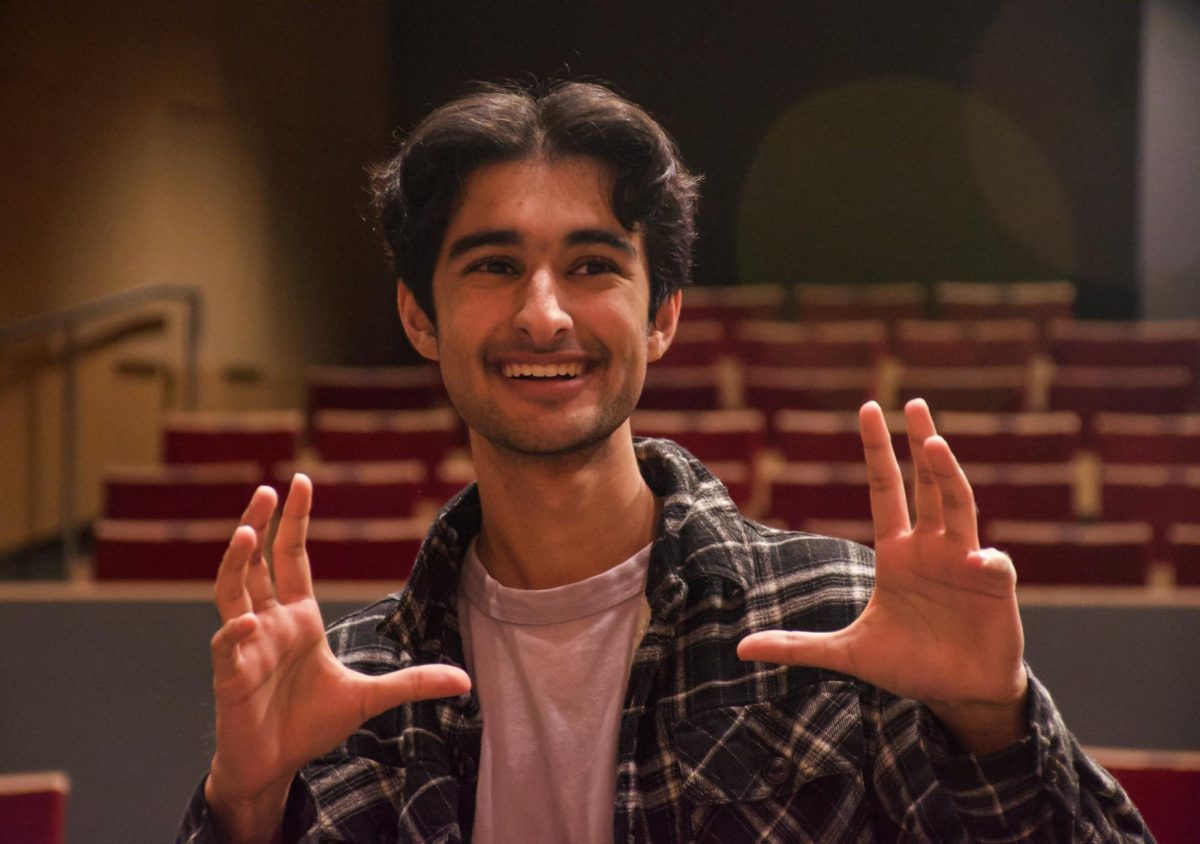




![“[Building nerf blasters] became this outlet of creativity for me that hasn't been matched by anything else. The process [of] making a build complete to your desire is such a painstakingly difficult process, but I've had to learn from [the skills needed from] soldering to proper painting. There's so many different options for everything, if you think about it, it exists. The best part is [that] if it doesn't exist, you can build it yourself," Ishaan Parate said.](https://harkeraquila.com/wp-content/uploads/2022/08/DSC_8149-900x604.jpg)



![“When I came into high school, I was ready to be a follower. But DECA was a game changer for me. It helped me overcome my fear of public speaking, and it's played such a major role in who I've become today. To be able to successfully lead a chapter of 150 students, an officer team and be one of the upperclassmen I once really admired is something I'm [really] proud of,” Anvitha Tummala ('21) said.](https://harkeraquila.com/wp-content/uploads/2021/07/Screen-Shot-2021-07-25-at-9.50.05-AM-900x594.png)







![“I think getting up in the morning and having a sense of purpose [is exciting]. I think without a certain amount of drive, life is kind of obsolete and mundane, and I think having that every single day is what makes each day unique and kind of makes life exciting,” Neymika Jain (12) said.](https://harkeraquila.com/wp-content/uploads/2017/06/Screen-Shot-2017-06-03-at-4.54.16-PM.png)







![“My slogan is ‘slow feet, don’t eat, and I’m hungry.’ You need to run fast to get where you are–you aren't going to get those championships if you aren't fast,” Angel Cervantes (12) said. “I want to do well in school on my tests and in track and win championships for my team. I live by that, [and] I can do that anywhere: in the classroom or on the field.”](https://harkeraquila.com/wp-content/uploads/2018/06/DSC5146-900x601.jpg)
![“[Volleyball has] taught me how to fall correctly, and another thing it taught is that you don’t have to be the best at something to be good at it. If you just hit the ball in a smart way, then it still scores points and you’re good at it. You could be a background player and still make a much bigger impact on the team than you would think,” Anya Gert (’20) said.](https://harkeraquila.com/wp-content/uploads/2020/06/AnnaGert_JinTuan_HoHPhotoEdited-600x900.jpeg)

![“I'm not nearly there yet, but [my confidence has] definitely been getting better since I was pretty shy and timid coming into Harker my freshman year. I know that there's a lot of people that are really confident in what they do, and I really admire them. Everyone's so driven and that has really pushed me to kind of try to find my own place in high school and be more confident,” Alyssa Huang (’20) said.](https://harkeraquila.com/wp-content/uploads/2020/06/AlyssaHuang_EmilyChen_HoHPhoto-900x749.jpeg)


A champion for the underdog
RBG leaves behind a powerful legacy for America

Though Justice Ginsburg’s entire legal legacy rested on both successes and setbacks, her very presence reached the hearts of those far beyond the Supreme Court doors. Even after her passing, her legacy as a woman and societal issues champion will continue for generations to come.
Amidst a sea of black robes traditionally tailored to reveal a man’s shirt and tie, a colorful feminine collar twinkled in the courtroom, the clasp sitting beneath a pragmatic, pulled-back bun. They belonged to one of the only four women to ever serve on the Supreme Court, and her name was Justice Ruth Bader Ginsburg.
Ginsburg died on Sept. 18 at the age of 87 due to complications of metastatic pancreatic cancer, according to a statement released by the Supreme Court.
Appointed to the court by President Bill Clinton in an overwhelming 96-3 Senate confirmation vote in August 1993, Ginsburg was the second woman to don the title and robes of a member of the Supreme Court following Justice Sandra Day O’Connor.
When O’Connor retired in January 2006, Ginsburg became the only woman remaining on the Court for three years, a period she called “the worst times.” She was eventually joined by Justices Sonia Sotomayor in 2009 and Elena Kagan in 2010, both appointed by President Barack Obama.
Ginsburg became the de facto leader of the high court’s four-member liberal bloc, which often led to disagreements with the five other conservative justices in the highly polarized court. She gained widespread attention for her incisive dissenting opinions, earning her the title of the Notorious R.B.G.
This was the first development in Ginsburg’s path to becoming a pop culture phenomenon in her later years; her acronym and image of a frilly lace collar paired with a golden crown turned her into an internet sensation. A documentary of her life hit the theatres in May 2018 along with “On the Basis of Sex” later that year, which chronicled her fight against gender discrimination in her early career.
“I feel like she’s been such a cultural icon just because of how admirable and how persevering she is as a woman who had cancer four times,” Kris Estrada (10), a member of the Youth Activism Club, said.
Ginsburg was treated for colon cancer in 1999, pancreatic cancer in 2009, malignant growths in her lung in 2018 and a malignant tumor in her pancreas in 2019. Despite ongoing medical conditions, Ginsburg refused to retire.
For more than 27 years, Ginsburg channeled her efforts on the court towards amplifying the voices of women and other marginalized groups amidst an amalgam of resistant politics. Bellicose, but with reason, the left-leaning associate justice played a key role in a number of critical cases that significantly altered America’s social landscape.
In United States v. Virginia, the country filed a lawsuit against the Virginia Military Institute, the only remaining all-male public undergraduate college, for violating the Equal Protection Clause of the 14th Amendment. The court struck down the all-male admissions policy in a 7-1 holding with Ginsburg emphasizing that gender equality is a constitutional right in the majority opinion.
“The way that she has served as a role model and an inspiration for women and for girls to pursue careers in law and careers in politics is huge,” upper school history and government teacher Carol Green said. “She very much was at the front and breaking ground, getting jobs, fighting for jobs and being the only woman in a lot of the workplaces that she was in, such as being one of the few women to get through her law school.”
Ginsburg also championed same-sex marriage rights, specifically in the Obergefell v. Hodges court case in June 2015. Led by Justice Anthony Kennedy, the Supreme Court ruled 5–4 that state bans on same-sex marriage were unconstitutional under the clauses of the Fourteenth Amendment, ushering in a new era of freedom and equality for same-sex couples.
“She wasn’t only a voice for women, she was also a voice for the LGBTQ community as well,” said Eira Saraff (9), another Youth Activism Club member. “She was also the only representative for minorities in the Supreme Court right now, so it’s really concerning now that she’s gone for both minorities and women.”
Amidst the vast outpouring of support for Ginsburg comes the important conversation of her inherent privilege. As a white woman who occasionally failed to rule in favor of supporting minorities, she represents the continuing strife within intersectional feminism of solely serving older, elite white women.
“She made decisions that hurt Native American rights in some decisions,” Green said, as seen in the Sherrill v. Oneida case. “Although she’s really paved the way there, in some ways that public self and that notorious RBG almost gets away to become this absolutely amazing superhero, and even our superheroes have flaws.
Though Justice Ginsburg’s entire legal legacy rested on both successes and setbacks, her very presence reached the hearts of those far beyond the Supreme Court doors. Even after her passing, her legacy as a woman and societal issues champion will continue for generations to come. This was the Notorious RBG.
Varsha Rammohan (12) is the co-editor-in-chief of Harker Aquila. This is her fourth year on staff, and she likes journalism since she can meet new people...

Alysa Suleiman (12) is the co-editor-in-chief of Harker Aquila. This is her fourth year on staff, and she previously served as Aquila's first A&E editor,...

Nicole Tian (12) is the co-editor-in-chief of Harker Aquila. This is her fourth year on staff, and she previously served as the opinion editor, co-lifestyle...