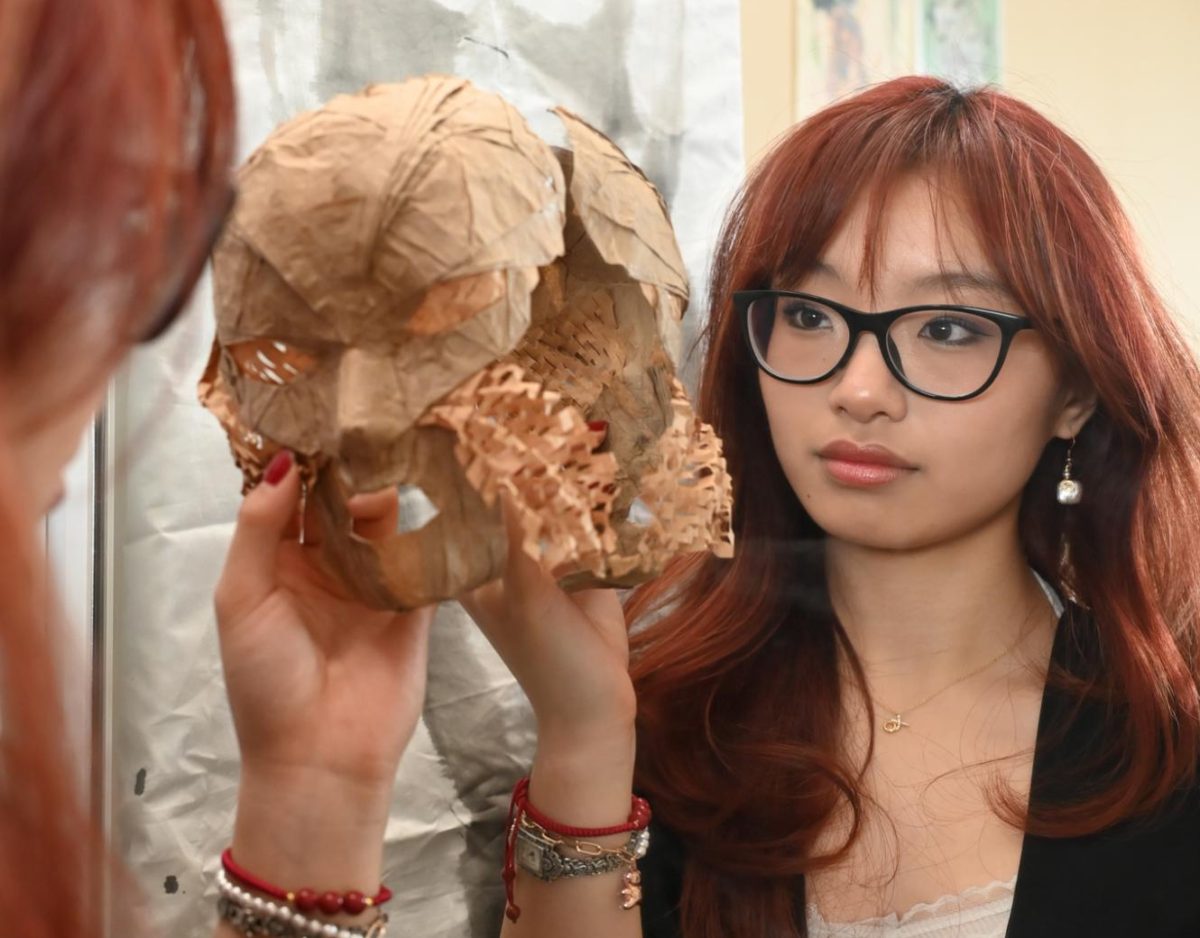
![“I wasn't discouraged by some of the obstacles we faced. I learned a lot from the leadership. I found that different people need different ways of receiving feedback — you can't [just] tell them to do something and expect the best. [Some] people needed more incentive. A large part of my role was to figure out what worked for everyone and to figure out how to lead all these separate individuals as a team,” Suhana Bhandare (’26) said.](https://harkeraquila.com/wp-content/uploads/2026/06/SuhanaBhandare_JasmineHansra-1-1200x798.jpg)
![“This is actually from Randy Pausch Randy P. Brick: ‘Walls are there for a reason. You have to show how much you want to overcome them.’ You have to show how much you want something. That's what I've always been able to do with tennis, Link Crew and getting that internship [with Kushy Baby]. It’s important pushing through that — getting around that brick wall, climbing over it or clawing through it,” Yash Sachdeva (’26) said.](https://harkeraquila.com/wp-content/uploads/2026/05/YashSachdeva_RamBatchu-copy-1200x1002.jpg)


![“[Building nerf blasters] became this outlet of creativity for me that hasn't been matched by anything else. The process [of] making a build complete to your desire is such a painstakingly difficult process, but I've had to learn from [the skills needed from] soldering to proper painting. There's so many different options for everything, if you think about it, it exists. The best part is [that] if it doesn't exist, you can build it yourself," Ishaan Parate said.](https://harkeraquila.com/wp-content/uploads/2022/08/DSC_8149-900x604.jpg)
![“When I came into high school, I was ready to be a follower. But DECA was a game changer for me. It helped me overcome my fear of public speaking, and it's played such a major role in who I've become today. To be able to successfully lead a chapter of 150 students, an officer team and be one of the upperclassmen I once really admired is something I'm [really] proud of,” Anvitha Tummala ('21) said.](https://harkeraquila.com/wp-content/uploads/2021/07/Screen-Shot-2021-07-25-at-9.50.05-AM-900x594.png)

![“I think getting up in the morning and having a sense of purpose [is exciting]. I think without a certain amount of drive, life is kind of obsolete and mundane, and I think having that every single day is what makes each day unique and kind of makes life exciting,” Neymika Jain (12) said.](https://harkeraquila.com/wp-content/uploads/2017/06/Screen-Shot-2017-06-03-at-4.54.16-PM.png)

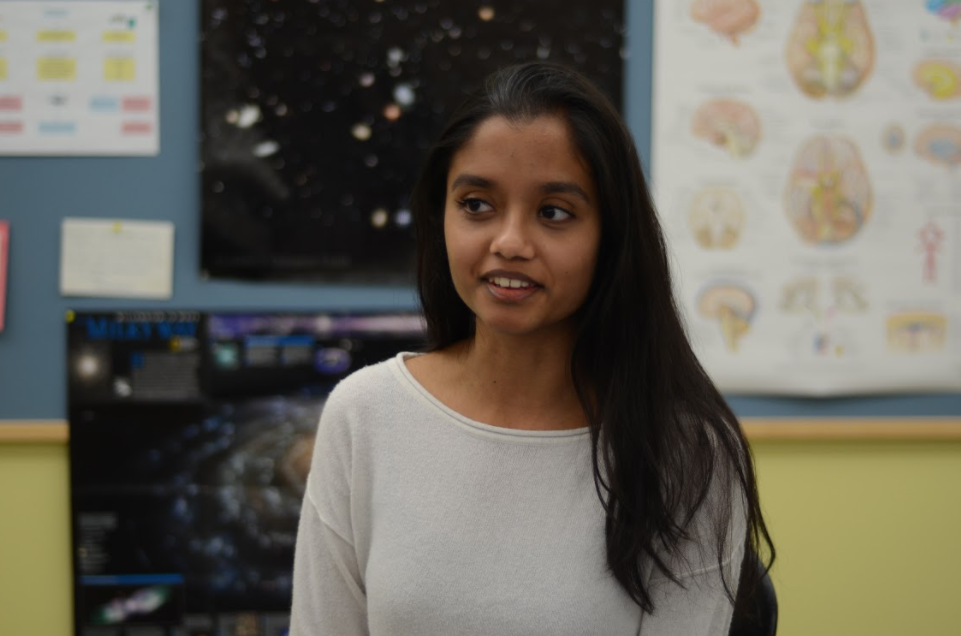
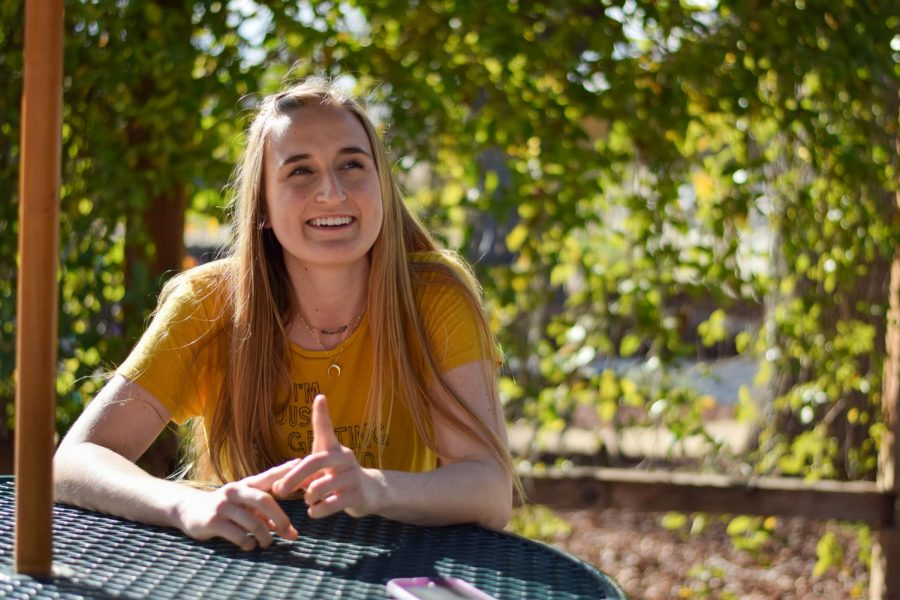
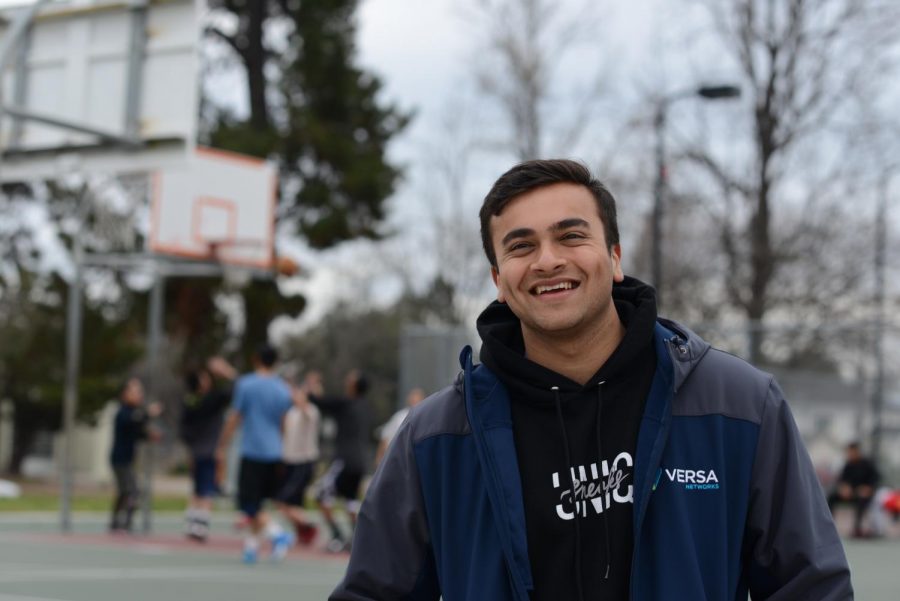
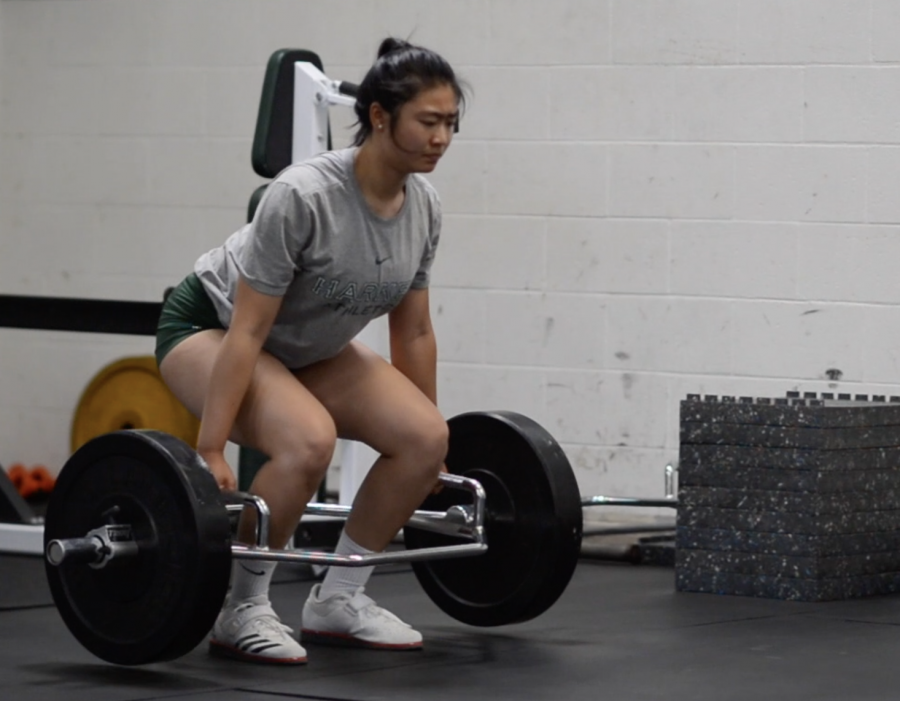

![“My slogan is ‘slow feet, don’t eat, and I’m hungry.’ You need to run fast to get where you are–you aren't going to get those championships if you aren't fast,” Angel Cervantes (12) said. “I want to do well in school on my tests and in track and win championships for my team. I live by that, [and] I can do that anywhere: in the classroom or on the field.”](https://harkeraquila.com/wp-content/uploads/2018/06/DSC5146-900x601.jpg)
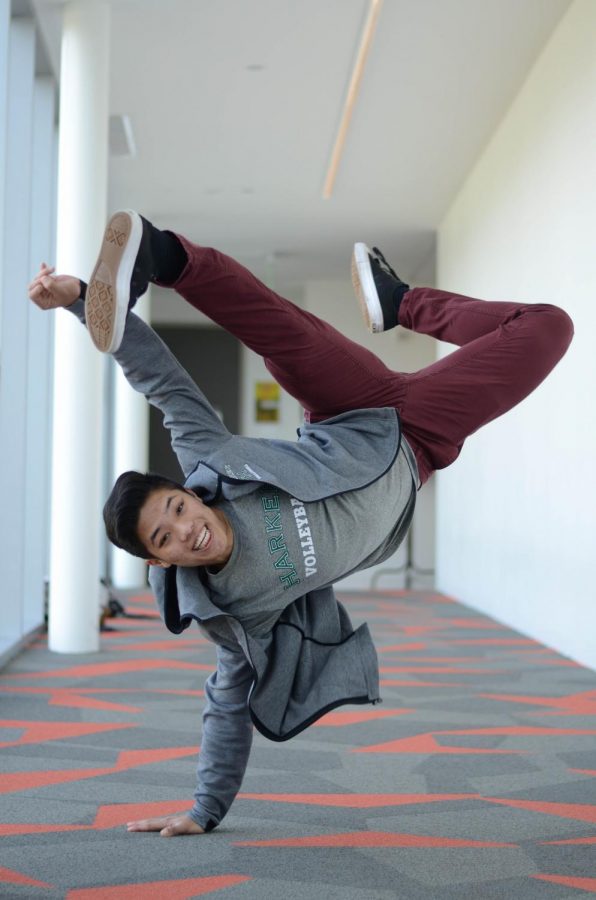
![“[Volleyball has] taught me how to fall correctly, and another thing it taught is that you don’t have to be the best at something to be good at it. If you just hit the ball in a smart way, then it still scores points and you’re good at it. You could be a background player and still make a much bigger impact on the team than you would think,” Anya Gert (’20) said.](https://harkeraquila.com/wp-content/uploads/2020/06/AnnaGert_JinTuan_HoHPhotoEdited-600x900.jpeg)
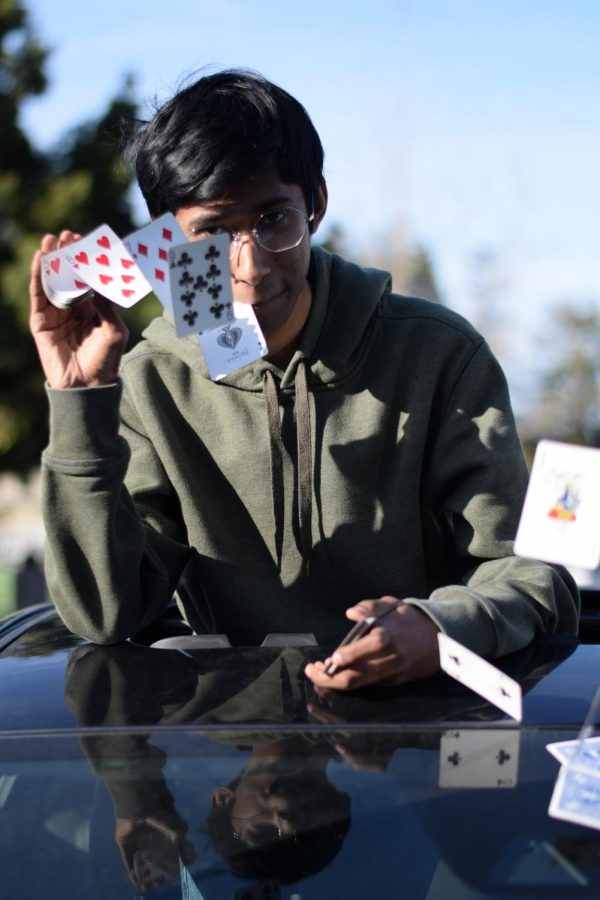
![“I'm not nearly there yet, but [my confidence has] definitely been getting better since I was pretty shy and timid coming into Harker my freshman year. I know that there's a lot of people that are really confident in what they do, and I really admire them. Everyone's so driven and that has really pushed me to kind of try to find my own place in high school and be more confident,” Alyssa Huang (’20) said.](https://harkeraquila.com/wp-content/uploads/2020/06/AlyssaHuang_EmilyChen_HoHPhoto-900x749.jpeg)



In a world of uncertainties and path shifts, senior Kairui Sun has one steadfast certainty: piano playing will remain his lifelong passion. The instrument that first captivated him 12 years ago represents a journey that is only just beginning — one that he envisions happening for many more decades.
“I’m looking back on the past 12 years of my journey with piano, but I really do see it as just a beginning,” Kairui said. “Piano is such a lifelong pursuit, and I sincerely hope that when I’m 70 or 80, I can still be having this reflection with myself and look back on decades of piano. If I didn’t have to worry about worldly possessions, I would just devote my life to studying the craft of the piano.”
Kairui’s interest in music began almost by chance. In kindergarten, a friend invited him to tag along to his lesson. During the teacher’s opening, Kairui started experimenting with scales on the piano. That January afternoon over a decade ago launched him into his passion for the instrument.
Playing piano started as a mechanical practice for Kairui: learning to read notes, hold his wrist up and coordinate his hands. But this eventually evolved into something deeper. In fourth grade, he performed “The Little Shepherd” by Claude Debussy at a small competition, and he experienced a revelation that has since defined his approach to music.
“When you’re actually performing on stage, the performer and the audience can have such a special emotional connection,” Kairui said. “I experienced that for the first time during that competition, and that was the first time where I really felt that enjoyment of piano.”
Since then, Kairui has spent years grappling with increasingly challenging pieces. He developed a philosophy that he believes distinguishes him in piano playing: the performer can contribute as much as the composer to the final performance.
“Whenever you perform a piece of music, the performer can contribute anywhere from 10 to 50 percent of the final product, and the remaining 90 to 50 percent is the composer,” Kairui said. “My artistic interpretation being worth as much as the composer’s is what keeps me coming back to piano every single day.”
This mindset was set in stone while he worked on his chosen piano concerto, Moszkowski’s Second Piano Concerto, an 11-minute piece he’s spent over a year perfecting. He noted that passages from the composition often felt uninspired and awkwardly stitched together. This relatively obscure piece presented a unique challenge for Kairui to bring his own artistic creativity when performing.
This dedication to taking on challenges extends beyond piano. History teacher James Tate, who taught Kairui in AP United States History and mentored him in independent history research, observed how he takes on every project with meticulousness.
“He’s a Renaissance person,” Tate said. “He has a lot of varied interests that he approaches with passion and ardor. He approaches all his projects with the need to maximize, improve, revise and keep tinkering until he gets to the top level.”
Yet, even as Kairui refined his concerto piece, his connection to piano grew increasingly strained in his junior year. A volleyball injury in August, combined with the mounting pressure and technical demands of the “unexpressive” piece, caused Kairui to stop practicing with the same passion and care he once had.
“It can feel lonely at times when you’re in a bad mental state, and only you can get yourself out of the situation,” Kairui said. “Even when I started practicing often again, I was frustrated that I was technically rusty — biomechanically, my fingers were not working the way I wanted them to. I knew my brain had to be the one to get myself out of it.”
Through vocal music teacher Jennifer Sandusky’s accompaniment class in his senior year, Kairui gained a new lens to experience piano, helping him to overcome the isolation he felt. For someone who was now accustomed to spending over a year perfecting a single piece, shifting to accompaniment required adaptation and listening. Sandusky acknowledged how he quickly gained the humility required to succeed.
“He’s such a great musician, and he’s a hard worker,” Sandusky said. “He thinks a lot about the music rather than just getting it learned and accompanying the singers. He’s very sensitive to the singer, and he’s been able to respond very quickly in this new situation.”
In this class, Kairui had the chance to accompany a classmate’s vocal music college portfolio. Experiences like this restored what had been missing: the joy of sharing music with others.
“I really do want to credit Ms. Sandusky’s vocal accompaniment course for fully restoring my confidence and the meaning that I see in piano,” Kairui said. “Going into that collaborative environment really helped me realize that the value of music for me still hasn’t changed. This idea of just being there to share this encapsulated expression really did come back this year in senior year.”
Senior Helen Gu, a classmate in his accompaniment course, witnessed how his caring nature manifests in his work.
“He is a very people-oriented individual,” Helen said. “He is a very caring person, and that manifests deeply in everything that he does. Everything that he puts his mind to, his heart is really there. His love for music and his love for people just really show.”
In other creative pursuits, this love for collaboration is apparent. Close friend senior Albert Yao recalls working with Kairui on a piano composition for their junior year English project analyzing Emily Dickinson’s poetry.
“He’s really skilled with classical theory and familiar with composing, even on the spot,” Albert said. “It was virtuosic improvisations a lot of times, and we came together with a great project at the end. He’s someone who takes initiative, is aware of the small things and is generally very passionate about what he does.”
For Kairui, the meaning of his piano playing is in connection: between time periods, audiences, musicians and experiences. Kairui has no doubt he has found what truly makes his journey of piano playing worthwhile.
“Storytellers don’t just tell stories — they also share encapsulated emotions,” Kairui said. “When any composer writes a piece of music down, they’re doing the same thing as writing a story, but it’s a story that also encapsulates emotions down onto paper. It’s an honor to have the technical capability to bridge the audience of today with the encapsulating emotions of the past.”