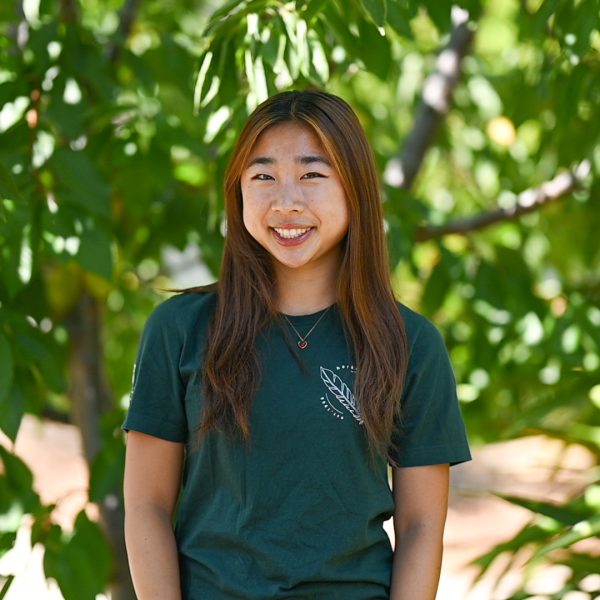
![“I wasn't discouraged by some of the obstacles we faced. I learned a lot from the leadership. I found that different people need different ways of receiving feedback — you can't [just] tell them to do something and expect the best. [Some] people needed more incentive. A large part of my role was to figure out what worked for everyone and to figure out how to lead all these separate individuals as a team,” Suhana Bhandare (’26) said.](https://harkeraquila.com/wp-content/uploads/2026/06/SuhanaBhandare_JasmineHansra-1-1200x798.jpg)

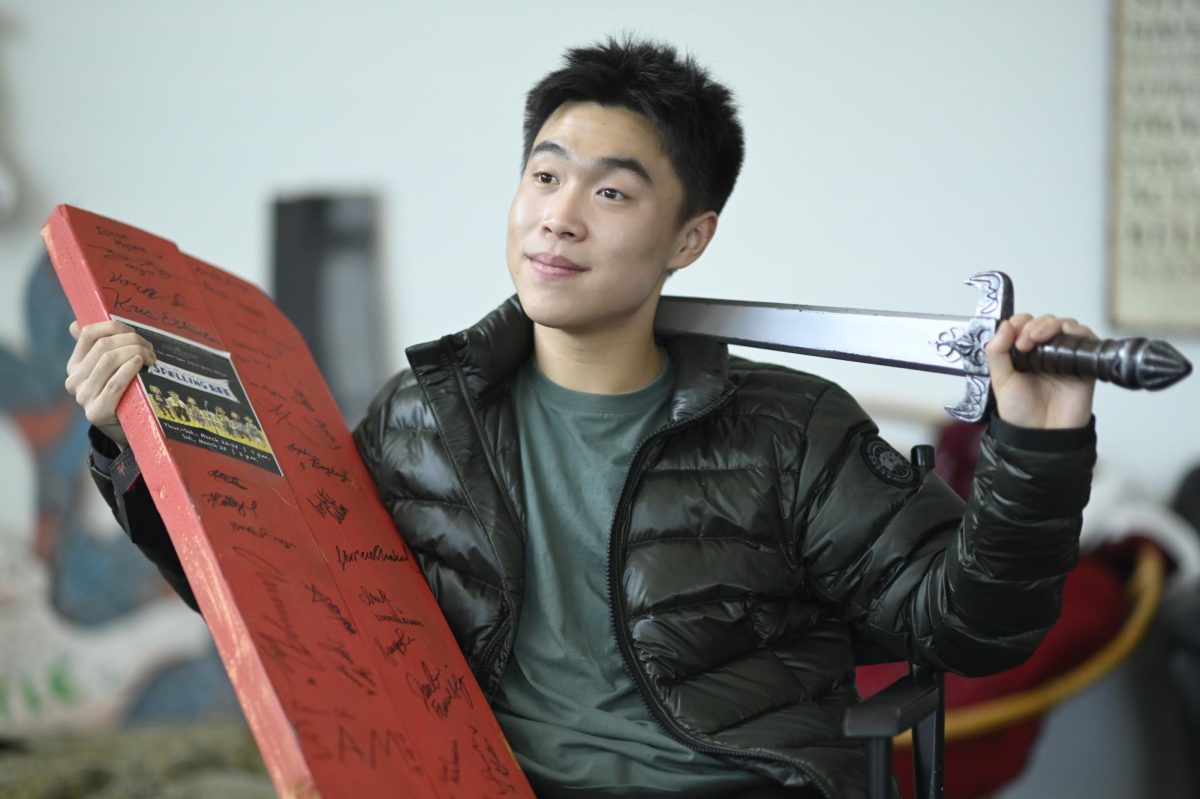
![“This is actually from Randy Pausch Randy P. Brick: ‘Walls are there for a reason. You have to show how much you want to overcome them.’ You have to show how much you want something. That's what I've always been able to do with tennis, Link Crew and getting that internship [with Kushy Baby]. It’s important pushing through that — getting around that brick wall, climbing over it or clawing through it,” Yash Sachdeva (’26) said.](https://harkeraquila.com/wp-content/uploads/2026/05/YashSachdeva_RamBatchu-copy-1200x1002.jpg)






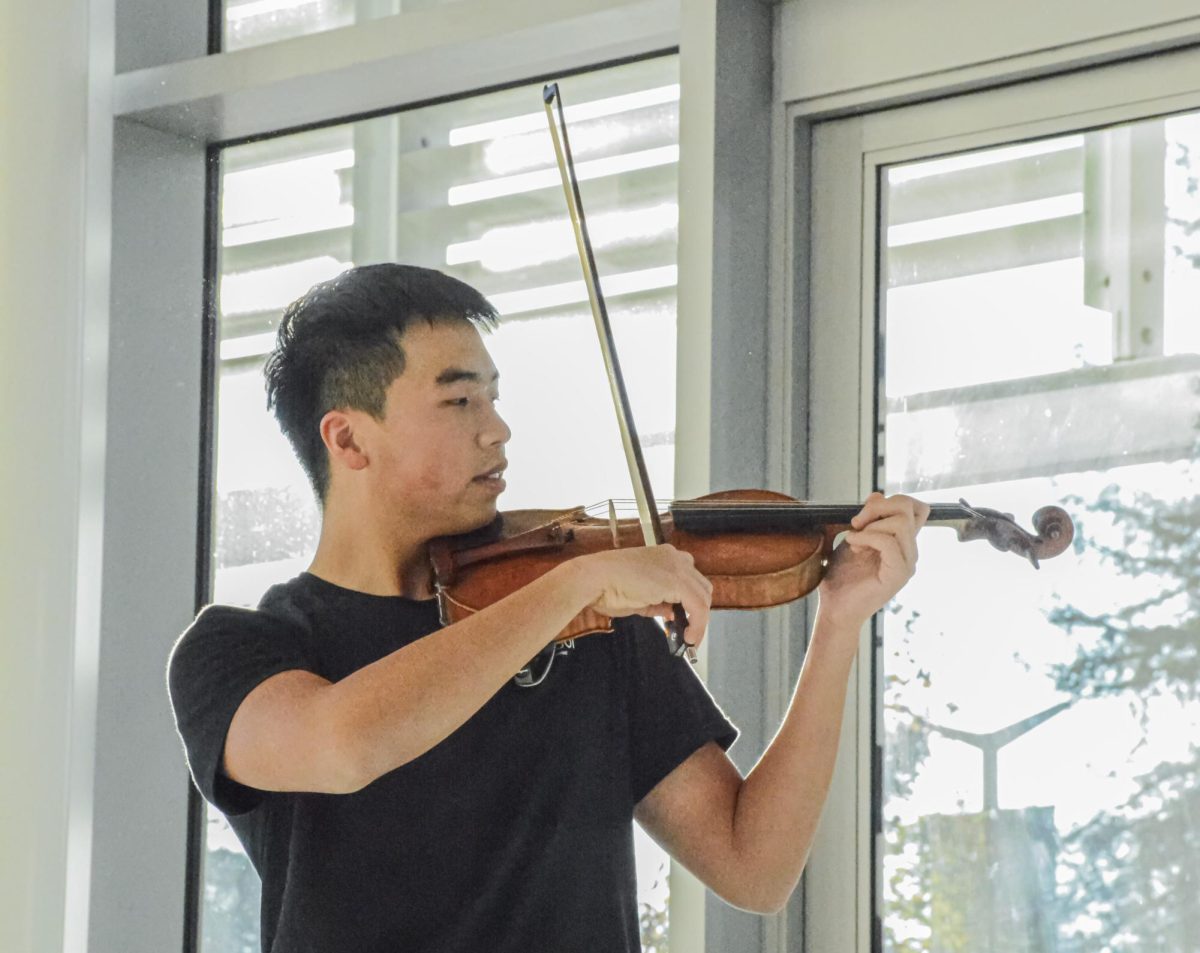
![“[Building nerf blasters] became this outlet of creativity for me that hasn't been matched by anything else. The process [of] making a build complete to your desire is such a painstakingly difficult process, but I've had to learn from [the skills needed from] soldering to proper painting. There's so many different options for everything, if you think about it, it exists. The best part is [that] if it doesn't exist, you can build it yourself," Ishaan Parate said.](https://harkeraquila.com/wp-content/uploads/2022/08/DSC_8149-900x604.jpg)

![“When I came into high school, I was ready to be a follower. But DECA was a game changer for me. It helped me overcome my fear of public speaking, and it's played such a major role in who I've become today. To be able to successfully lead a chapter of 150 students, an officer team and be one of the upperclassmen I once really admired is something I'm [really] proud of,” Anvitha Tummala ('21) said.](https://harkeraquila.com/wp-content/uploads/2021/07/Screen-Shot-2021-07-25-at-9.50.05-AM-900x594.png)


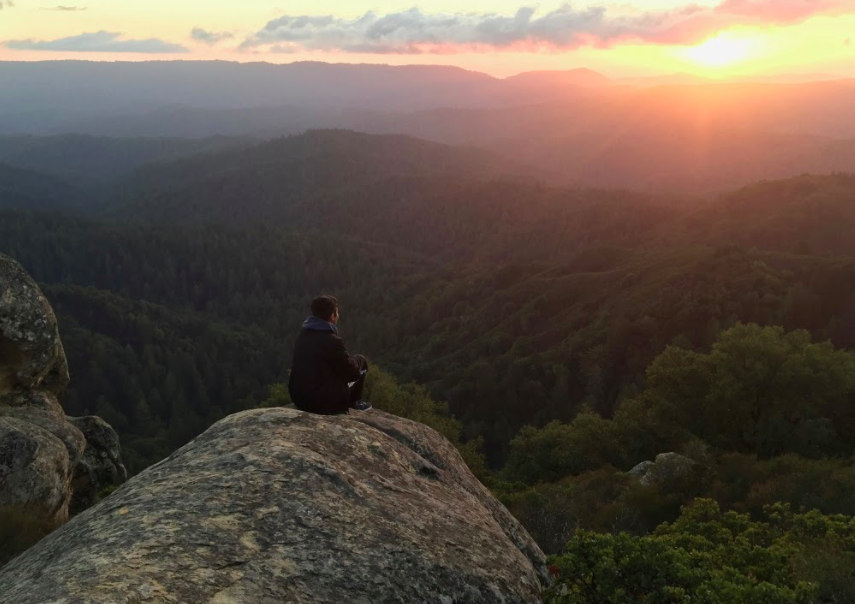
![“I think getting up in the morning and having a sense of purpose [is exciting]. I think without a certain amount of drive, life is kind of obsolete and mundane, and I think having that every single day is what makes each day unique and kind of makes life exciting,” Neymika Jain (12) said.](https://harkeraquila.com/wp-content/uploads/2017/06/Screen-Shot-2017-06-03-at-4.54.16-PM.png)




![“My slogan is ‘slow feet, don’t eat, and I’m hungry.’ You need to run fast to get where you are–you aren't going to get those championships if you aren't fast,” Angel Cervantes (12) said. “I want to do well in school on my tests and in track and win championships for my team. I live by that, [and] I can do that anywhere: in the classroom or on the field.”](https://harkeraquila.com/wp-content/uploads/2018/06/DSC5146-900x601.jpg)
![“[Volleyball has] taught me how to fall correctly, and another thing it taught is that you don’t have to be the best at something to be good at it. If you just hit the ball in a smart way, then it still scores points and you’re good at it. You could be a background player and still make a much bigger impact on the team than you would think,” Anya Gert (’20) said.](https://harkeraquila.com/wp-content/uploads/2020/06/AnnaGert_JinTuan_HoHPhotoEdited-600x900.jpeg)
![“I'm not nearly there yet, but [my confidence has] definitely been getting better since I was pretty shy and timid coming into Harker my freshman year. I know that there's a lot of people that are really confident in what they do, and I really admire them. Everyone's so driven and that has really pushed me to kind of try to find my own place in high school and be more confident,” Alyssa Huang (’20) said.](https://harkeraquila.com/wp-content/uploads/2020/06/AlyssaHuang_EmilyChen_HoHPhoto-900x749.jpeg)


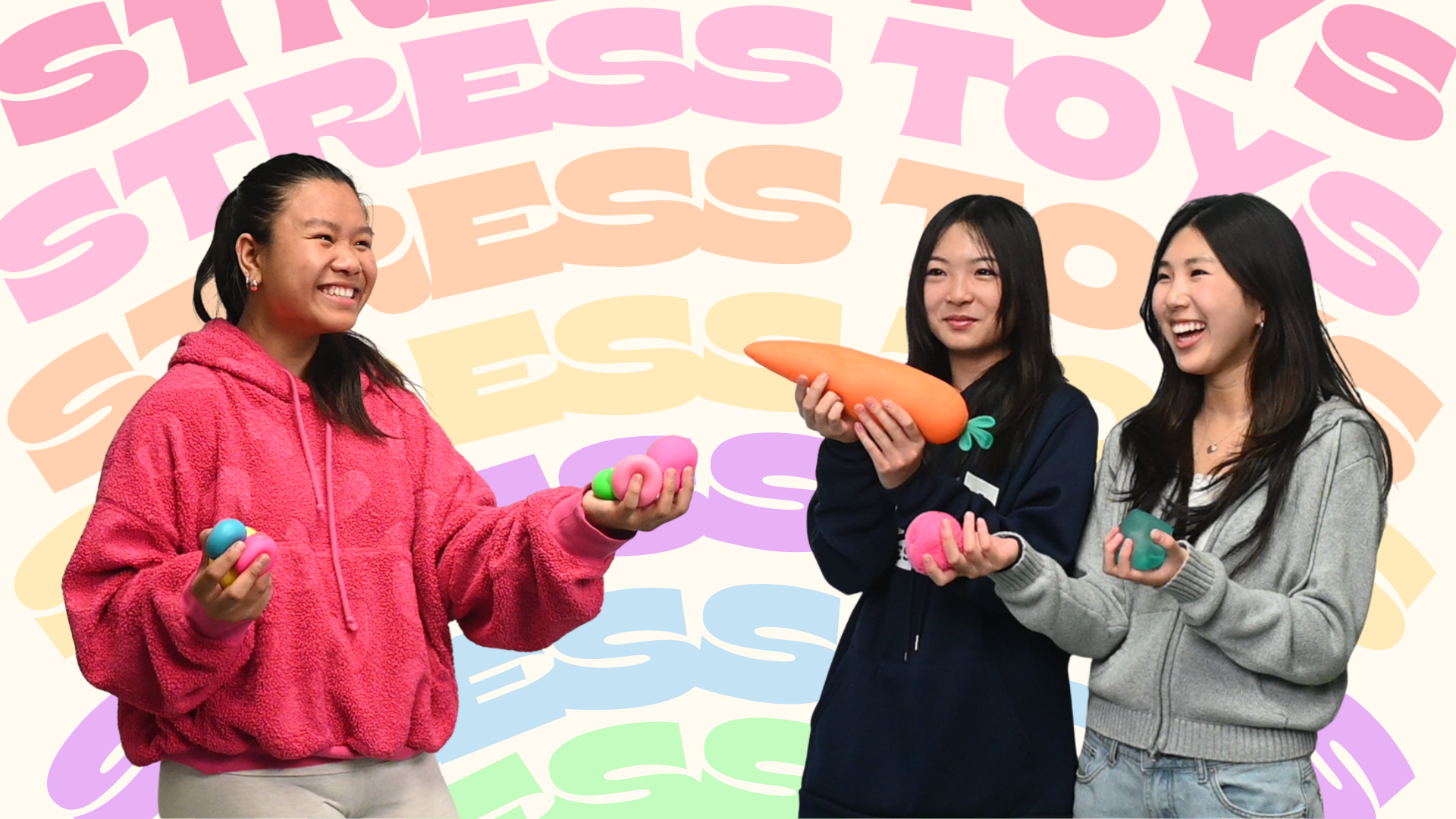
Butter-soft squishes, jelly-like rebounds — boasting mesmerizing textures and bold colors, stress toys have emerged as the newest collectible craze. Most recently, new products like NeeDoh stress toys and 5 Below glitter dumplings have entered this cycle, finding their way into backpacks, classrooms and social media feeds across the country.
For junior Sanika Das, stress toys originally offered a solution to unwanted habits, yet overtime they have revealed even greater advantages.
“The reason I actually got a NeeDoh in the first place was because I bite my nails a lot,” Sanika said. “I have since I was really young, and this keeps my hands occupied so I don’t instinctually bite my nails. As I’m bringing them to school I’m realizing that it does help me focus and give my hands something to do. Today I had an English quiz and it helped to feel it while I didn’t know what I was doing on the quiz.”
While they come in countless shapes, textures and colors, all stress toys serve a similar function: helping reduce anxiety and improve concentration. Many products are filled with gel, foam or a putty-like substance that reshapes when touched, creating a soothing experience for users. By providing an easily accessible outlet to channel restlessness and honing the mind on sensory input, these tools allow users to feel more mindful and grounded.
Senior Aarit Gupta mentioned that the physical sensation of squeezing or kneading his NeeDoh makes it easier to stay engaged during classes.
“I have a blue NeeDoh that’s a cube, and it feels like a stress ball, but when you let go, it magically goes back to being a cube,” Aarit said. “I’ve always liked fidgeting, so Needohs can help you distract your mind if it is racing or thinking about other things. There’s a nice sensation while pushing it, and it’s fun to mess around with. Using a stress toy is a good way to focus that excess energy.”
Social media has played a large role in reigniting the popularity of stress toys, with the market predicted to grow from $5.88 billion in 2025 to $7.95 billion in 2030. Platforms like TikTok amplify the hype of these products through videos of users buying, testing or showcasing their collectibles.
“In concept, these toys are such simple products, so seeing people create hype about it on social media and being like, ‘I got this whole box of dumplings or NeeDohs,’ really contributes to awareness and also how popular it’s become,” Sanika said. “It’s having its up right now, but it’s probably going to go down when the next new thing comes.”
For some students, watching influencers show off colorful hauls sparks their own desire to participate. Senior Brooke Kubose was inspired to start her own collection after seeing a creator share a jar of Aaron’s Thinking Putty as part of a back-to-school essential video. She noticed how the explosion in interest of those around her also contributes to the desire to purchase more.
“A lot of my friends like squishy toys, and they’re always talking about things like, ‘Did you buy this one?’ or ‘Did you see this new special edition NeeDoh that came out?’ Brooke said. “Whenever I go to Target or any other store, I always see people looking for NeeDohs or looking for squishy toys.”
However, this trend of buying sensory toys, often as collectibles instead of stress-relieving tools, raises questions about sustainability. Aarit pointed to the long-term environmental costs of the consumerism culture behind the craze.
“The rise of these stress toys is just like the water bottle trend where people buy a popular water bottle, but then when it isn’t trendy anymore, it ends up in a corner or in the trash,” Aarit said. “It was the same thing with fidget spinners. I do think these stress toys are helpful, but the help is marginal, so I worry that they’ll just end up in the landfill eventually.”
In terms of social benefits, these toys have the possibility to help students both feel more concentrated in class and build relationships with others. A brightly colored NeeDoh or unconventional stress toy can serve as a bridge to connect with others.
“It made people who don’t normally talk to me talk to me,” Sanika said. “My NeeDoh gets passed around a lot. It’s interesting to see how no one really talks in class about things like, ‘Oh I want a NeeDoh,’ but once it’s in the class, everyone gets really enthralled by it. It made me talk to a bunch of people that I wouldn’t normally talk to.”