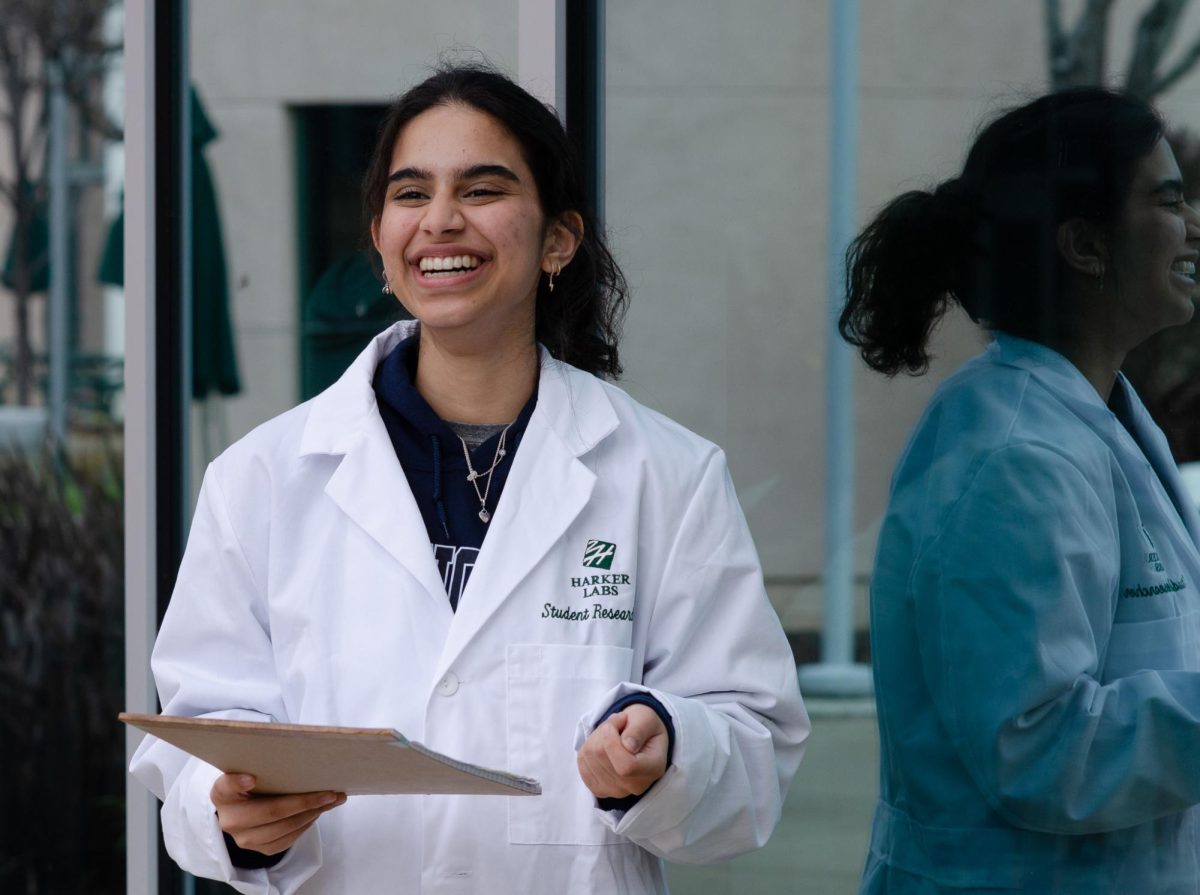
![“I wasn't discouraged by some of the obstacles we faced. I learned a lot from the leadership. I found that different people need different ways of receiving feedback — you can't [just] tell them to do something and expect the best. [Some] people needed more incentive. A large part of my role was to figure out what worked for everyone and to figure out how to lead all these separate individuals as a team,” Suhana Bhandare (’26) said.](https://harkeraquila.com/wp-content/uploads/2026/06/SuhanaBhandare_JasmineHansra-1-1200x798.jpg)
![“This is actually from Randy Pausch Randy P. Brick: ‘Walls are there for a reason. You have to show how much you want to overcome them.’ You have to show how much you want something. That's what I've always been able to do with tennis, Link Crew and getting that internship [with Kushy Baby]. It’s important pushing through that — getting around that brick wall, climbing over it or clawing through it,” Yash Sachdeva (’26) said.](https://harkeraquila.com/wp-content/uploads/2026/05/YashSachdeva_RamBatchu-copy-1200x1002.jpg)

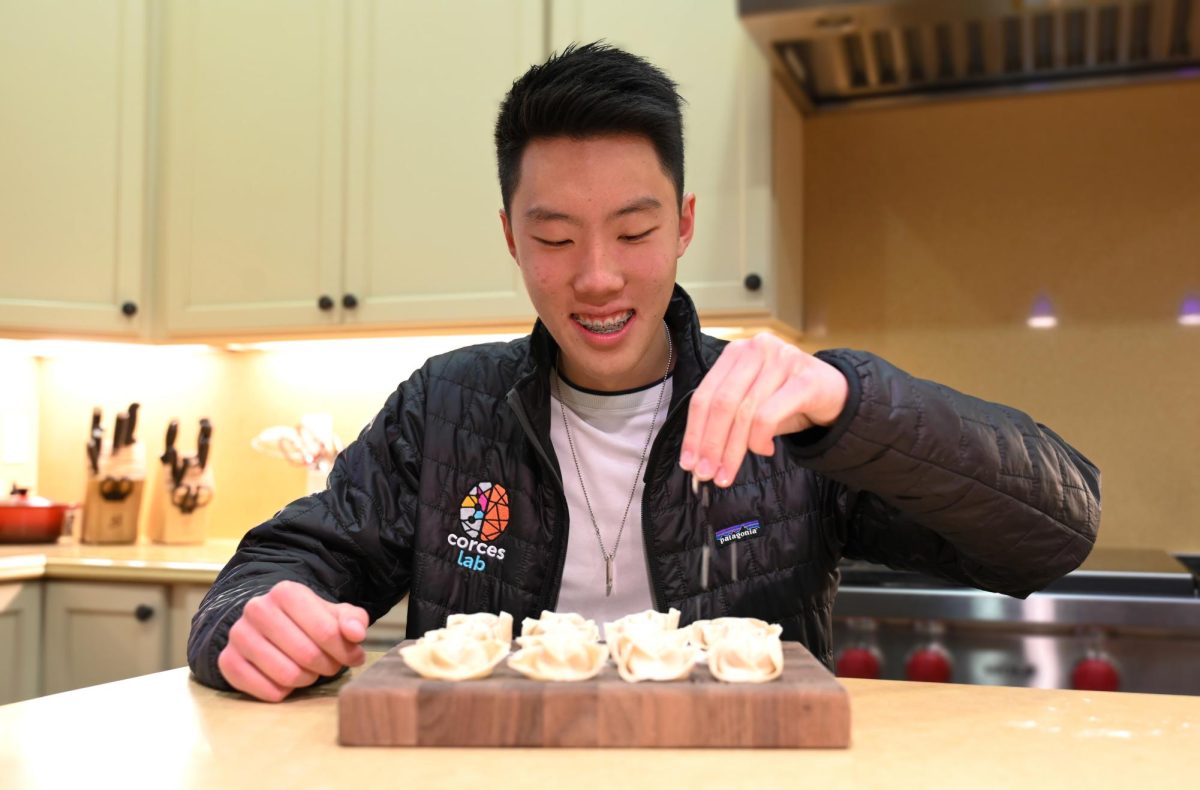
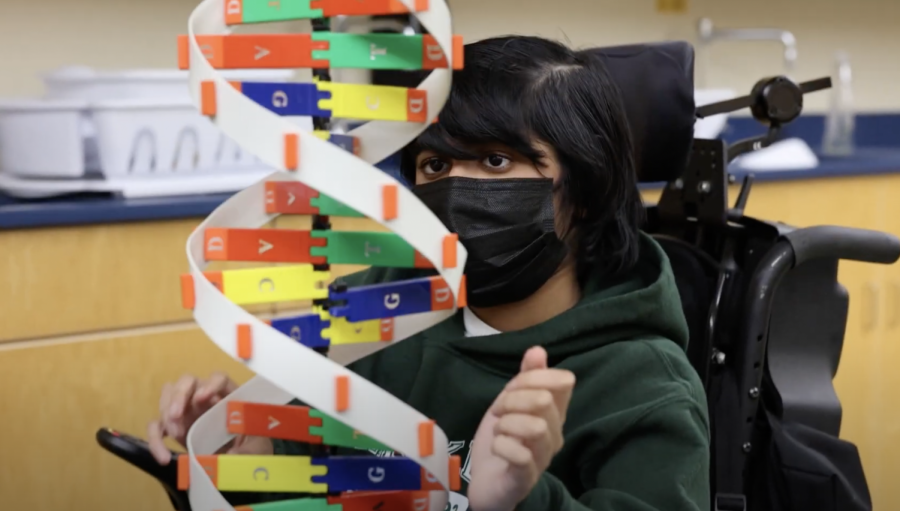
![“[Building nerf blasters] became this outlet of creativity for me that hasn't been matched by anything else. The process [of] making a build complete to your desire is such a painstakingly difficult process, but I've had to learn from [the skills needed from] soldering to proper painting. There's so many different options for everything, if you think about it, it exists. The best part is [that] if it doesn't exist, you can build it yourself," Ishaan Parate said.](https://harkeraquila.com/wp-content/uploads/2022/08/DSC_8149-900x604.jpg)
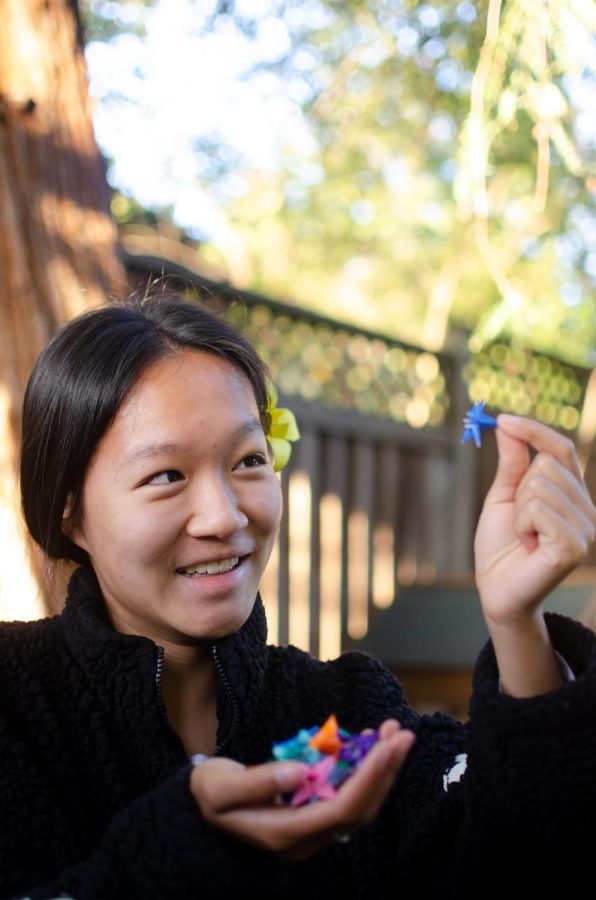
![“When I came into high school, I was ready to be a follower. But DECA was a game changer for me. It helped me overcome my fear of public speaking, and it's played such a major role in who I've become today. To be able to successfully lead a chapter of 150 students, an officer team and be one of the upperclassmen I once really admired is something I'm [really] proud of,” Anvitha Tummala ('21) said.](https://harkeraquila.com/wp-content/uploads/2021/07/Screen-Shot-2021-07-25-at-9.50.05-AM-900x594.png)
![“I think getting up in the morning and having a sense of purpose [is exciting]. I think without a certain amount of drive, life is kind of obsolete and mundane, and I think having that every single day is what makes each day unique and kind of makes life exciting,” Neymika Jain (12) said.](https://harkeraquila.com/wp-content/uploads/2017/06/Screen-Shot-2017-06-03-at-4.54.16-PM.png)
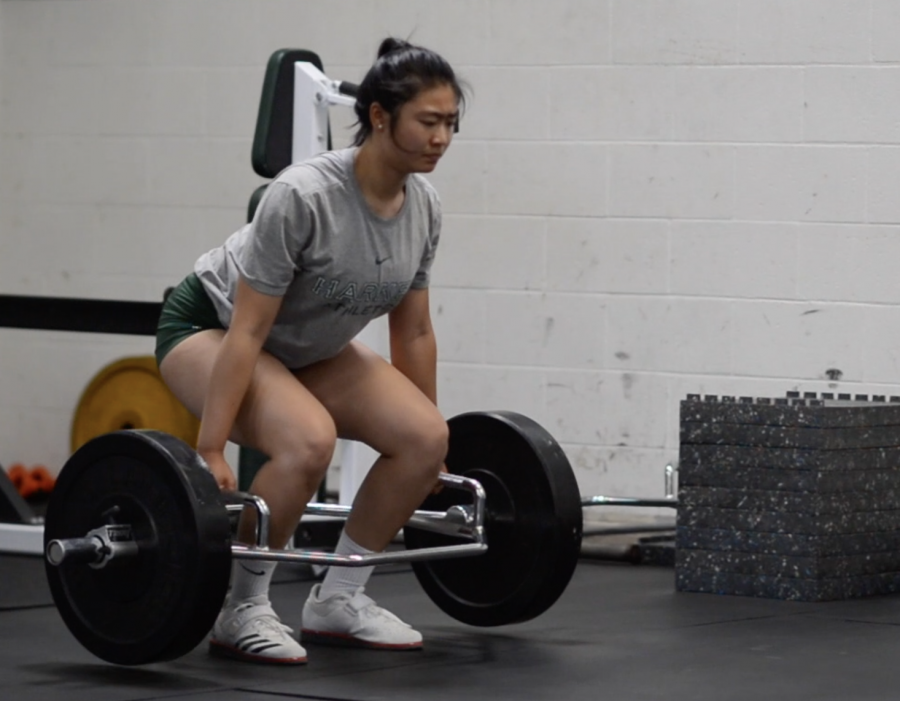
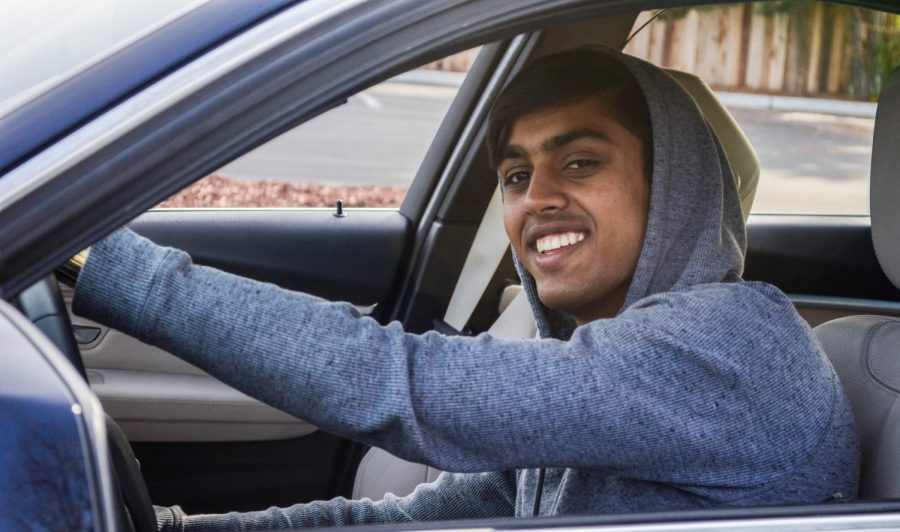
![“My slogan is ‘slow feet, don’t eat, and I’m hungry.’ You need to run fast to get where you are–you aren't going to get those championships if you aren't fast,” Angel Cervantes (12) said. “I want to do well in school on my tests and in track and win championships for my team. I live by that, [and] I can do that anywhere: in the classroom or on the field.”](https://harkeraquila.com/wp-content/uploads/2018/06/DSC5146-900x601.jpg)
![“[Volleyball has] taught me how to fall correctly, and another thing it taught is that you don’t have to be the best at something to be good at it. If you just hit the ball in a smart way, then it still scores points and you’re good at it. You could be a background player and still make a much bigger impact on the team than you would think,” Anya Gert (’20) said.](https://harkeraquila.com/wp-content/uploads/2020/06/AnnaGert_JinTuan_HoHPhotoEdited-600x900.jpeg)
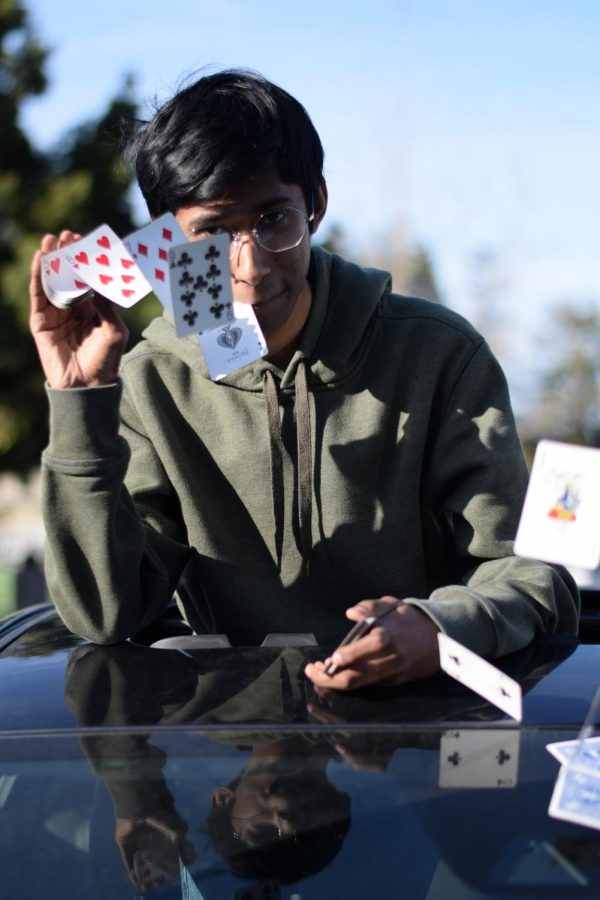
![“I'm not nearly there yet, but [my confidence has] definitely been getting better since I was pretty shy and timid coming into Harker my freshman year. I know that there's a lot of people that are really confident in what they do, and I really admire them. Everyone's so driven and that has really pushed me to kind of try to find my own place in high school and be more confident,” Alyssa Huang (’20) said.](https://harkeraquila.com/wp-content/uploads/2020/06/AlyssaHuang_EmilyChen_HoHPhoto-900x749.jpeg)


Welcome to 2026, where 2016 is trending again. Pink-tinted filters, throwback photos and decade-old pop hits are flooding social media feeds, signaling a revival of last decade’s music and aesthetics. Across platforms like Instagram and TikTok, users frame 2016 as a simpler, more carefree era of life that they hope to return to.
The viral “2016” TikTok filter, which mimics the pink hue common in early Instagram photos, has been used in 55 million total videos, bringing back the platform’s casual feel. 2016 pop favorites, including “Lush Life” by Zara Larsson and “Closer” by The Chainsmokers, have also regained popularity on streaming platforms, with each averaging 4.5 and 1.5 million daily streams, respectively. Larsson’s “Lush Life” dance became its own TikTok trend in November of 2025, with users posting videos recreating the choreography.
In a schoology poll sent out to the upper school community with 92 responses, 40% of respondents associated 2016 with a time before life felt more chaotic. As 2026 brings heightened fear over Immigration and Customs Enforcement raids and uncertainty around President Donald Trump’s media censorship, which mark just a few of the uncertainties of the present, sophomore Aarya Vaidya believes that the renewed popularity of 2016 culture stems from people seeking ease in a tense social climate.
“This trend reflects discomfort with the present rather than nostalgia about the past,” Aarya said. “Back then, life felt lighter because everybody was having a good time and nothing seemed super serious. Right now, being stressed is normalized and cancel culture is everywhere, especially on social media. Reviving 2016 culture does not fix everything, but it’s this carefree vibe that more people desire and need to embrace in 2026.”
While the longing for a joyful past is understandable, idealizing 2016 overlooks its complexities.
Remembering its challenges is essential to ensure nostalgia does not become a form of escapism. For many, romanticization of the past is a coping mechanism, preserving a sense of security and placating action.
Despite its current representation online, 2016 was far from perfect. President Donald Trump’s victory in his first U.S. presidential election deepened political divides by igniting widespread protests, while the ongoing Syrian Civil War and opioid epidemic highlighted both domestic and global challenges of the time. These events are absent from the picture-perfect descriptions circulating online, but according to psychology teacher Julie Turchin, selective memory comes naturally.
“Our brains are wired to protect us,” Turchin said. “We don’t remember everything, so the thing about the past is that it’s easy to forget the emotions and the stress. Some people look at the past and think of it more fondly than the present because their memories preserve the good stuff and forget the rest.”
For many current high schoolers, the nostalgia portrayed online is not rooted in personal experience. Most were elementary school students in 2016 and have few clear memories of that time — 42% of poll respondents reported that they barely remember the year at all. Using the 2016 aesthetic has become a way to engage with a collective memory, even if much of it is constructed online rather than lived firsthand. Within the same poll, 32% of respondents believed that the 2016 trend was performative and not built off of genuine nostalgia.
“On my own, I might not think of 2016 as my best year ever, but social media accelerates a community effect,” Turchin said. “You build a belief on this tiny, one-legged stool, and you add a bunch of other beliefs to support that belief by adding other legs to the stool. Even if you say, ‘Actually, 2016 had all these things wrong with it,’ and you saw away that first leg, there are all these other legs I put in to support the first idea, which may not have been true.”
At the same time, 2016 nostalgia does not have to be dismissed entirely. Looking back offers perspective and inspiration as long as it is paired with awareness of the present. Junior Stellan Lindh, an avid TikTok user, interprets the trend as a reflection of a broader desire for sincerity in modern culture.
“Everybody now is trying to be this perfect version of themselves,” Stellan said. “2016 was this era of authenticity. It was a time on social media where you would only see your own friends on your feed instead of influencers. During that time, people really weren’t worried too much about how many likes they were going to get on their posts.”
By both appreciating the past and staying grounded in the present, people can enjoy nostalgia without letting it overshadow current realities. For Stellan, this means working to implement change and seek improvement in our current world to model the positive aspects of 2016.
“Seeing 2016 again is bringing back an era where everybody felt less worried about the state of the world,” Stellan said. “It was a time when people were happier, so that’s why it’s been resurging in recent months. Some people are definitely doing it because it’s a trend, but a lot of people are coming together to appreciate that year as well.”