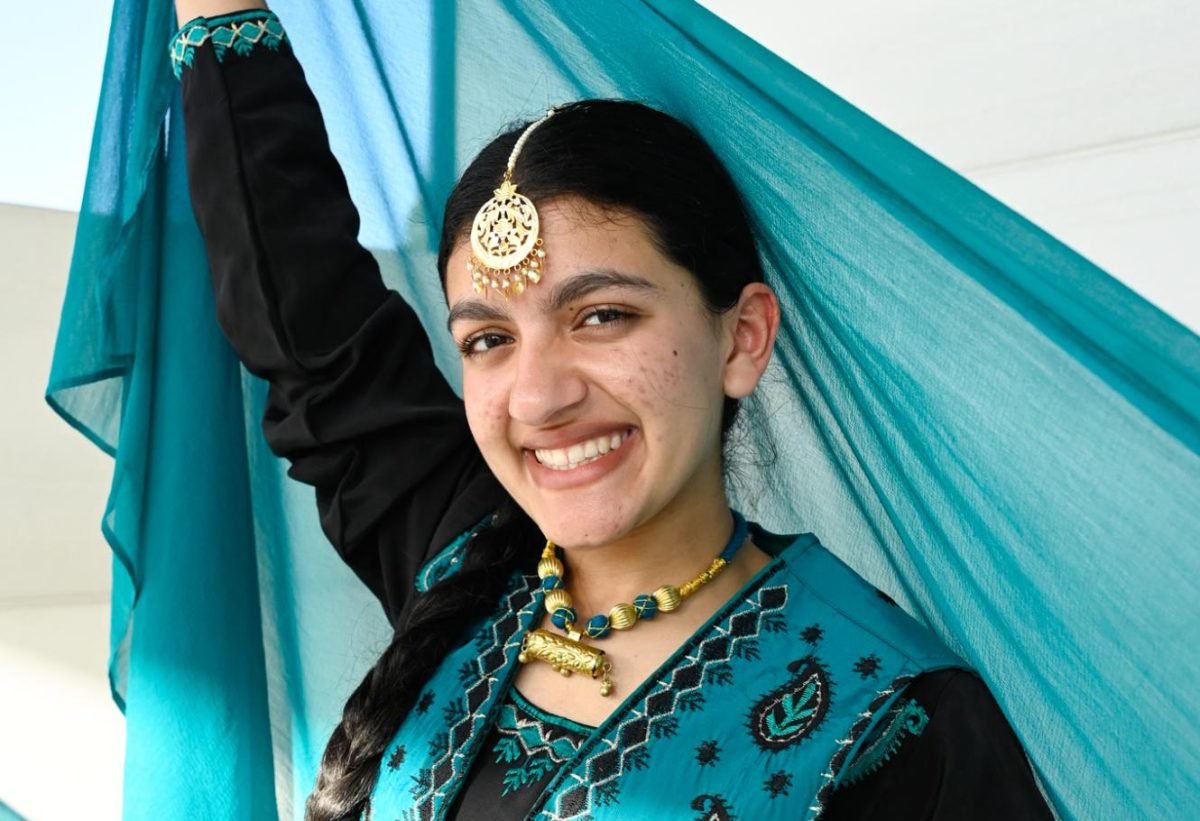
![“I wasn't discouraged by some of the obstacles we faced. I learned a lot from the leadership. I found that different people need different ways of receiving feedback — you can't [just] tell them to do something and expect the best. [Some] people needed more incentive. A large part of my role was to figure out what worked for everyone and to figure out how to lead all these separate individuals as a team,” Suhana Bhandare (’26) said.](https://harkeraquila.com/wp-content/uploads/2026/06/SuhanaBhandare_JasmineHansra-1-1200x798.jpg)
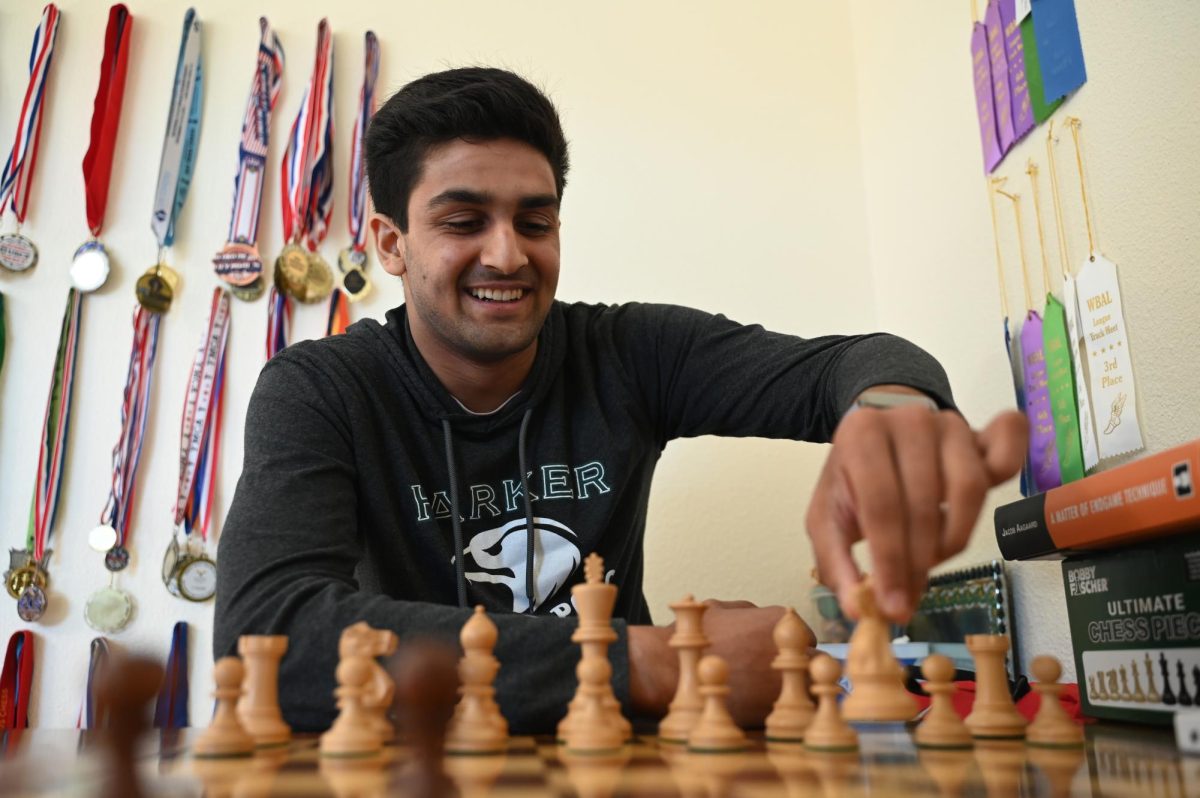
![“This is actually from Randy Pausch Randy P. Brick: ‘Walls are there for a reason. You have to show how much you want to overcome them.’ You have to show how much you want something. That's what I've always been able to do with tennis, Link Crew and getting that internship [with Kushy Baby]. It’s important pushing through that — getting around that brick wall, climbing over it or clawing through it,” Yash Sachdeva (’26) said.](https://harkeraquila.com/wp-content/uploads/2026/05/YashSachdeva_RamBatchu-copy-1200x1002.jpg)
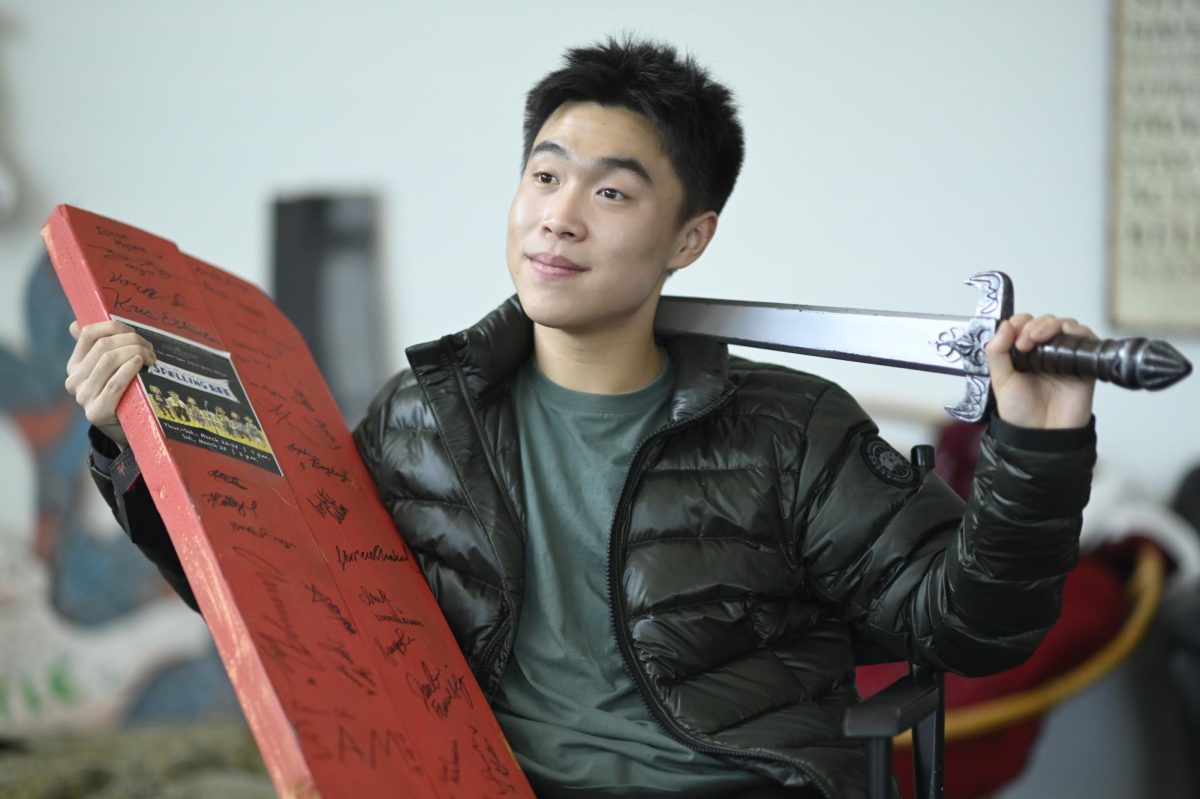
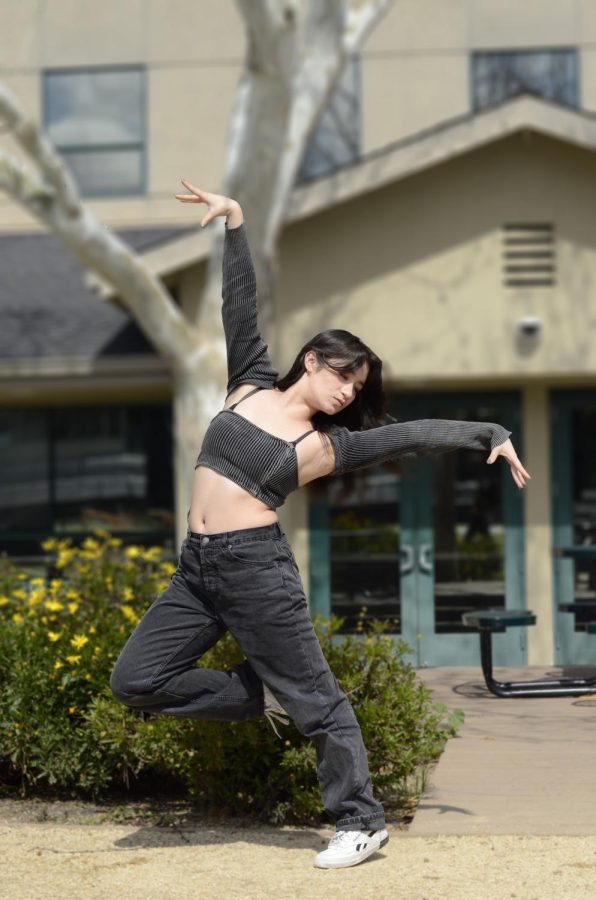
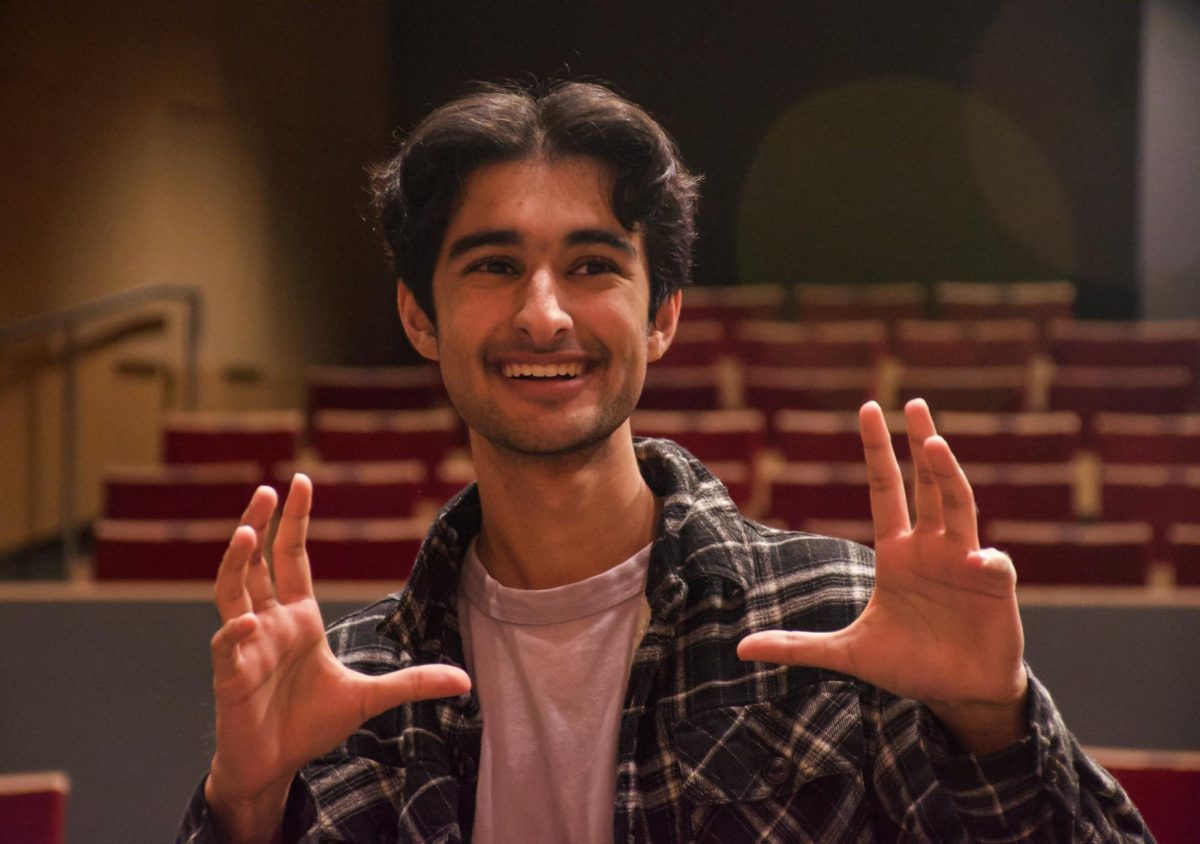
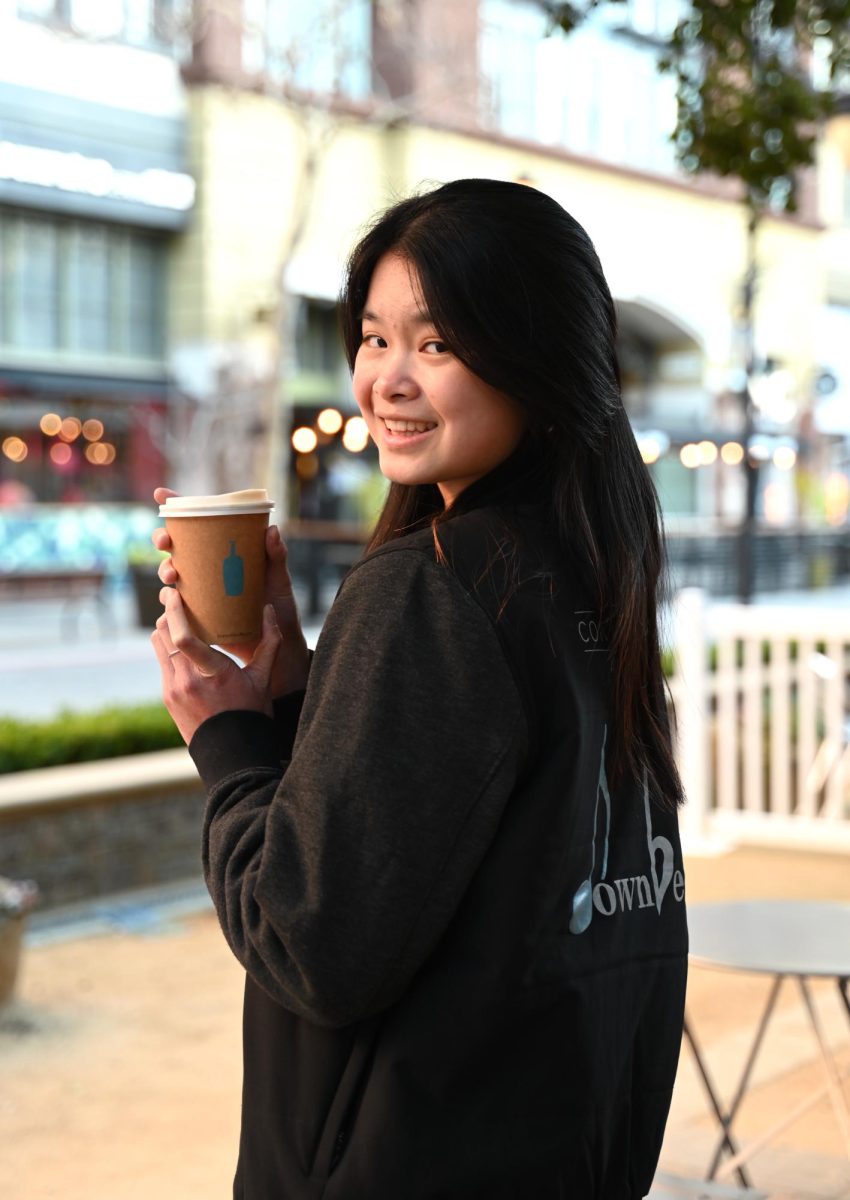
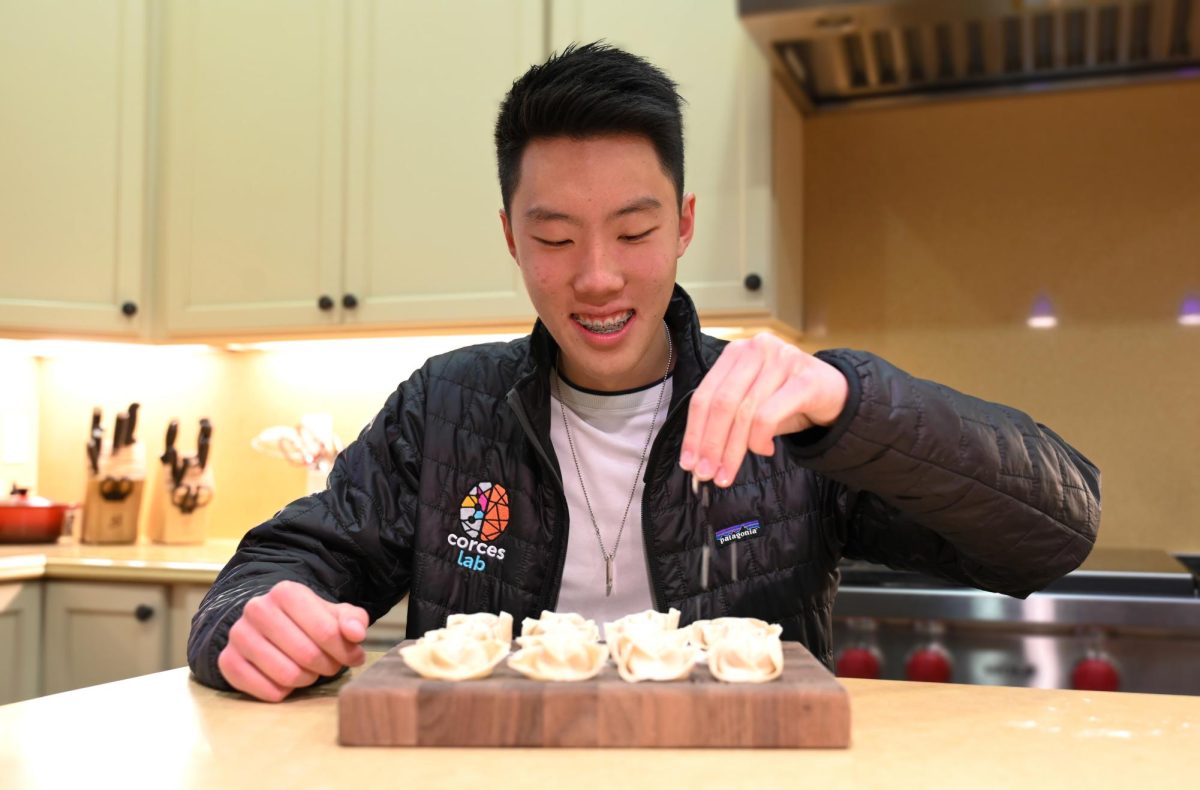
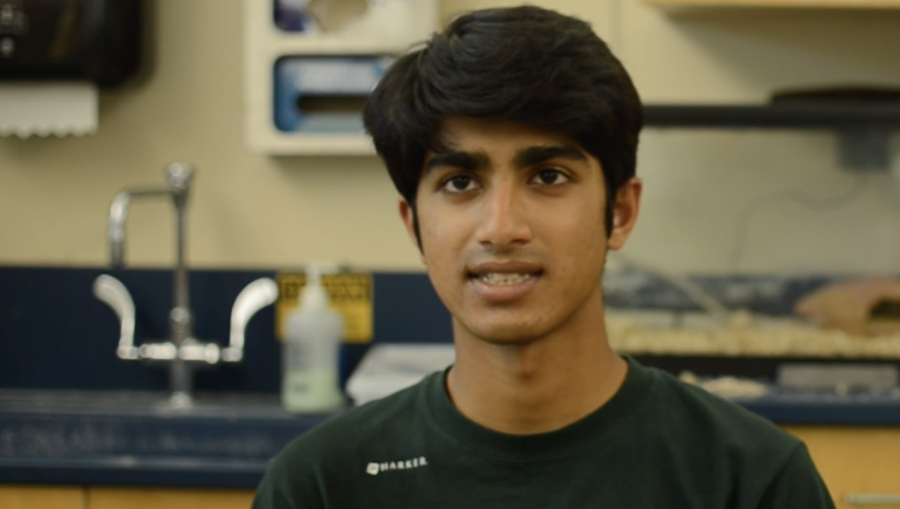
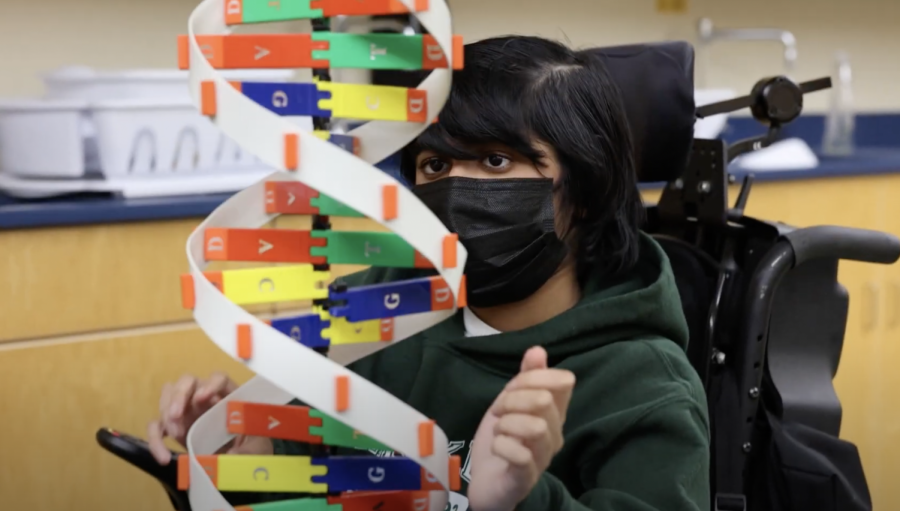
![“[Building nerf blasters] became this outlet of creativity for me that hasn't been matched by anything else. The process [of] making a build complete to your desire is such a painstakingly difficult process, but I've had to learn from [the skills needed from] soldering to proper painting. There's so many different options for everything, if you think about it, it exists. The best part is [that] if it doesn't exist, you can build it yourself," Ishaan Parate said.](https://harkeraquila.com/wp-content/uploads/2022/08/DSC_8149-900x604.jpg)
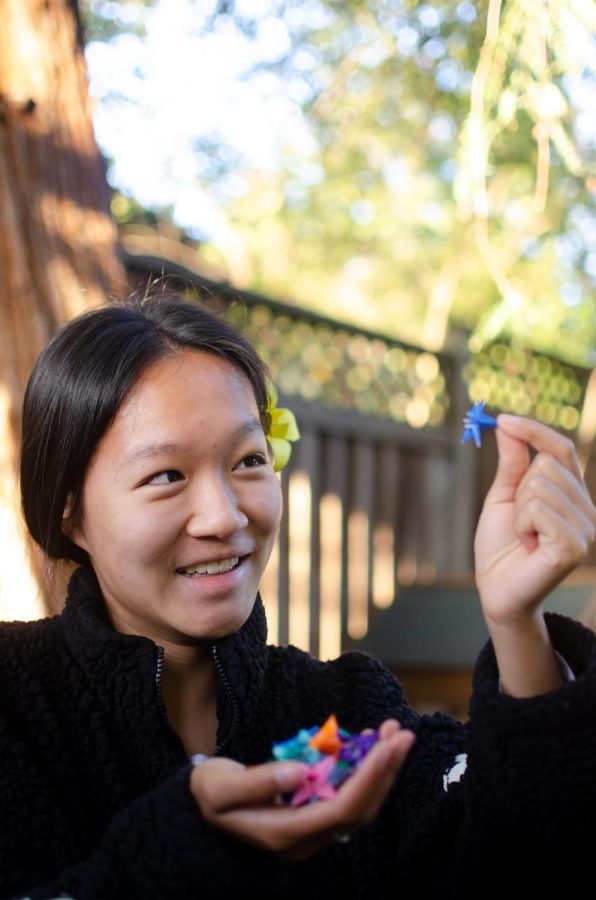
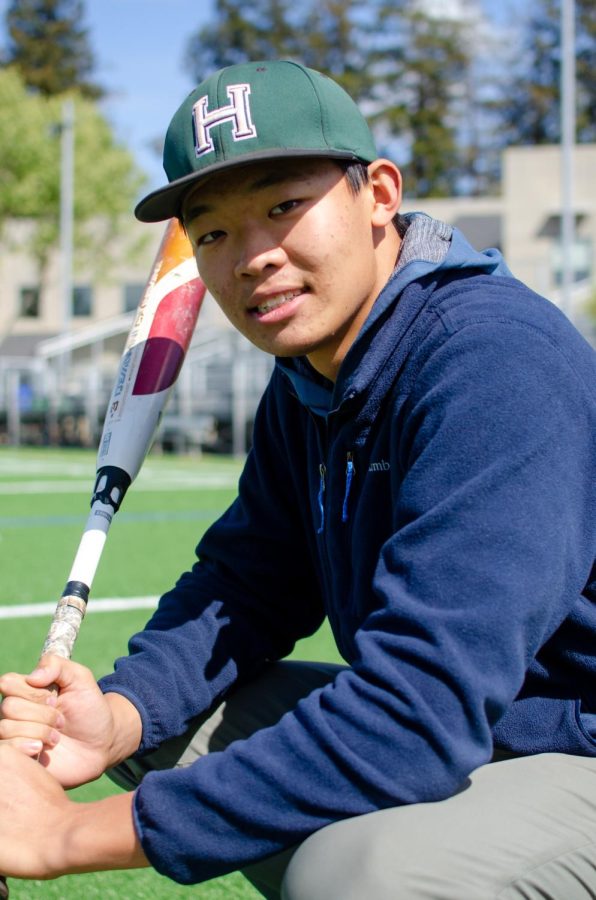
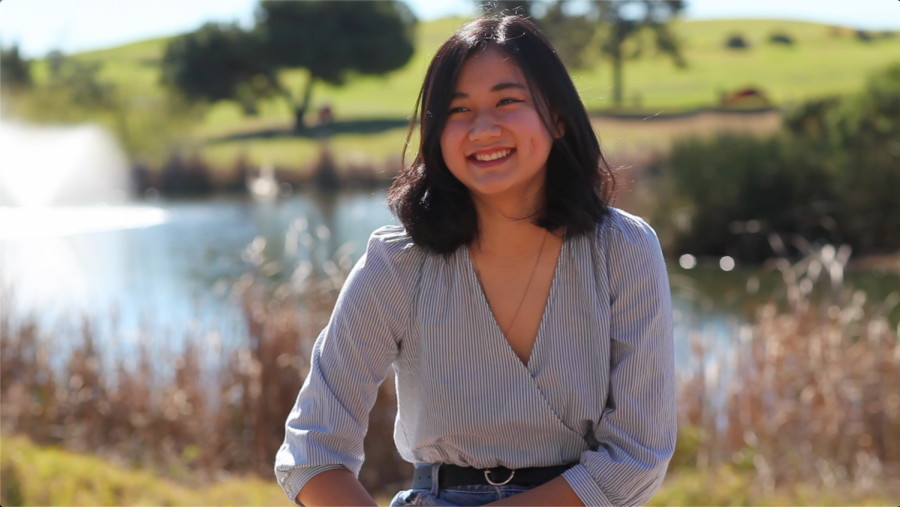
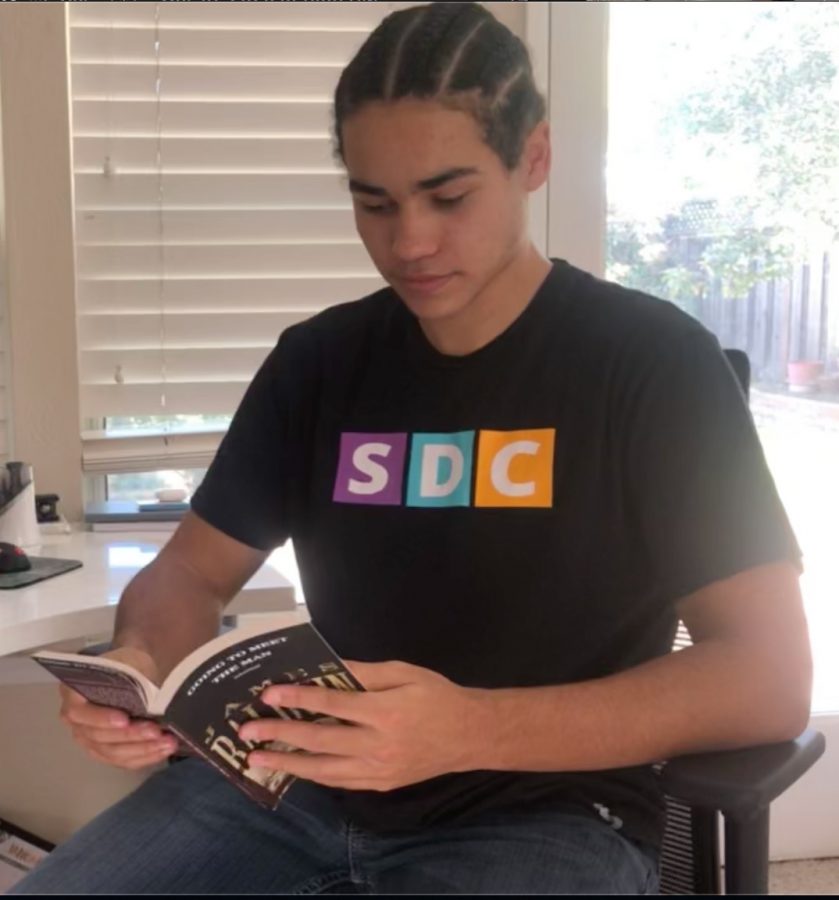
![“When I came into high school, I was ready to be a follower. But DECA was a game changer for me. It helped me overcome my fear of public speaking, and it's played such a major role in who I've become today. To be able to successfully lead a chapter of 150 students, an officer team and be one of the upperclassmen I once really admired is something I'm [really] proud of,” Anvitha Tummala ('21) said.](https://harkeraquila.com/wp-content/uploads/2021/07/Screen-Shot-2021-07-25-at-9.50.05-AM-900x594.png)

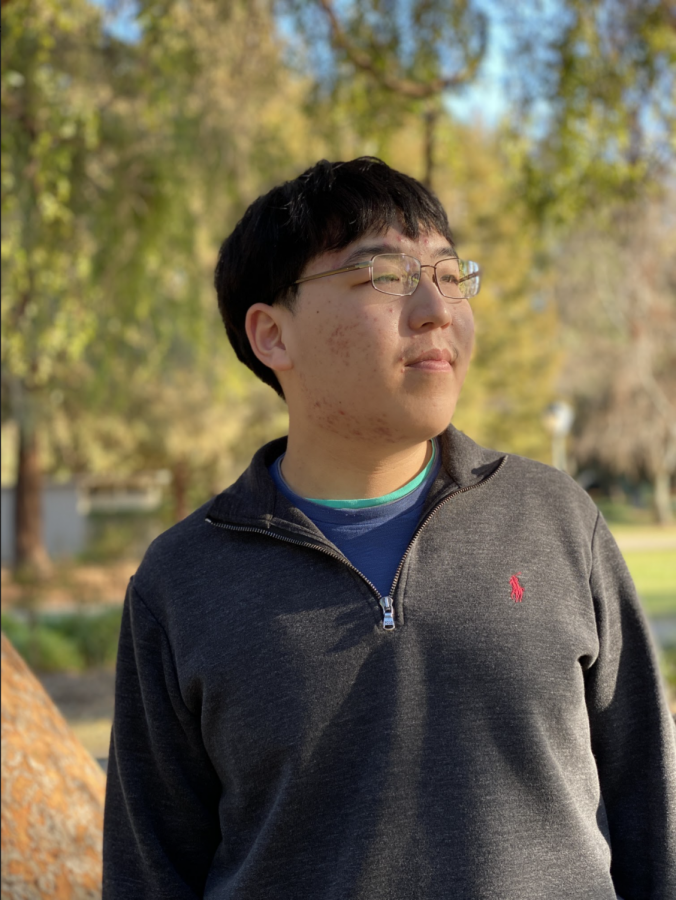
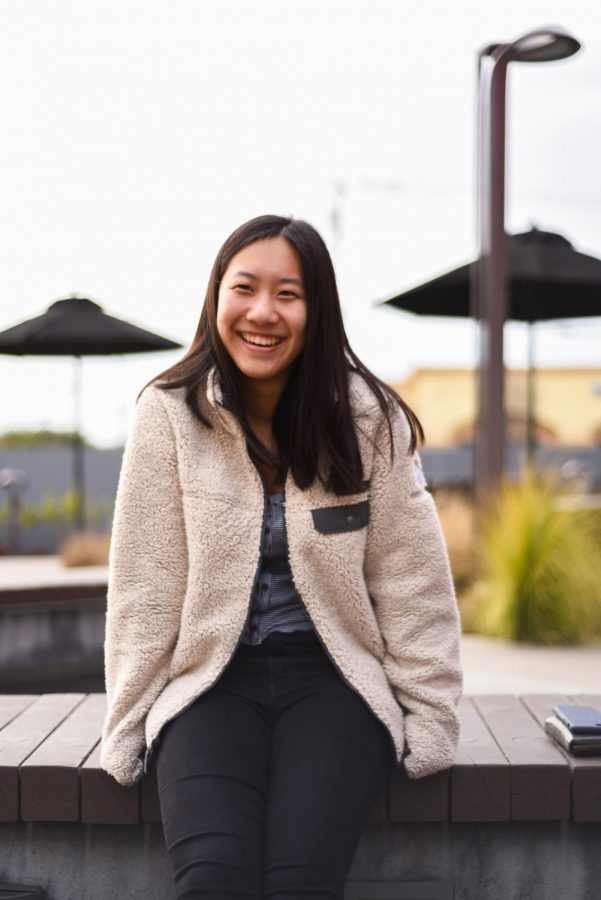
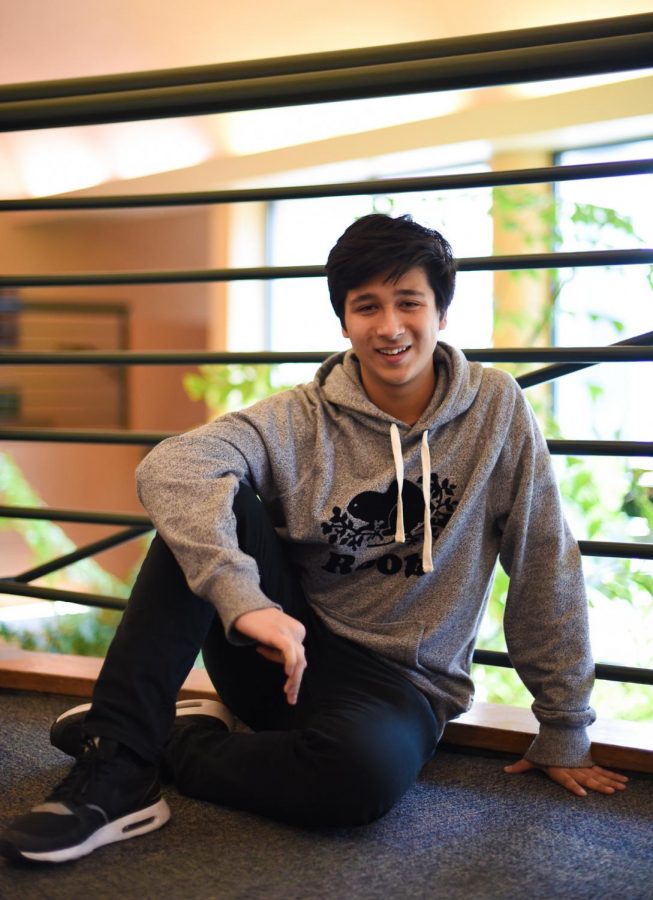
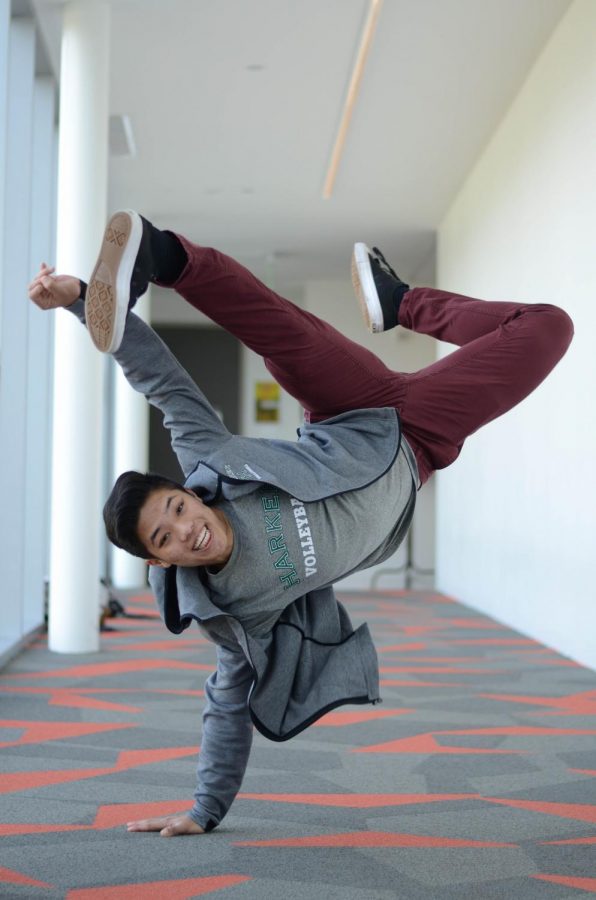
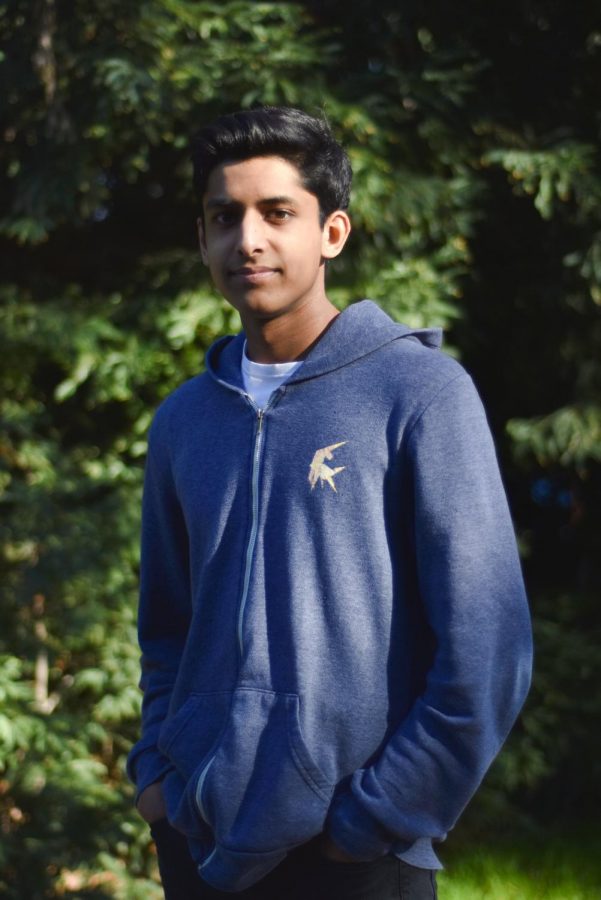
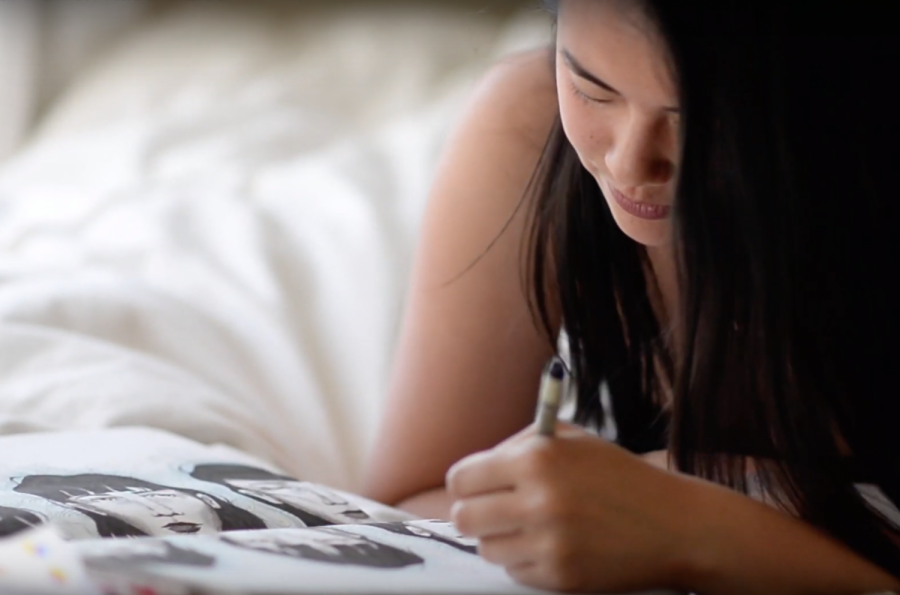
![“I think getting up in the morning and having a sense of purpose [is exciting]. I think without a certain amount of drive, life is kind of obsolete and mundane, and I think having that every single day is what makes each day unique and kind of makes life exciting,” Neymika Jain (12) said.](https://harkeraquila.com/wp-content/uploads/2017/06/Screen-Shot-2017-06-03-at-4.54.16-PM.png)
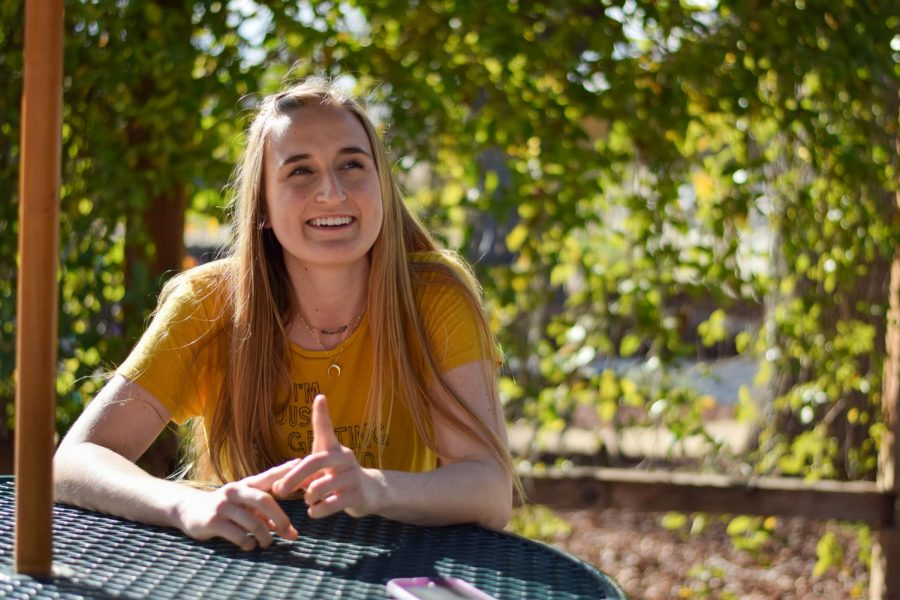
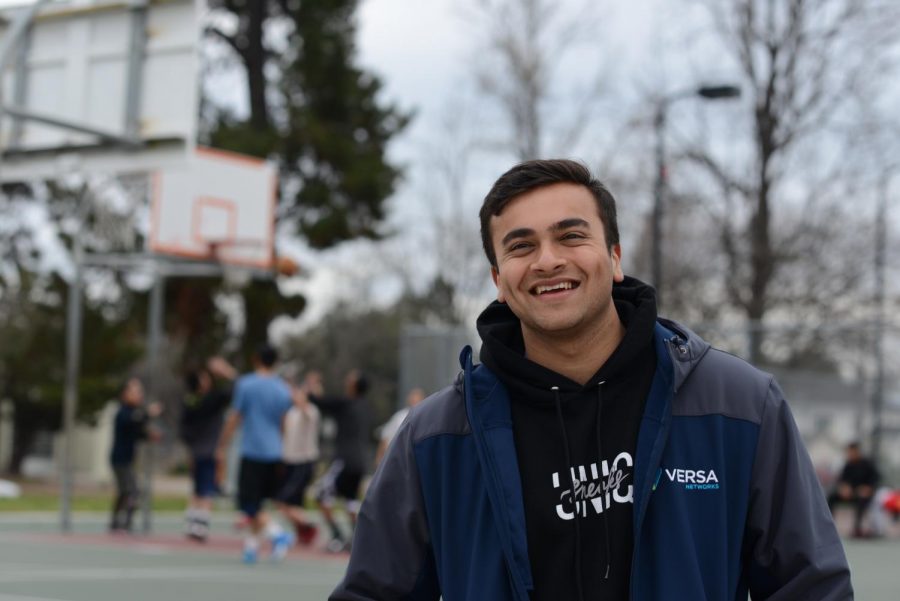
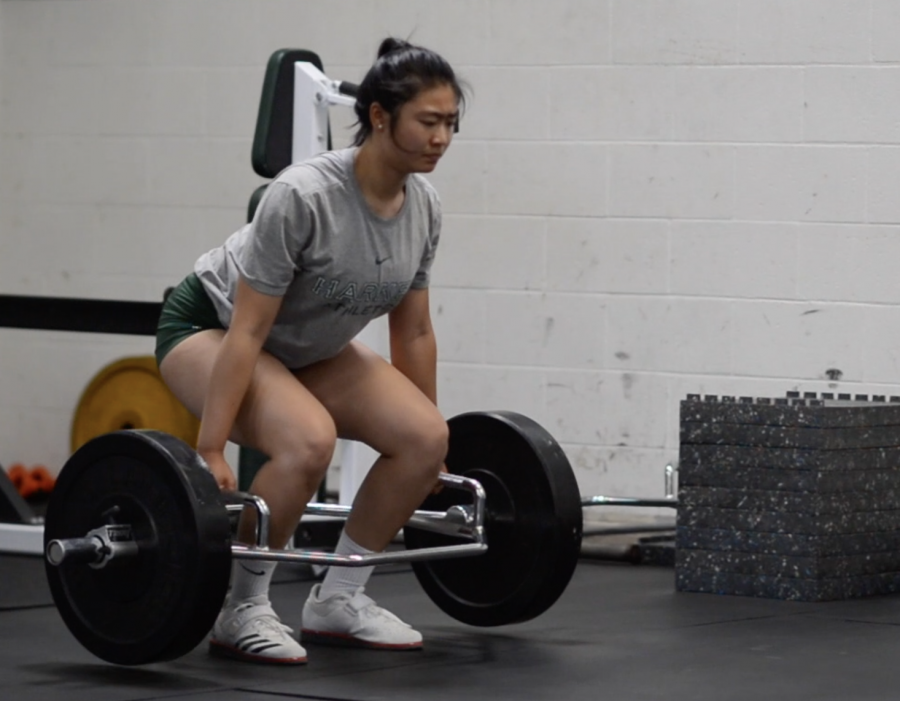

![“My slogan is ‘slow feet, don’t eat, and I’m hungry.’ You need to run fast to get where you are–you aren't going to get those championships if you aren't fast,” Angel Cervantes (12) said. “I want to do well in school on my tests and in track and win championships for my team. I live by that, [and] I can do that anywhere: in the classroom or on the field.”](https://harkeraquila.com/wp-content/uploads/2018/06/DSC5146-900x601.jpg)
![“[Volleyball has] taught me how to fall correctly, and another thing it taught is that you don’t have to be the best at something to be good at it. If you just hit the ball in a smart way, then it still scores points and you’re good at it. You could be a background player and still make a much bigger impact on the team than you would think,” Anya Gert (’20) said.](https://harkeraquila.com/wp-content/uploads/2020/06/AnnaGert_JinTuan_HoHPhotoEdited-600x900.jpeg)
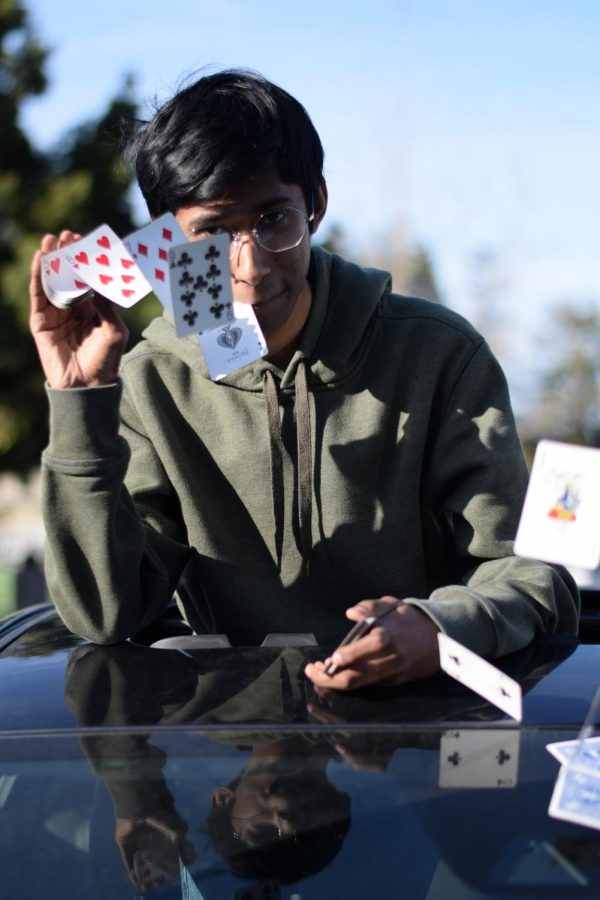
![“I'm not nearly there yet, but [my confidence has] definitely been getting better since I was pretty shy and timid coming into Harker my freshman year. I know that there's a lot of people that are really confident in what they do, and I really admire them. Everyone's so driven and that has really pushed me to kind of try to find my own place in high school and be more confident,” Alyssa Huang (’20) said.](https://harkeraquila.com/wp-content/uploads/2020/06/AlyssaHuang_EmilyChen_HoHPhoto-900x749.jpeg)

SAN FRANCISCO — Student reporters, advisers and professional journalists explained concepts ranging from the legal aspects of coverage to the creation of page layouts to impactful editing at the annual Journalism Education Association of Northern California Media Day today.
The World of Broadcast Journalism
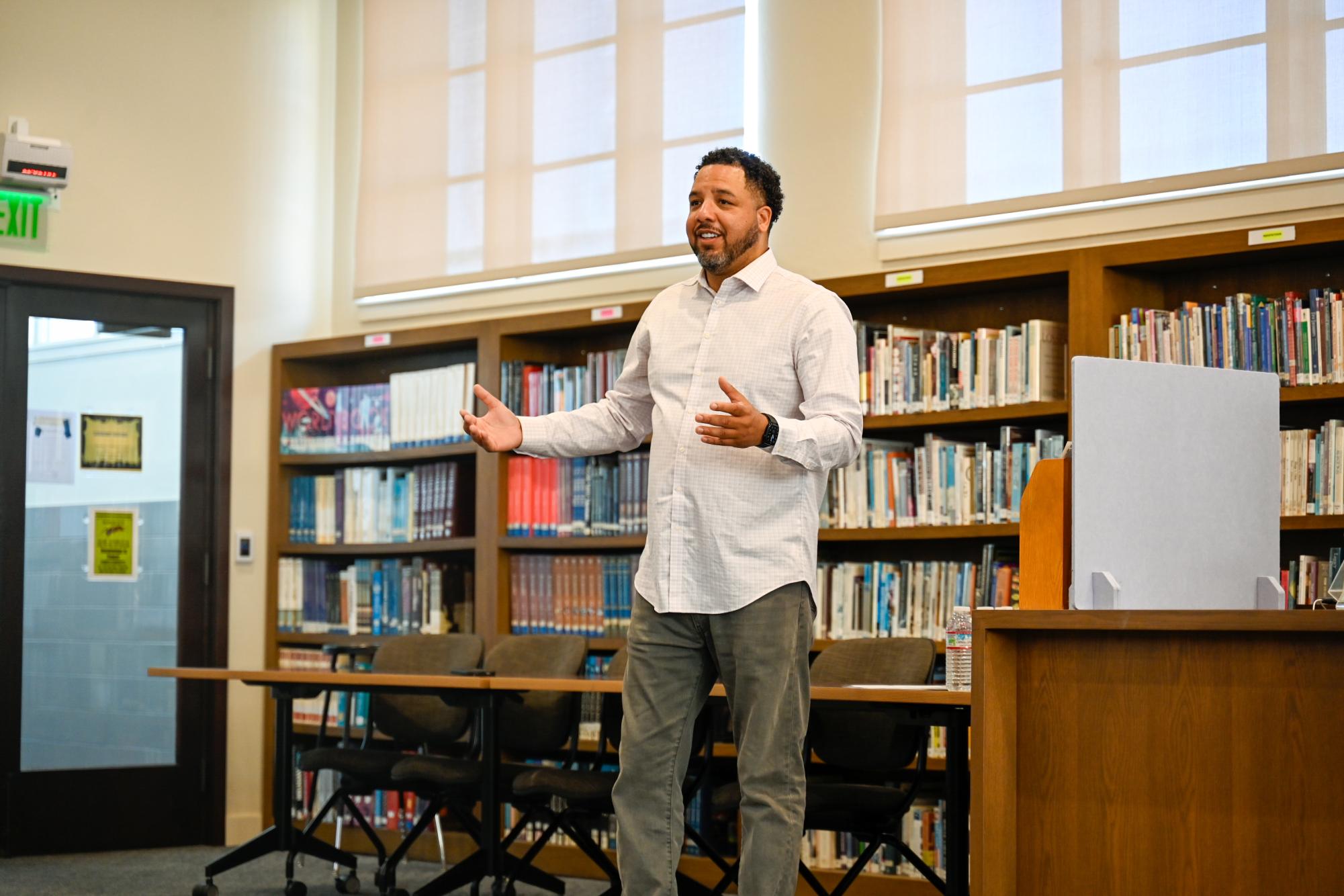
NBC Sportscaster Bonta Hill shared his experience working in the sports media industry as a collegiate and professional sports reporter in the Bay Area.
He discussed how to cover live games and interact with professional athletes, and he emphasized the importance of persistence in journalism.
“One of the biggest obstacles of sports media is blocking out noise,” Hill said. “That noise can come in the form of hatred, insecurities and jealousies, but you have to focus on yourself. I just do what I need to do.”
Hill highlighted the importance of humility and positivity in journalism, and gave advice to attendees about staying true to themselves by drawing from his experiences with finding his place within the industry.
Attendee and Branham High School reporter junior Brayden Gassmann emphasized his key takeaways from the session.
“He’s a very inspirational person to me, especially because I want to go into sports podcasting,” Brayden said. “Bonta definitely talked a lot about how journalism takes practice and it’s hard, but as long as you love the grind, that’s all that matters. It comes down to expressing yourself and having a smile on your face.”
Attendee and Berkeley High School video producer Sunny Lipton appreciated the chance to learn about working in the media industry and planned to bring the lessons she learned back to her school’s publication.
“I’m really excited to learn here, so this was a great opportunity,” Sunny said. “Not being ashamed of being persistent, reaching out to people, listening to what your audience has to say and covering what they’re interested in are all important.”
Art of the Anecdotal Lede
KPIX CBS News Bay Area broadcaster and former Louisiana Illuminator reporter JC Canicosa discussed how to write character-driven ledes in his session.
He opened by asking students about their current articles and advised them to find local, human angles to boil down broader issues. Canicosa then showed attendees a variety of examples that incorporated emotional, anecdotal ledes, including a video clip of an ICE raid and its effects on an elderly grandmother.
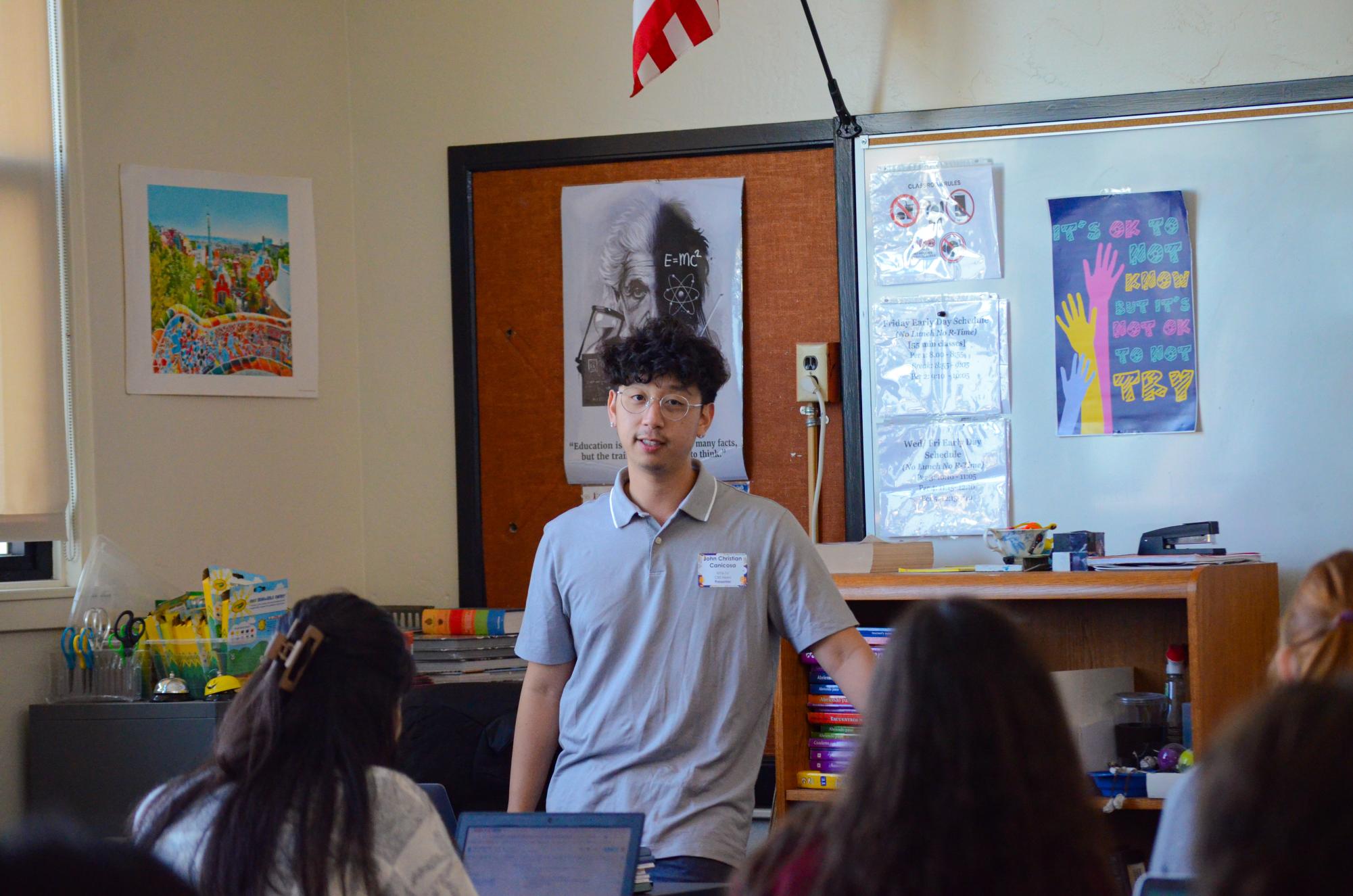
Canicosa structured his session around the importance of highlighting people and their stories rather than purely focusing on statistics and objective facts.
“I want [students] to see how important characters are to stories, how essential it is to tell stories through the lens of an individual,” Canicosa said. “At the end of the day, this is what we do. We give voices to people who don’t have voices. We give platforms to people who would not otherwise have it.”
Attendee and Branham High School reporter Sienna Moss echoed Canicosa’s sentiment.
“It was really helpful to make sure that you’re focusing on not only facts but also emotions,” Sienna said. “I feel like you can get facts from sources, but the characters really tell you their personalities.”
Canicosa conceived of the session to instill a passion for in-depth reporting in high school journalists. An alumnus of Archbishop Riordan, Canicosa thought returning to his old school was especially rewarding.
“Find your niche, find what you have passion for reporting about,” Canicosa said. “When you get to a place where you feel good about where you are, remember what it felt like to have someone reach down and pick you up, and pay that forward. My old journalism teacher at Riordan asked me to speak here, and I love giving back like that.”
Design Like a Pro
Monta Vista High School’s El Estoque adviser and Journalism Education Association Northern California President Julia Satterthwaite, MJE, taught students how to create aesthetically pleasing and intentional spreads.
She split her presentation into three sections: the design principles of C.R.A.P. — contrast, repetition, alignment and proximity — as well as professional inspiration and “marriage of elements meetings.” As she showed spreads from El Estoque and other publications, she pointed out elements like complementary colors, repeating motifs to organize information and justification options.
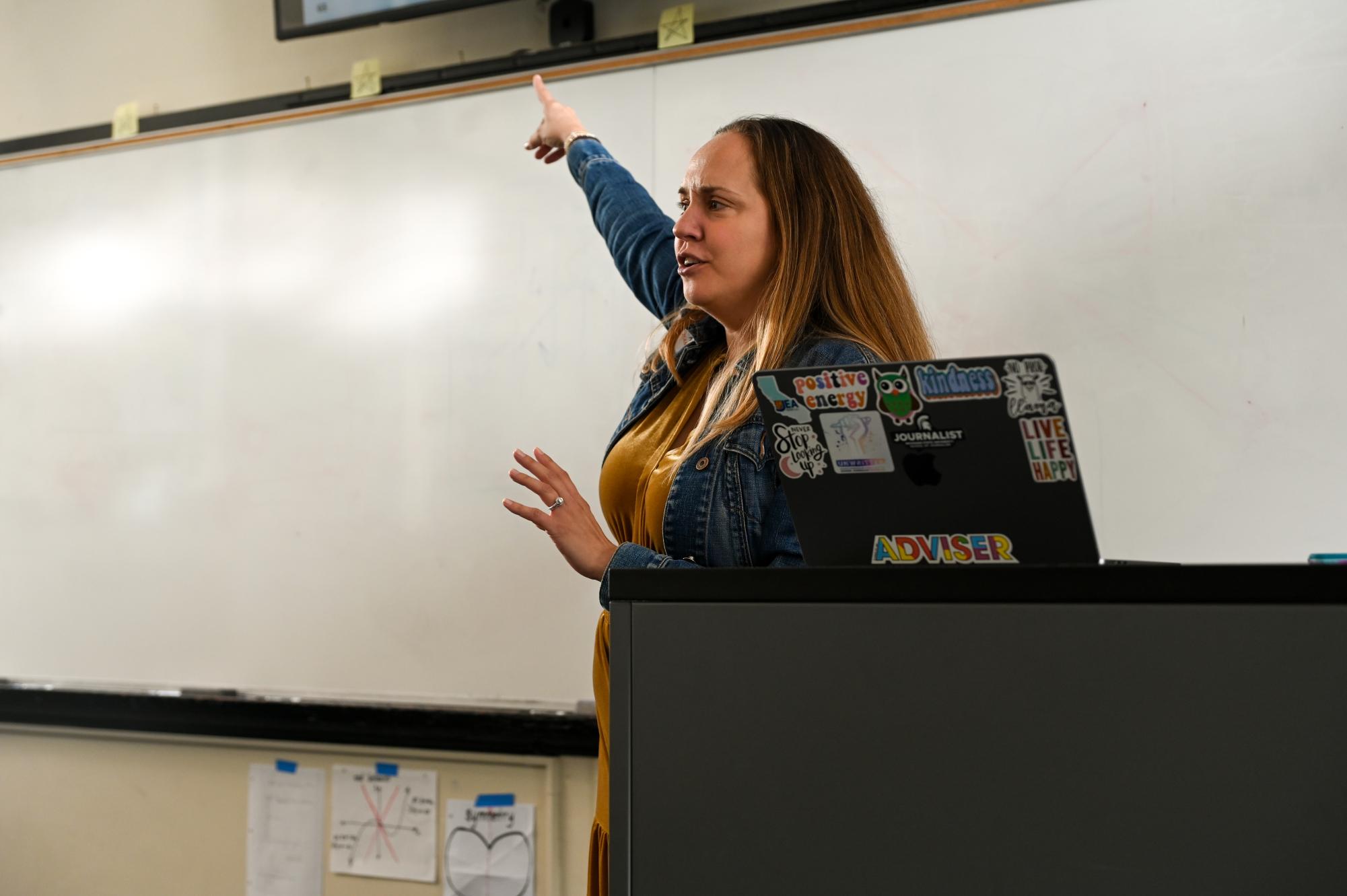
In her presentation, Satterthwaite emphasized the importance of innovation and uniqueness in design.
“Think outside the box. Don’t be afraid to try new things, and make sure that you are planning something big, dominant and eye-catching,” Satterthwaite said. “The mistake that kids sometimes make is writing too many words.”
Attendee and Albany High School reporter Nasiah Tesch shared that his main takeaway from the presentation was an emphasis on drawn graphic elements and a more streamlined process for planning layouts.
“We definitely have to utilize graphics more,” he said. “I think a problem with our publication is balancing out photography with our drawn graphics. Getting professional inspiration ahead of time will definitely be super helpful for us.”
Throughout the session, Satterthwaite stressed the importance of searching for design inspiration from a variety of external sources. Satterthwaite concluded the session with an activity where attendees proposed, sketched and shared page layouts for fictional prompts.
She put together her presentation last December, showcasing it at the JEA Advisers’ retreat and the JEA/NSPA Spring National High School Journalism Convention before today’s event.
“Each audience is different,” Satterthwaite said. “It was supposed to be a quick review of C.R.A.P. design, but what I’m finding is that there’s not a lot of kids who know about it. So I think that I may need to do a presentation on the basics of design principles. It’s good feedback for me to hear so that I can prepare better to have both a beginning and an advanced level design class for students next year.”