


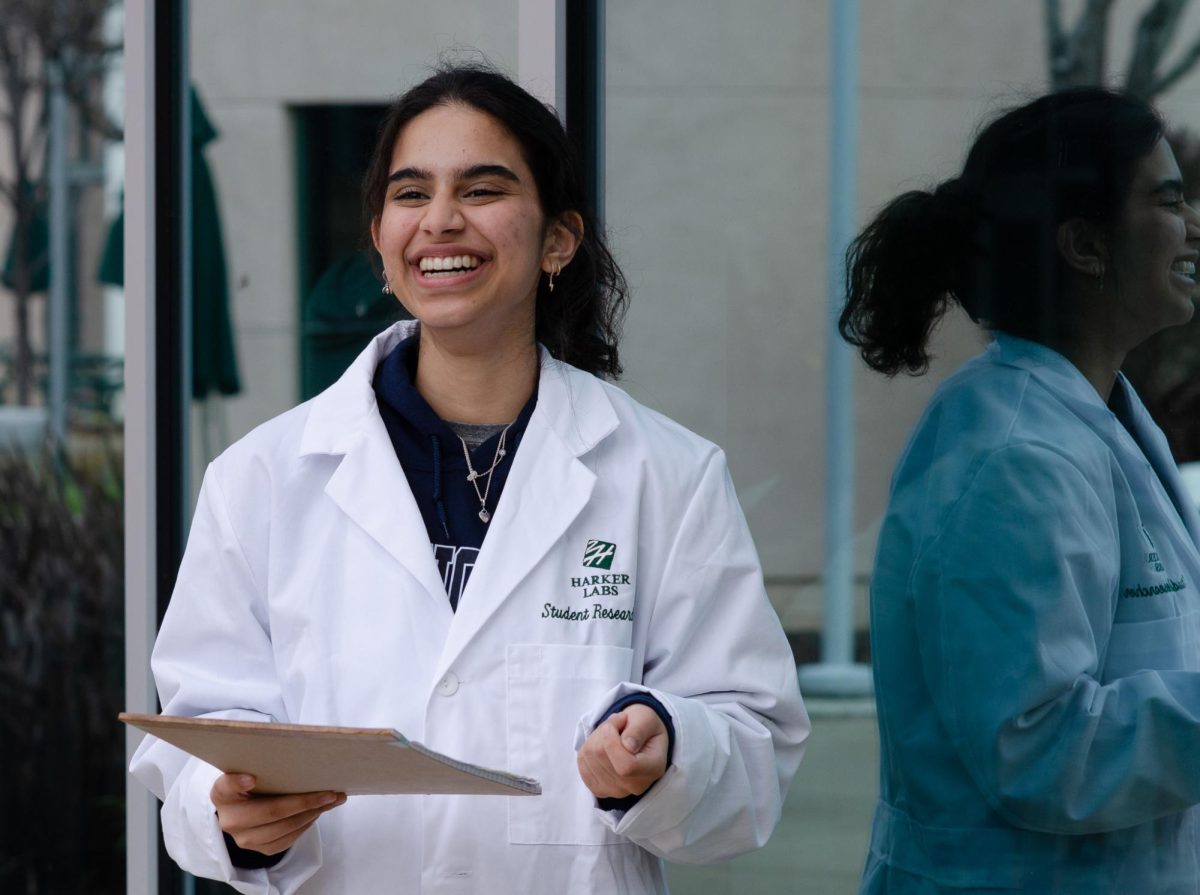
![“I wasn't discouraged by some of the obstacles we faced. I learned a lot from the leadership. I found that different people need different ways of receiving feedback — you can't [just] tell them to do something and expect the best. [Some] people needed more incentive. A large part of my role was to figure out what worked for everyone and to figure out how to lead all these separate individuals as a team,” Suhana Bhandare (’26) said.](https://harkeraquila.com/wp-content/uploads/2026/06/SuhanaBhandare_JasmineHansra-1-1200x798.jpg)
![“This is actually from Randy Pausch Randy P. Brick: ‘Walls are there for a reason. You have to show how much you want to overcome them.’ You have to show how much you want something. That's what I've always been able to do with tennis, Link Crew and getting that internship [with Kushy Baby]. It’s important pushing through that — getting around that brick wall, climbing over it or clawing through it,” Yash Sachdeva (’26) said.](https://harkeraquila.com/wp-content/uploads/2026/05/YashSachdeva_RamBatchu-copy-1200x1002.jpg)




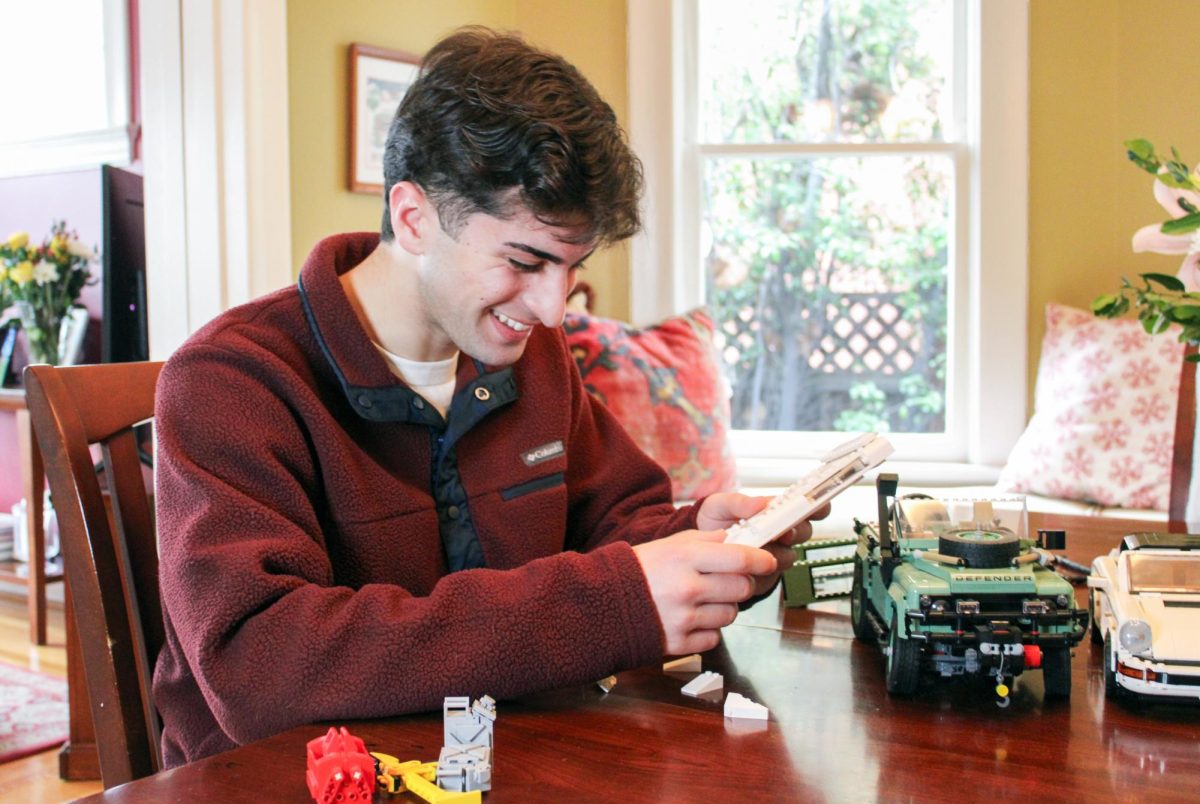


![“[Building nerf blasters] became this outlet of creativity for me that hasn't been matched by anything else. The process [of] making a build complete to your desire is such a painstakingly difficult process, but I've had to learn from [the skills needed from] soldering to proper painting. There's so many different options for everything, if you think about it, it exists. The best part is [that] if it doesn't exist, you can build it yourself," Ishaan Parate said.](https://harkeraquila.com/wp-content/uploads/2022/08/DSC_8149-900x604.jpg)

![“When I came into high school, I was ready to be a follower. But DECA was a game changer for me. It helped me overcome my fear of public speaking, and it's played such a major role in who I've become today. To be able to successfully lead a chapter of 150 students, an officer team and be one of the upperclassmen I once really admired is something I'm [really] proud of,” Anvitha Tummala ('21) said.](https://harkeraquila.com/wp-content/uploads/2021/07/Screen-Shot-2021-07-25-at-9.50.05-AM-900x594.png)



![“I think getting up in the morning and having a sense of purpose [is exciting]. I think without a certain amount of drive, life is kind of obsolete and mundane, and I think having that every single day is what makes each day unique and kind of makes life exciting,” Neymika Jain (12) said.](https://harkeraquila.com/wp-content/uploads/2017/06/Screen-Shot-2017-06-03-at-4.54.16-PM.png)

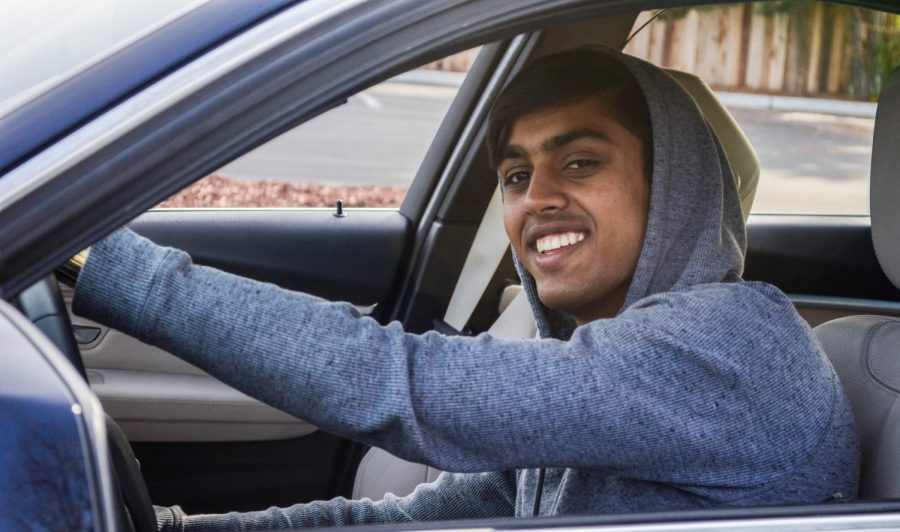
![“My slogan is ‘slow feet, don’t eat, and I’m hungry.’ You need to run fast to get where you are–you aren't going to get those championships if you aren't fast,” Angel Cervantes (12) said. “I want to do well in school on my tests and in track and win championships for my team. I live by that, [and] I can do that anywhere: in the classroom or on the field.”](https://harkeraquila.com/wp-content/uploads/2018/06/DSC5146-900x601.jpg)
![“[Volleyball has] taught me how to fall correctly, and another thing it taught is that you don’t have to be the best at something to be good at it. If you just hit the ball in a smart way, then it still scores points and you’re good at it. You could be a background player and still make a much bigger impact on the team than you would think,” Anya Gert (’20) said.](https://harkeraquila.com/wp-content/uploads/2020/06/AnnaGert_JinTuan_HoHPhotoEdited-600x900.jpeg)
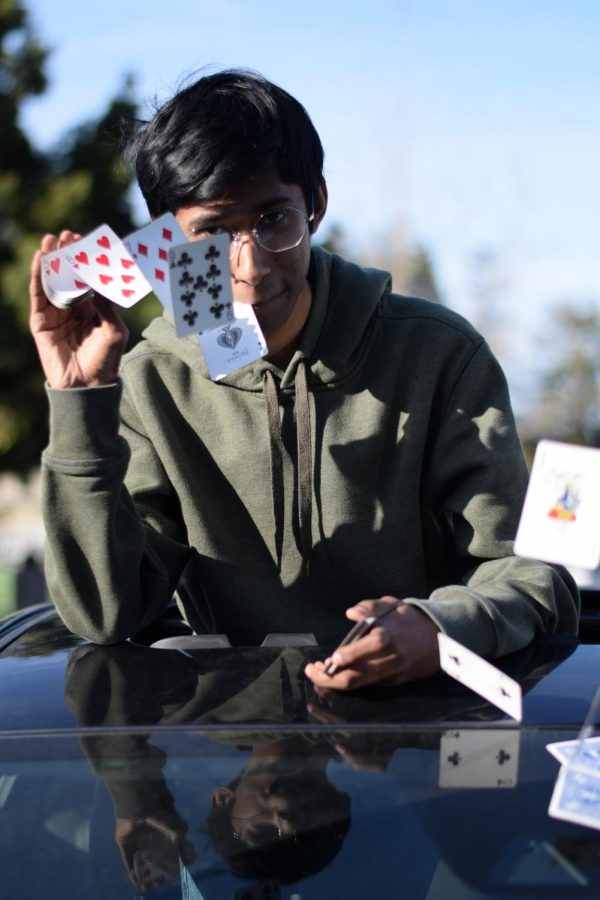
![“I'm not nearly there yet, but [my confidence has] definitely been getting better since I was pretty shy and timid coming into Harker my freshman year. I know that there's a lot of people that are really confident in what they do, and I really admire them. Everyone's so driven and that has really pushed me to kind of try to find my own place in high school and be more confident,” Alyssa Huang (’20) said.](https://harkeraquila.com/wp-content/uploads/2020/06/AlyssaHuang_EmilyChen_HoHPhoto-900x749.jpeg)

Humans of Harker: Keep up the rally
Ramanand Vegesna (12) lives life without regret
![“As I’ve grown older, I’ve [begun to] feel like ‘oh I could have done this better, I could have done that better’, and that’s my personality as a perfectionist. But also, I understand that in the moment I made this decision because I thought it was the right thing to do, and I want to live my life like that: not doing things that in the moment I know I shouldn’t be doing, that in the moment I know I’ll regret later,” Ramanand Vegesna (12) said.](https://harkeraquila.com/wp-content/uploads/2020/04/RamanandVegesna_JessieWang_HoHPhoto-900x596.jpg)
“As I’ve grown older, I’ve [begun to] feel like ‘oh I could have done this better, I could have done that better’, and that’s my personality as a perfectionist. But also, I understand that in the moment I made this decision because I thought it was the right thing to do, and I want to live my life like that: not doing things that in the moment I know I shouldn’t be doing, that in the moment I know I’ll regret later,” Ramanand Vegesna (12) said.
Ramanand Vegesna (12) can flip a tennis racket and catch it over and over again, without stopping or even breaking eye contact from the friends he’s chatting with. He simply flicks his wrist, sending the racket’s red-black frame tumbling through the air until his fingers close around its white grip with a small, satisfying thud. With the briefest of pauses and a casual movement, the red, black and white rise once more, lazily somersaulting back towards a waiting hand. This skill is part of the vast expanse that lies beneath the tip of the Ramanand iceberg, concealed behind a quiet facade.
With an uncle who runs a tennis and badminton club in India and a family who enjoy the sport, it was perhaps inevitable that Ramanand would be introduced to tennis. He began playing at Niru’s Tennis Academy when he was four years old with close friend Rakesh Nori (12), alternating between soccer on Saturdays and tennis on Sundays. It was then that he began to develop his love for the sport.
“It was almost like he was in his element when he was playing tennis,” Rakesh said, recalling their childhoods. “I think he has that sort of mental capacity to do really well … He never gives up and tennis is really definitely a sport about your endurance and how much are you willing to take and how much you are willing to give.”
And Ramanand is willing to give a lot for tennis, perhaps best exemplified in the last match of his middle school career, which he described as an event that defined his current worldview. Having sprained his ankle the previous day and “begged” his doctor to let him go on court, Ramanand was playing number one singles “a lot better than [he] should have.” He managed a comeback late in the game, but Ramanand’s feet gave out as he chased a ball during the match point.
“They just stopped moving,” Ramanand said. “It wasn’t because of the pain, but something in my brain just stopped working and I froze. And I know what that feels like, and I just despise it so much. So anytime I’m in a tense situation I do everything I can, whether that be just staying calm [or] taking deep breaths so that I don’t ever feel that again.”
This realization wasn’t the only lesson Ramanand learned from tennis. With it came a fiercely competitive spirit. It’s not a spirit that drives him away from others, rather it’s an attitude that motivates Ramanand to help those around him as well. Mihir Sharma (12), Ramanand’s teammate and friend played together with him at last year’s WBAL doubles finals, where they played a three-hour match against a team that was expected to beat them in thirty minutes.
“The whole time [Ramanand] was encouraging me to get better on the court, giving me things that I could do and encouraging me when I made a mistake and owning up to his own faults,” Mihir said. “He was the one who kept us together as a team, which is why we were able to play those guys for such a long time.”
Even outside of tennis, Ramanand strives to encourage his friends and enjoy life with them.
“Most of the memorable [moments we have] come from where we’re just laughing together so hard that we can’t even breathe anymore, losing the sense of time,” Rakesh said. “[Ramanand] can make you forget about all of your issues and your problems, make you have a good time and just laugh. That’s what I cherish the most.”
Ramanand is able to apply these strengths outside of tennis, in both his academics and his social life.
“He can think outside of the box very well,” Gabriele Stahl, who taught Ramanand math in his sophomore and junior years, said. “He approaches problems from a very analytical side, but it doesn’t mean that he always goes the path we have done in class. He sometimes comes up with other methods to solve problems.”
Ultimately, Ramanand’s goal is simple — to live life without regrets.
“As I’ve grown older, I’ve [begun to] feel like ‘oh I could have done this better, I could have done that better’, and that’s my personality as a perfectionist,” Ramanand said. “But also, I understand that in the moment I made this decision because I thought it was the right thing to do, and I want to live my life like that: not doing things that in the moment I know I shouldn’t be doing, that in the moment I know I’ll regret later.”
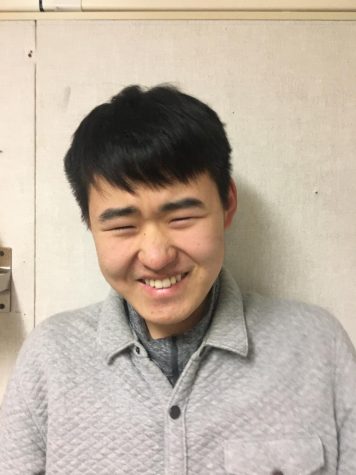
Jessie Wang (12) is the senior copy editor for the Winged Post and Harker Aquila. This is his fourth and final year on staff, and he hopes to continue...