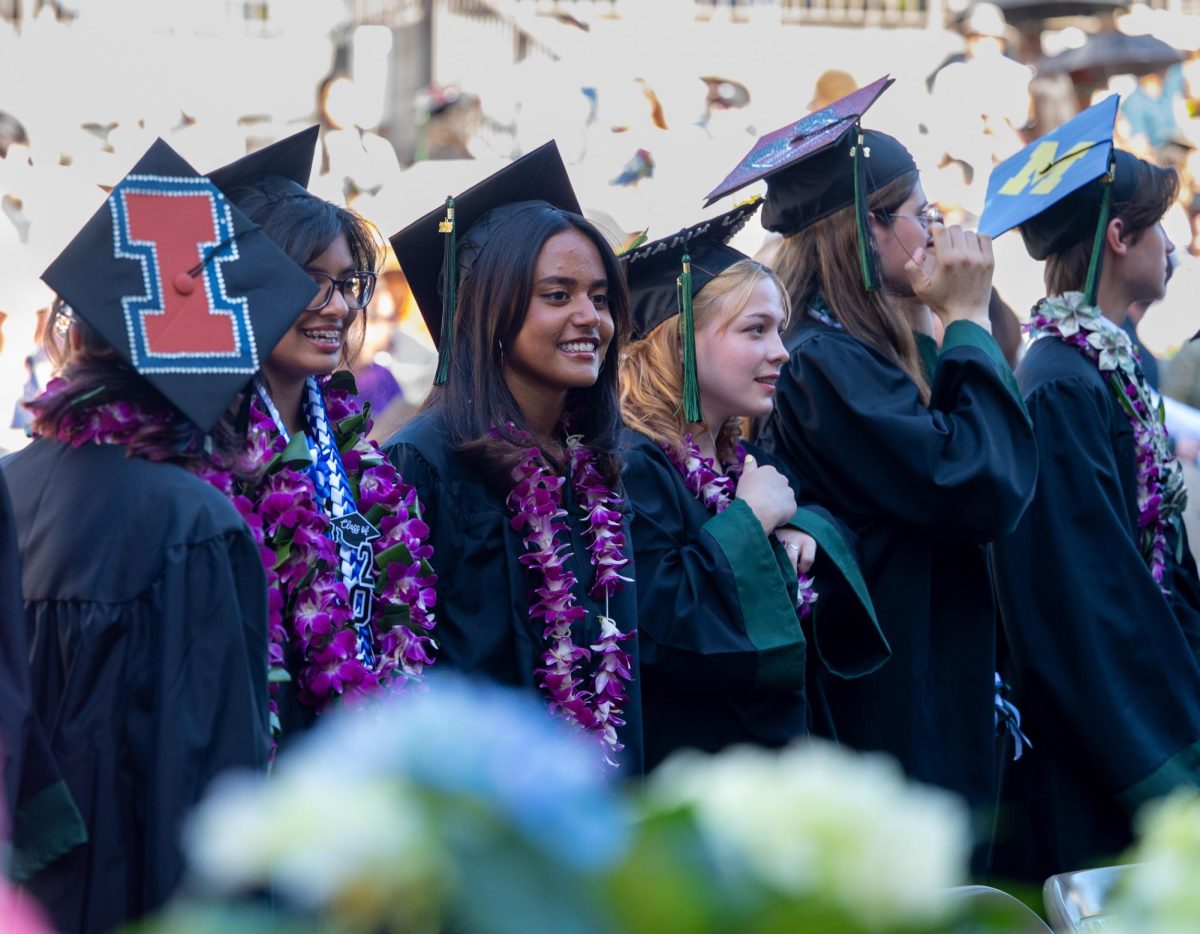
![“I wasn't discouraged by some of the obstacles we faced. I learned a lot from the leadership. I found that different people need different ways of receiving feedback — you can't [just] tell them to do something and expect the best. [Some] people needed more incentive. A large part of my role was to figure out what worked for everyone and to figure out how to lead all these separate individuals as a team,” Suhana Bhandare (’26) said.](https://harkeraquila.com/wp-content/uploads/2026/06/SuhanaBhandare_JasmineHansra-1-1200x798.jpg)

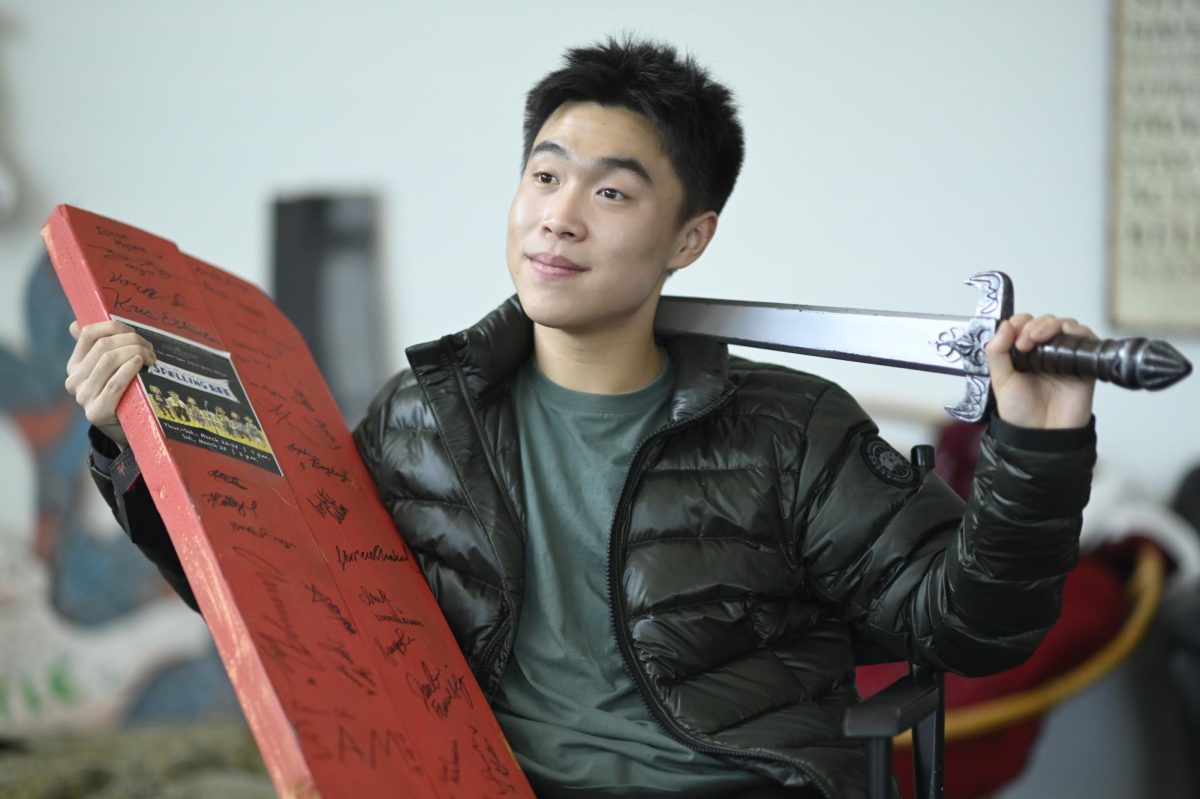
![“This is actually from Randy Pausch Randy P. Brick: ‘Walls are there for a reason. You have to show how much you want to overcome them.’ You have to show how much you want something. That's what I've always been able to do with tennis, Link Crew and getting that internship [with Kushy Baby]. It’s important pushing through that — getting around that brick wall, climbing over it or clawing through it,” Yash Sachdeva (’26) said.](https://harkeraquila.com/wp-content/uploads/2026/05/YashSachdeva_RamBatchu-copy-1200x1002.jpg)










![“[Building nerf blasters] became this outlet of creativity for me that hasn't been matched by anything else. The process [of] making a build complete to your desire is such a painstakingly difficult process, but I've had to learn from [the skills needed from] soldering to proper painting. There's so many different options for everything, if you think about it, it exists. The best part is [that] if it doesn't exist, you can build it yourself," Ishaan Parate said.](https://harkeraquila.com/wp-content/uploads/2022/08/DSC_8149-900x604.jpg)
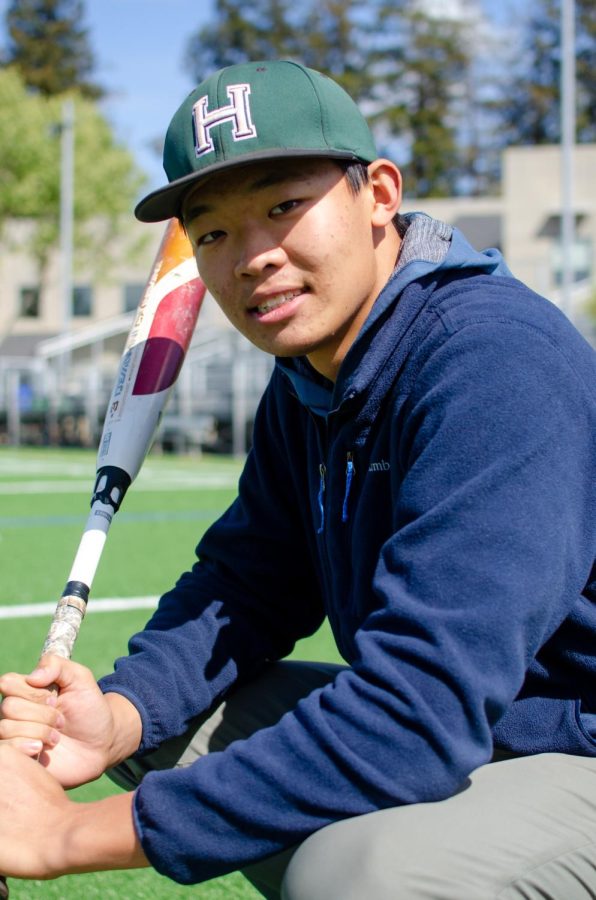

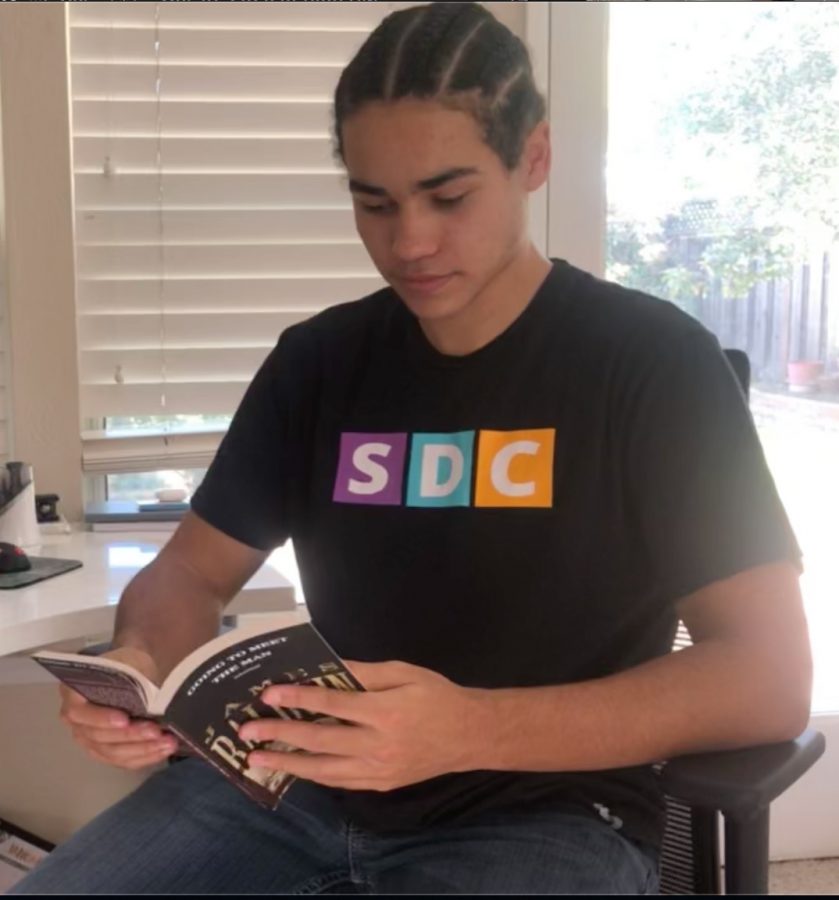
![“When I came into high school, I was ready to be a follower. But DECA was a game changer for me. It helped me overcome my fear of public speaking, and it's played such a major role in who I've become today. To be able to successfully lead a chapter of 150 students, an officer team and be one of the upperclassmen I once really admired is something I'm [really] proud of,” Anvitha Tummala ('21) said.](https://harkeraquila.com/wp-content/uploads/2021/07/Screen-Shot-2021-07-25-at-9.50.05-AM-900x594.png)
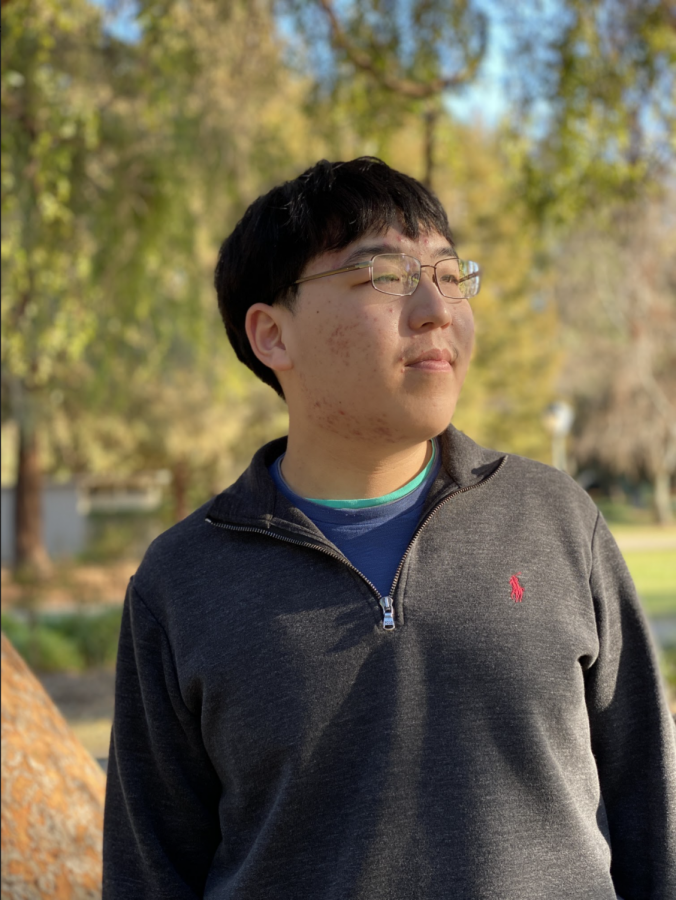


![“I think getting up in the morning and having a sense of purpose [is exciting]. I think without a certain amount of drive, life is kind of obsolete and mundane, and I think having that every single day is what makes each day unique and kind of makes life exciting,” Neymika Jain (12) said.](https://harkeraquila.com/wp-content/uploads/2017/06/Screen-Shot-2017-06-03-at-4.54.16-PM.png)




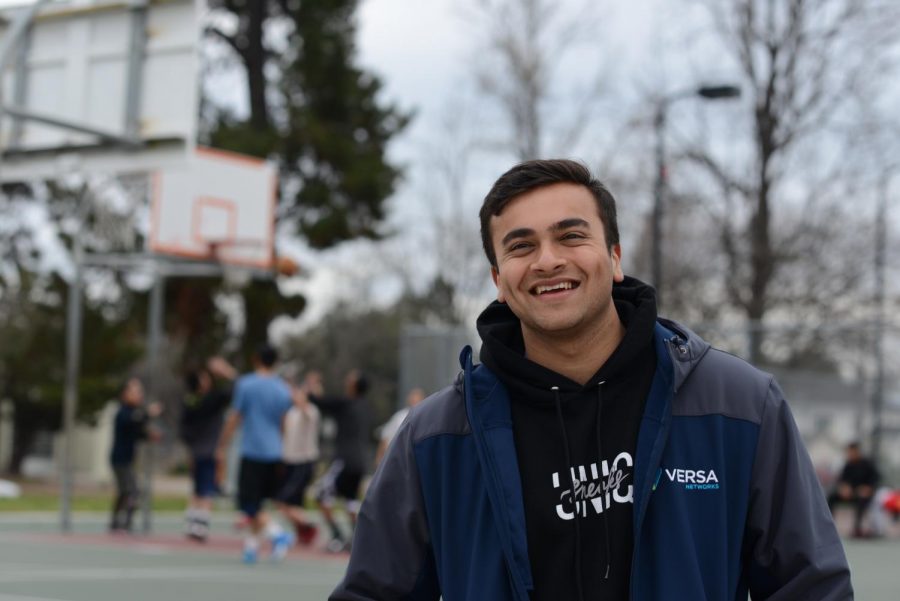
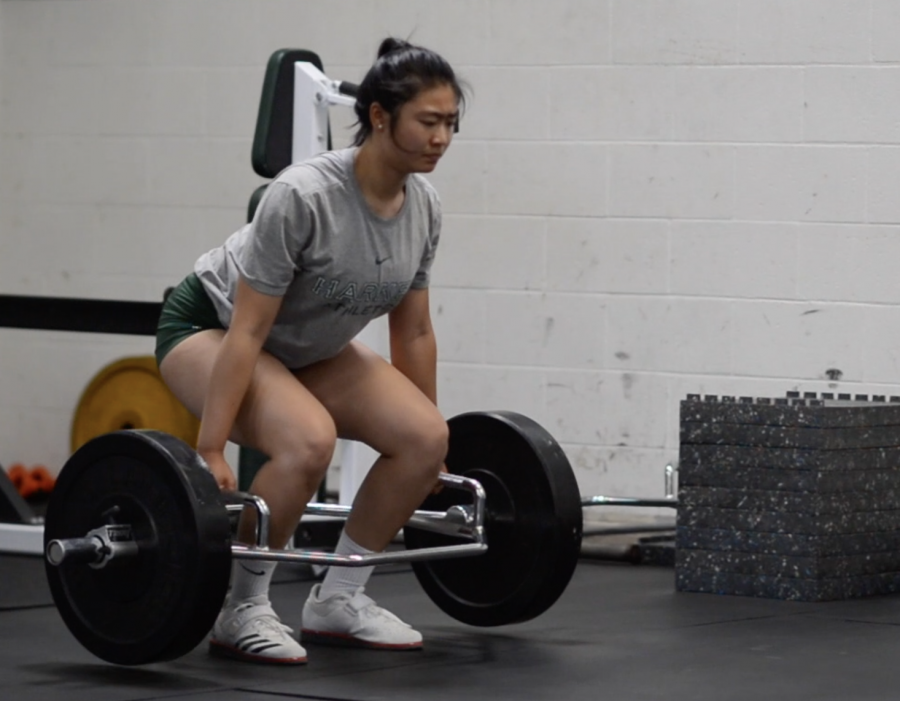
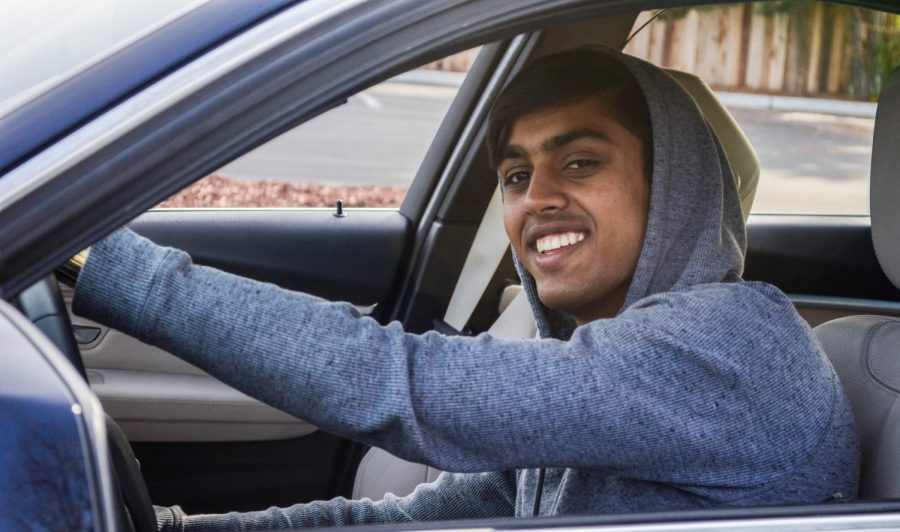
![“My slogan is ‘slow feet, don’t eat, and I’m hungry.’ You need to run fast to get where you are–you aren't going to get those championships if you aren't fast,” Angel Cervantes (12) said. “I want to do well in school on my tests and in track and win championships for my team. I live by that, [and] I can do that anywhere: in the classroom or on the field.”](https://harkeraquila.com/wp-content/uploads/2018/06/DSC5146-900x601.jpg)
![“[Volleyball has] taught me how to fall correctly, and another thing it taught is that you don’t have to be the best at something to be good at it. If you just hit the ball in a smart way, then it still scores points and you’re good at it. You could be a background player and still make a much bigger impact on the team than you would think,” Anya Gert (’20) said.](https://harkeraquila.com/wp-content/uploads/2020/06/AnnaGert_JinTuan_HoHPhotoEdited-600x900.jpeg)
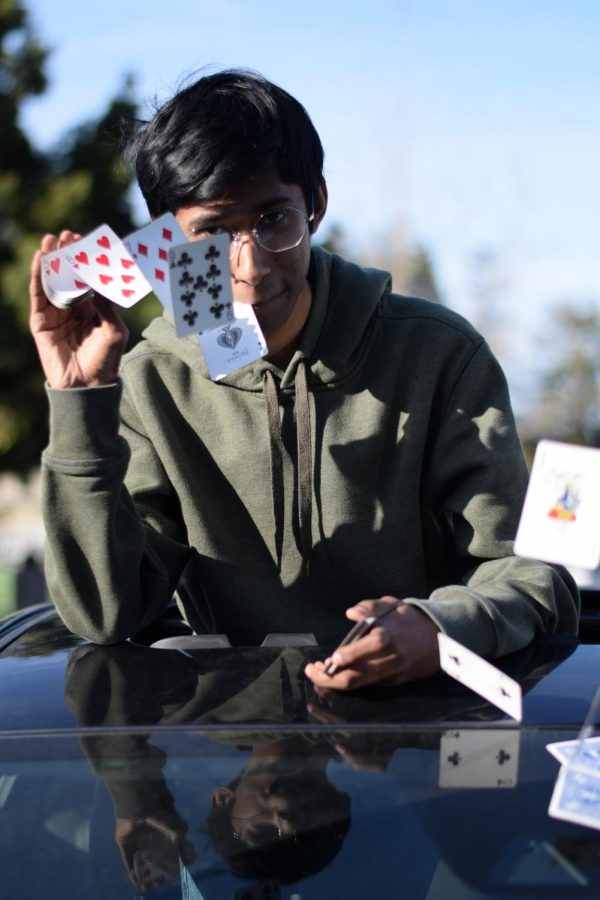
![“I'm not nearly there yet, but [my confidence has] definitely been getting better since I was pretty shy and timid coming into Harker my freshman year. I know that there's a lot of people that are really confident in what they do, and I really admire them. Everyone's so driven and that has really pushed me to kind of try to find my own place in high school and be more confident,” Alyssa Huang (’20) said.](https://harkeraquila.com/wp-content/uploads/2020/06/AlyssaHuang_EmilyChen_HoHPhoto-900x749.jpeg)



Racial disparity persists in NFL coaching and ownership despite league’s efforts to promote diversity
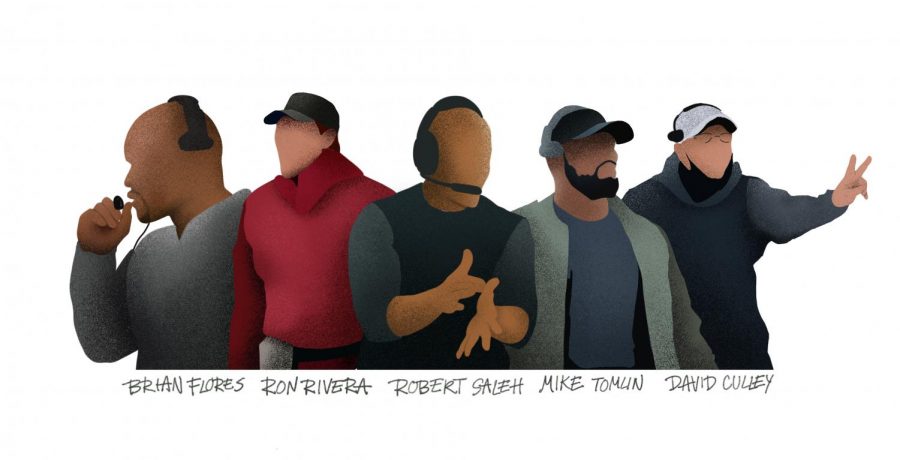
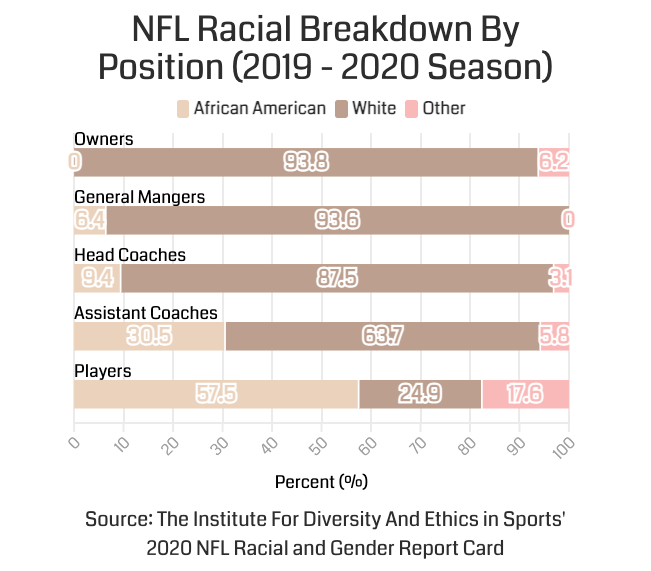
Brian Flores, Ron Rivera, Robert Saleh, Mike Tomlin, and David Culley (all pictured above) are the only five minority head coaches in the NFL, heading in to the 2021 – 2022 NFL season. This translates to just 13% of the league’s 32 head coaches, which is surprising considering that over 70% of the NFL’s players are of color, according to The Institute For Diversity and Ethics in Sports’ 2020 NFL Gender and Racial Report Card.
April 7, 2021
Mike Tomlin. Ron Rivera. Brian Flores. Robert Saleh. David Culley. The names of the only non-white head coaches in the NFL. In a league where minorities make up the majority of the player pool, one would expect more than 13% of the NFL’s head coaches to be minorities.
The NFL has long faced the issue of a racial disparity in the coaching staffs and ownership of its 32 teams. According to The Institute For Diversity and Ethics in Sports’ 2020 NFL Gender and Racial Report Card, over 70% of NFL players are people of color. But as you move up the NFL’s organizational hierarchy, the percentage declines, for each successive step. Just over 35% of the NFL’s assistant coaches are minorities. That percentage drops to the aforementioned 13% for head coaches and to just 6% for owners.
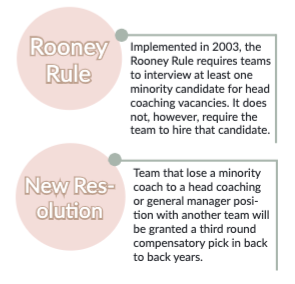
The NFL has made attempts to address this widening gap in recent years, starting with the Rooney Rule, which was established in 2003 by the league’s diversity committee. The Rooney Rule requires teams to interview at least one minority candidate for head coaching and general manager vacancies in an effort to promote diversity throughout the league.
Loren Powers, who is white and the head coach of the Harker football team, views the Rooney Rule as a “double-edged sword”. While he appreciates its intentions and the fact the NFL is acknowledging and attempting to address the issue at hand, he feels that “rules shouldn’t have to be passed just to give people an equal shot.”
“It sucks that we have to implement a rule like that for people to get a shot, because every person deserves an opportunity,” Powers said. “But the one nice thing is that the NFL is saying that, ‘Hey, we do realize that there is a huge racial disparity here.’ It shows that the NFL is aware of this and trying to make a difference, so I can see how it is advantageous.”
One caveat to the Rooney Rule, however, is that it does not require teams to actually hire the minority candidates they interview, simply just to interview/consider them. Brian Pinkston (12), an African American and varsity volleyball athlete, fears that this can lead to teams beginning to lose sight of the intentions behind the rule, perhaps causing them to view the Rooney Rule as “just another box to check off.”
“[The Rooney Rule] probably comes from a place of good intentions, but I just wonder what the actual effects are,” Brian said. “Teams could just include a minority candidate to fill that quota, when they may not even have the intention of actually hiring that candidate.”
In the 18 years since the Rooney Rule’s implementation, the greatest number of minority head coaches in the NFL in a single season was 8, achieved in 2011, 2017 and 2018, according to the 2020 NFL Gender and Racial Report Card. In order to further their efforts at promoting diversity, the NFL implemented a new resolution this past offseason, which grants teams two compensatory draft picks if they lose a minority coach to a head coaching or general manager position with another team.
Powers describes this new resolution as being “empowering” for the team that gives a minority individual a platform to showcase their skills and become a head coach. He references former San Francisco 49ers defensive coordinator Robert Saleh, who is Muslim and was hired to be the head coach of the New York Jets this past offseason.
“The benefits of this resolution are two-fold,” Powers said. “The 49ers gave [Saleh] an opportunity, and he crushed it, and now he’s a head coach, and at the same time, the NFL is saying to the [49ers], ‘We appreciate you giving this person an opportunity to show that he can potentially be a head coach one day’ and rewarding them for it.”
Ultimately, the racial disparity in the NFL has a lot to do with the fact the hiring is solely based on connections and who knows who. According to the 2020 NFL Gender and Racial Report Card, 30 of the 32 NFL teams have white ownership, and history has shown that these white owners tend, for the most part, to hire white individuals to occupy the various positions in their organization. Powers learned the importance of connections in the NFL firsthand, when he applied to become a scout for the San Francisco 49ers in 2018.
“When I was working in the [49ers] high school engagement program, Bill Walsh’s 19-year-old grandson joined the scouting department. How does a 19-year-old kid have the acumen and credentials to go be a scout at the NFL level? Well, he had the connections to get there,” Powers said. “He was able to jump that ladder and climb the ranks way higher than someone like myself, who has to go step by step, would be able to do.”
To Brian, this exclusivity and the fact that the coaches are selected from the same network of relationships over and over again is a huge impediment to the NFL’s efforts to promote diversity.
“You typically get this select club of 80 coaches or so that people pick and choose from to be their head coaches. We really need to try to mix that up: expanding beyond the initial 80 or so candidates is really crucial in trying to level the playing field, so that people from other positions, that weren’t given the same advantages, can have the opportunity to be a head coach,” Brian said. “I feel like there are a lot of qualified minorities out there who would be great head coaches, but haven’t been given the opportunity to do so.”
As Brian puts it, if NFL teams and owners continue to rely so heavily on these types of connections when hiring, the racial disparity present in the league now will persist. In addition to expanding the “coaching pool,” Brian believes that the league must closely monitor the effects of the rules they implement and make modifications when necessary if they wish to cause concrete change.
“These rules require revisiting if the league wants to prove their intent. You can’t just implement one rule and say, ‘Oh, look at how much we did,’” he said. “Every few years, you have to go back and see how this rule has helped since we implemented it, what can we do to further it, and looking at, not just the intentions, but also the consequences as well, because those are equally important.”