![“I wasn't discouraged by some of the obstacles we faced. I learned a lot from the leadership. I found that different people need different ways of receiving feedback — you can't [just] tell them to do something and expect the best. [Some] people needed more incentive. A large part of my role was to figure out what worked for everyone and to figure out how to lead all these separate individuals as a team,” Suhana Bhandare (’26) said.](https://harkeraquila.com/wp-content/uploads/2026/06/SuhanaBhandare_JasmineHansra-1-1200x798.jpg)

![“This is actually from Randy Pausch Randy P. Brick: ‘Walls are there for a reason. You have to show how much you want to overcome them.’ You have to show how much you want something. That's what I've always been able to do with tennis, Link Crew and getting that internship [with Kushy Baby]. It’s important pushing through that — getting around that brick wall, climbing over it or clawing through it,” Yash Sachdeva (’26) said.](https://harkeraquila.com/wp-content/uploads/2026/05/YashSachdeva_RamBatchu-copy-1200x1002.jpg)

















![“[Building nerf blasters] became this outlet of creativity for me that hasn't been matched by anything else. The process [of] making a build complete to your desire is such a painstakingly difficult process, but I've had to learn from [the skills needed from] soldering to proper painting. There's so many different options for everything, if you think about it, it exists. The best part is [that] if it doesn't exist, you can build it yourself," Ishaan Parate said.](https://harkeraquila.com/wp-content/uploads/2022/08/DSC_8149-900x604.jpg)



![“When I came into high school, I was ready to be a follower. But DECA was a game changer for me. It helped me overcome my fear of public speaking, and it's played such a major role in who I've become today. To be able to successfully lead a chapter of 150 students, an officer team and be one of the upperclassmen I once really admired is something I'm [really] proud of,” Anvitha Tummala ('21) said.](https://harkeraquila.com/wp-content/uploads/2021/07/Screen-Shot-2021-07-25-at-9.50.05-AM-900x594.png)

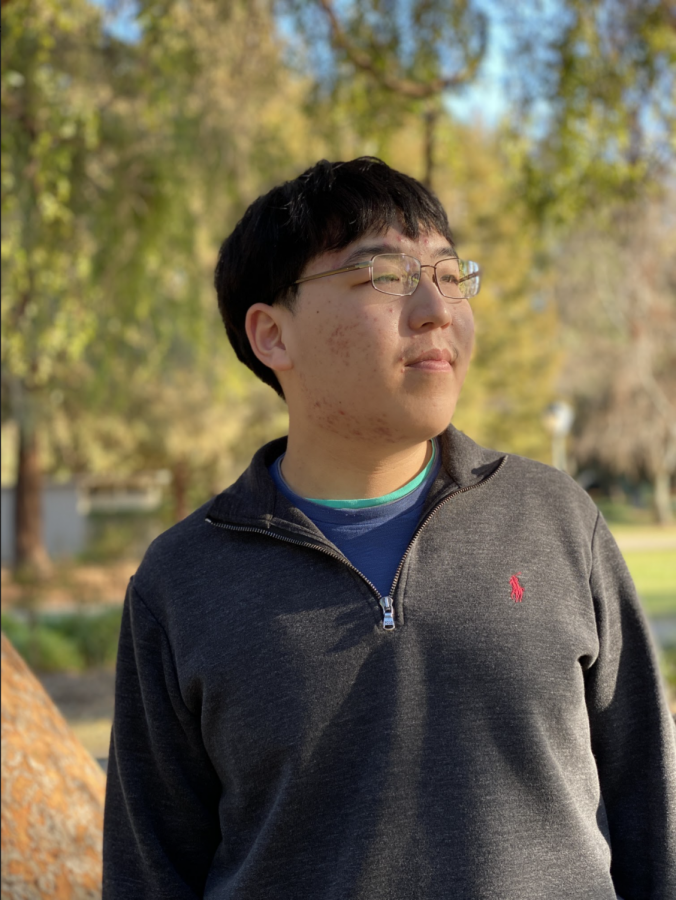


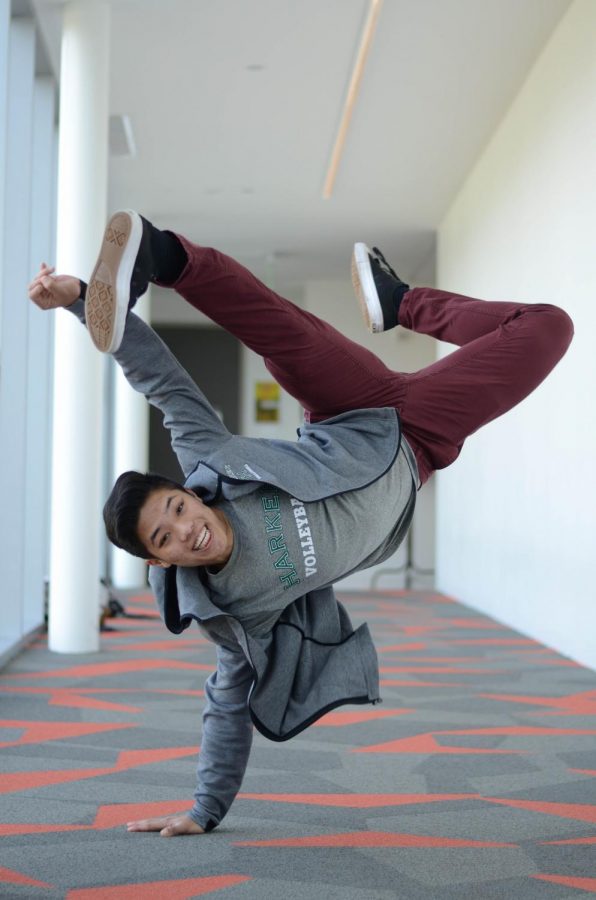


![“I think getting up in the morning and having a sense of purpose [is exciting]. I think without a certain amount of drive, life is kind of obsolete and mundane, and I think having that every single day is what makes each day unique and kind of makes life exciting,” Neymika Jain (12) said.](https://harkeraquila.com/wp-content/uploads/2017/06/Screen-Shot-2017-06-03-at-4.54.16-PM.png)






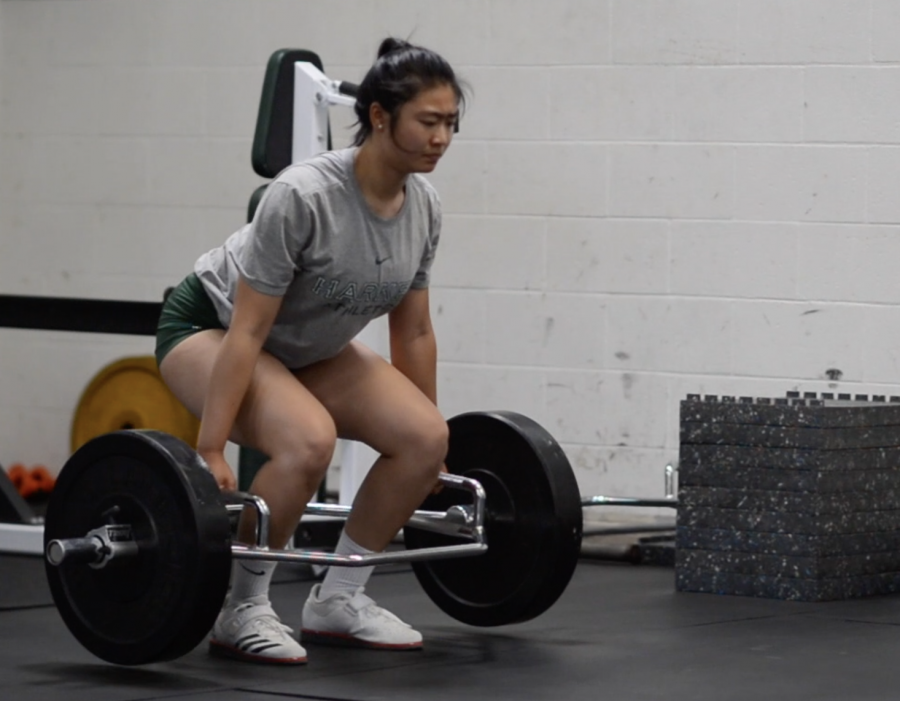

![“My slogan is ‘slow feet, don’t eat, and I’m hungry.’ You need to run fast to get where you are–you aren't going to get those championships if you aren't fast,” Angel Cervantes (12) said. “I want to do well in school on my tests and in track and win championships for my team. I live by that, [and] I can do that anywhere: in the classroom or on the field.”](https://harkeraquila.com/wp-content/uploads/2018/06/DSC5146-900x601.jpg)
![“[Volleyball has] taught me how to fall correctly, and another thing it taught is that you don’t have to be the best at something to be good at it. If you just hit the ball in a smart way, then it still scores points and you’re good at it. You could be a background player and still make a much bigger impact on the team than you would think,” Anya Gert (’20) said.](https://harkeraquila.com/wp-content/uploads/2020/06/AnnaGert_JinTuan_HoHPhotoEdited-600x900.jpeg)
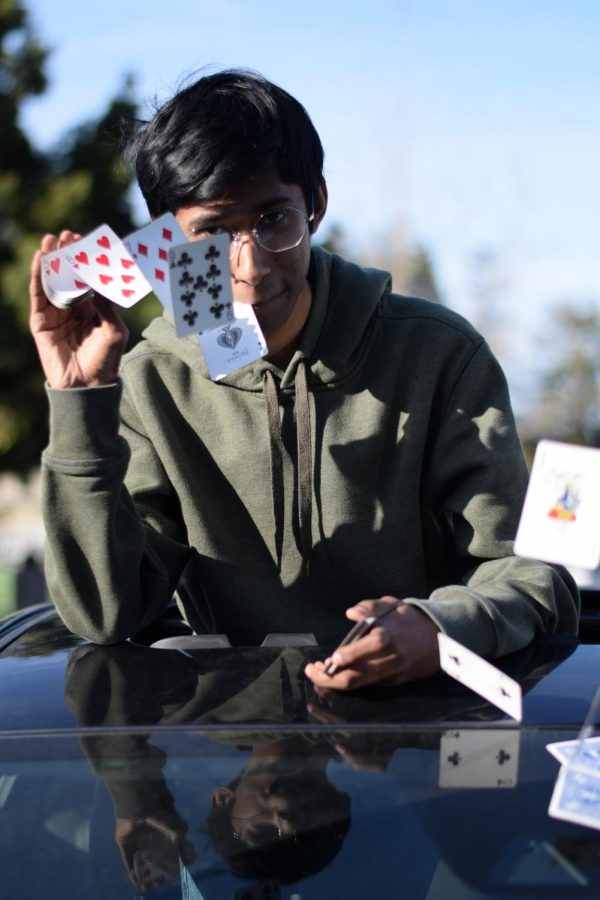
![“I'm not nearly there yet, but [my confidence has] definitely been getting better since I was pretty shy and timid coming into Harker my freshman year. I know that there's a lot of people that are really confident in what they do, and I really admire them. Everyone's so driven and that has really pushed me to kind of try to find my own place in high school and be more confident,” Alyssa Huang (’20) said.](https://harkeraquila.com/wp-content/uploads/2020/06/AlyssaHuang_EmilyChen_HoHPhoto-900x749.jpeg)


New Lord of the Flies cannot be faithful to original book while faithfully depicting an all-female cast
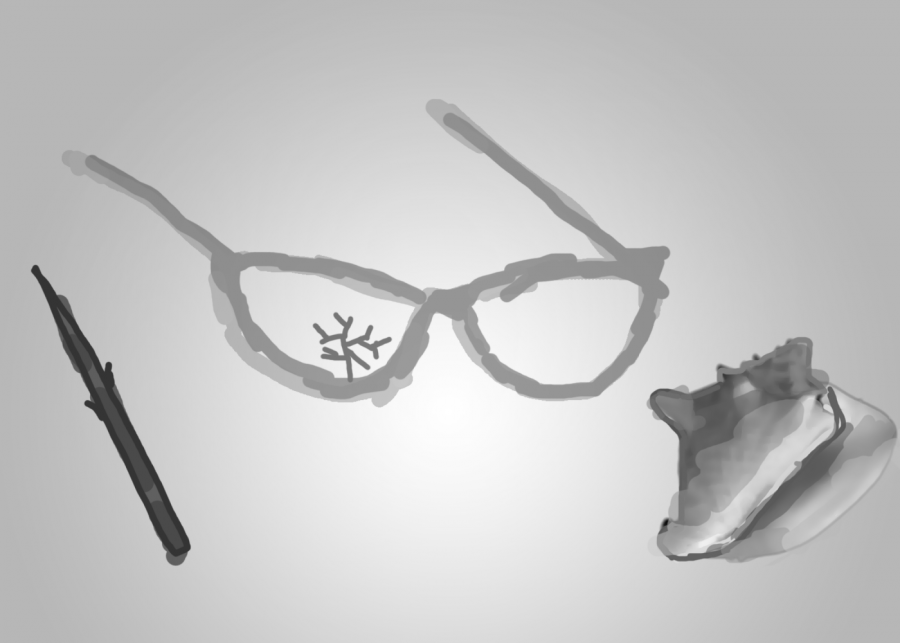
The three symbols of power in Lord of the Flies: the conch, a pair of glasses, and a sharpened stick. A decision to remake the book with the characters recast as girls has drawn controversy.
October 12, 2017
Sequels, remakes, and reboots comprise over forty of the movies released or to be released in 2017, a lackluster year so far for Hollywood, producing historically low summer box office numbers. With the controversy of 2016’s Ghostbusters in recent memory, Warner Bros.’s announcement of an all-female Lord of the Flies in August came at a focal point for many controversial issues in Hollywood.
The remake is still in early production with no set release date, screenplay, or cast but will be written and directed by long-standing writing-directing pair Scott McGehee and David Siegel whose most recent work includes 2012’s “What Maisie Knew”.
Translated to film in 1963 and 1990 with male casts, the book depicts a group of British schoolboys deserted on an uninhabited island who descend into a chaos without any power structures.
In an interview with Deadline, Siegel expressed intentions to remain faithful to the events of the book and justified the all-female cast saying that “taking the opportunity to tell it in a way it hasn’t been told before, with girls rather than boys, is that it shifts things in a way that might help people see the story anew. It breaks away from some of the conventions, the ways we think of boys and aggression.”
Though a film that breaks conventions and tells a story from a new angle usually excites me, Siegel and McGehee need to walk an impossibly narrow line to justify an all-female remake.
The directors do not seem concerned with capturing nostalgia to turn a profit. With the 1990 film adaptation garnering no critical acclaim and ranking 85th in domestic box office out of its year’s movies and an original source material more commonly associated with an English classroom than the silver screen, the remake lacks the usual Hollywood recipe for financial success.
But pure creative intentions do not justify a remake. A remake should respect its source material and accomplish something that it could not have done as an original film, but if Siegel stands by his words that he “wants to do a very faithful […] adaptation of the book,” changing the genders of characters without changing the characters themselves will add little to previous adaptations of the book aside from introducing the shock value of girls being violent and savage.
Whether the film intends to or not, the all-female Lord of the Flies remake sets a precedent for how the movie industry approaches female leads and female representation in general. Though having girls who break traditional female stereotypes seems to break convention, having female leads whose personalities and dynamics were created for boys reinforces the idea that leads and strong characters should be masculine.
There is nothing wrong with female characters having traditionally masculine traits, but when female leads consistently fall into this trope, casting female leads might be little more than token representation. The strength of any character should not be defined by how similar they are to the standard male action hero.
Leads or powerful characters who deviate from the standard hero, whether by gender, race, sexuality or any other demographic, must derive strength from their unique experiences and different backgrounds rather than conform to the traits of a traditional male character. Characters with underrepresented backgrounds that embrace their differences not only make their films more compelling by adding new, unique possibilities to their narratives and dynamics but also justify more minority representation in both casting and production to more accurately depict their distinctions.
The directors’ faith to the source material and the potential of an all-female cast are mutually exclusive. The Lord of the Flies remake must rewrite its female characters as female characters. I cannot say for certain what this entails, but if Siegel and McGehee, two middle-aged men, can accurately depict the nuanced differences between an all-female and all-male Lord of the Flies and capture the intricacies of the interpersonal relationships of preteen girls, it will truly be a tour de force.
This piece was originally published in the pages of the Winged Post on October 12, 2017.