


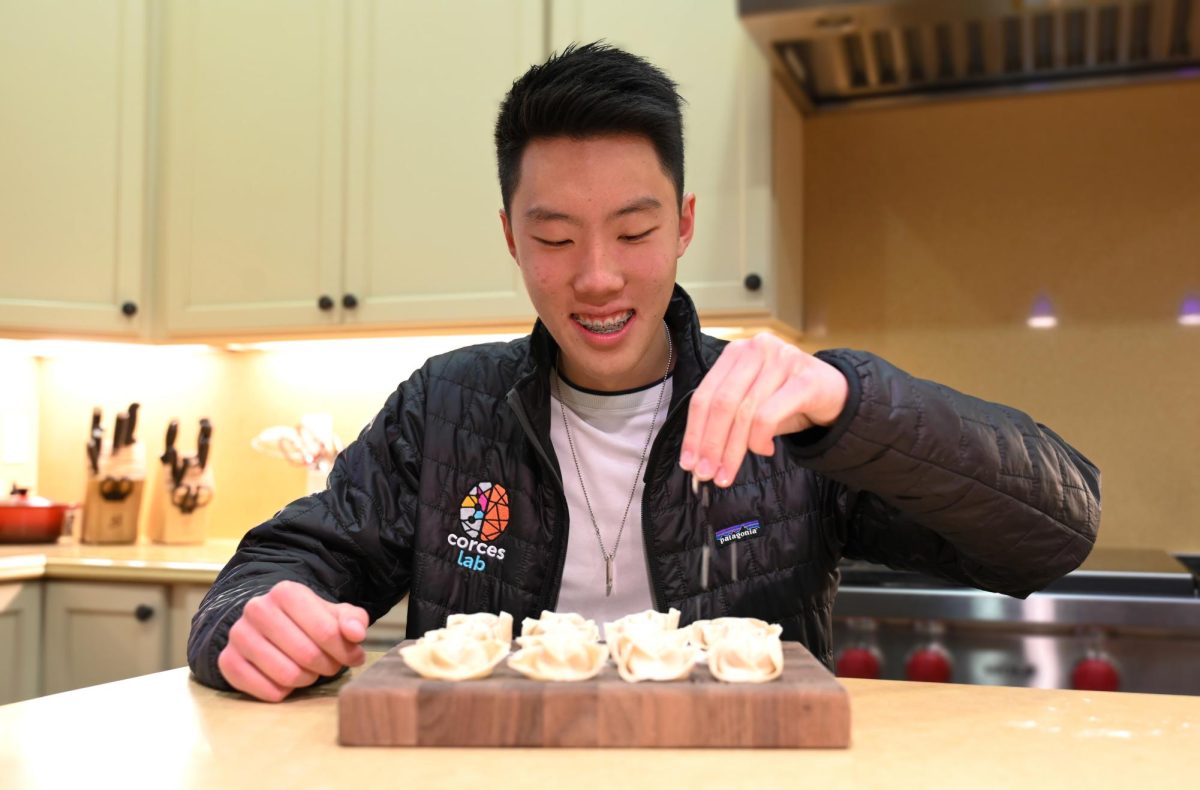
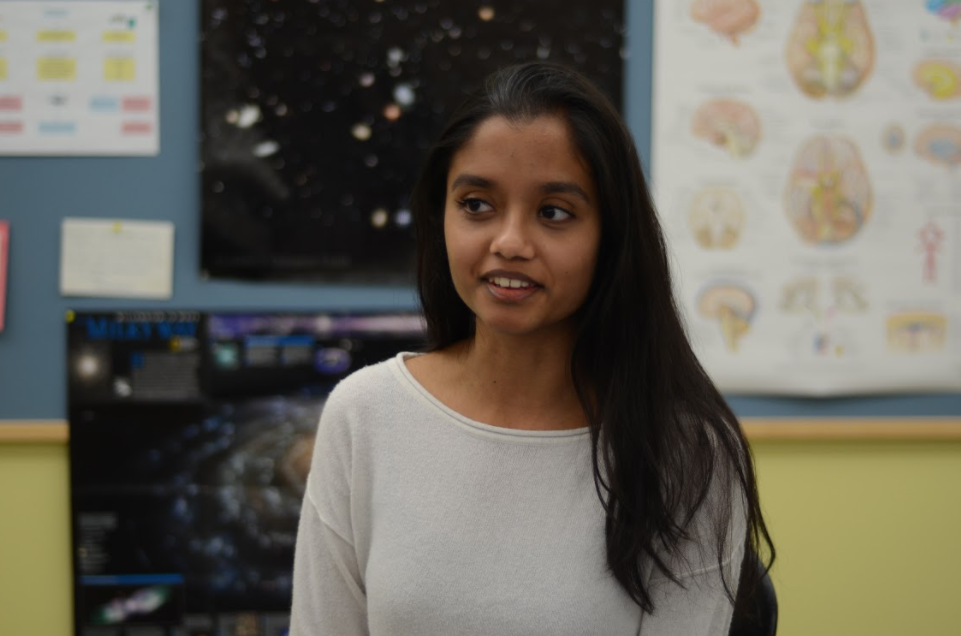
![“I wasn't discouraged by some of the obstacles we faced. I learned a lot from the leadership. I found that different people need different ways of receiving feedback — you can't [just] tell them to do something and expect the best. [Some] people needed more incentive. A large part of my role was to figure out what worked for everyone and to figure out how to lead all these separate individuals as a team,” Suhana Bhandare (’26) said.](https://harkeraquila.com/wp-content/uploads/2026/06/SuhanaBhandare_JasmineHansra-1-1200x798.jpg)
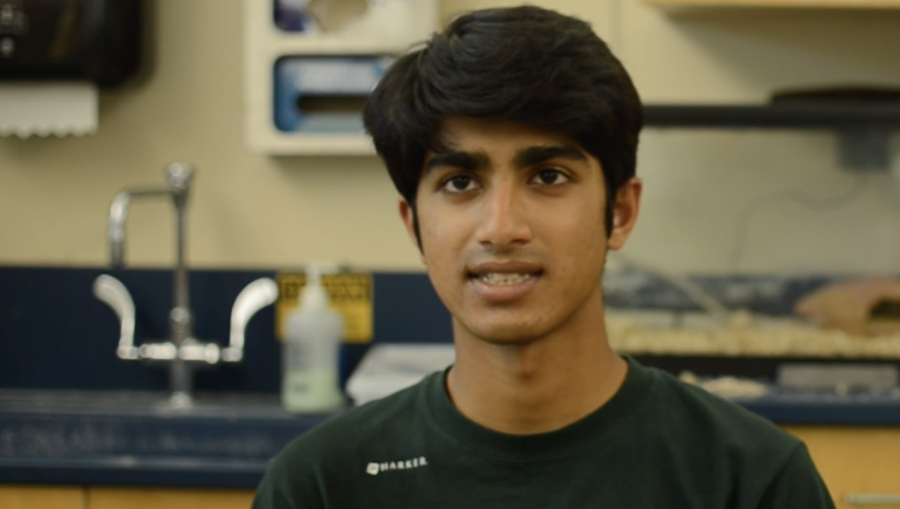
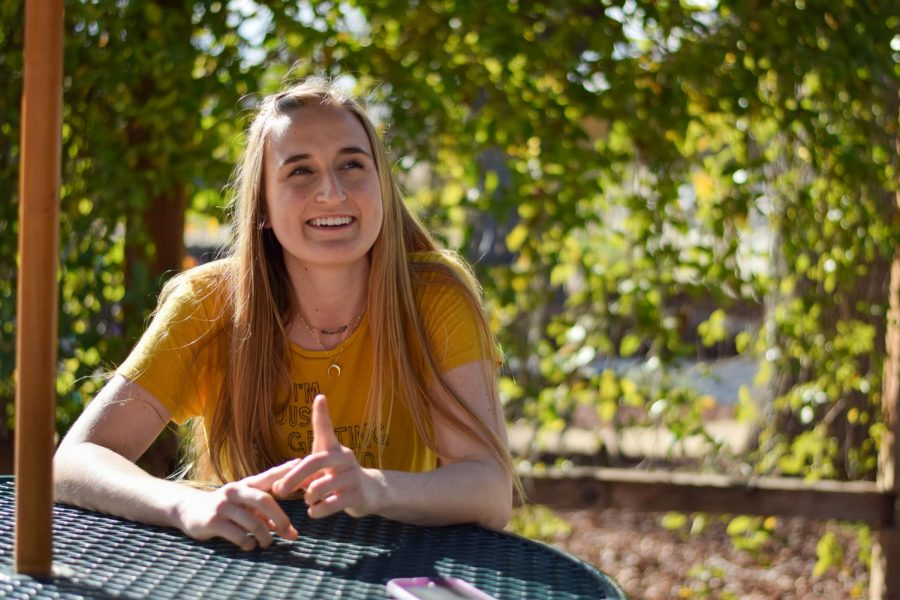
![“This is actually from Randy Pausch Randy P. Brick: ‘Walls are there for a reason. You have to show how much you want to overcome them.’ You have to show how much you want something. That's what I've always been able to do with tennis, Link Crew and getting that internship [with Kushy Baby]. It’s important pushing through that — getting around that brick wall, climbing over it or clawing through it,” Yash Sachdeva (’26) said.](https://harkeraquila.com/wp-content/uploads/2026/05/YashSachdeva_RamBatchu-copy-1200x1002.jpg)


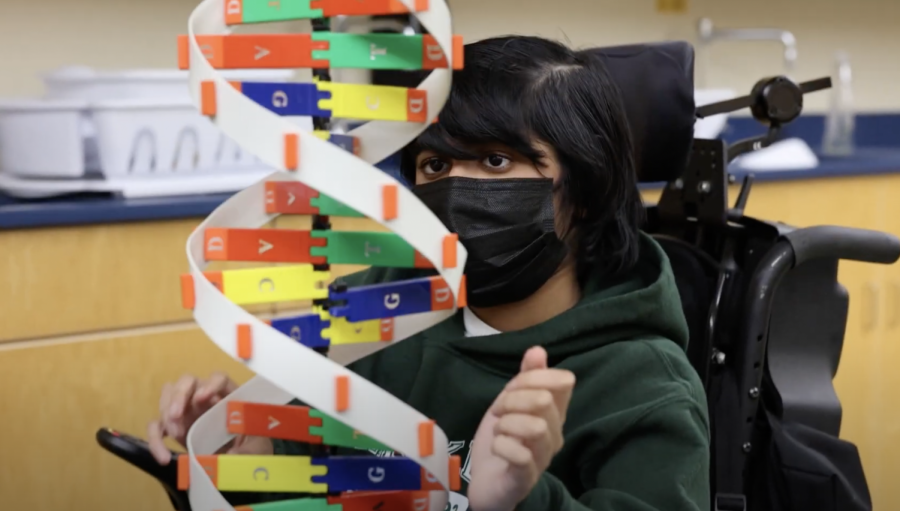
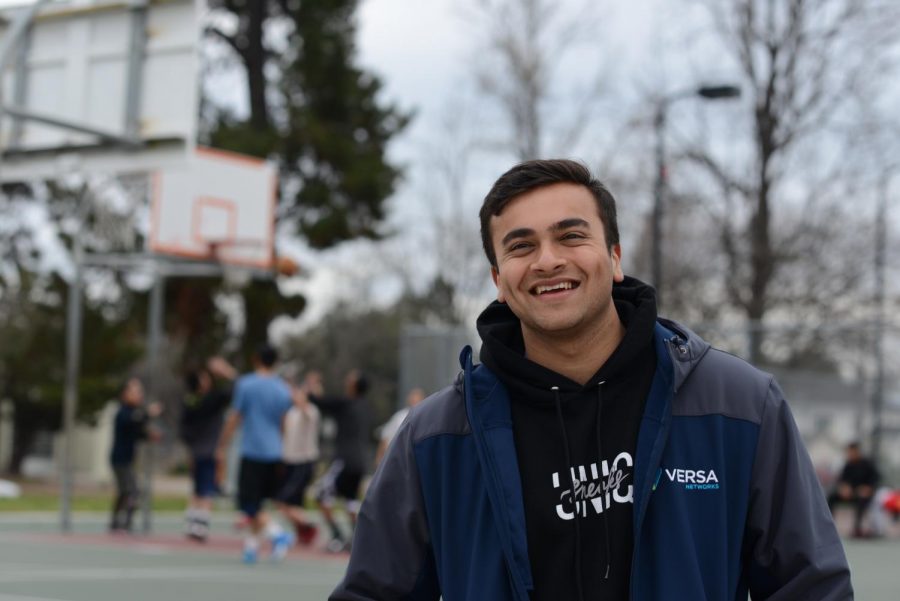
![“[Building nerf blasters] became this outlet of creativity for me that hasn't been matched by anything else. The process [of] making a build complete to your desire is such a painstakingly difficult process, but I've had to learn from [the skills needed from] soldering to proper painting. There's so many different options for everything, if you think about it, it exists. The best part is [that] if it doesn't exist, you can build it yourself," Ishaan Parate said.](https://harkeraquila.com/wp-content/uploads/2022/08/DSC_8149-900x604.jpg)
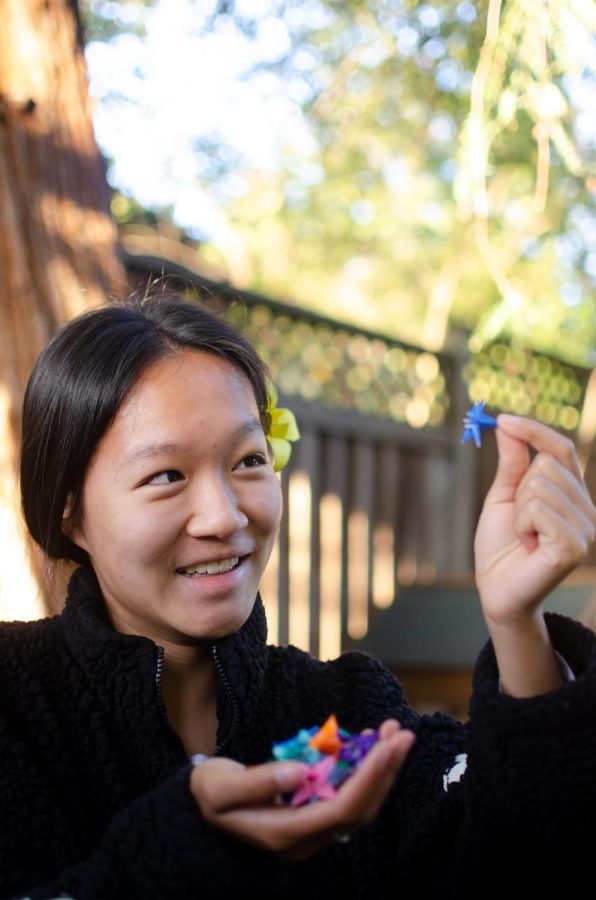
![“When I came into high school, I was ready to be a follower. But DECA was a game changer for me. It helped me overcome my fear of public speaking, and it's played such a major role in who I've become today. To be able to successfully lead a chapter of 150 students, an officer team and be one of the upperclassmen I once really admired is something I'm [really] proud of,” Anvitha Tummala ('21) said.](https://harkeraquila.com/wp-content/uploads/2021/07/Screen-Shot-2021-07-25-at-9.50.05-AM-900x594.png)
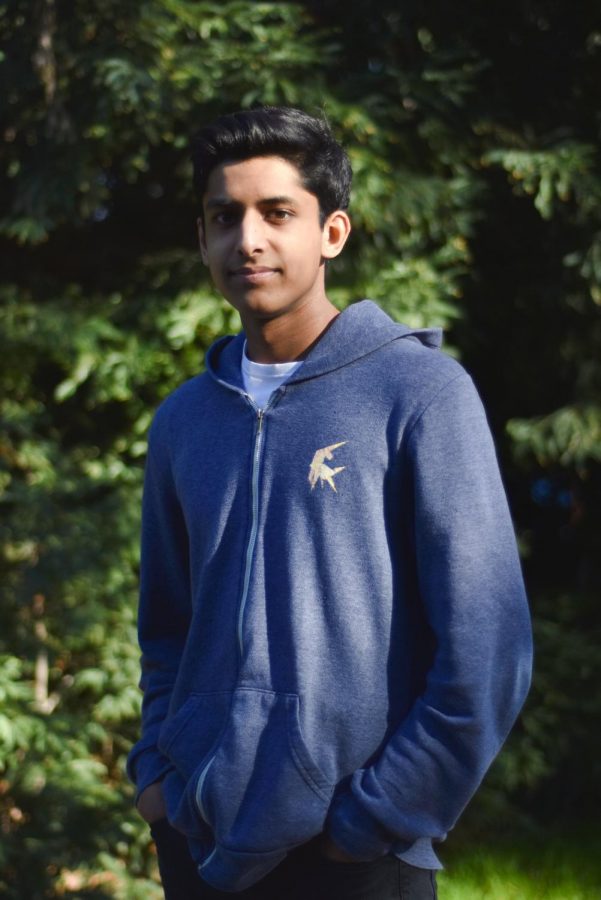

![“I think getting up in the morning and having a sense of purpose [is exciting]. I think without a certain amount of drive, life is kind of obsolete and mundane, and I think having that every single day is what makes each day unique and kind of makes life exciting,” Neymika Jain (12) said.](https://harkeraquila.com/wp-content/uploads/2017/06/Screen-Shot-2017-06-03-at-4.54.16-PM.png)
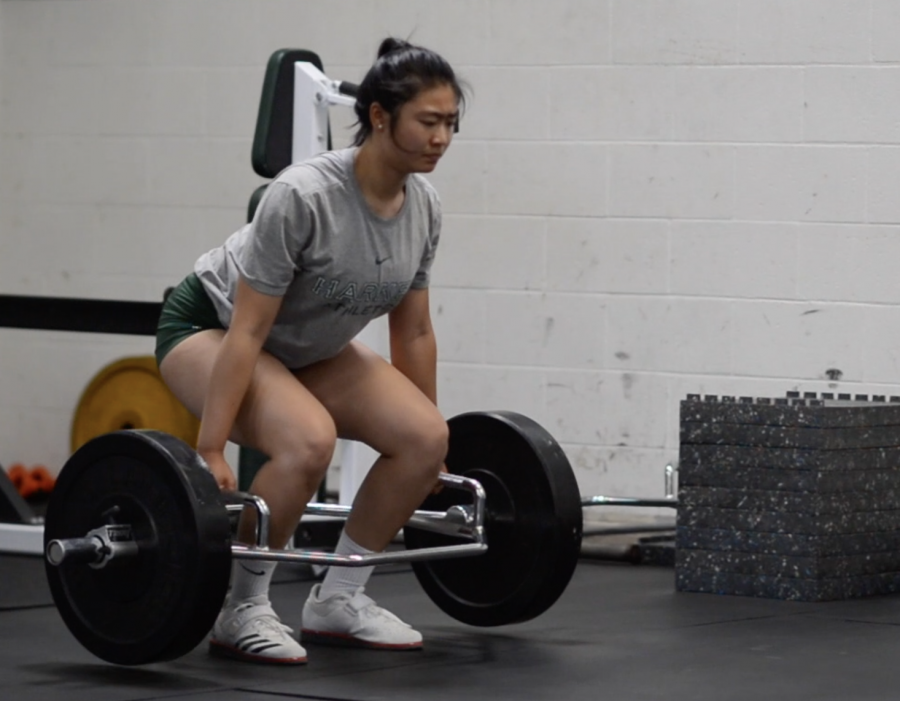

![“My slogan is ‘slow feet, don’t eat, and I’m hungry.’ You need to run fast to get where you are–you aren't going to get those championships if you aren't fast,” Angel Cervantes (12) said. “I want to do well in school on my tests and in track and win championships for my team. I live by that, [and] I can do that anywhere: in the classroom or on the field.”](https://harkeraquila.com/wp-content/uploads/2018/06/DSC5146-900x601.jpg)
![“[Volleyball has] taught me how to fall correctly, and another thing it taught is that you don’t have to be the best at something to be good at it. If you just hit the ball in a smart way, then it still scores points and you’re good at it. You could be a background player and still make a much bigger impact on the team than you would think,” Anya Gert (’20) said.](https://harkeraquila.com/wp-content/uploads/2020/06/AnnaGert_JinTuan_HoHPhotoEdited-600x900.jpeg)
![“I'm not nearly there yet, but [my confidence has] definitely been getting better since I was pretty shy and timid coming into Harker my freshman year. I know that there's a lot of people that are really confident in what they do, and I really admire them. Everyone's so driven and that has really pushed me to kind of try to find my own place in high school and be more confident,” Alyssa Huang (’20) said.](https://harkeraquila.com/wp-content/uploads/2020/06/AlyssaHuang_EmilyChen_HoHPhoto-900x749.jpeg)


Humans of Harker: Bows, bridges and boba
Channeling self-expression through music, Lucas Chen inspires and encourages the musical community
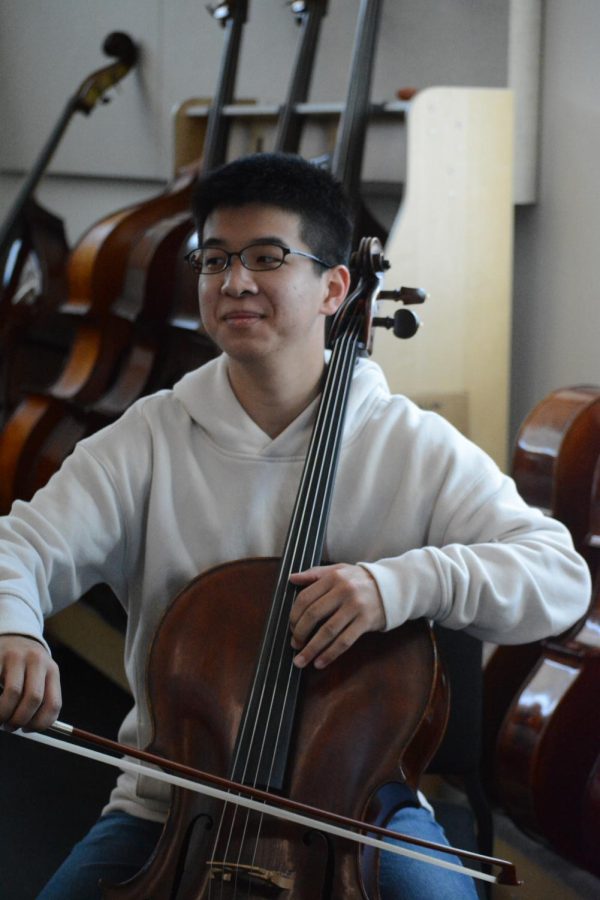
“Compared to taking a test at school, cellos are difficult to quantify. If you get a good grade at school, then that’s that good grade. But if you’re playing the cello, you can’t give yourself a number grade, so there’s always things that you can work on and you’re always hearing different things that you can change,” Lucas Chen (12) said.
Clasping the bow of his cello, Lucas Chen (12) recalls bowing the instrument’s strings gently and beginning to perform his worries away, note after note. Every note is a worry gone, a stress gone, a weight lifted from his shoulders. Every worry gone is confidence, faith and a powerful amount of love for cello gained.
For the past 11 years, cello has factored into many aspects of Lucas’s life, both at Harker and in extracurriculars. As the co-president of Harker’s Tri-M Honor Society and an avid member of the Palo Alto Chamber Orchestra as well as Young Chamber Musicians, Lucas devotes endless hours to music everyday.
“[The cello] is a very expressive instrument,” Lucas said. “For example, [on] a piano, you just hit a key, [whereas] there are so many different ways that you can customize the way you play [on a cello]. You can change the sound, [or] you can change where you’re hitting the note.”
Lucas originally started off as a pianist in first grade but later focused on cello and, more recently, realized that the latter instrument had become his one escape from reality.
“If I’m tired of one thing, I use the other one as a break,” Lucas said. “If I’m tired of studying, then I practice the cello as a break. Likewise, if I’m getting physically tired, and I need to do something that’s less physically demanding, then I switch over and study.”
Lucas took the musical experience he gained from playing piano to grow as a cello player. As a child, he set both short and long term instrumental goals. Though he found cello’s initial learning curve rather steep, he continued to play, focusing on reaching a more advanced level of musicianship, which created a rough patch for him toward the start of his cellist career.
“Cello is one of those instruments where it’s extremely hard to start, but once you get your footing, it’s much easier because you have to build the technique to play the instrument,” Lucas said. “A lot of that is slow, very meticulous practice that is difficult to handle at a young age, so it was mostly grappling with how do I maintain interest in this instrument, while all I do is do a bunch of pretty boring exercises.”
Lucas maintains a positive outlook on continual self-improvement in cello. His dedication to cello shines through both on and off the stage, whether it’s during rehearsals in the comfort of his own home, or on the stage in front of hundreds and hundreds of people.
“Compared to taking a test at school, cellos are difficult to quantify,” Lucas said. “If you get a good grade at school, then that’s that good grade. But if you’re playing the cello, you can’t give yourself a number grade, so there’s always things that you can work on and you’re always hearing different things that you can change.”
This drive toward continuous self-improvement permeates Lucas’s impact on the music community, as well. Instrumental music teacher and orchestra director Dr. David Hart, who has worked with Lucas since his freshman year, notes his strong work ethic.
“There was a very strong cello section when [Lucas] was a freshman, some very strong upperclassmen and they had very strong personalities,” Dr. Hart said. “He came in and he was in awe, it seemed, but you could tell he was taking it seriously and soaking it up. I also noticed that he did a lot of work, he practiced, he came prepared and looked up to the upperclassmen.”
Lucas’s hard work and dedication eventually paid off as he was finally able to overcome his childhood stage fright and pursue what he loved without the anxiety of performing getting in his way, with additional help from his musical community.
“It was great to see the amount of support within the musical community and I think that’s been something that motivates me,” Lucas said as he reflected on a nerve-wracking performance back in the summer of 2019. “One of the things I’ve been [working] on is how to perform without letting all of that stage fright get to me.”
Yet, just as Lucas draws strength from his fellow musicians, he also has grown to provide the same encouragement toward them as well. Dr. Hart recalls a now legendary anecdote that occurred during the upper school orchestra’s tour in Hawaii, in which Lucas promised the entire violin section that he would buy them all boba if they did not rush during their performance. The orchestra successfully completed the challenge, and Lucas gave them their reward as promised.
“This quiet, respectful human being who took charge of his own life has grown to take ownership for the whole group, in a kind way,” Dr. Hart said. “It’s easy to want to be overly critical, [but] that is the last thing that happens. It’s a supportive environment where mistakes are celebrated, and yet, we have high expectations and [Lucas] does for himself as well as others. He’s a pillar to me, he’s the rock of the group.”
Close friend Zeel Thakkar (12) met Lucas at a programming summer camp right before junior year. As the only juniors in the class, they formed a bond that remains “indestructible to this day,” according to Zeel. Lucas and Zeel have spent several hours-long facetimes listening to his playing over the years in high school the two have known each other.
“What really stood out to me was Lucas’s dedication to everything that he enjoys,” Zeel said. “I’m endlessly impressed by his work ethic and passion for cello, and how much dedication he puts into it.”
As Lucas looks back on not only his musical, but also academic journey, he reflects on how cello has helped him develop his identity.
“I have no clue where I would be [without cello] because I feel like I would be completely different,” Lucas said. “Frankly, I don’t know what I would be like, because so much of me has [been dedicated] towards playing the cello that I haven’t had those experiences yet.”
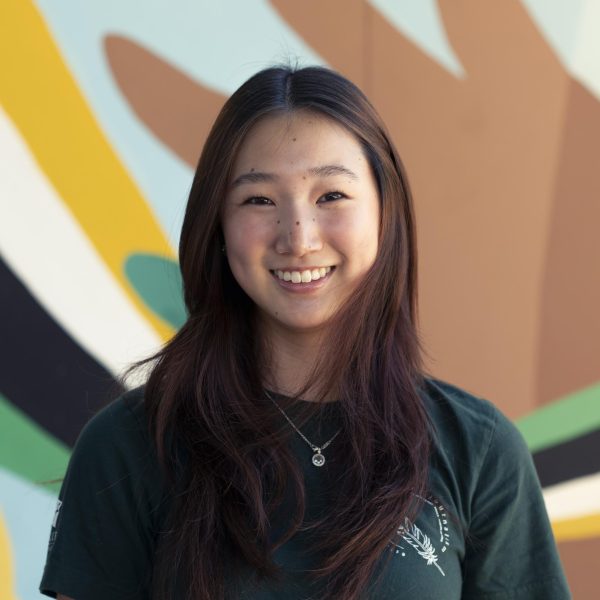
Gemma Chan (12) is a Managing editor for the TALON Yearbook, and this is her fourth year on staff. This year, she looks forward to meeting the new reporters...
Erica Cai (12) is the co-editor-in-chief of Humans of Harker, and this is her fourth year on staff. Her goals in journalism this year are to celebrate...
Katelyn Zhao (12) is the co-editor-in-chief of Humans of Harker, and this is her fourth year on staff. Katelyn aims to honor each of the stories within...