![“I wasn't discouraged by some of the obstacles we faced. I learned a lot from the leadership. I found that different people need different ways of receiving feedback — you can't [just] tell them to do something and expect the best. [Some] people needed more incentive. A large part of my role was to figure out what worked for everyone and to figure out how to lead all these separate individuals as a team,” Suhana Bhandare (’26) said.](https://harkeraquila.com/wp-content/uploads/2026/06/SuhanaBhandare_JasmineHansra-1-1200x798.jpg)


![“This is actually from Randy Pausch Randy P. Brick: ‘Walls are there for a reason. You have to show how much you want to overcome them.’ You have to show how much you want something. That's what I've always been able to do with tennis, Link Crew and getting that internship [with Kushy Baby]. It’s important pushing through that — getting around that brick wall, climbing over it or clawing through it,” Yash Sachdeva (’26) said.](https://harkeraquila.com/wp-content/uploads/2026/05/YashSachdeva_RamBatchu-copy-1200x1002.jpg)






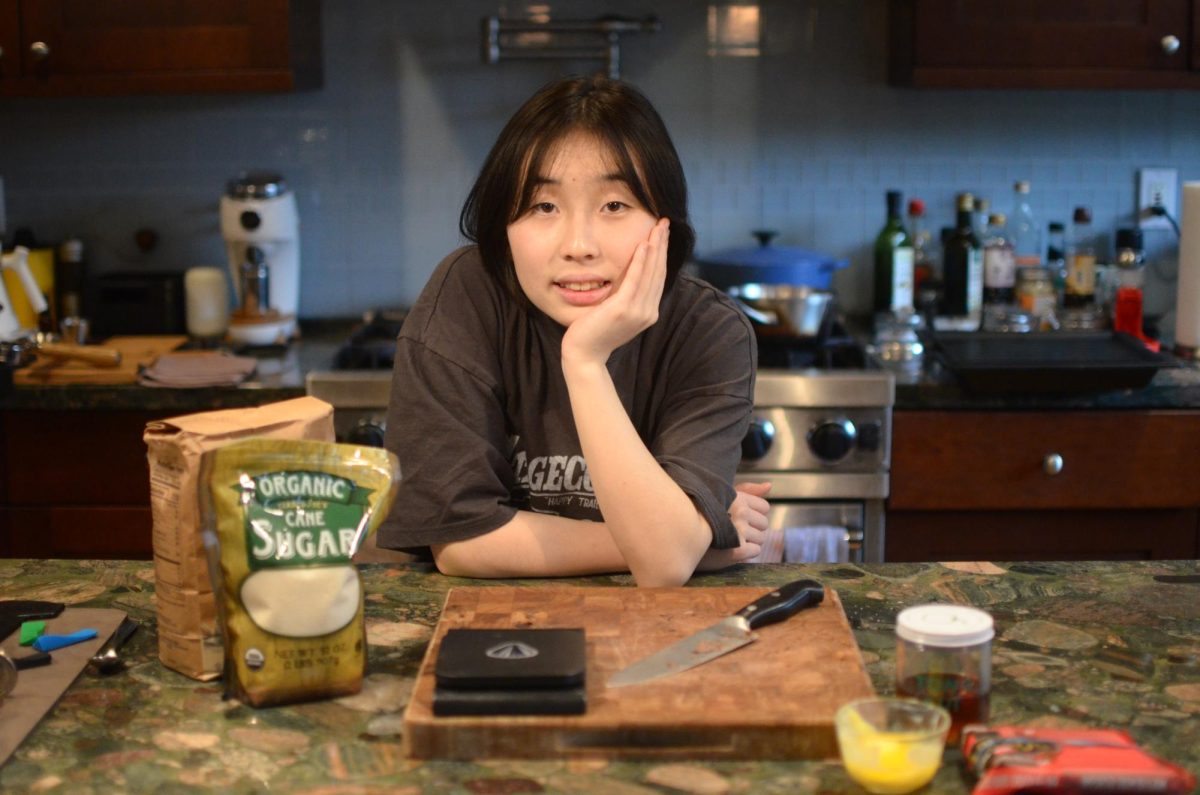


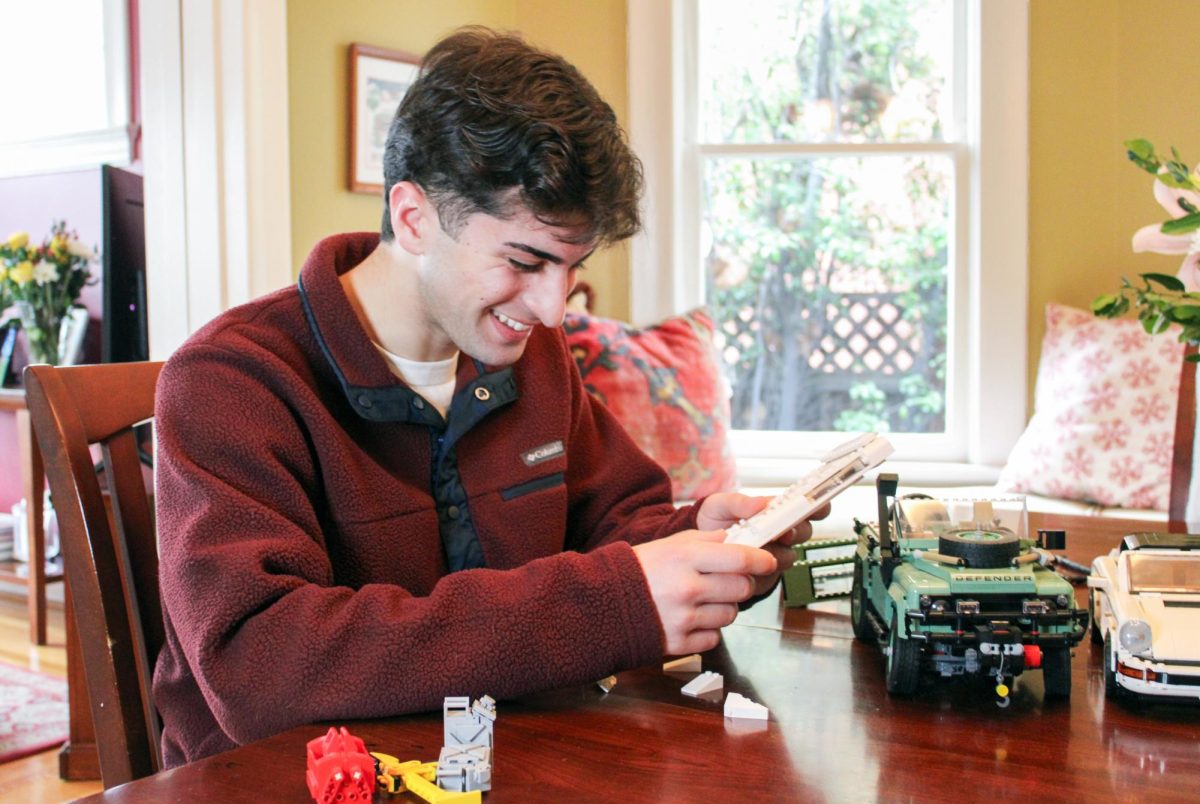





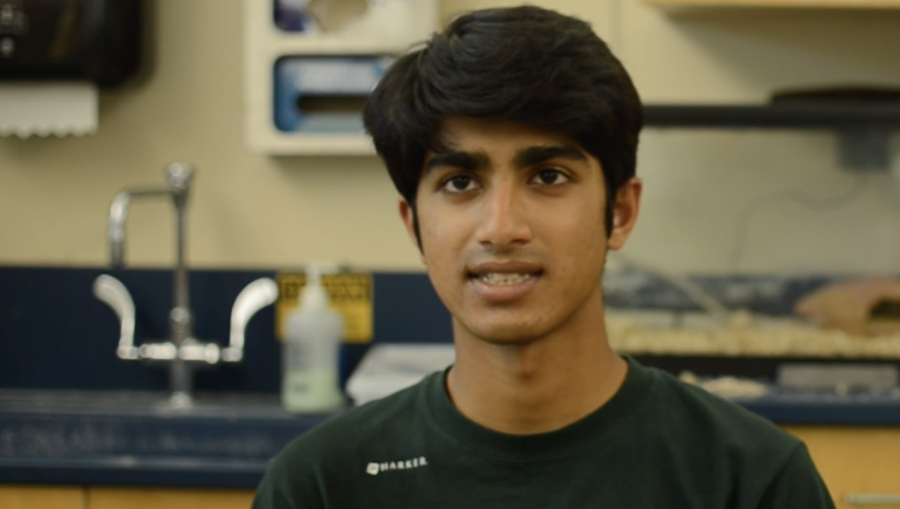
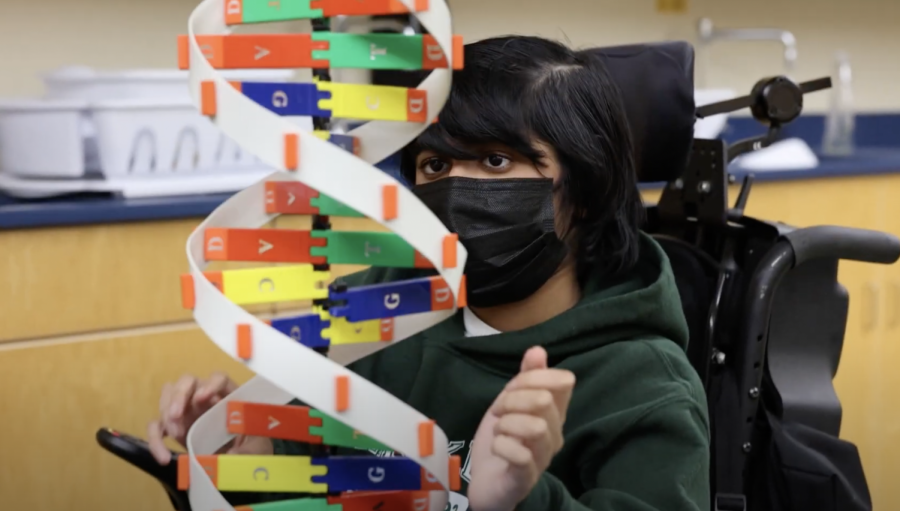
![“[Building nerf blasters] became this outlet of creativity for me that hasn't been matched by anything else. The process [of] making a build complete to your desire is such a painstakingly difficult process, but I've had to learn from [the skills needed from] soldering to proper painting. There's so many different options for everything, if you think about it, it exists. The best part is [that] if it doesn't exist, you can build it yourself," Ishaan Parate said.](https://harkeraquila.com/wp-content/uploads/2022/08/DSC_8149-900x604.jpg)




![“When I came into high school, I was ready to be a follower. But DECA was a game changer for me. It helped me overcome my fear of public speaking, and it's played such a major role in who I've become today. To be able to successfully lead a chapter of 150 students, an officer team and be one of the upperclassmen I once really admired is something I'm [really] proud of,” Anvitha Tummala ('21) said.](https://harkeraquila.com/wp-content/uploads/2021/07/Screen-Shot-2021-07-25-at-9.50.05-AM-900x594.png)







![“I think getting up in the morning and having a sense of purpose [is exciting]. I think without a certain amount of drive, life is kind of obsolete and mundane, and I think having that every single day is what makes each day unique and kind of makes life exciting,” Neymika Jain (12) said.](https://harkeraquila.com/wp-content/uploads/2017/06/Screen-Shot-2017-06-03-at-4.54.16-PM.png)



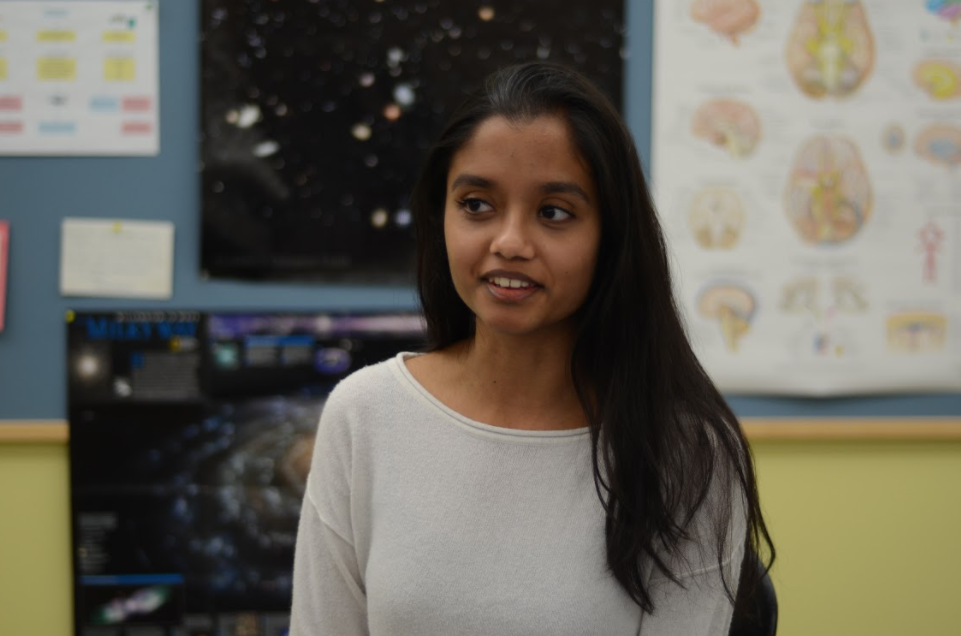


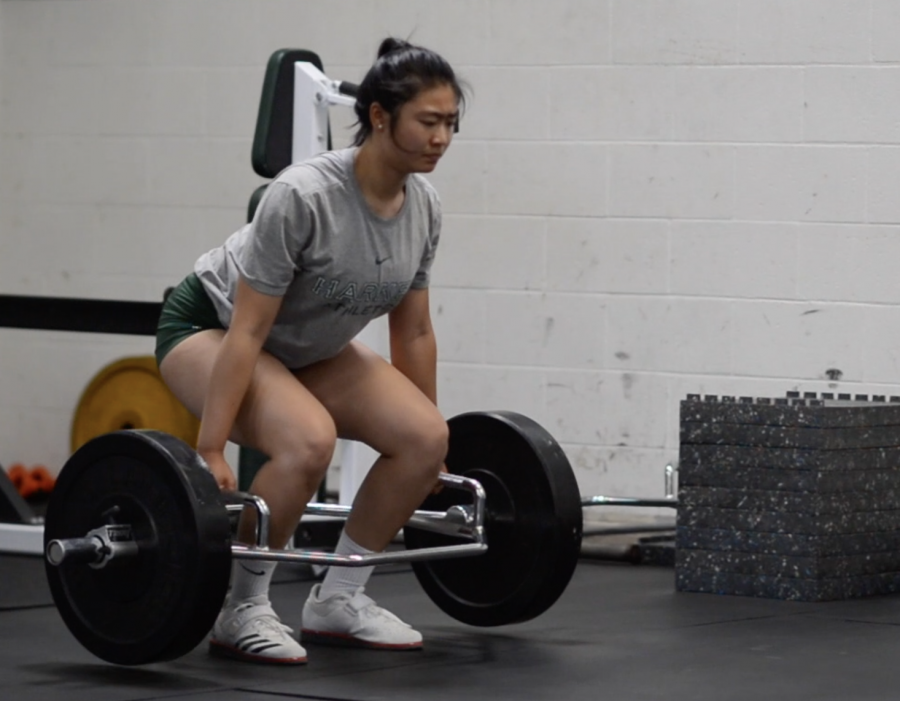

![“My slogan is ‘slow feet, don’t eat, and I’m hungry.’ You need to run fast to get where you are–you aren't going to get those championships if you aren't fast,” Angel Cervantes (12) said. “I want to do well in school on my tests and in track and win championships for my team. I live by that, [and] I can do that anywhere: in the classroom or on the field.”](https://harkeraquila.com/wp-content/uploads/2018/06/DSC5146-900x601.jpg)
![“[Volleyball has] taught me how to fall correctly, and another thing it taught is that you don’t have to be the best at something to be good at it. If you just hit the ball in a smart way, then it still scores points and you’re good at it. You could be a background player and still make a much bigger impact on the team than you would think,” Anya Gert (’20) said.](https://harkeraquila.com/wp-content/uploads/2020/06/AnnaGert_JinTuan_HoHPhotoEdited-600x900.jpeg)

![“I'm not nearly there yet, but [my confidence has] definitely been getting better since I was pretty shy and timid coming into Harker my freshman year. I know that there's a lot of people that are really confident in what they do, and I really admire them. Everyone's so driven and that has really pushed me to kind of try to find my own place in high school and be more confident,” Alyssa Huang (’20) said.](https://harkeraquila.com/wp-content/uploads/2020/06/AlyssaHuang_EmilyChen_HoHPhoto-900x749.jpeg)



The shorter work week: an alternative to the universal basic income
Wikimedia Commons
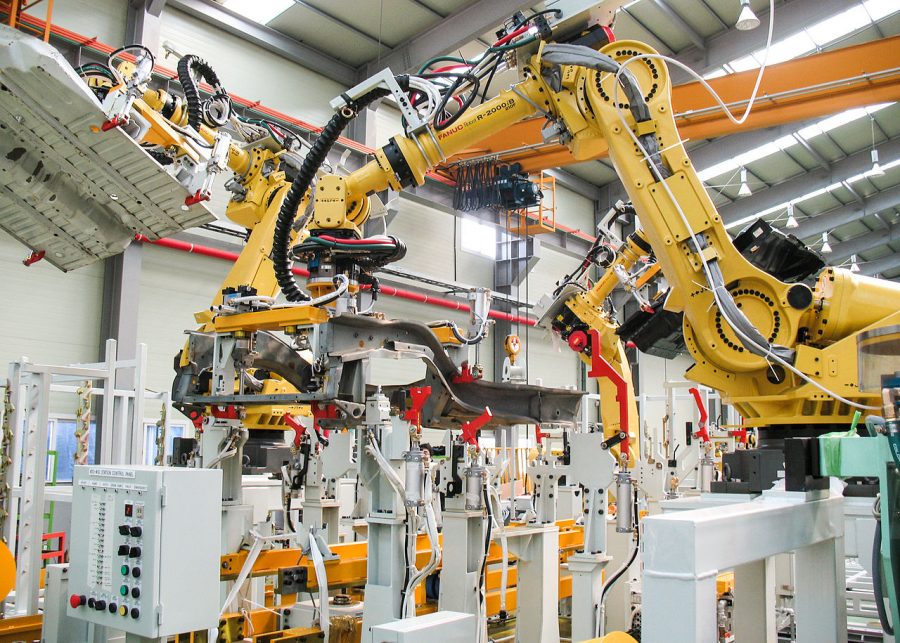
Automation has already transformed the manufacturing industry. Other industries and eventually society will need to adjust as robot becomes smarter and cheaper.
January 13, 2017
McDonald’s first drive-thru restaurant opened in Sierra Vista, Arizona in 1975 allowing diners to order food without leaving their cars. 41 years later, McDonald’s plans to replace all human cashiers from their 14,000 stores with touch-screen kiosks.
Beginning in cities with the highest minimum wages, thousands of jobs could be replaced with automated self-service. Publicly, McDonald’s justified its decision by saying automation makes ordering food more convenient and accurate, accommodates for expanded menu options and improves table service. Automation is not simply a cost-cutting alternative to human work, it is the future for blue collar jobs. Amazon Go, the company’s self-proclaimed “store featuring the world’s most advanced shopping technology”, allows customers to purchase goods without having to wait in checkout lines. It also allows stores to have no cashiers.
Automation does make most customer experiences far more convenient, but the less pleasant logic behind the decision to automate is a simple comparison of cost. Even when paying their employees minimum wage, human work will never be cost effective when compared to machines which cost cents in electricity an hour. Science celebrities and businessmen have already predicted the replacement of lower and middle class jobs with more efficient automated machines, but the issue remains a contested one.
Humanity has experienced revolutionary technological change in the past which threatened popular occupations of the past. The agricultural, industrial and information revolutions widely eliminated hunter-gatherers, skilled individual craftsmen and other eventually dated occupations with “better” jobs accompanied with rising standards of living. Critics of the belief that automation will incite skyrocketing unemployment cite these precedents as evidence that technology only replaces old jobs with better ones.
It is true that the majority of the adult population of every generation has found work despite changing technology. However, this progress has one caveat. Every technological revolution has been accompanied with massive increases in consumption. Increasing consumption to the point where a full workforce is justified alongside an automated one will nearly certainly be impossible unless we expand past the limits of our planet.
Until we find our way to other planets and stars, we need to face the near certainty that much of our current working population will become unnecessary. One of the most discussed solutions is the UBI (universal basic income). With the Economic Security Project, a fund devoted to the experimentation of unconditional income, committing $10 million to exploring the possibilities of the UBI and Prince Edward Island, a province in Canada, already participating through a pilot program of the UBI, the UBI could allow permanently unemployed individuals to live with all necessities while a small portion of individuals would continue to work in occupations irreplaceable by machines.
Fundamentally, the UBI is a response to the reality that less man hours will be needed to sustain society. Nearly all remaining jobs would be intellectual or creative occupations which often require high education levels while automation fulfilled all remaining labor demands. A UBI allows for society to be content while only small portions of its population are able to work and compete for the remaining necessary human work hours.
A UBI can only serve as a temporary band-aid as it only remedies the symptoms of the Automation Revolution. Individuals who would rely on the UBI to live would not have the resources to pursue higher education for them or their children effectively locking themselves out of the workforce while employed individuals would have the income to allow their children to pursue higher education and join the workforce. With no social mobility, there would be little incentive for the employed population to continue to fund the population living off of the UBI. The UBI system decreases the number of human work hours by severely limiting the number of people who would work fulltime while providing a safety net for the rest of the population.
The alternative is simple. Decrease the number of human work hours by decreasing hours worked per individual. Allowing automation to naturally gut occupations without interference would create huge inequalities between people who would continue to work irreplaceable jobs for five day a week and people who wouldn’t have to work at all. By mandating a reduced work week, a larger percentage of the population would remain competitive in the workforce while keeping the sum of work hours low enough where our level of consumptions would not become unsustainable with automation.
In response to the new demand for higher education, occupations in education would give people work while not increasing consumption. Automation makes life more convenient opening up more time, and a smaller work week allows individuals to reap the benefits of convenience while providing opportunity for more people to work.
Automation is inevitable. People’s jobs will disappear at no fault to the individual as machines become more efficient and intelligent. Following the same work patterns as people from the companies of the 19th century will be as dated as the jobs automation are replacing. In a rapidly changing economic world, it’s time to consider a new work schedule.