
![“I wasn't discouraged by some of the obstacles we faced. I learned a lot from the leadership. I found that different people need different ways of receiving feedback — you can't [just] tell them to do something and expect the best. [Some] people needed more incentive. A large part of my role was to figure out what worked for everyone and to figure out how to lead all these separate individuals as a team,” Suhana Bhandare (’26) said.](https://harkeraquila.com/wp-content/uploads/2026/06/SuhanaBhandare_JasmineHansra-1-1200x798.jpg)


![“This is actually from Randy Pausch Randy P. Brick: ‘Walls are there for a reason. You have to show how much you want to overcome them.’ You have to show how much you want something. That's what I've always been able to do with tennis, Link Crew and getting that internship [with Kushy Baby]. It’s important pushing through that — getting around that brick wall, climbing over it or clawing through it,” Yash Sachdeva (’26) said.](https://harkeraquila.com/wp-content/uploads/2026/05/YashSachdeva_RamBatchu-copy-1200x1002.jpg)















![“[Building nerf blasters] became this outlet of creativity for me that hasn't been matched by anything else. The process [of] making a build complete to your desire is such a painstakingly difficult process, but I've had to learn from [the skills needed from] soldering to proper painting. There's so many different options for everything, if you think about it, it exists. The best part is [that] if it doesn't exist, you can build it yourself," Ishaan Parate said.](https://harkeraquila.com/wp-content/uploads/2022/08/DSC_8149-900x604.jpg)



![“When I came into high school, I was ready to be a follower. But DECA was a game changer for me. It helped me overcome my fear of public speaking, and it's played such a major role in who I've become today. To be able to successfully lead a chapter of 150 students, an officer team and be one of the upperclassmen I once really admired is something I'm [really] proud of,” Anvitha Tummala ('21) said.](https://harkeraquila.com/wp-content/uploads/2021/07/Screen-Shot-2021-07-25-at-9.50.05-AM-900x594.png)







![“I think getting up in the morning and having a sense of purpose [is exciting]. I think without a certain amount of drive, life is kind of obsolete and mundane, and I think having that every single day is what makes each day unique and kind of makes life exciting,” Neymika Jain (12) said.](https://harkeraquila.com/wp-content/uploads/2017/06/Screen-Shot-2017-06-03-at-4.54.16-PM.png)

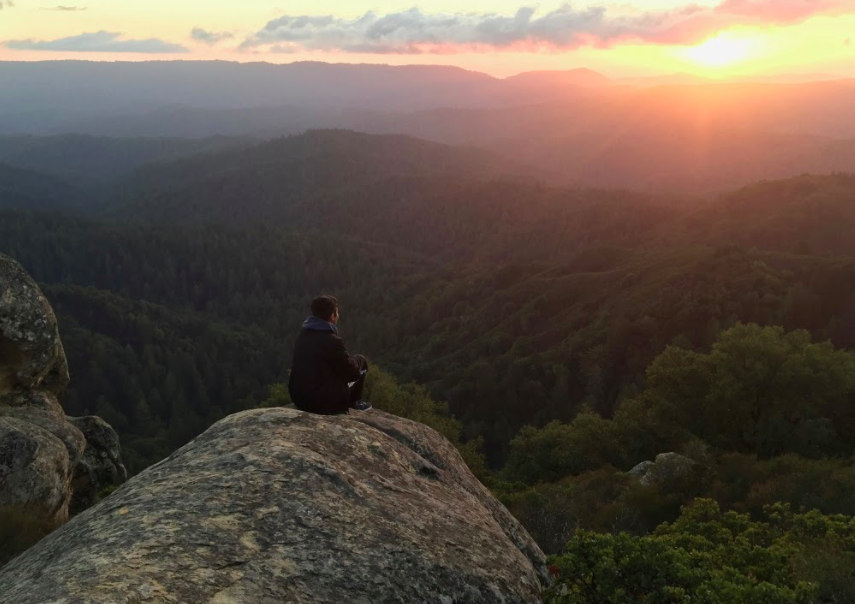






![“My slogan is ‘slow feet, don’t eat, and I’m hungry.’ You need to run fast to get where you are–you aren't going to get those championships if you aren't fast,” Angel Cervantes (12) said. “I want to do well in school on my tests and in track and win championships for my team. I live by that, [and] I can do that anywhere: in the classroom or on the field.”](https://harkeraquila.com/wp-content/uploads/2018/06/DSC5146-900x601.jpg)
![“[Volleyball has] taught me how to fall correctly, and another thing it taught is that you don’t have to be the best at something to be good at it. If you just hit the ball in a smart way, then it still scores points and you’re good at it. You could be a background player and still make a much bigger impact on the team than you would think,” Anya Gert (’20) said.](https://harkeraquila.com/wp-content/uploads/2020/06/AnnaGert_JinTuan_HoHPhotoEdited-600x900.jpeg)

![“I'm not nearly there yet, but [my confidence has] definitely been getting better since I was pretty shy and timid coming into Harker my freshman year. I know that there's a lot of people that are really confident in what they do, and I really admire them. Everyone's so driven and that has really pushed me to kind of try to find my own place in high school and be more confident,” Alyssa Huang (’20) said.](https://harkeraquila.com/wp-content/uploads/2020/06/AlyssaHuang_EmilyChen_HoHPhoto-900x749.jpeg)



Zika virus spreads across the globe
March 3, 2016
The Center for Disease Control and Prevention (CDC) has identified over one million global cases of the Zika virus, and as of Feb. 17th, 82 cases were confirmed in the United States.
The Zika Virus first appeared in Africa, initially isolated in the Zika Forest of Uganda in 1948. Since then, the mosquito-borne disease has surfaced in Southeast Asia and the Pacific Islands. From May 2015, the virus has spread rapidly in Central and South America, Mexico and the Caribbean.
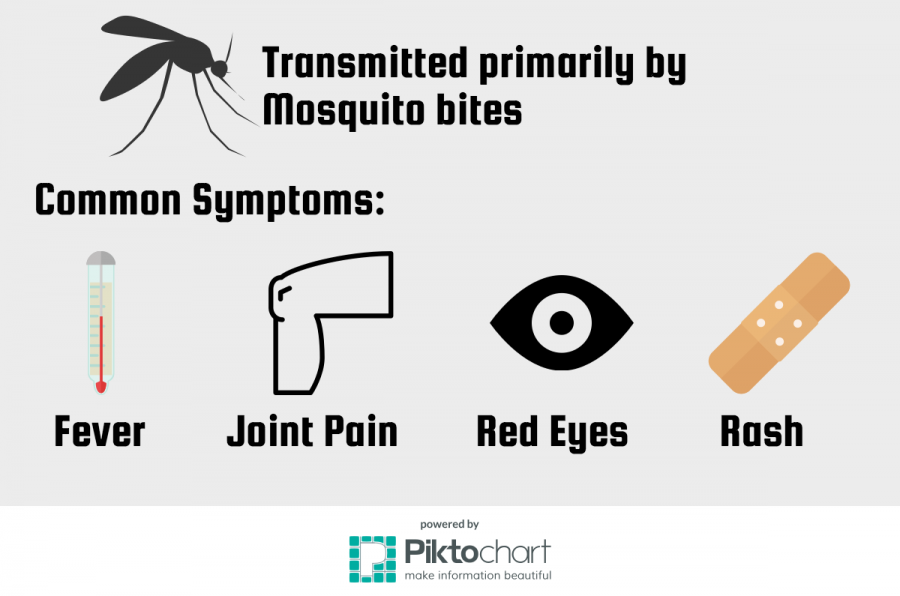
While occasionally transferred through sexual intercourse or blood transfusion, the virus is normally transmitted via the bite of an infected Aedes mosquito.
Virginia Tabios, senior nurse at the Palo Alto Medical Foundation’s Santa Clara Clinic, suggested ways for those traveling to Zika-infected regions to avoid the mosquitoes that carry the disease.
“Travelers to these areas should stay in screened or air conditioned rooms especially during the times when the mosquitoes are most active– during the early morning hours and around sunset,” Tabios advised. “Wearing long pants, long sleeves, shoes, hats and insect repellent at all times is imperative.”
This is the first Zika Virus outbreak of such a large scale. According to the CDC, 180 instances were reported in 2007 in Micronesia, and in 2012, the virus infected around one-tenth of the population in French Polynesia.
All cases reported in the United States are travel-associated. Those affected by the disease left the country and returned before the onset of the symptoms, which take 2-12 days to manifest.
There is no cure for the disease, yet in most instances, those infected experience either no symptoms or mild ones that last anywhere from a few days to a week. These nominal symptoms include moderate fever, headaches, rashes, muscle and joint aches, irritability and temporary conjunctivitis.
Many students traveled to Zika-infected areas in Mexico and Central America during break. Viveka Saraiya (9), who visited Cancún, Mexico over winter vacation, described her experience interacting with people concerned about the spread of the disease.
“I could tell that people were somewhat scared,” she said. “The virus was a topic of many worried discussions I heard.”
According to the World Health Organization, recent surges of disease in Brazil indicate that the infection may trigger Microcephaly and Guillain Barré Syndrome.
Babies with Microcephaly, a severe birth defect, are born with underdeveloped brains and cannot be cured. During the outbreak in Brazil, many problems in pregnant women with the Zika Virus were reported, including newborns being delivered with Microcephaly. Brazilian scientists are investigating various cases of this disease, but whether or not there is a definitive link between Microcephaly and the Zika Virus is inconclusive.
After the Zika Virus outbreak in Brazil as well the 2013 flare-up in French Polynesia, the number of reported cases of Guillain Barré Syndrome increased. The syndrome is an autoimmune disorder that targets the nervous system, resulting in paralysis. Researchers from health organizations are examining the association between the two illnesses.
The World Health Organization (WHO) is responding to the outbreak by providing Zika-infected countries with resources to manage patients and to contain the disease.
American scientists are currently investigating the effects of the virus to determine what efforts can be made to halt the spread of the infection within the United States.