
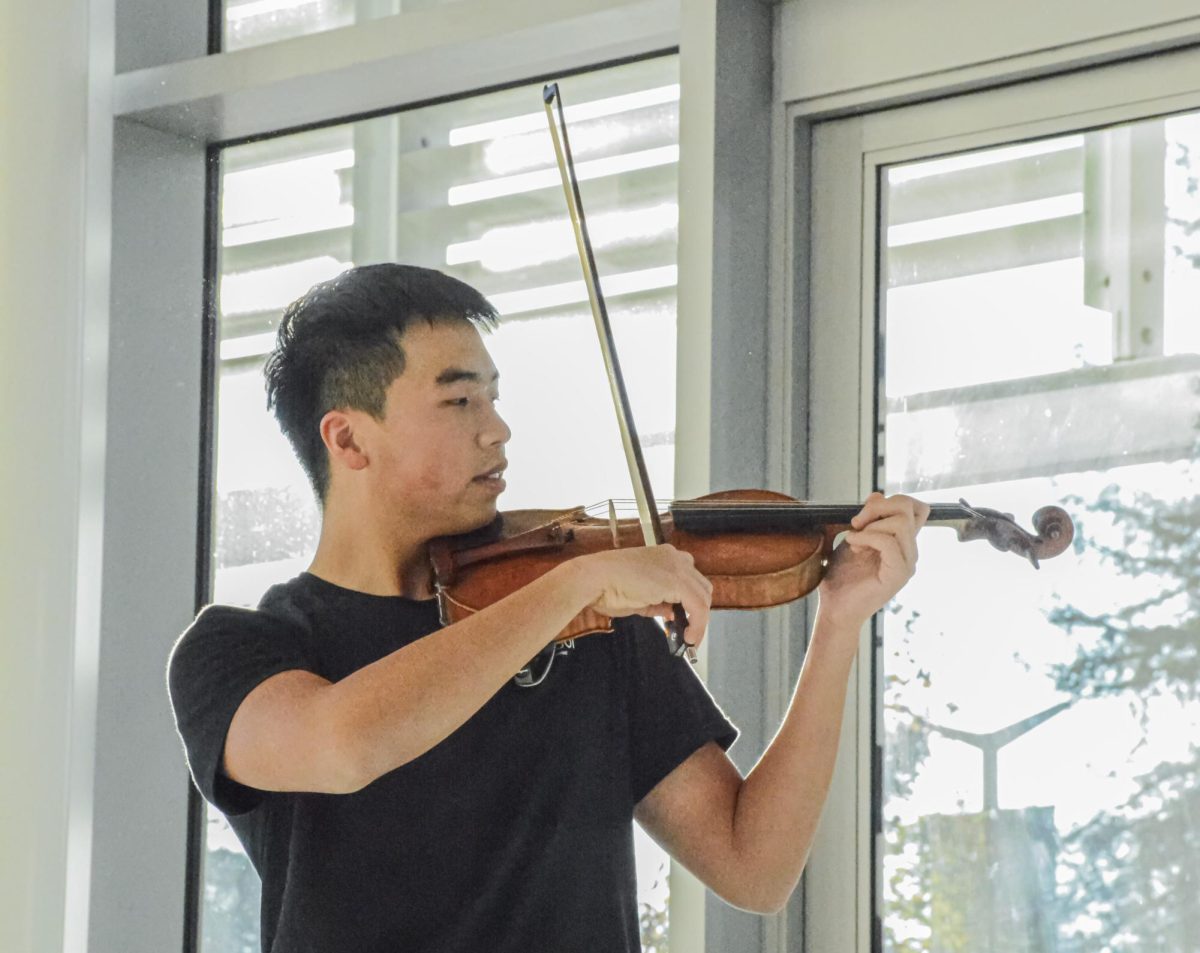
![“I wasn't discouraged by some of the obstacles we faced. I learned a lot from the leadership. I found that different people need different ways of receiving feedback — you can't [just] tell them to do something and expect the best. [Some] people needed more incentive. A large part of my role was to figure out what worked for everyone and to figure out how to lead all these separate individuals as a team,” Suhana Bhandare (’26) said.](https://harkeraquila.com/wp-content/uploads/2026/06/SuhanaBhandare_JasmineHansra-1-1200x798.jpg)

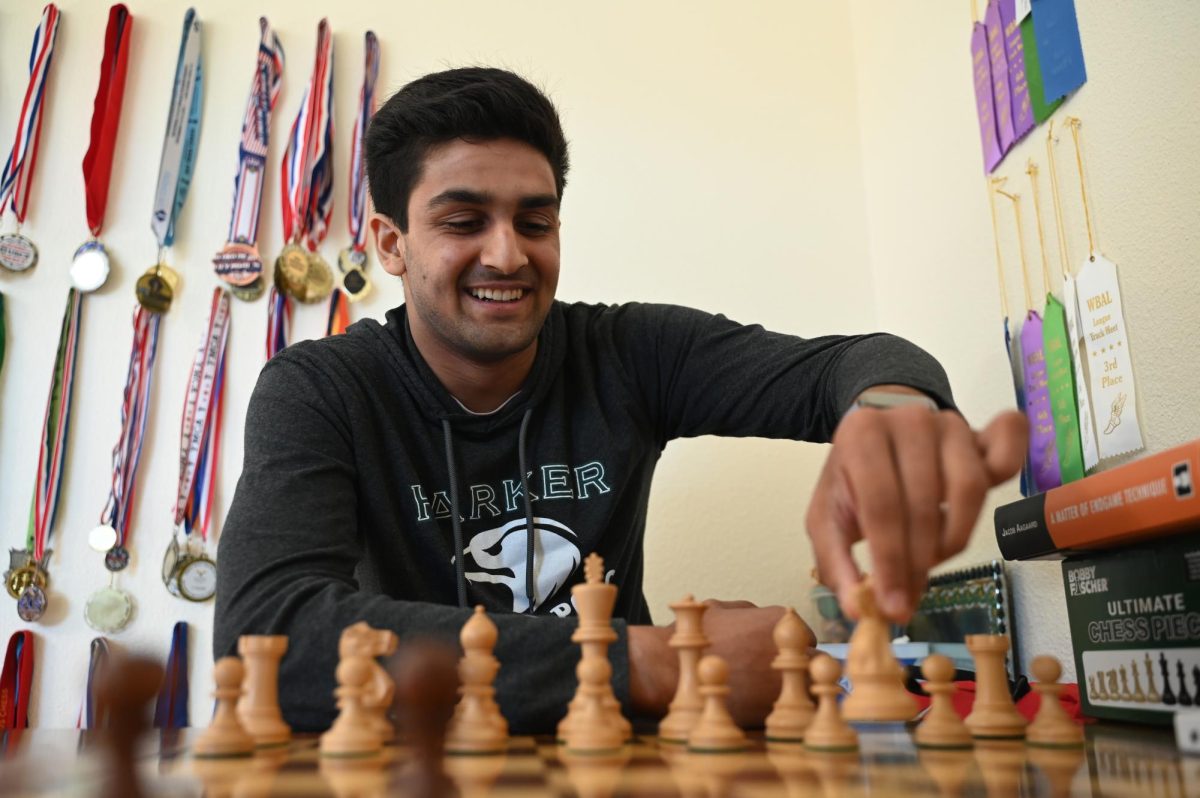
![“This is actually from Randy Pausch Randy P. Brick: ‘Walls are there for a reason. You have to show how much you want to overcome them.’ You have to show how much you want something. That's what I've always been able to do with tennis, Link Crew and getting that internship [with Kushy Baby]. It’s important pushing through that — getting around that brick wall, climbing over it or clawing through it,” Yash Sachdeva (’26) said.](https://harkeraquila.com/wp-content/uploads/2026/05/YashSachdeva_RamBatchu-copy-1200x1002.jpg)








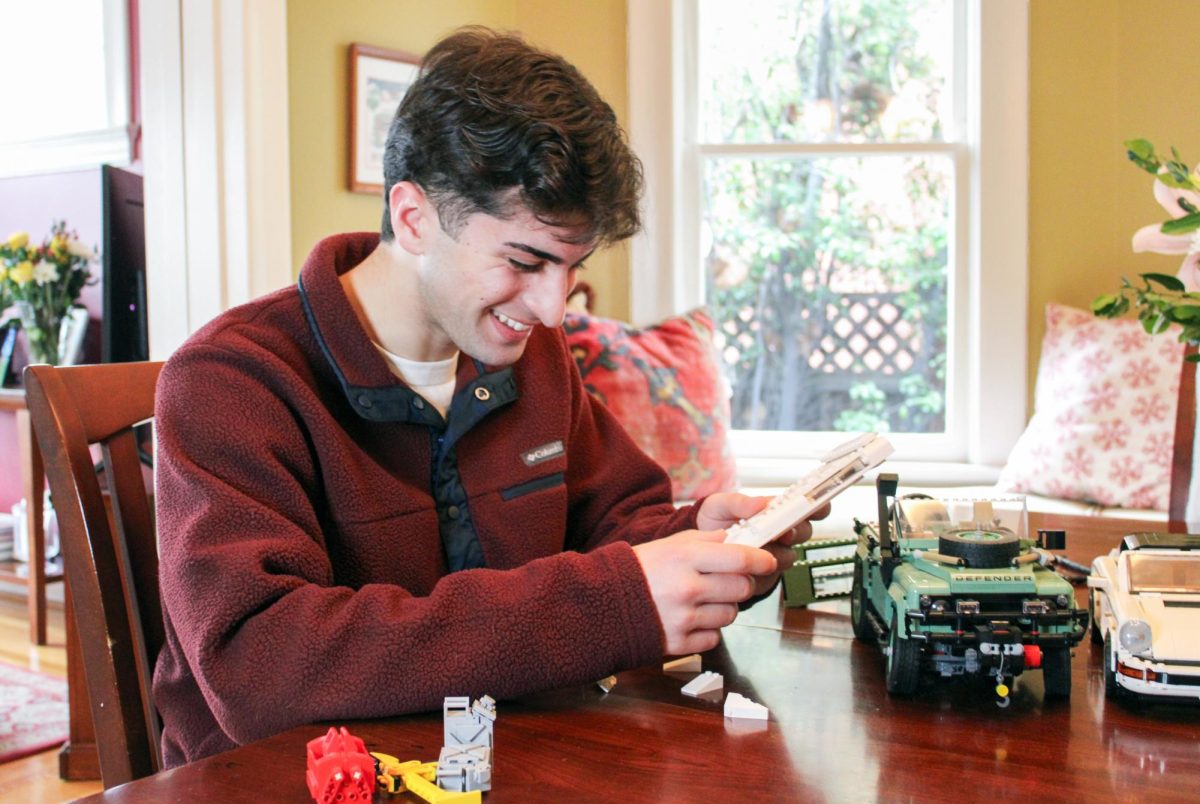


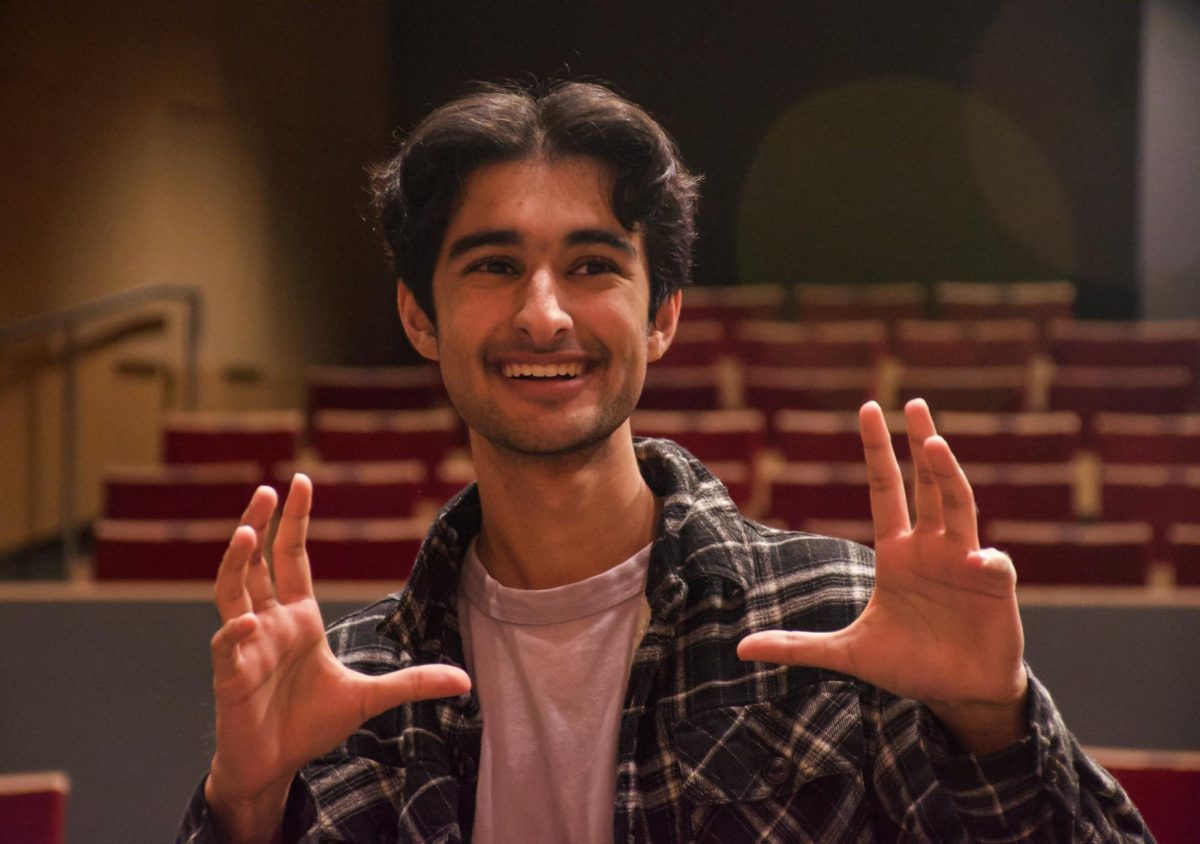


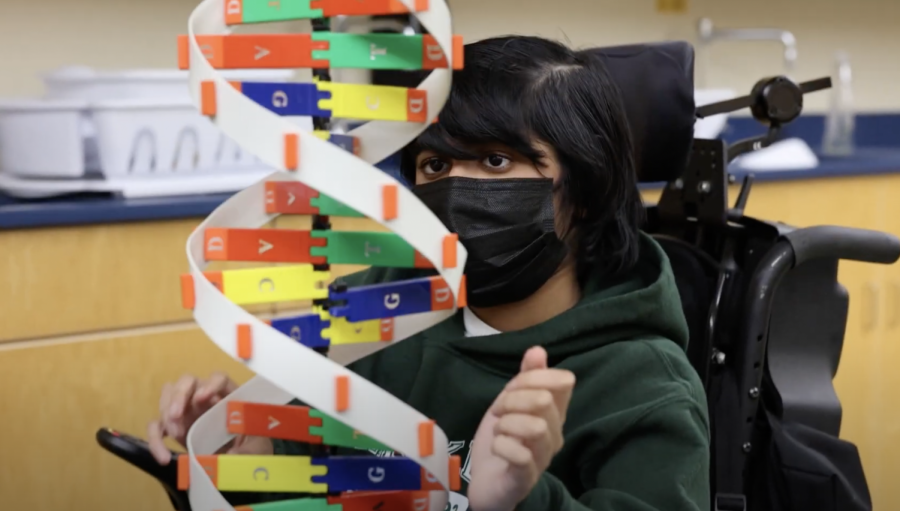
![“[Building nerf blasters] became this outlet of creativity for me that hasn't been matched by anything else. The process [of] making a build complete to your desire is such a painstakingly difficult process, but I've had to learn from [the skills needed from] soldering to proper painting. There's so many different options for everything, if you think about it, it exists. The best part is [that] if it doesn't exist, you can build it yourself," Ishaan Parate said.](https://harkeraquila.com/wp-content/uploads/2022/08/DSC_8149-900x604.jpg)



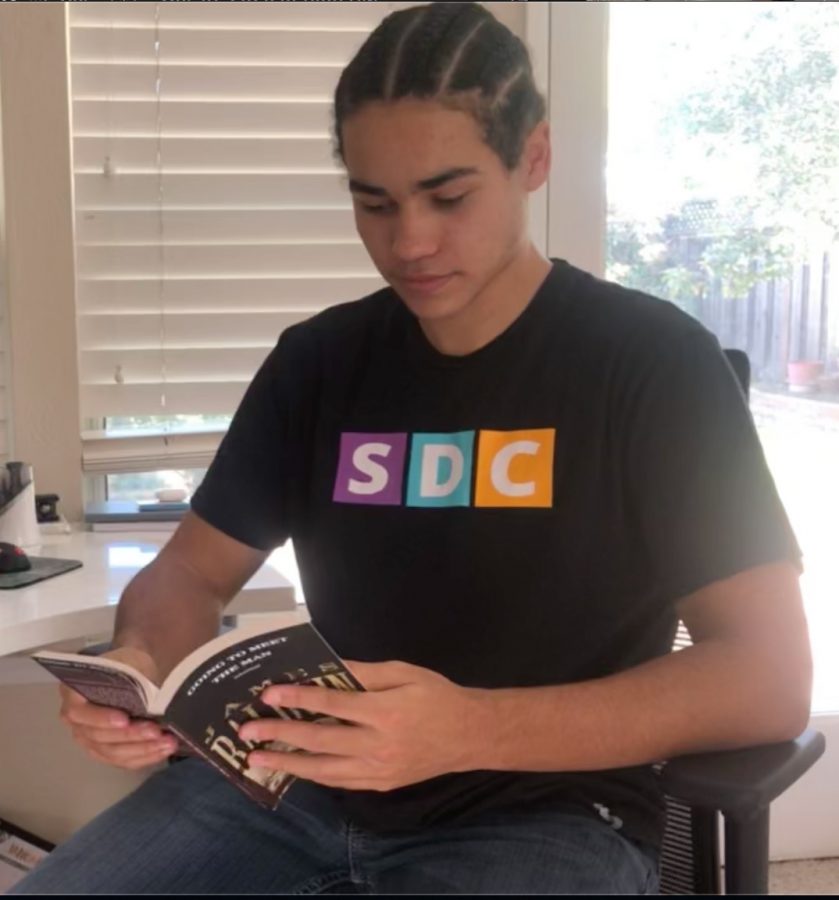
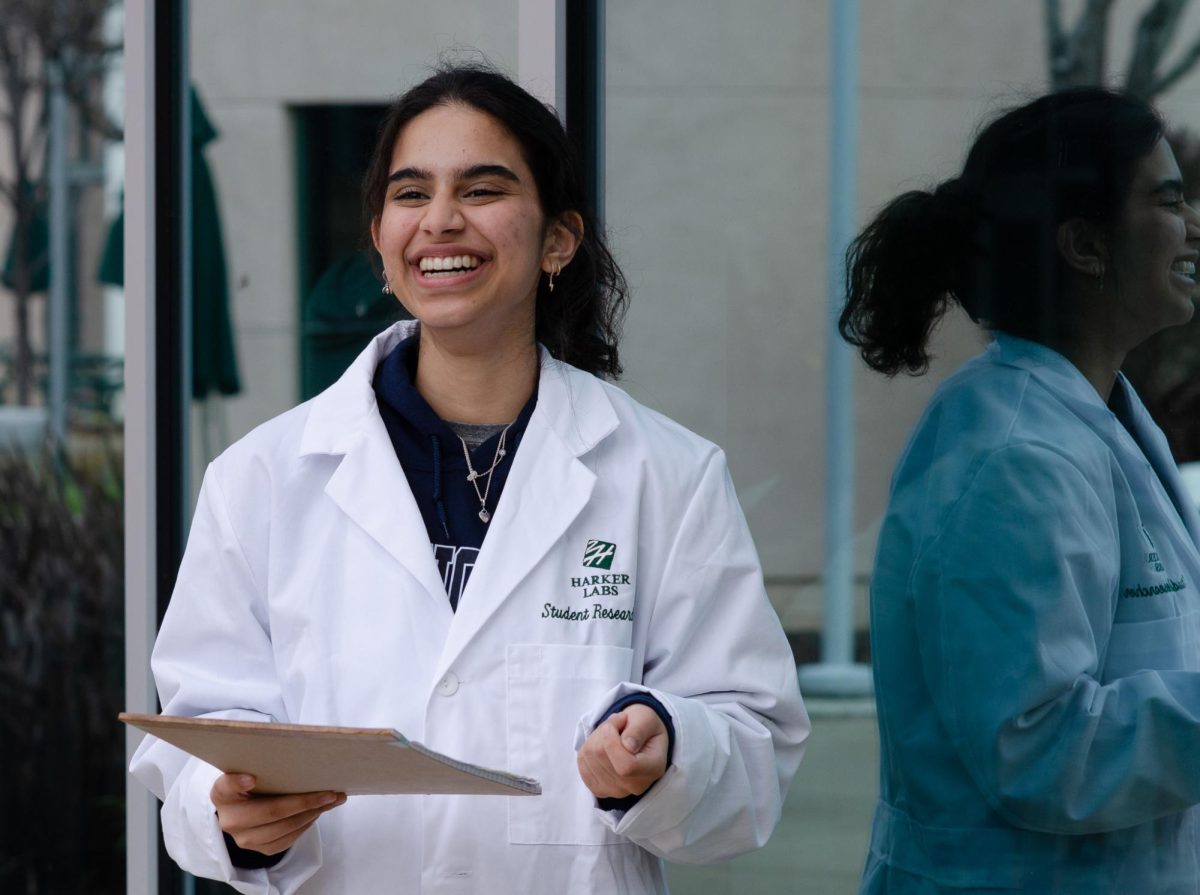
![“When I came into high school, I was ready to be a follower. But DECA was a game changer for me. It helped me overcome my fear of public speaking, and it's played such a major role in who I've become today. To be able to successfully lead a chapter of 150 students, an officer team and be one of the upperclassmen I once really admired is something I'm [really] proud of,” Anvitha Tummala ('21) said.](https://harkeraquila.com/wp-content/uploads/2021/07/Screen-Shot-2021-07-25-at-9.50.05-AM-900x594.png)

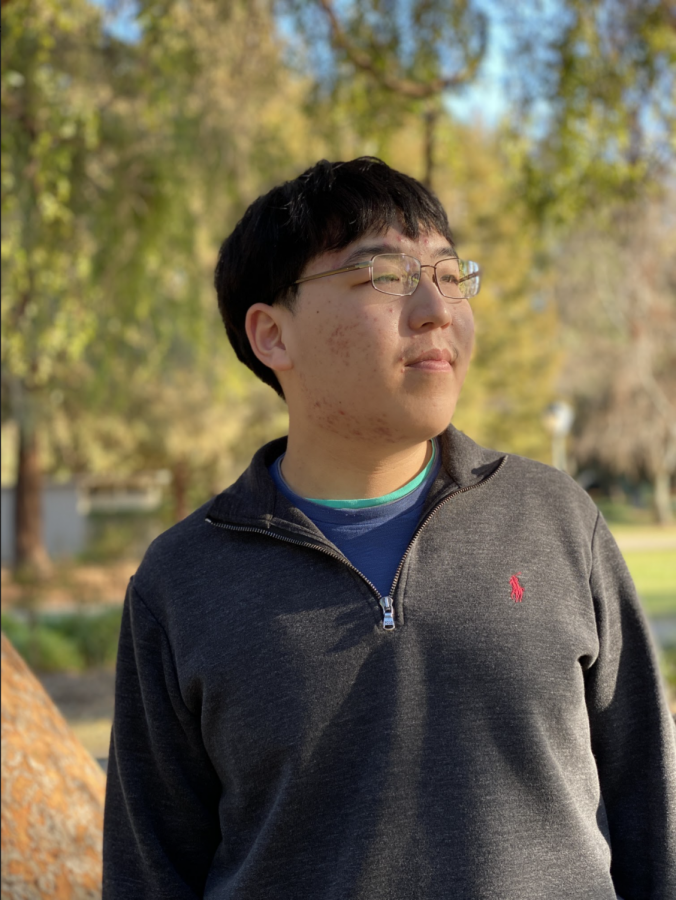





![“I think getting up in the morning and having a sense of purpose [is exciting]. I think without a certain amount of drive, life is kind of obsolete and mundane, and I think having that every single day is what makes each day unique and kind of makes life exciting,” Neymika Jain (12) said.](https://harkeraquila.com/wp-content/uploads/2017/06/Screen-Shot-2017-06-03-at-4.54.16-PM.png)



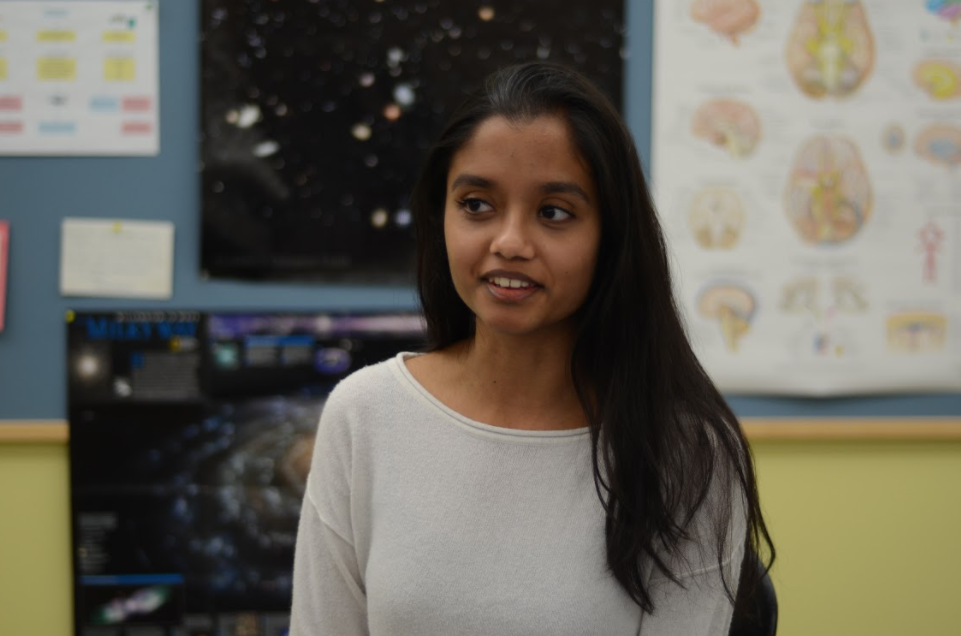


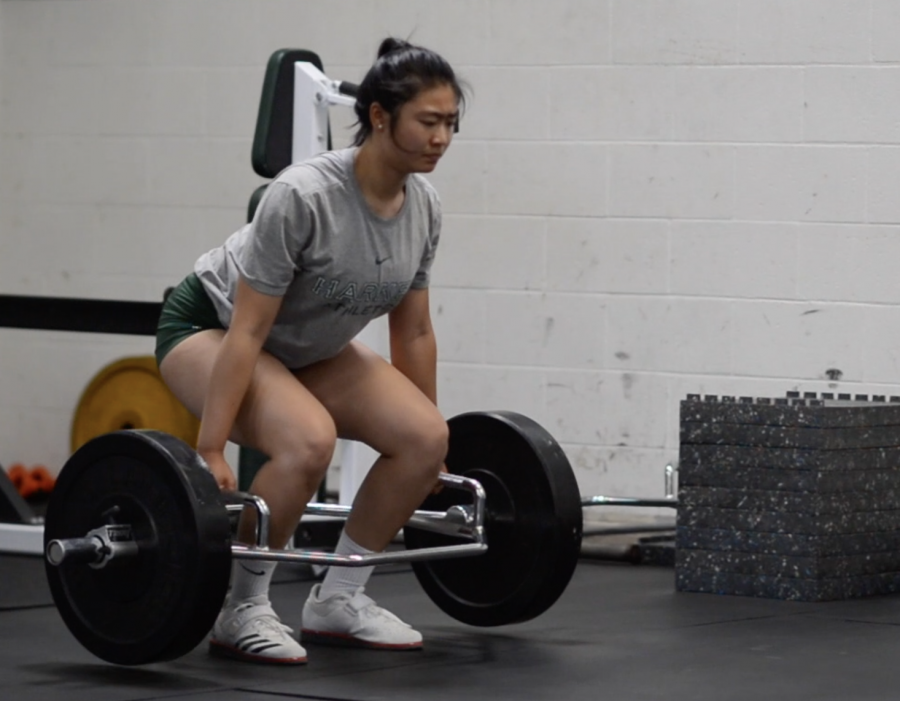

![“My slogan is ‘slow feet, don’t eat, and I’m hungry.’ You need to run fast to get where you are–you aren't going to get those championships if you aren't fast,” Angel Cervantes (12) said. “I want to do well in school on my tests and in track and win championships for my team. I live by that, [and] I can do that anywhere: in the classroom or on the field.”](https://harkeraquila.com/wp-content/uploads/2018/06/DSC5146-900x601.jpg)
![“[Volleyball has] taught me how to fall correctly, and another thing it taught is that you don’t have to be the best at something to be good at it. If you just hit the ball in a smart way, then it still scores points and you’re good at it. You could be a background player and still make a much bigger impact on the team than you would think,” Anya Gert (’20) said.](https://harkeraquila.com/wp-content/uploads/2020/06/AnnaGert_JinTuan_HoHPhotoEdited-600x900.jpeg)

![“I'm not nearly there yet, but [my confidence has] definitely been getting better since I was pretty shy and timid coming into Harker my freshman year. I know that there's a lot of people that are really confident in what they do, and I really admire them. Everyone's so driven and that has really pushed me to kind of try to find my own place in high school and be more confident,” Alyssa Huang (’20) said.](https://harkeraquila.com/wp-content/uploads/2020/06/AlyssaHuang_EmilyChen_HoHPhoto-900x749.jpeg)




What trends have China’s housing market faced for the last few years?
Matthew Goetting (12) swiftly moves his pencil to bubble in the answer. The test which placed Matthew’s team in state finals in the Northern California National Economic Challenge consisted of questions that ranged from AP Economics to esoteric current event topics. Matthew attributes his team’s success in the tournament to his habit of reading the latest news and staying informed.
Whether it be applying his macroeconomics skills to perform an NPV calculation of a company’s balance sheet or scouring Reddit threads on college football transfers, understanding the world around him is a common thread throughout all that Matthew does. He values educating himself as a way to make informed opinions and more effectively contribute to society.
“With a lot of misinformation on social media in general nowadays, we each have a responsibility to stay educated on what the truth is and what’s really going on,” Matthew said. “I always try to interact with both sides, even at Harker, whether it’s reading from different sources about topics or watching podcasts of people debating issues. I’ve always loved challenging myself to hear from both sides.”
One of Matthew’s first ventures into economics began with a Behavioral Economics elective course during his sophomore year. He enjoyed its unique combination of psychology and math, along with its application in modeling real-world interactions. He vividly remembers learning about the decoy effect in class, and later that day, he observed this marketing strategy in action at a local Jamba Juice.
“It’s very satisfying to predict how people are going to behave,” Matthew said. “From econ, I understand a new part of the world and I’m able to, in one way, be more aware of the techniques that people use on me and even defend myself from deceptive marketing.”
Upper school English teacher Susanne Salhab, who has been Matthew’s adviser since freshman year and taught him in AP English Literature his senior year, recognizes Matthew’s diligence in forming insightful perspectives. Although he may not always share his thoughts with those around him, he is constantly engaging and analyzing at a deep level.
“It’s a little bit intellectually lazy for me to think, ‘Someone’s not talking, that means they haven’t done their reading or they don’t have an opinion,’” Salhab said. “Matthew helped me challenge that stance. Just because someone’s not speaking doesn’t mean that they don’t have a committed perspective, it just means that maybe they’re more comfortable listening and formulating their opinions.”
Matthew’s love for learning extends beyond his own academic pursuits — it also inspired him to share his knowledge with younger students. Working with the Kinship, Adoptive and Foster Parent Association (KAFPA) of Santa Clara County, he taught local foster children classes on circuits and gadgets, imparting not only valuable technical skills but also passing on his own sense of curiosity and excitement about the possibilities of innovation.
“Teaching was challenging in the sense that some of the students came from all different kinds of backgrounds,” Matthew said. “There are some kids that are already taking all kinds of robotics and then some came in with very basic minimal knowledge. I got a lot of respect for teaching and learned how to make sure everyone’s needs are met in the classroom.”
His interest in computer hardware technology traces back to middle school. Initially wanting to play video games like Red Dead Redemption 2 and Fortnite with a keyboard and mouse with a higher frame rate, he decided to build his own gaming PC. He spent hours researching the different components and assembling them, an experience that offered him a unique appreciation for technology and the complex circuitry behind it.
Recognizing that not everyone has access to technology and opportunities to learn the intricate details of gadgets, Matthew put together circuit kits and lesson plans for his students. He acknowledges the creative freedom and infinite possibilities that understanding electronics offers.
“You can build anything with circuits — an electronic coffee machine, a robot arm, these are all kinds of things you can do,” Matthew said. “Once you understand the fundamentals, once you learn the basic strategies or techniques, you can build anything you want, design anything you want. And maybe it doesn’t work, then you see why it doesn’t work and you see each version getting better than the previous version, and eventually you will have that robot arm.”
While showcasing academic excellence in the classroom, Matthew also manages to strike a unique balance between studying and having fun with his friends. Close friend Jack Ledford (12), who met Matthew playing football during lunch in lower school, articulates Matthew’s ability to blend serious commitments with lighthearted social interactions.
“Of my friends, he’s more academically focused than some others,” Jack said. “But he’s still there playing football at lunch, and he’s able to balance that really well. Not a lot of people can do it as well as he can. He’s also one of my funniest friends. He might not crack jokes every second, but when he does, I always remember because they’re good.”
Close friend Ryan Barth (12), who met Matthew in fourth grade, also values his friendship with Matthew, recognizing his reserved yet profoundly supportive nature.
“Matthew is quiet, and he’s thoughtful,” Ryan said. “Sometimes it feels like he’s maybe not there but he really is present, he’s caring and even if he’s not talking, he’s just showing it in different ways. He’s super good at keeping me in check.”