



“CLC.” It’s an acronym that has been mentioned throughout the year in school meetings, emails and Schoology posts. But what exactly is the Campus Leadership Coalition, and what role does it play at Harker?
The group, formed under an ASB initiative, brings together the major leadership bodies on campus, like Associated Student Body (ASB), Student Council, Honor Council, Living with Intention, Focus, and Enthusiasm (LIFE) Board, Student Diversity Coalition (SDC), Green Team and Student Activities Board (SAB), to coordinate projects, prevent overlap and promote a shared vision of unity.
The idea stemmed from a simple challenge: many student organizations were working towards similar goals but on separate paths. ASB Secretary Sophia Zhu (11) noted that overlapping events and initiatives revealed the need for a space where leaders could coordinate their efforts.
“ASB felt that something that needed to happen was more consensus among the different leadership groups on campus,” Sophia said. “We could be stepping on each other’s toes and not be aware of it. We felt that creating the CLC would be beneficial to keep us in communication with one another, and to promote transparency within ourselves so we present ourselves as a unified front to the student body.”
ASB held the first CLC retreat to outline shared goals for the year on Aug. 12. Director of Student Organizations Eric Kallbrier, who advises the coalition, noted that the retreat helped set the tone for the months ahead.
“All the student groups gathered and spent the day thinking about what our community does very well and should be highlighted and where there are opportunities for our community to grow,” Kallbrier said. “The enthusiasm around that process, the open-minded discussions and the critical thinking about our community was really inspiring and really says a lot about the student leaders that the student body elected.”
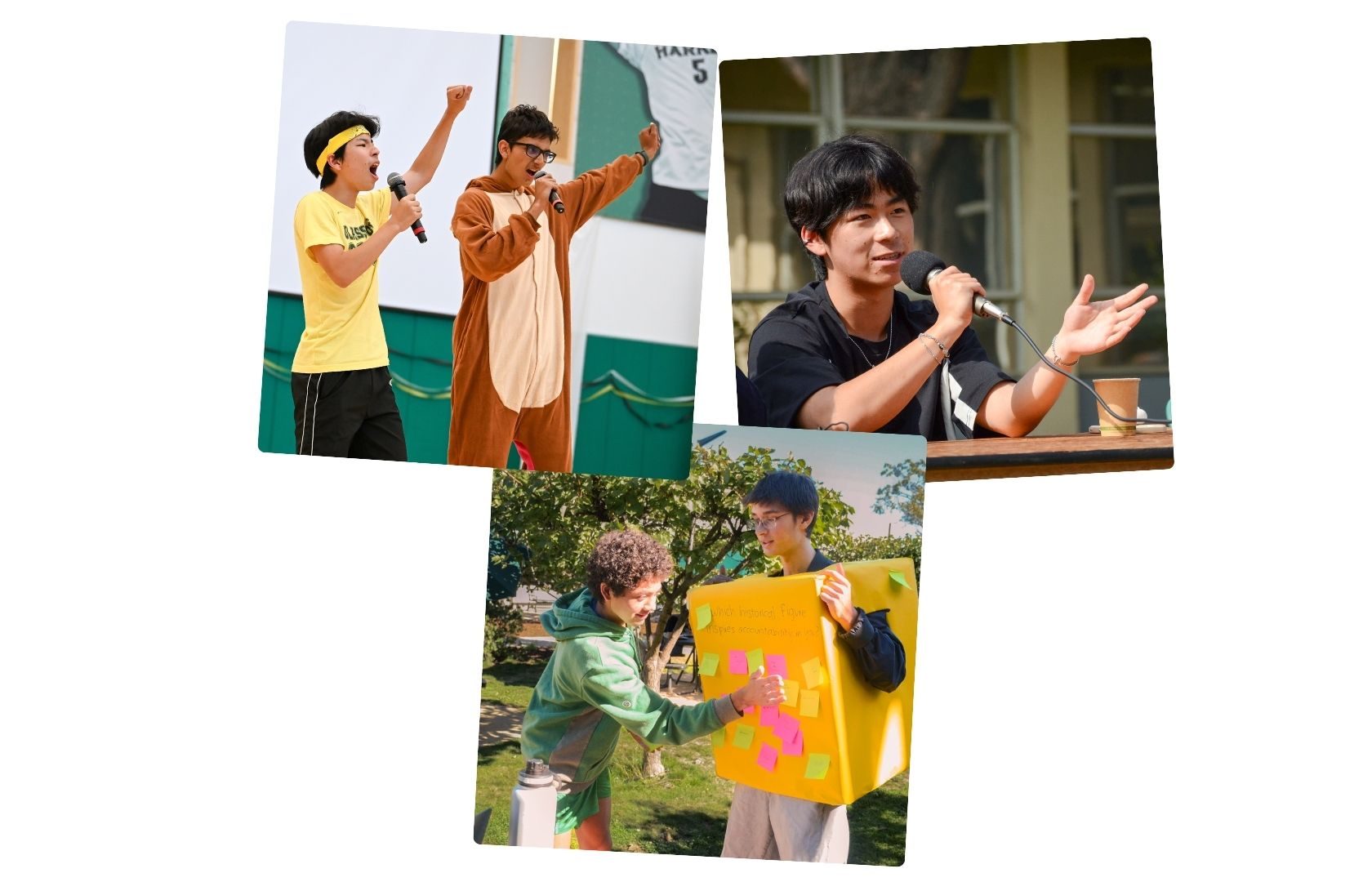
The CLC collaborated during the sustainability assembly in September, where students learned about the differences between the campus trash bins and joined a GooseChase competition to see which advisory could sort waste most accurately. The event reinforced that environmental responsibility is a shared effort, not the mission of a single club.
“Our sustainability assembly in September was a collaboration between all of the groups to explain to the students why we need to promote sustainability on campus,” Sophia said.“It’s not just a Green Team initiative, it also involves honor and respecting our environment so that brings in the Honor Council and SDC. It’s really showing the unity that all of these leadership groups can have rather than presenting ourselves as separate bodies because when we come together we’re able to drive bigger initiatives.”
SAB representative and CLC member Brady Tse (12), reflected that while the coalition brings more perspectives into planning, it also introduces additional steps in the process.
“It doesn’t make it more efficient because there’s more people that have to approve the idea and there’s more systems in place,” Brady said. “However, it’s beneficial to get those extra systems in place because SAB itself is a pretty small group of students who are all busy and might miss something, so having extra entities like ASB or HSLT allows for less mistakes to be made and more thoughtful things to be said.”
For example, although SAB and HSLT planned the upcoming Winter Walkways event, it required input from multiple groups, and all communication was facilitated through CLC.
“We wanted to make sure that we are very inclusive on all the different cultures and how they celebrate their winters, so we had to talk to Ms. Burrows and SDC,” Brady said. “It lets us have a more diverse lens to look at all these events and it makes it feel that we are more community-oriented rather than simply just like us 12 students.”
The CLC hosted a Town Hall on Oct. 22 to share updates and answer student questions, offering one of the first chances for students to see how the coalition operates. For some attendees, like frosh Rohan Ahuja, the event clarified the group’s role but also highlighted how much of its work remains unnoticed.
“I think that there are definitely a lot of opportunities for people to make changes and comment on those changes,” Rohan said.“There was a lot of information [at the Town Hall] and it definitely helped to improve my understanding of what the CLC does, but there’s a perception that they’re not doing anything. To fix the perception, I think that they need to be a little bit more active in making it clear.”
CLC is still in its early stages, with the Honor Council currently drafting a charter that will detail which groups are eligible to join. The charter’s main goal is to prevent redundancy by ensuring each group contributes a unique perspective. With the charter in place, the CLC will welcome more leadership groups and move forward with planning new joint initiatives.