


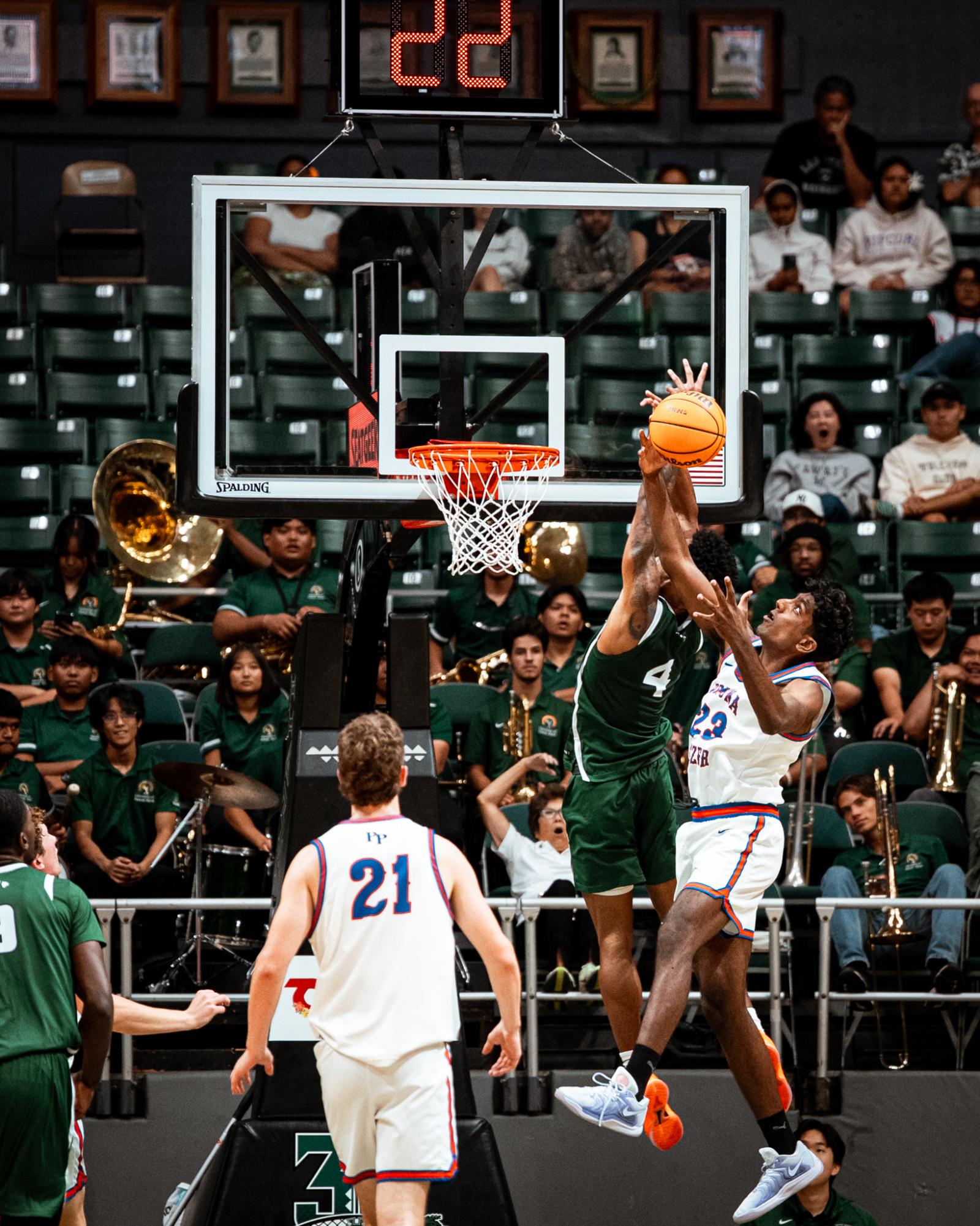
Four concussions in two and a half years. The number of injuries alone carries weight, not just in missed games, but in doubt and the pressure to stay strong.
For Abhi Namala (‘23), this became a turning point rather than an ending to his Division III basketball career. As a forward on the Pomona-Pitzer Basketball team, Namala has spent his first two years of college navigating injury setbacks that have limited his playing time and challenged his self-confidence.
“No matter how ready I thought I was, I wasn’t,” Namala said. “Every person on this court earned a spot to be here, so every practice, day and game is a fight to actually prove that you do deserve the spot. It’s really nice because that really brings out the competitive spirit and makes you a tough person — not the fake toughness where you’re screaming and yelling, but to be able to show up, compete and outlast your opponents.”
After his sophomore season concluded last March, the mental fatigue from repeated concussions hit Namala harder than ever. Several came from hard contact that was natural in basketball, including an aggressive collision with an opponent. He spent most of the season sidelined, with weekly practices replaced by rehab sessions, and naturally fell out of the rotation as he waited to be cleared for return. For the first time in his athletic career, he considered stepping away from the sport, but he refused to let all his past hard work go to waste.
“When the season ended, I was honestly depressed,” Namala said. “It sounds like a big word, but I wasn’t in a great spot, and I made a lot of real changes to my life to bounce back stronger. Looking back, I’m so glad I didn’t quit in those moments, and I relied on my meditation practices, resilience and community because it would be wrong for me to quit on the dream.”
To him, recovery is as much of a battle of the mind as the body. Namala’s approach toward healing highlights the mental side of athletic resilience.
“I realized how much my mental state also plays a role in my pains,” Namala said. “When I’m more stressed, I feel my neck tighten up. The mind has such a big factor on the body, so it’s never just one muscle; it’s all a chain, it’s all connected. Likewise, all the actions you take outside of the court translate to your gameplay, whether good or bad. ”
Back on the court, every practice and game is a test for Namala’s discipline. He arrives early, studies film and pays close attention to what his team needs to work on. Small routines, from pre-practice meditation to post-game stretching, have become a larger part of his effort to stay strong physically and mentally.
“Success, in college, is positioning, boxing out and reading the opponent correctly,” Namala said. “Once you do that consistently, you can build consistent wins. Any team can get lucky and make 100 three-pointers in a game, but what really gets those satisfying wins are these small plays with precision, mindfulness and actual attention.”
Namala draws inspiration from Bay Area native and former overseas professional basketball player Gokul Natesan, who has most recently played for the Llaneros de Guárico. Following Natesan’s example reinforces one of the reasons why Namala plays: to challenge stereotypes, break barriers and inspire others from underrepresented backgrounds to pursue their dreams.
“Typically with athletics, there’s a stereotype of Asians not being that athletic or that they focus mainly on studies,” Namala said. “Showing people that we can do a balance of both is really cool. Gokul is an inspiration to me; we’re very similar in our builds, facial features and how we play. I am only 10 years younger than him, and I’ve always felt like, if he can defy norms, maybe I can do it too.”
charlene • Feb 27, 2026 at 4:16 pm
love this liana this is just too inspiring