

“She’s literally the most unattractive woman he’s dated.”
“They make no sense on paper.”
“It has to be PR, right?”
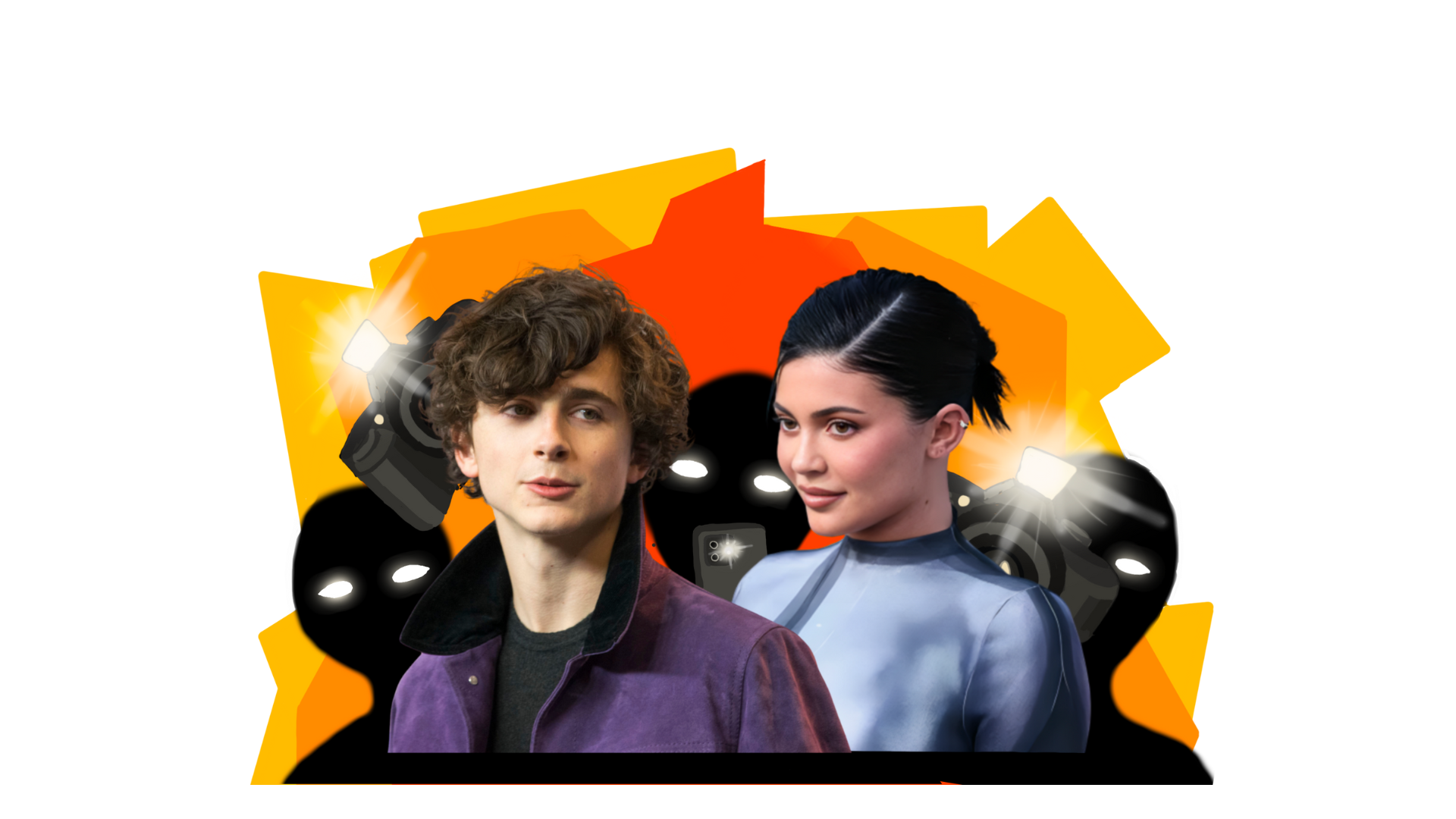
These are only some examples of the tweets and Reddit posts that circulated throughout the Internet when acclaimed actor Timothée Chalamet began dating reality TV star Kylie Jenner in late 2023. Now, two years later, with rumors resurfacing about the pair allegedly splitting up, similar comments have appeared. Immediately, celebrity gossip magazines like the Daily Mail have put out articles analyzing their every action.
Incidents of backlash and scrutiny like these illustrate the trend of celebrity obsession in certain niche fan groups, exacerbated through social media. Junior Dhanya Ramanan, who enjoys following celebrity gossip, sees how fans often form parasocial relationships with public figures.
“This kind of familiarity stems from this idea that we know celebrities,” Dhanya said. “But we have no idea how any of these people are in real life. We don’t know what their preferences are. We know a select facet that they have chosen to expose to the greater world, and the idea that we can determine anything about their identities from that is just ludicrous.”
Because celebrities in the entertainment industry often interact with their fanbase through partaking in more promotional events, fans may feel a false sense of emotional intimacy with their idols. To protect their relationships, some famous figures strive to completely separate their private and public lives.
Senior Janam Chahal, who often engages with celebrity news, argues that public figures shouldn’t keep their relationships a secret for fear of backlash. She believes that fans should be the ones changing their obsessive behaviors, not celebrities.
“The celebrity’s decision to share information about their relationship shouldn’t be dependent on what random people on the internet think about them,” Janam said. “At the end of the day, they deserve to share as much or as little as normal people would. The fault lies in the hands of the public making assumptions about the situation rather than what the celebrity chooses to share.”
Widespread fixation with the private lives of public figures first began with the rise of Hollywood in the early 1900s, where actors’ entertainment value outside of films, primarily through their personal lives and drama, became just as important as their on-screen talent. Even back then, celebrities used their relationships as more of an attempt to improve their image through public perception and less of their own personal choices.
“This isn’t an idiosyncrasy of this time period,” Dhanya said. “Public relationships have lasted since the dawn of time, like in the 1940s where people were being married off so they could have profitable marriages. When we criticize marriages that were organized by movie studios at that time, we think ‘Oh, it’s because their entire life was controlled by their public persona,’ and that’s exactly what’s happening now with publicized celebrity relationships.”
By providing easy access to instant connection, the internet has also intensified people’s fixation with celebrities. Social media platforms can impart a sense of intimacy, where celebrities talk directly to fans in a seemingly less polished way, like through livestreams or vlogs. These sites also allow fans to actively make speculations and feel like they are involved in influencing celebrities’ lives.
“Social media has cultivated a culture that is a lot more invested in the actions of celebrities than ever before,” Janam said. “Before social media was invented, the only way you would know things about these celebrities is from press interviews or paparazzi. With the increasing prominence of digital media, it’s a lot easier to access information about these relationships.”
Public relationships also intrigue fans since they see celebrities as aspirational figures, and a love story only adds to their appeal. Sophomore Sid Gaur, who is a fan of celebrity gossip, cautions that attachments to perfectly polished relationships create impossible standards for connections in normal life.
“They’re celebrities, so they have different priorities than people like us,” Sid said. “Setting celebrities as your expectations for how love is supposed to work is difficult, especially because relationships are a balance. If you’re idolizing how celebrities interact with each other and what they give each other, it’s unrealistic to expect that from a person who isn’t living that lifestyle.”
Nevertheless, when done in a way that takes into account celebrities’ right to privacy, celebrity relationship gossip can serve as a harmless form of entertainment as well as a lighthearted way to bond with others.
“If fixating on celebrities is your cup of tea, then go for it,” Sid said. “It can be really entertaining for some people and it can be really fruitful as a way to de-stress. However, making your entire personality about your view on the celebrity is not great. By respecting celebrities’ choices and consuming content about them without hurting anyone, you can be a fan in a healthy way.”